It is a trigonal carbonate with typical “relief pleochroism” or “chagrin change". May be calcite, dolomite, siderite, magnesite or rhodocrosite. If with paralell extinction, it is aragonite.
It is NOT possible to differentiate these carbonates from each other under the petrographic microscope.
PPL: Anhedral, equidimensional or prismatic grains. Perfect basal sections have 4 or 8 sides. 2 cleavages at ~90º in basal sections.
XPL: Oblique extinction of 35-48º. ES(+). Twins are common. Hourglass texture occurs in augite-Ti. B(+), 2V = 25-61º. Pigeonite and diopside are similar.
PPL: High relief, cleavage not visible, grains rounded, with a dark halo around them if in biotite or hornblende.
XPL: Intense 3rd to 4th order colors. Extinction paralell, ES(+), rare twins, frequent zonation. U(+), but a 2V of 10º is possible. Similar to monazite. Can become metamict (= isotropic).
PPL: High relief, cleavage normally not visible, may have pale colors (yellow, green). Rounded, prismatic or wedge-shaped grains, may show dark halo around them.
XPL: Intense 2nd and 3rd order colors. Parallel extinction, rare twins. B(+), 2V from 6-19°. Very similar to zircon. Can be confused with epidote.
Less common orthorhombic nesosilicate of the Al2SiO5 Group, typical of high P and T pelitic metamorphic rocks.
PPL: Long prismatic crystals with fractures perpendicular to the elongation, acicular or in fibrous masses (fibrolite). Basal sections are square with diagonal cleavage.
XPL: Extinction paralell (symmetrical in basal sections), ES(+), without twins or zoning. B(+), 2V from 21-30º.
Less common monoclinic sorosilicate of the Epidote Group.
PPL: Prismatic, acicular, radiated or granular with pseudohexagonal sections, one perfect cleavage.
XPL: Intense and/or anomalous blue colors. Zoning common. Extinction paralell to cleavage or oblique of 30º. ES(+/-), B(+), 2V of 40-90º. Epidote and pumpellyite are similar.
Very rare monoclinic amphibole of Ca-poor metamorphic rocks.
PPL: Forms parallel to subradiate aggregates of prismatic crystals. Basal sections form rhombs with 2 cleavages at 56 and 124º. May be pleochroic in pale green/brown.
XPL: Extinction 15-21º, ES(+), common thin polysynthetic twins, B(+/-), 2V of 68-97º.
Rare orthorhombic inosilicate (Strunz) or phyllosilicate (Dana).
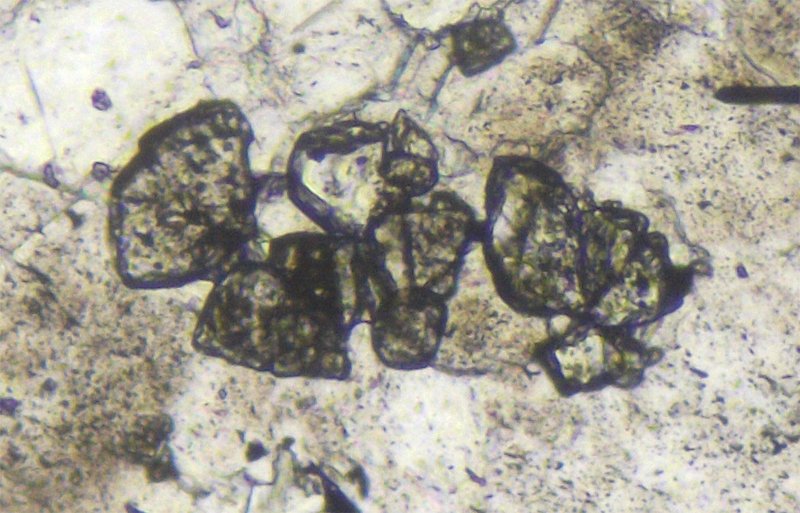
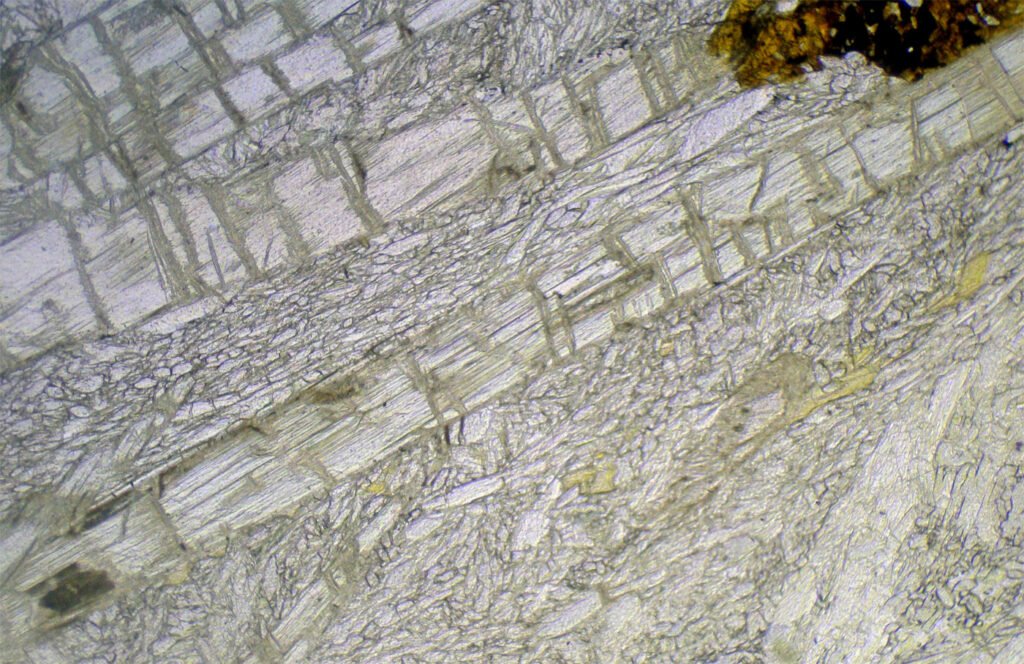
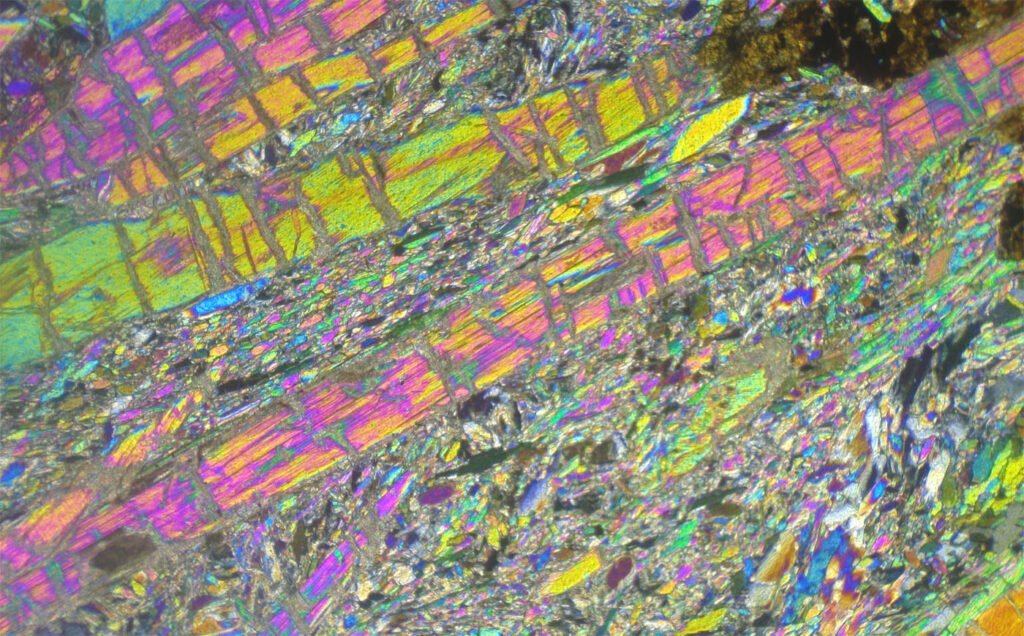
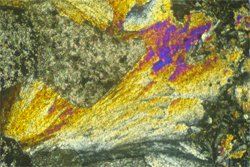
PPL: Tabular, prismatic or radiated, can be in bow-tie patterns. Medium relief. Good {001} cleavage.
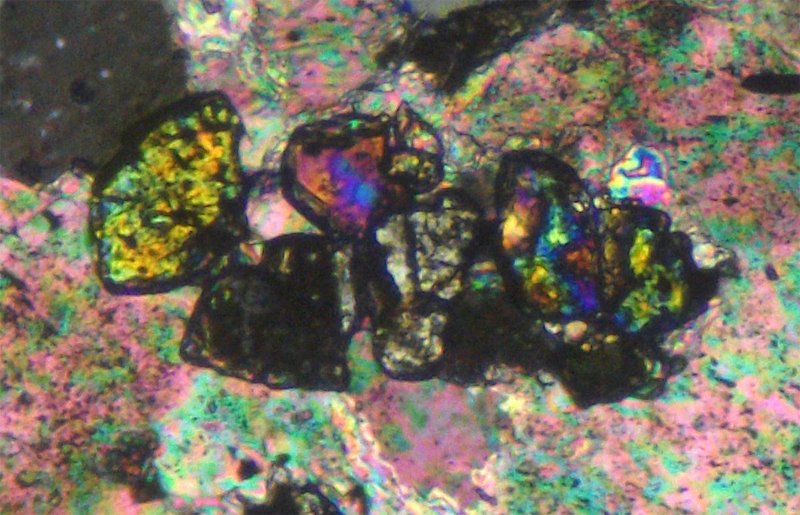
XPL: 2nd order or anomalous colors (blue or brown). Extinction parallel, undulating or in chess pattern. ES(+/-). Twins rare, zoning possible. B(+), 2V from 64-71°.
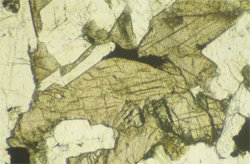
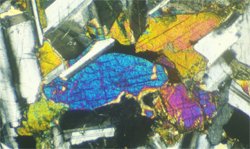
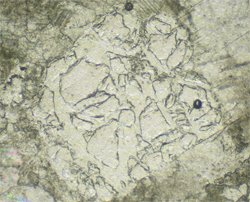
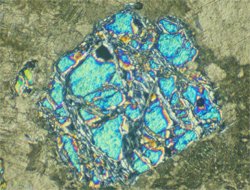
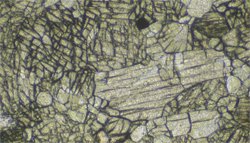
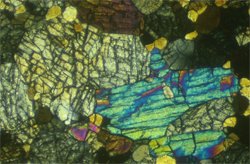
Images: Prehnite in PPL and in XPL (in yellow, many other colors are possible).
Very rare orthorhombic sorosilicate of high P and low T metamorphic rocks of the blueschist facies.
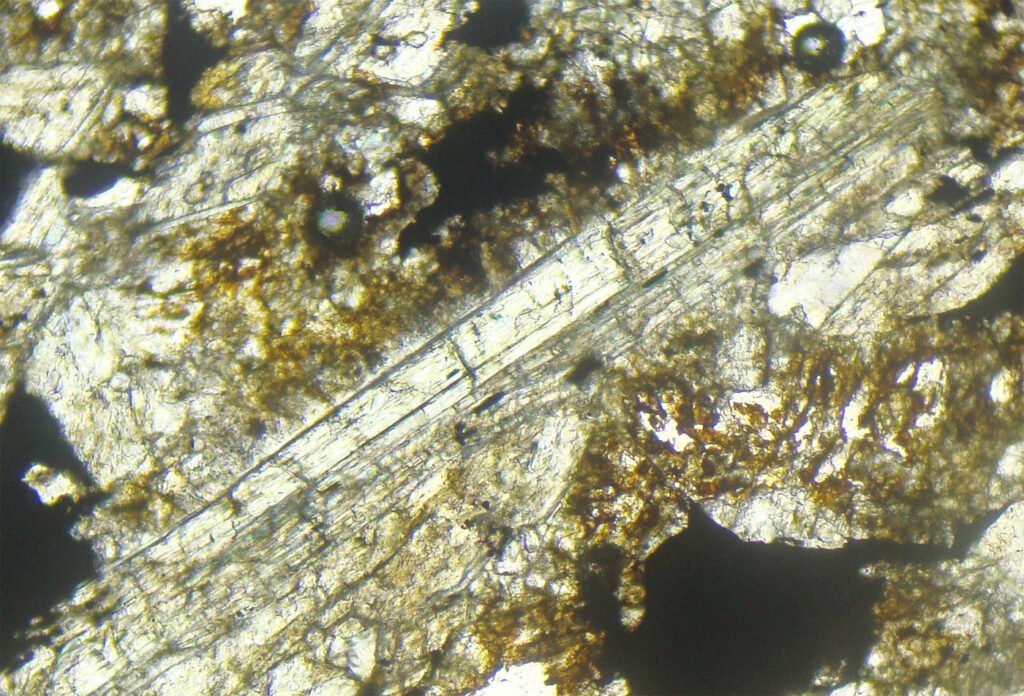
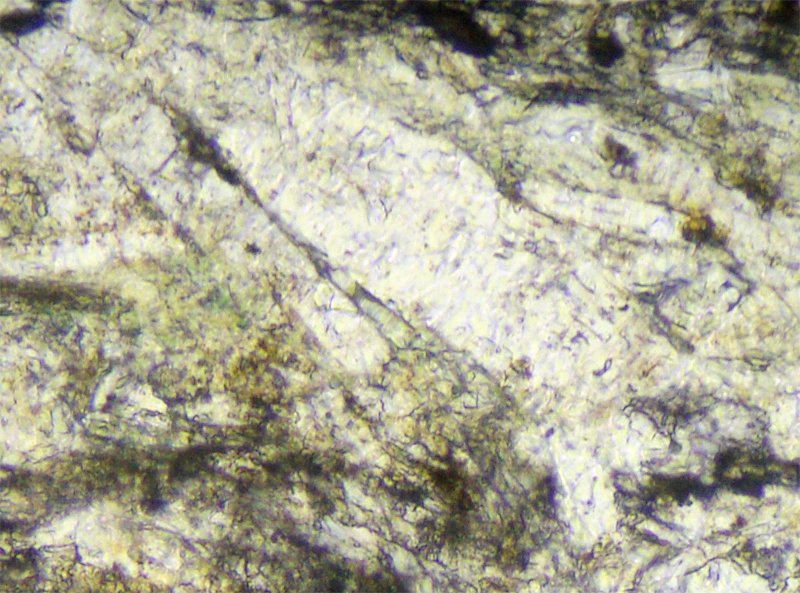
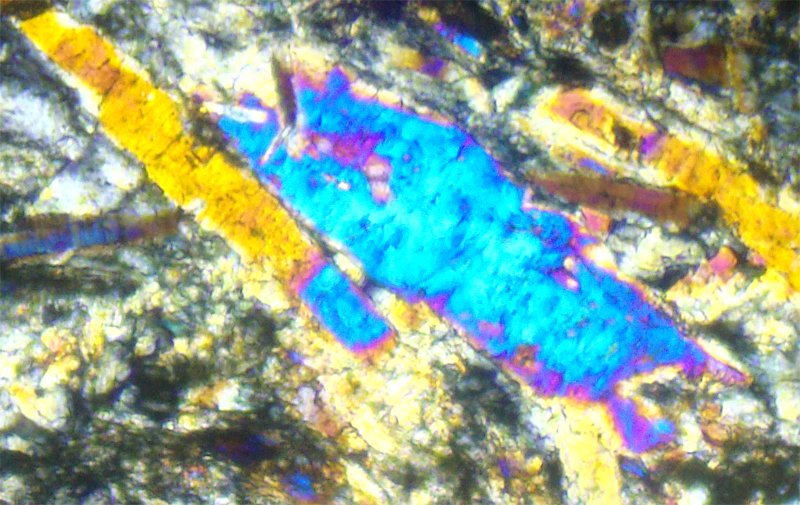
PPL: Small tabular euhedral crystals. Medium to high relief. Cleavages intersect at 67°.
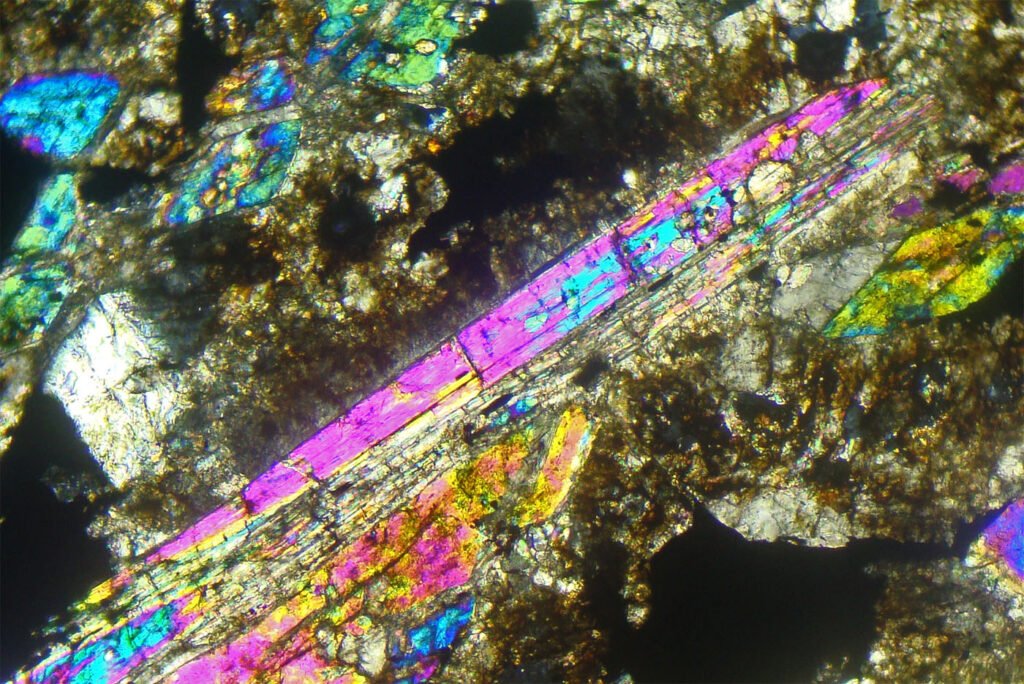
XPL: Colors from 1st order orange to 2nd order blue. Longitudinal sections show parallel extinction and ES(-). Basal sections with symmetrical extinction. Twinning possible. B(+), with 2V=76-87º.
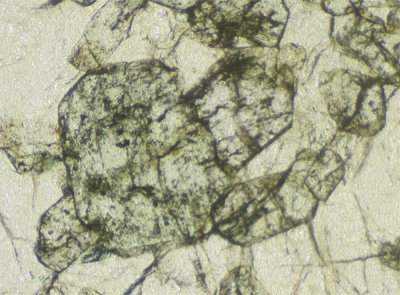
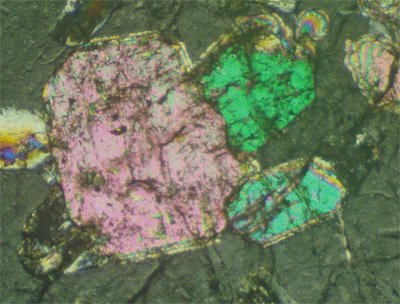
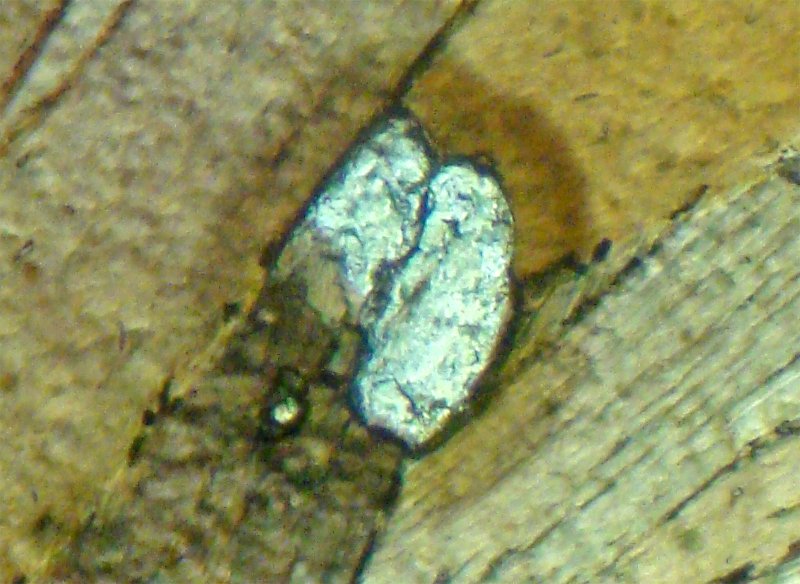
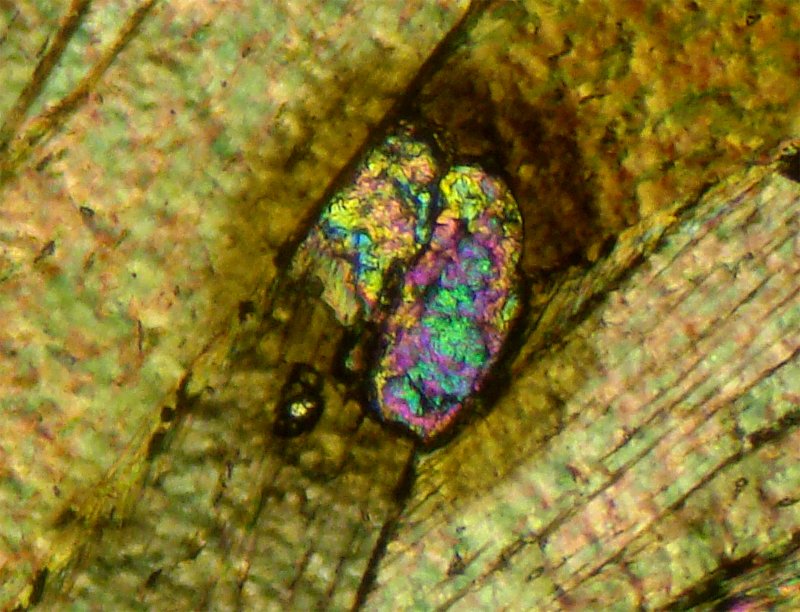
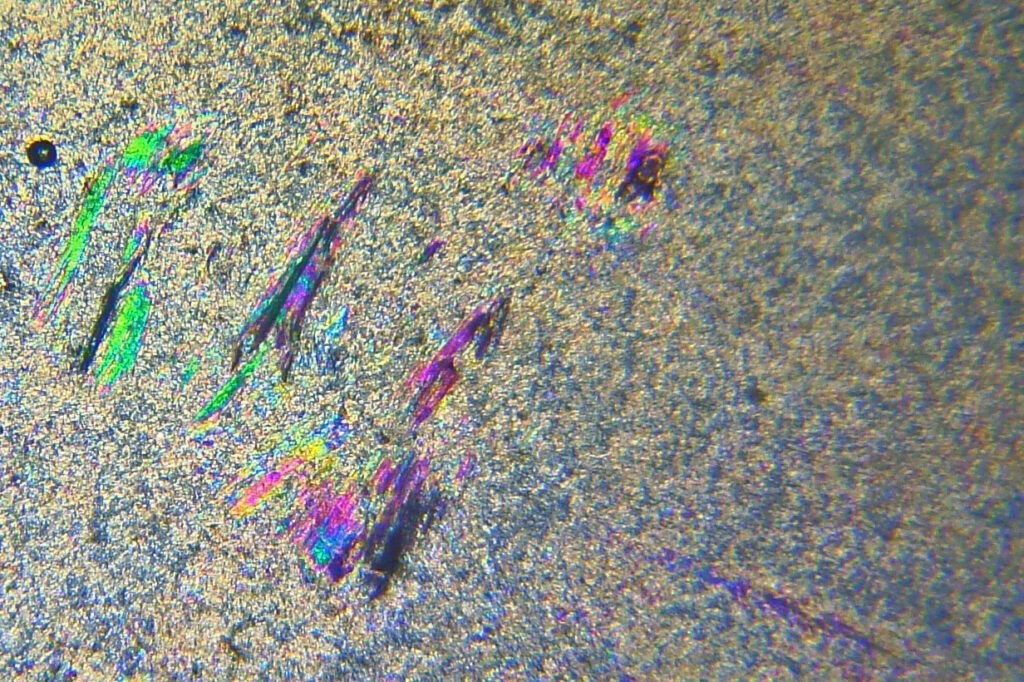
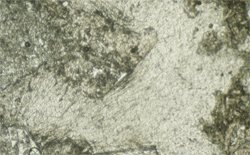
Images: Lawsonite in PPL and in XPL.
Colorless minerals with moderate to very high relief, in XPL with colors higher than lower 1st order.