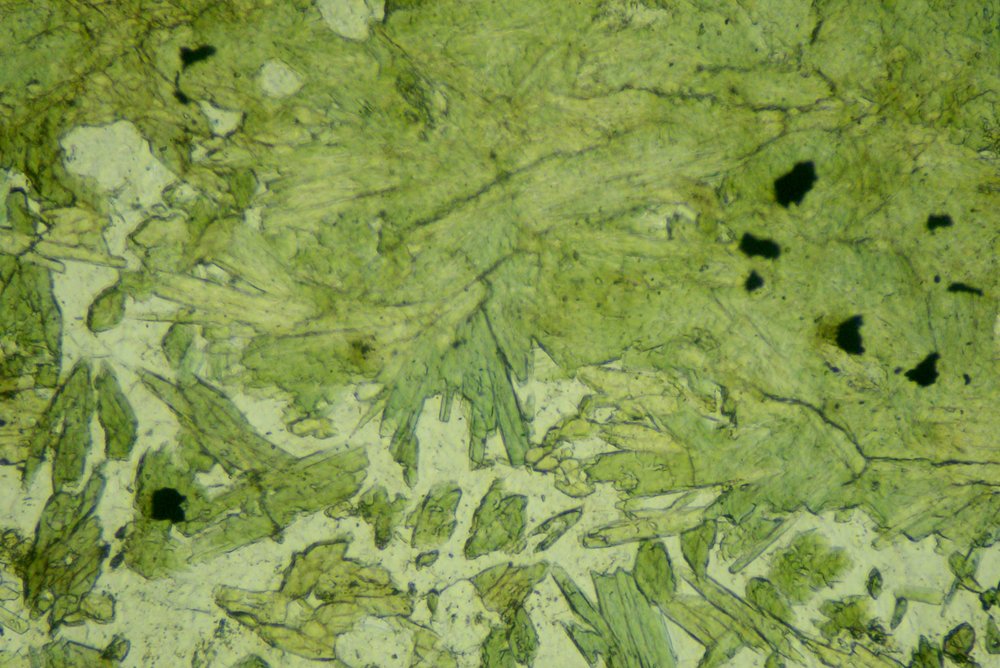
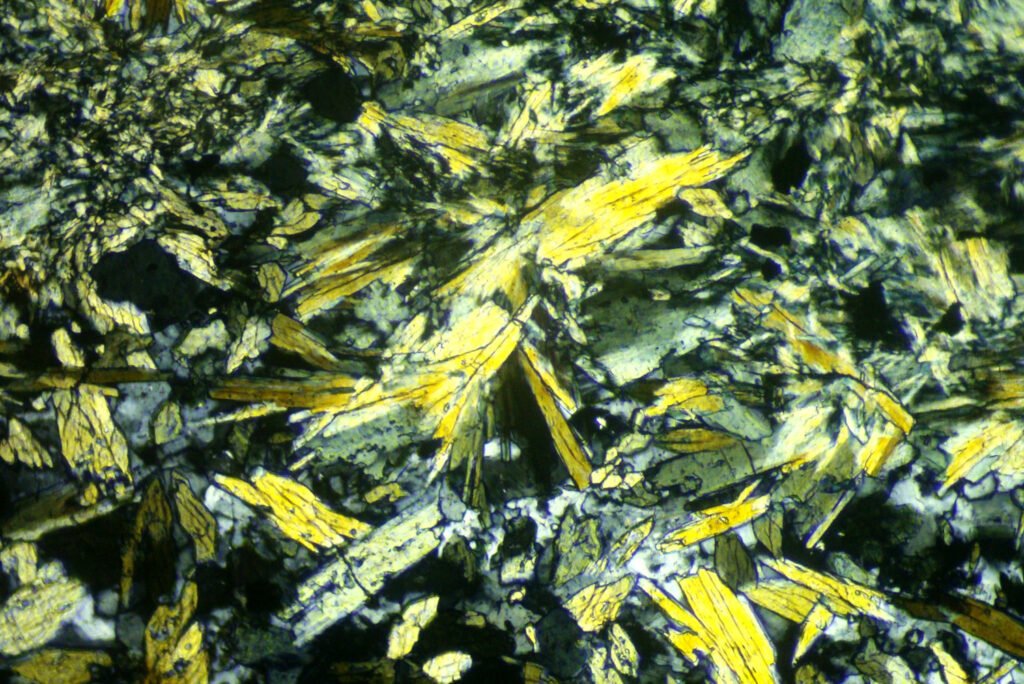
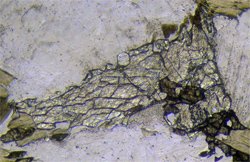
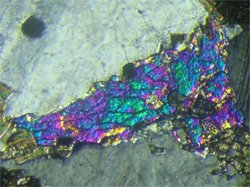
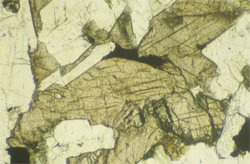
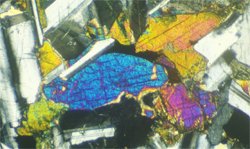
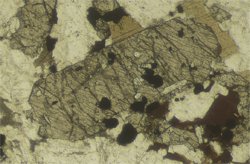
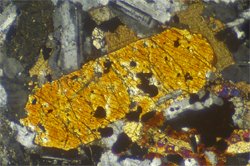
Extremely common monoclinic phyllosilicate, occurs in many types of rocks.
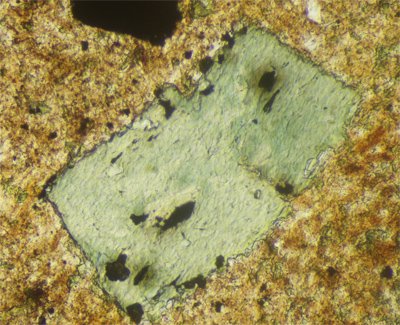
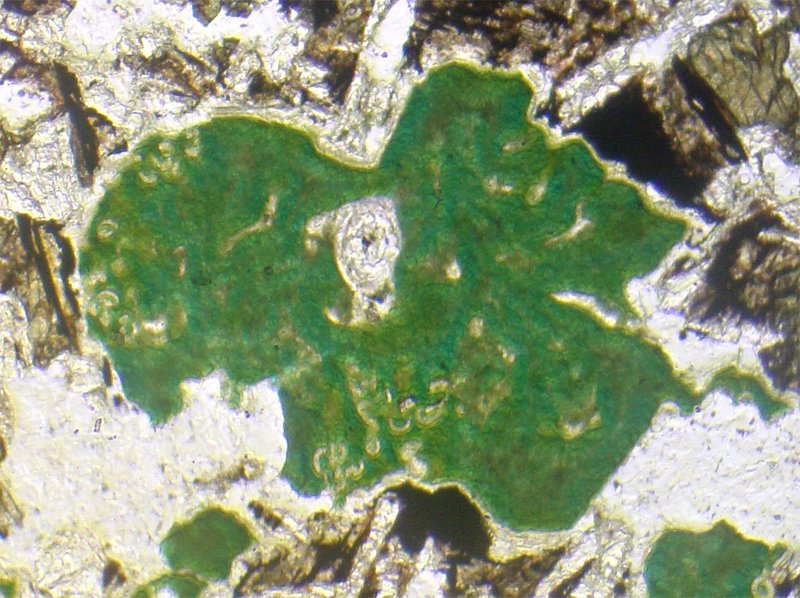
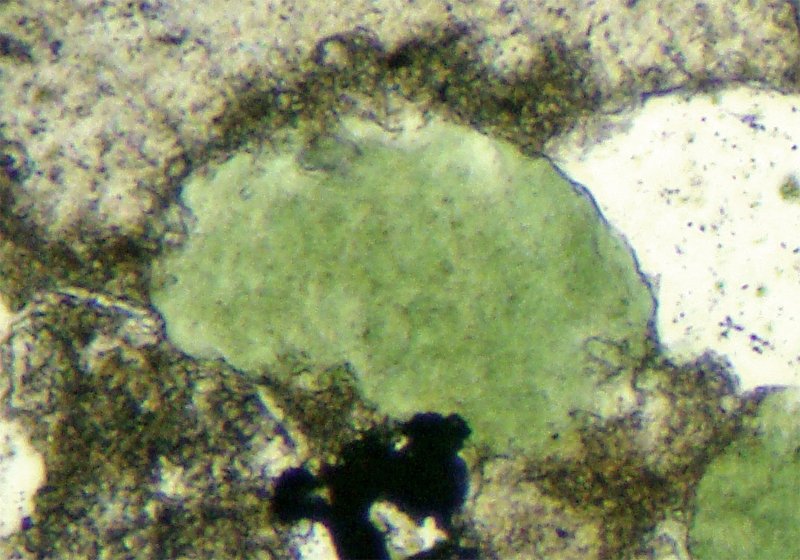
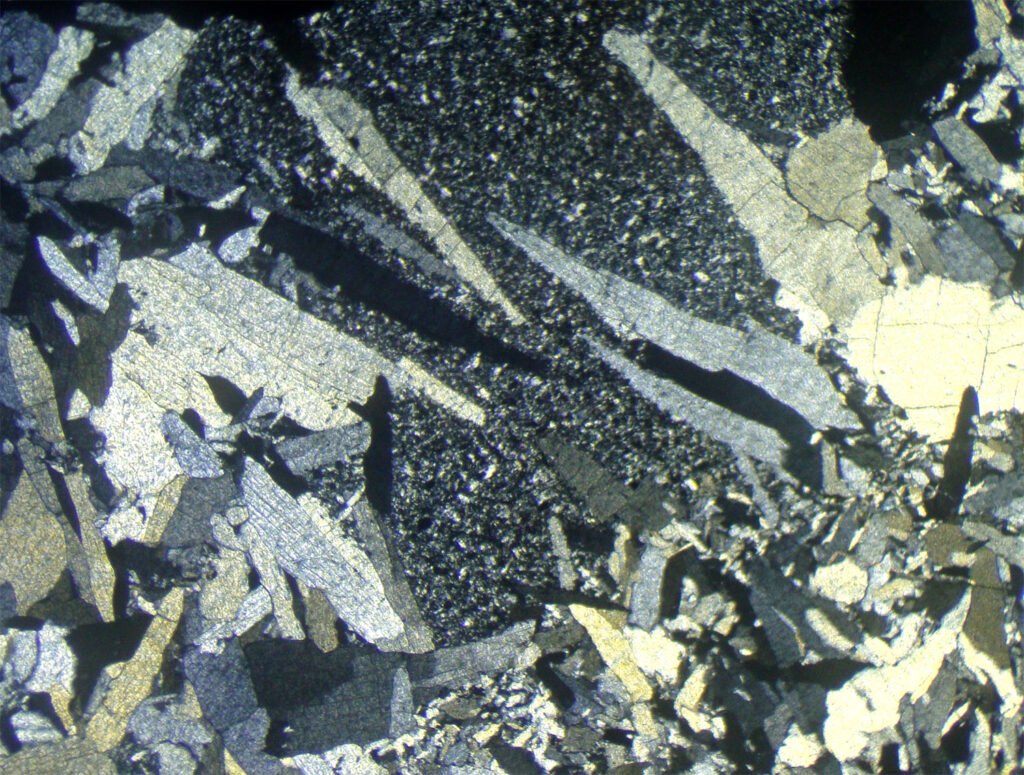
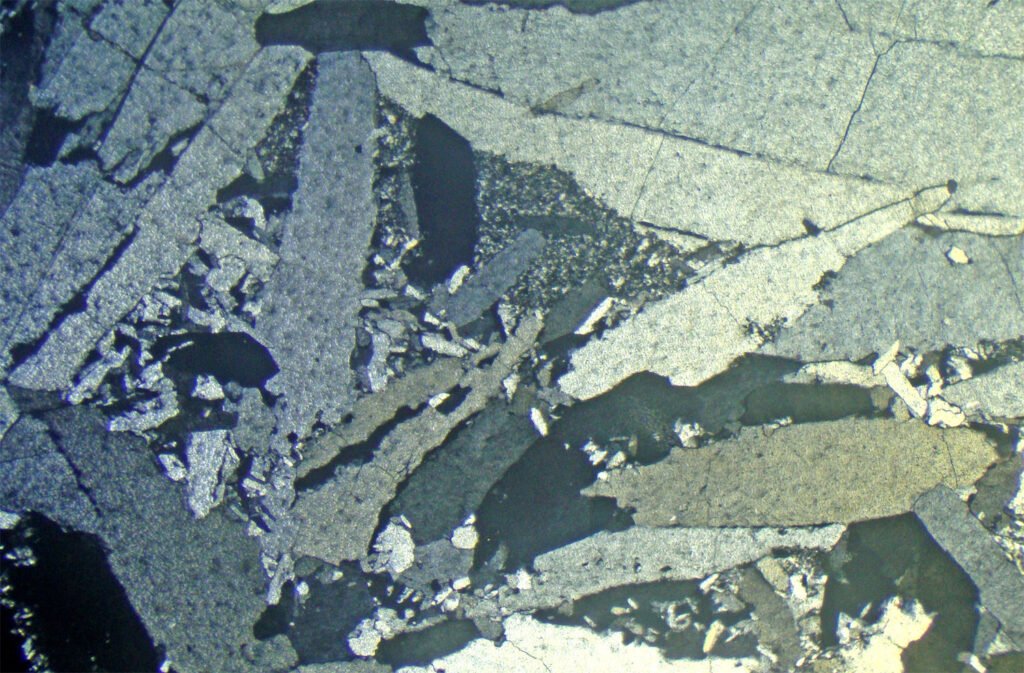
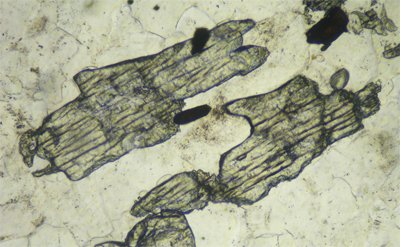
PPL: Pale green colors with weak pleochroism. Very small lamellae, fibers or masses.
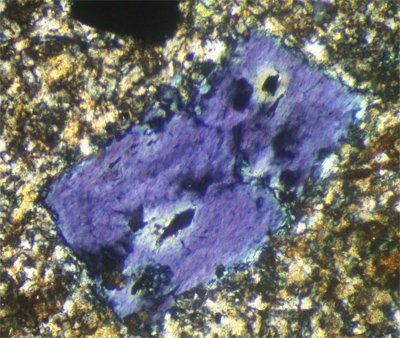
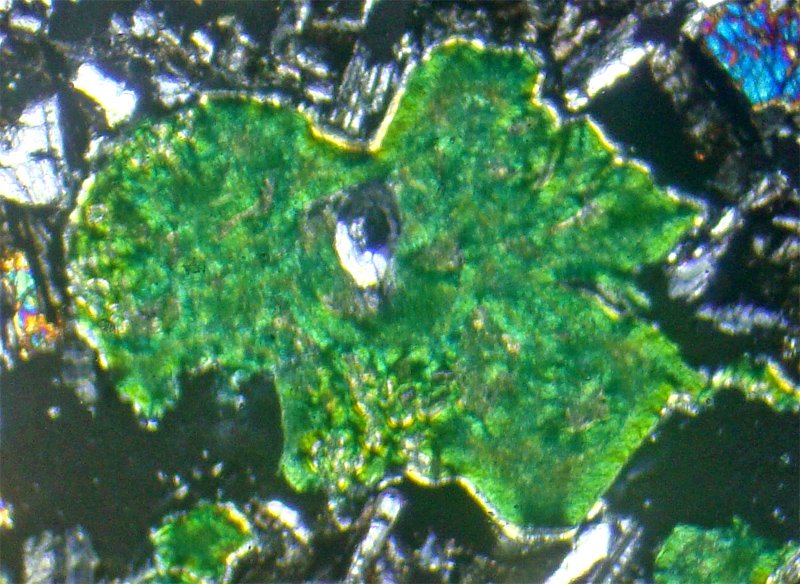
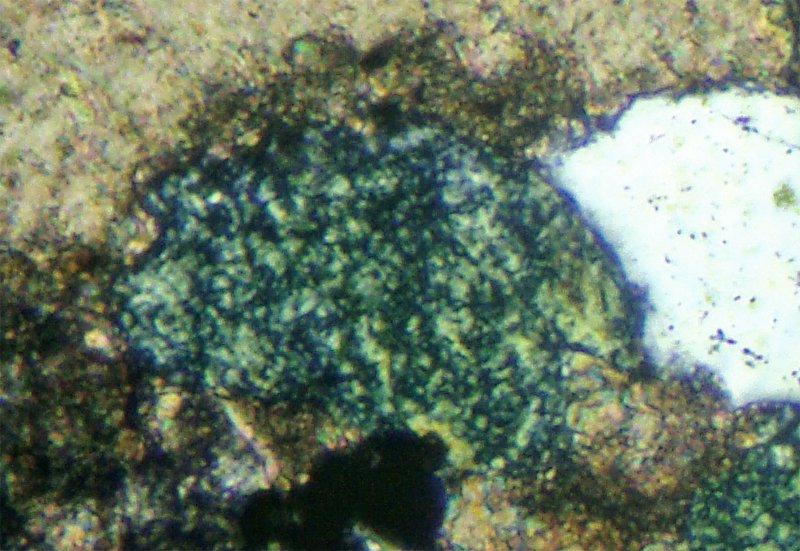
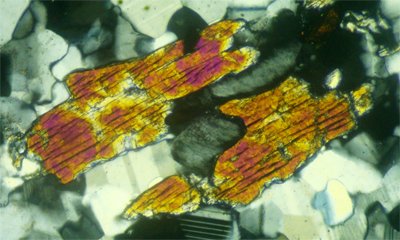
XPL: Anomalous colors: blue (berlin blue) or brown (leather brown), bluish-gray or purple. 0-9º extinction, unmottled (diagnostic against micas!). ES(+/-), B(+/-).
Images: Chloritized phenocryst in volcanic rock, in PPL and in XPL.
Common monoclinic sorosilicate, occurrs in many types of rocks.
PPL: Pleochroic between colorless, lime green, pale green, pale yellow, yellow-green and brown-green. High relief. Granular, columnar, acicular. Basal sections are rhombic. 1 perfect cleavage.
XPL: Intense and zoned anomalous colors. Paralell or oblique extinction. ES(+/-), B(-), 2V = 64-90º.
Rather rare monoclinic sorosilicate, typical of specific metamorphic rocks.
PPL: Weak to moderate pleochroism between colorless, yellowish, light green and blue-green. Lamellar, acicular or fibrous. Medium to high relief, 2 good cleavages.
XPL: Colors between 1st and 2nd order or anomalous (indigo blue and leather brown). Zoning common. ES(+/-), twins common, B(+), 2V 7º-110º.
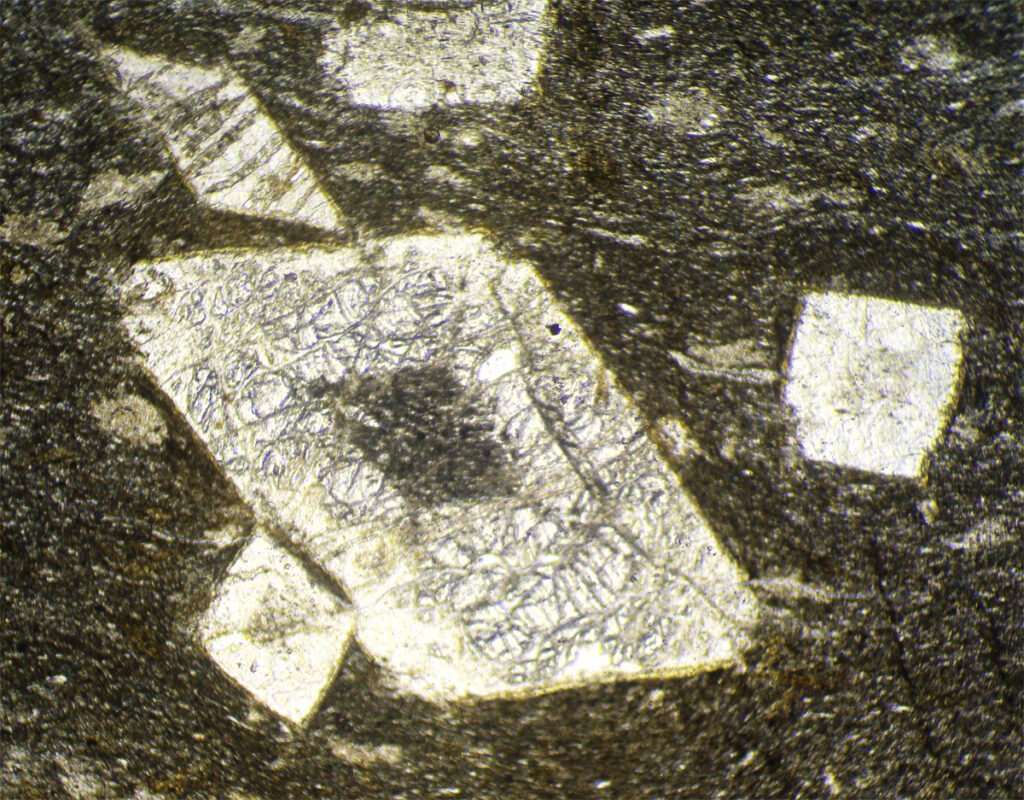
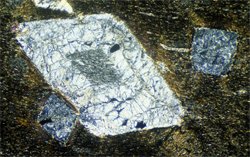
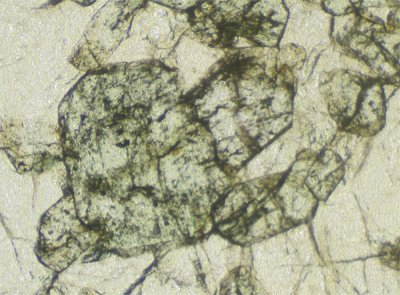
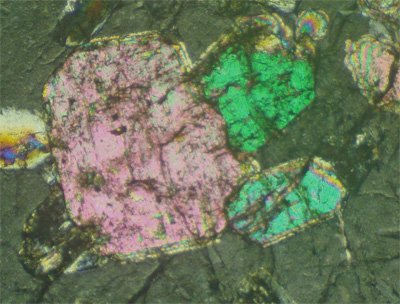
Rather common orthorhombic nesosilicate, of Al-rich metamorphic rocks.
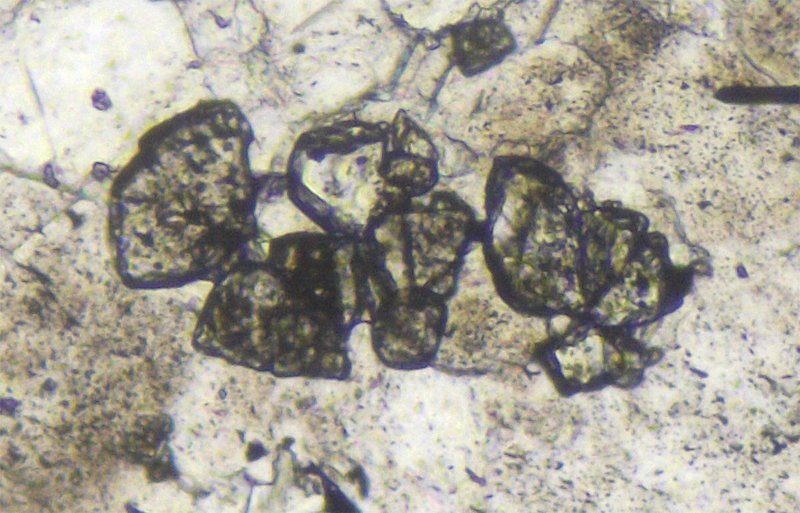
PPL: Usually colorless, may have pale green to pink pleochroism. Short prisms of square section. Perfect {110} cleavage; basal sections with 2 cleavages at 89º.
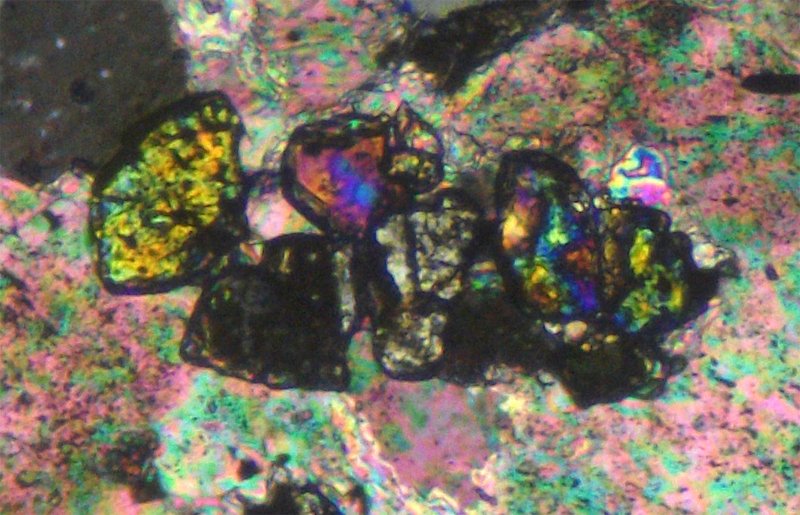
XPL: Paralell extinction, basal sections with symmetrical extinction. ES(-). Black carbon inclusions common. B(-), 2V:71-86°.
Images: Andalusite basal sections in PPL and in XPL.
PPL: Usually colorless, but may have pale green, brown, yellow, or bluish pleochroism. Medium-high relief. Two cleavages at ~90º in the basal sections.
XPL: Oblique extinction (35-48º). ES(+). Twins common. B(+), 2V from 25-61°. Identical to diopside and pigeonite!
Common monoclinic pyroxene, less common than augite.
PPL: Usually colorless, but can be pale green in color with very weak pleochroism. Medium to high relief. 2 cleavages at ~90º in basal sections. Granular to short prismatic.
XPL: Colors up to 2nd order orange. Extinction 38-48º, B(+), 2V 58-62º. Identical to augite and pigeonite!
Rare monoclinic Ca-poor pyroxene, typical of volcanic rocks..
PPL: Usually colorless, can be pale, yellow-green to brownish-green in color. Medium-high relief, typically granular and anhedral, usually in the rock matrix.
XPL: Intense 2nd order colors. Oblique extinction from 37-44º, B(+) with 2V from 0-30º. Identical do augite and diopside!
Very rare monoclinic amphibole of Ca-poor metamorphic rocks.
PPL: Usually colorless, but can be pleochroic between pale green to pale brown. Forms clusters of prismatic crystals. In the basal section (rhombic!), 2 cleavages at 56/124º.
XPL: Extinction 15-21º. Colors up to 2nd and 3rd order. ES(+), B(+/-).
Rather common orthorhombic sulphate, of many different geological settings.
PPL: Usually colorless, but may be weakly pleochroic in green, yellow, violet, brown, or blue. Granular or tabular habit, forms radiated aggregates. Medium relief and several cleavages.
XPL: Lower 1st order colors, like gray to straw yellow, ES(+) and parallel extinction. Twins rare, zonation absent. B(+).
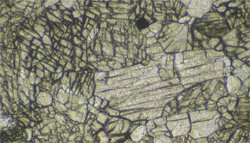
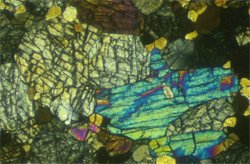
Orthorhombic pyroxene common in ultramafic and basaltic rocks.
PPL: Usually pleochroic between pinkish and colorless, but may be pale green. Short prismatic, granular, basal section with 4 or 8 sides and 2 cleavages at ~90º.
XPL: Parallel extinction! Colors up to 1st order orange (lower than the colors of clinopiroxenes!). ES(+), common zonation, rare twins. B(+/-), 2V from 58-86°.
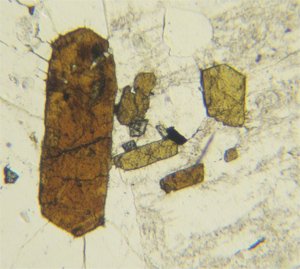
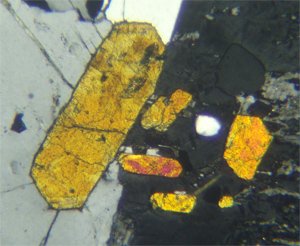
PPL: Usually colorless or yellow, but may show weak pale green pleochroism. High relief, without visible cleavage, in rounded or wedge-shaped grains. Black halos around it are possible.
XPL, intense 2nd and 3rd order colors. Parallel extinction, B(+), 2V = 6-19º. Very similar to zircon. Can be confused with epidote.