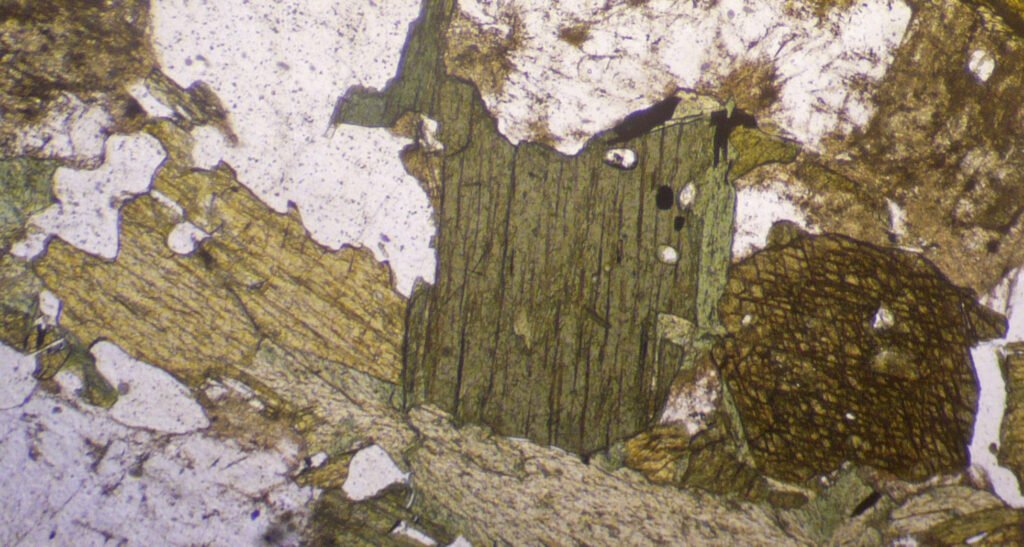
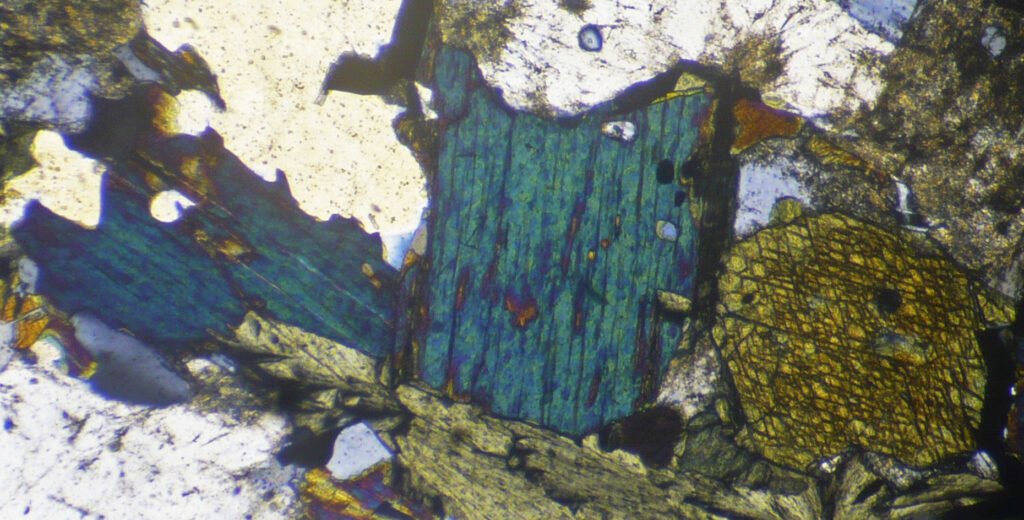
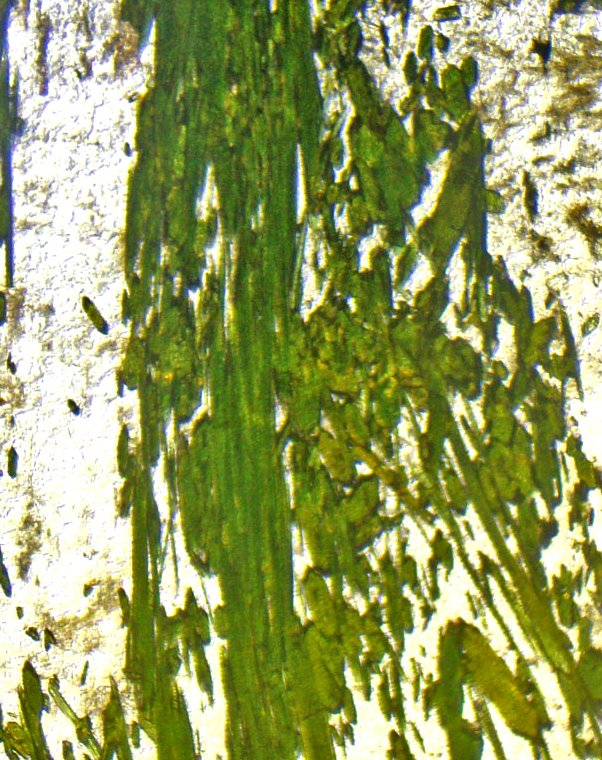
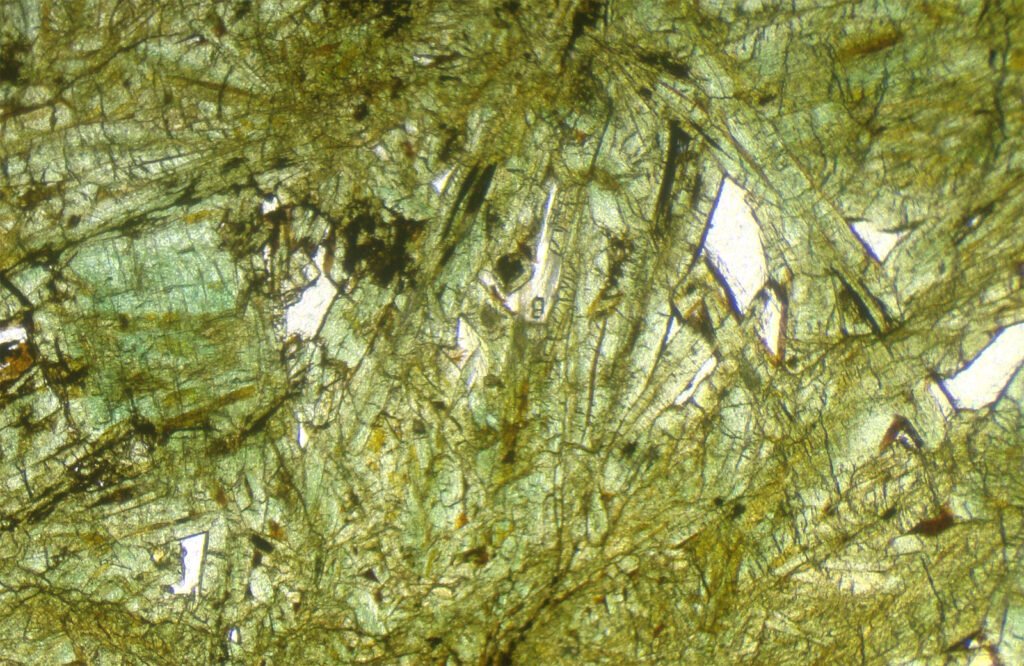
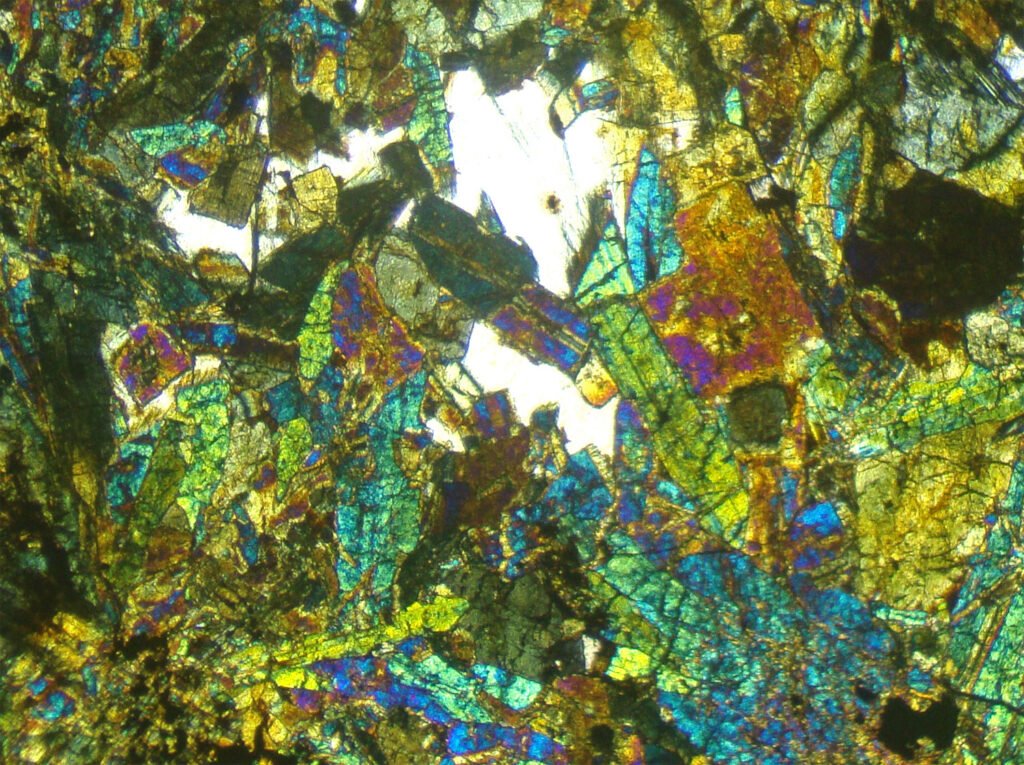
PPL: Strong pleochroism in green, yellow-green to bluish-green. Two cleavages at 56º-124º in the basal sections (pseudo-hexagonal, rhombic). Long to short prismatic, medium-high relief.
XPL: 1st to end 2nd order colors, oblique extinction (14-22º), ES(+), twins and zoning are common, B(-).
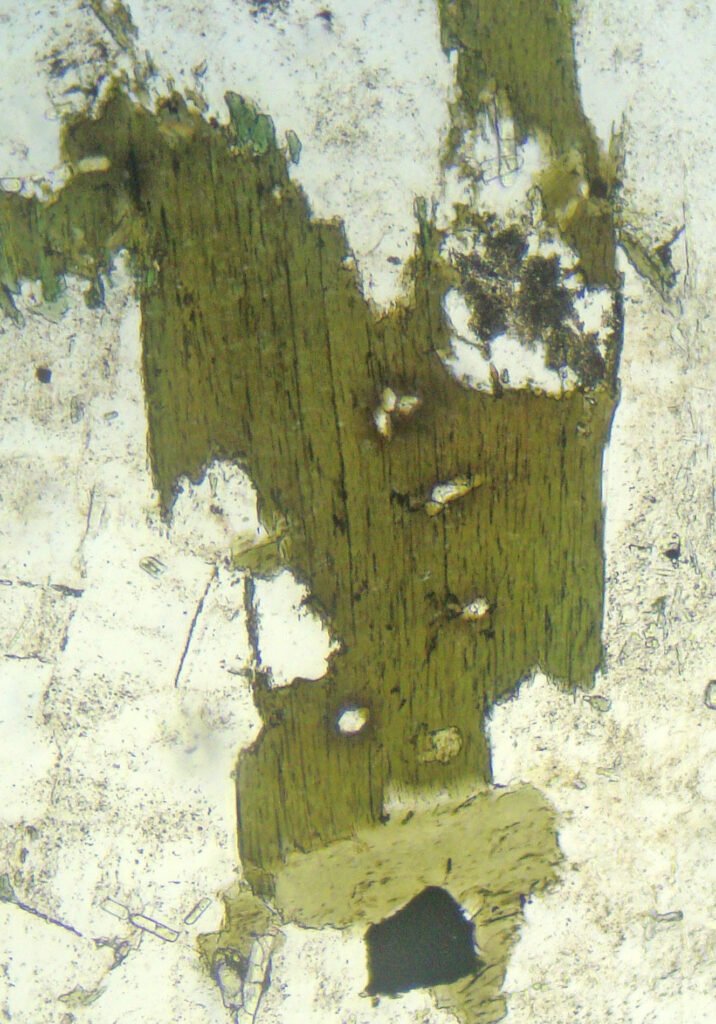
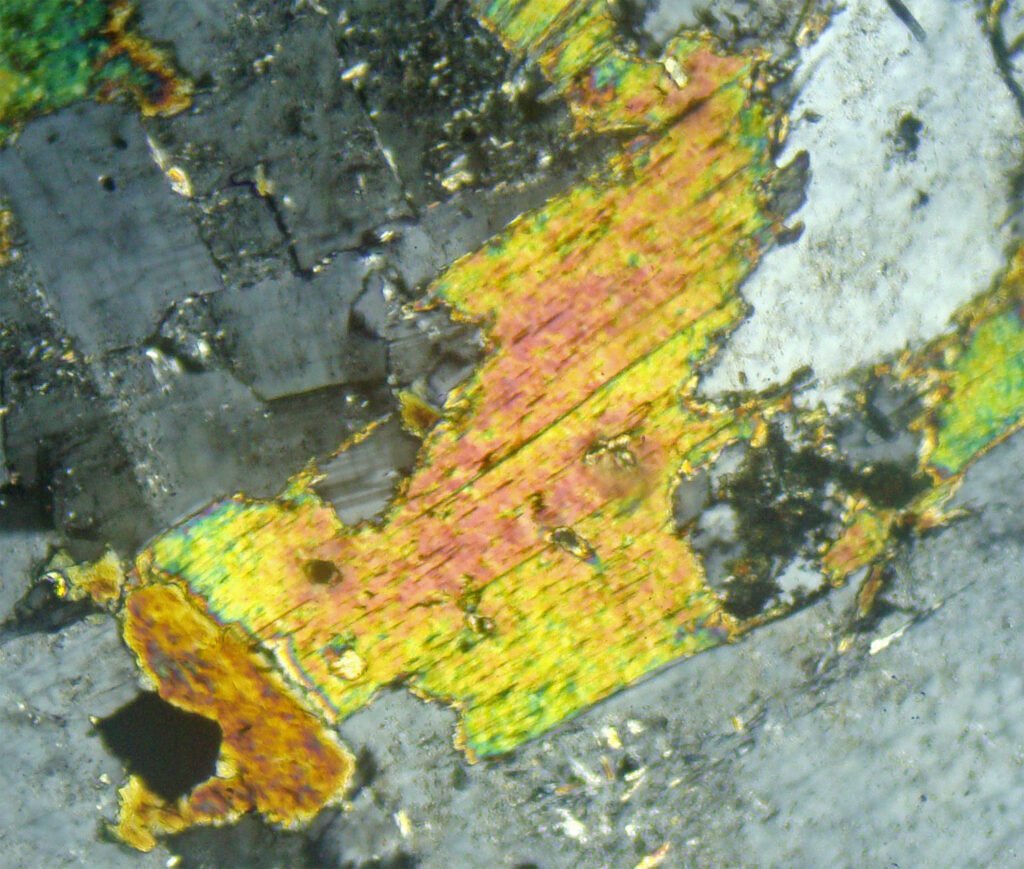
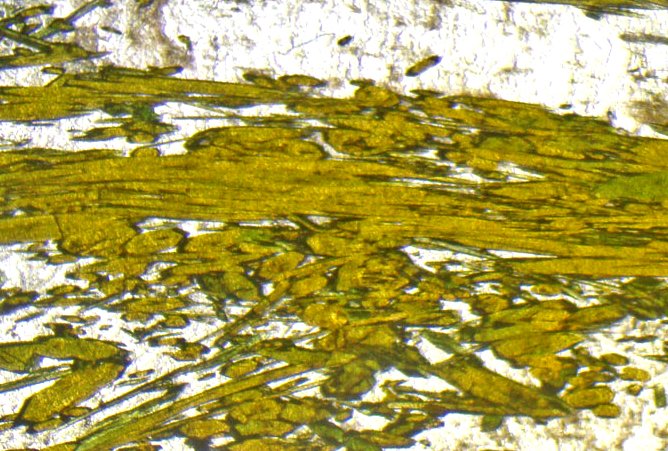
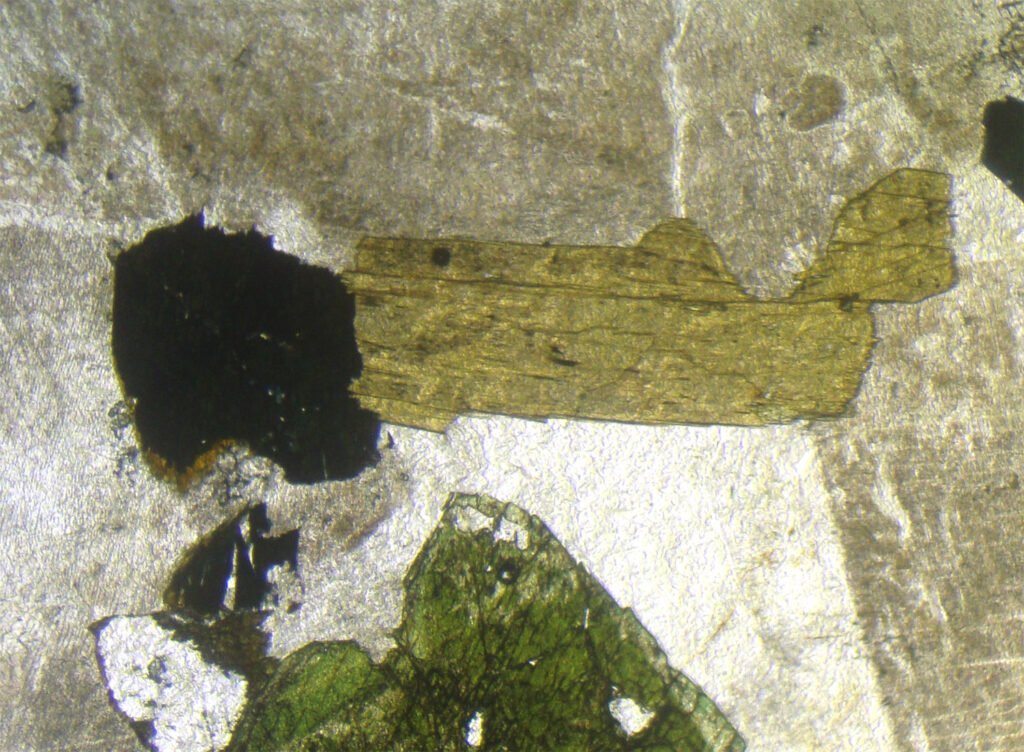
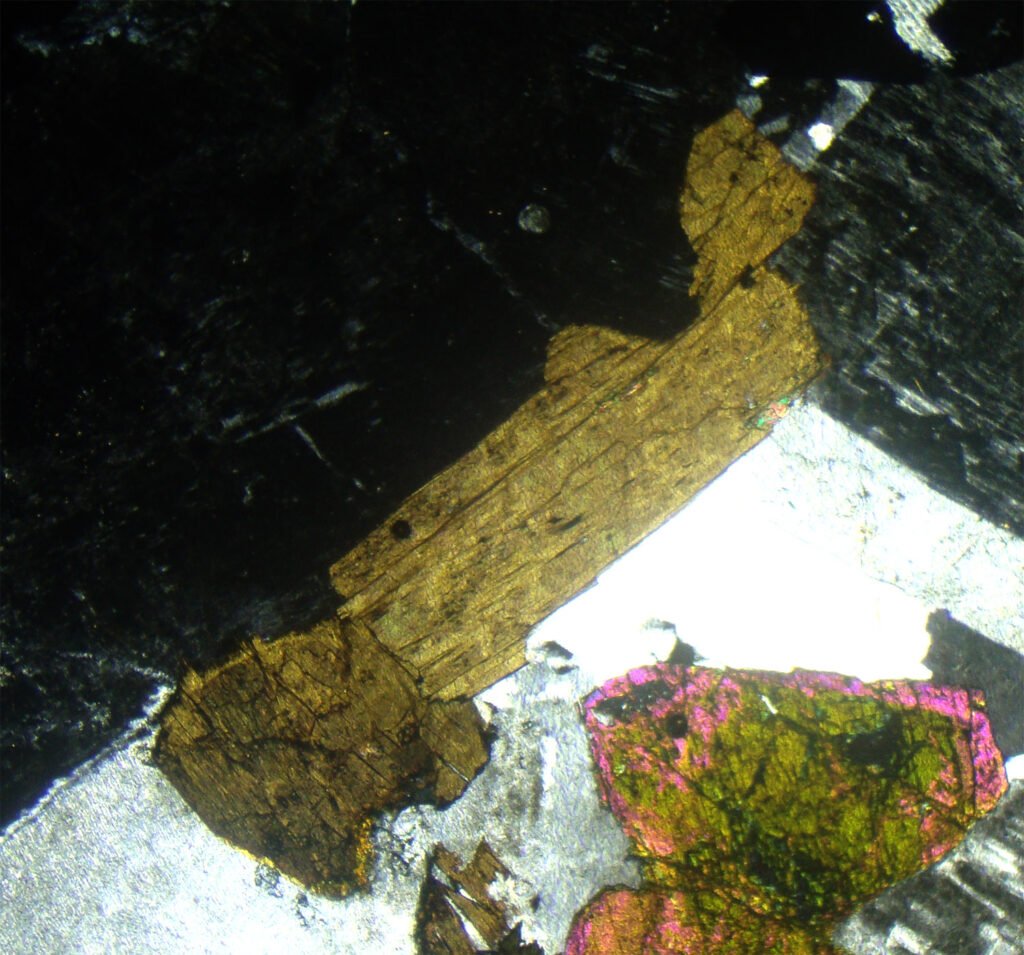
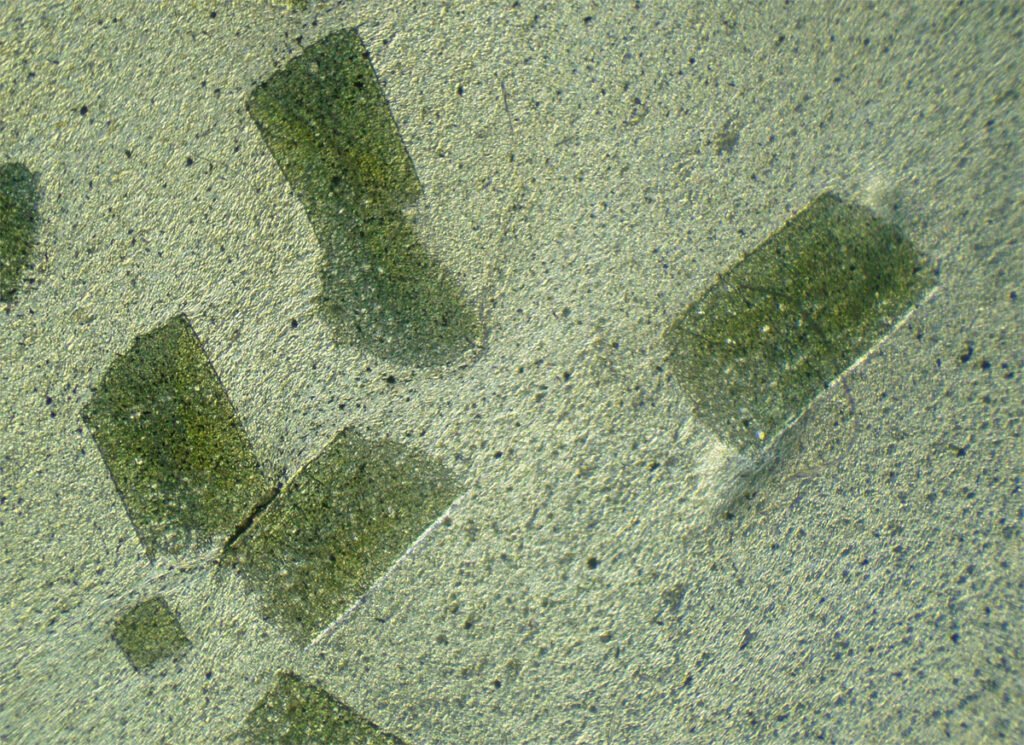
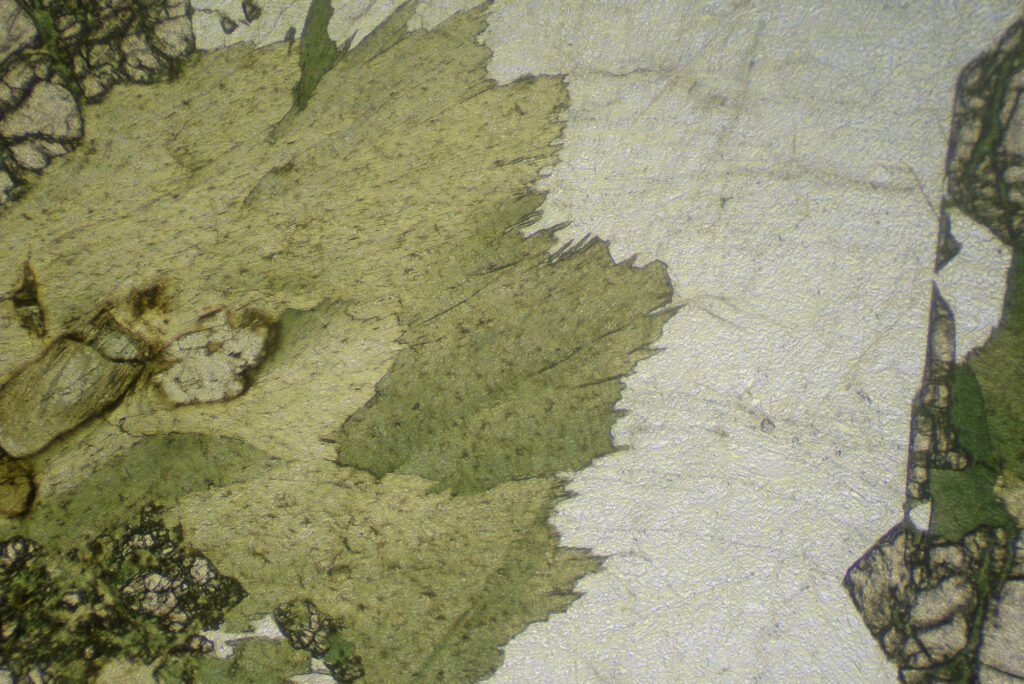
PPL: Strong pleochroism in green (or brown or red-brown or yellow or red). Medium relief. One perfect cleavage if not altered. Basal sections without cleavage.
XPL: 3rd-4th order colors, masked by the strong mineral color. Parallel and mottled extinction. ES(+), B(-).
Images: Biotite in PPL and in XPL, showing some of the possible colors.
Less common trigonal cyclosilicate of the Tourmaline Group (>40 different minerals).
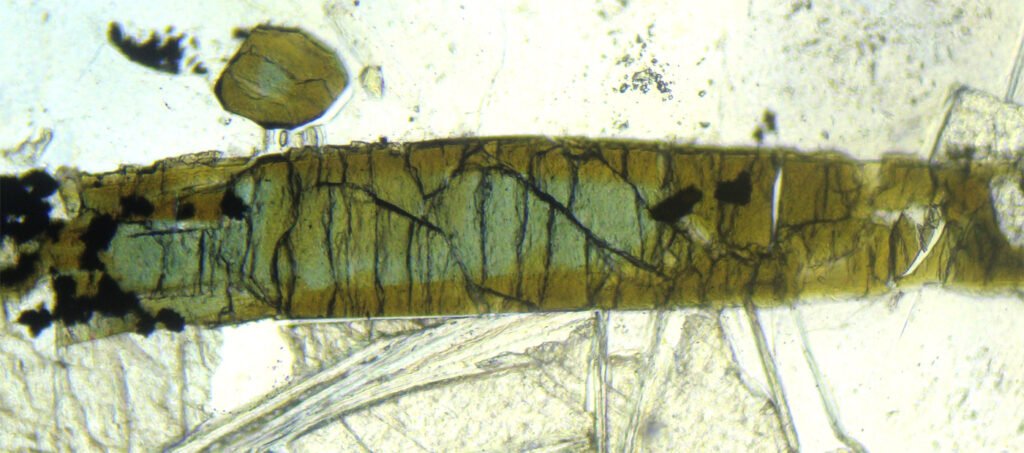
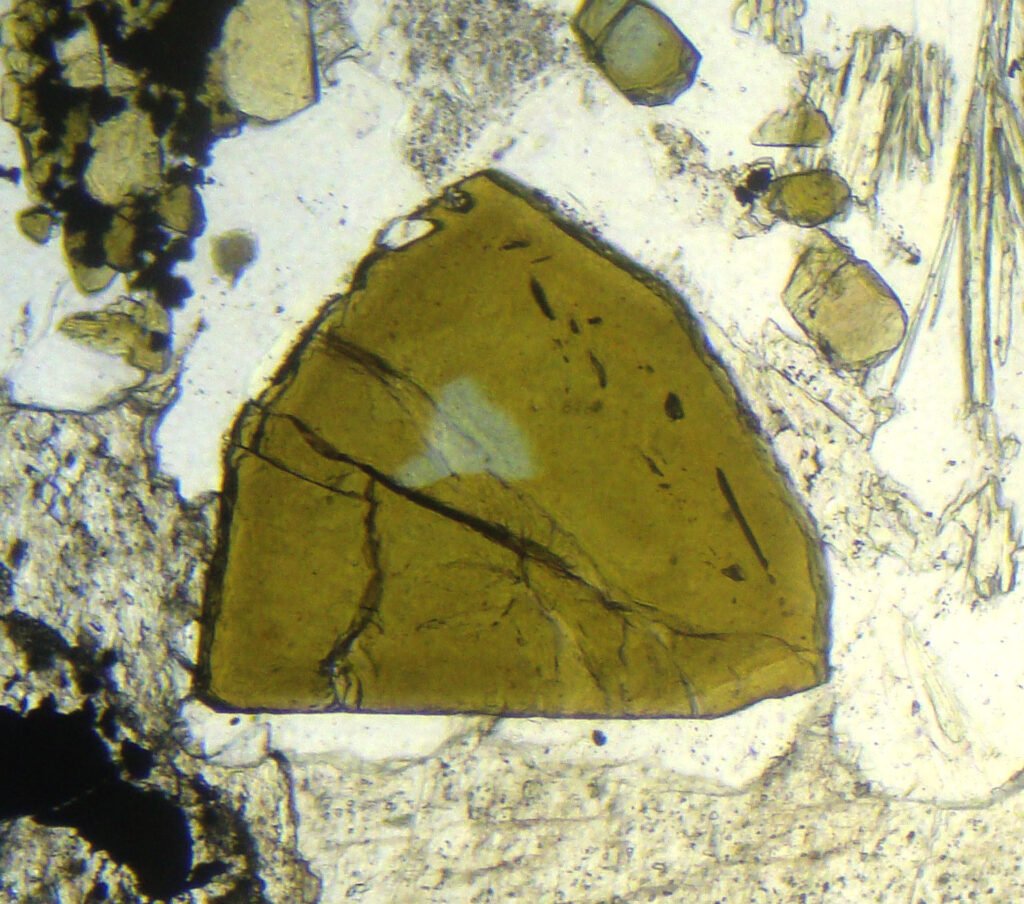
PPL: Strong pleochroism in green (may be in many different colors like yellow, blue, red, black and brown). High relief, cleavage not visible, fractures perpendicular to elongation. Basal sections (without pleochroism!) triangular or pseudo-hexagonal.
XPL: Paralell extinction, ES(-), frequent zonation. U(-), can have 2V of 5º.
Images: zoned longitudinal and basal sections of tourmaline.
PPL: Very deep colors with pleochroism in brownish-green, blue-gray to brownish-green. It may look like an opaque mineral! Two cleavages at 56º/124º in the basal sections. Various habits.
XPL: Colors are almost the same. 5-9º extinction, ES(-), twins and zoning possible, B(+/-).
Rather rare monoclinic sorosilicate, typical of specific metamorphic rocks.
PPL: Weak to moderate pleochroism between colorless, yellowish, light green and blue-green. Zoning common. Lamellar, acicular or fibrous. Medium-high relief, 2 good cleavages.
XPL: 1st and 2nd order colors or anomalous (indigo blue or leather brown). SE(+/-), Twins possible. B(+), 2V 7º-110º.
Rare triclinic nesosilicate of specific types of metamorphic rocks.
PPL: Moderate to strong pleochroism between green, green-gray, colorless, bluish, yellow-green. Hourglass zoning possible. High relief, cleavage not visible.
XPL: Low 1st order colors or anomalous. Extinction tends to oblique. ES(-), twins common, B(+/-).