Rare monoclinic sorosilicate of Mn-rich metamorphic rocks.
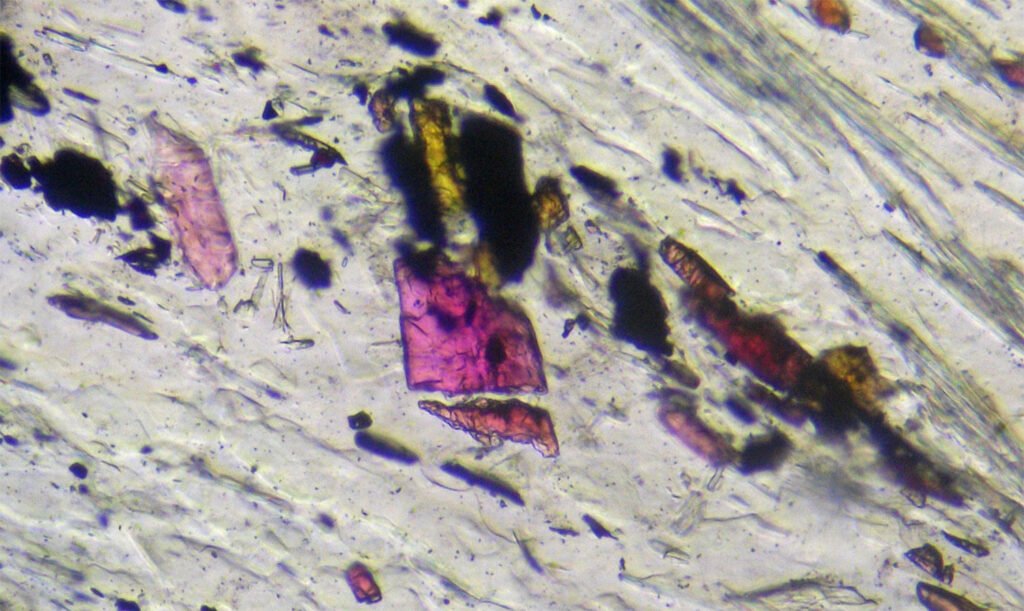
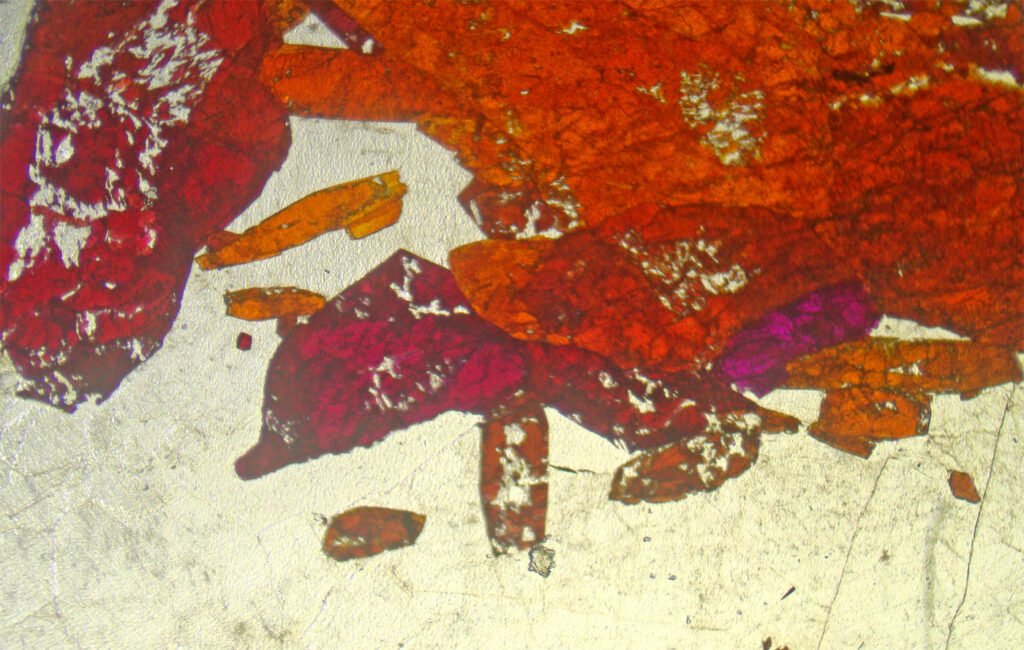
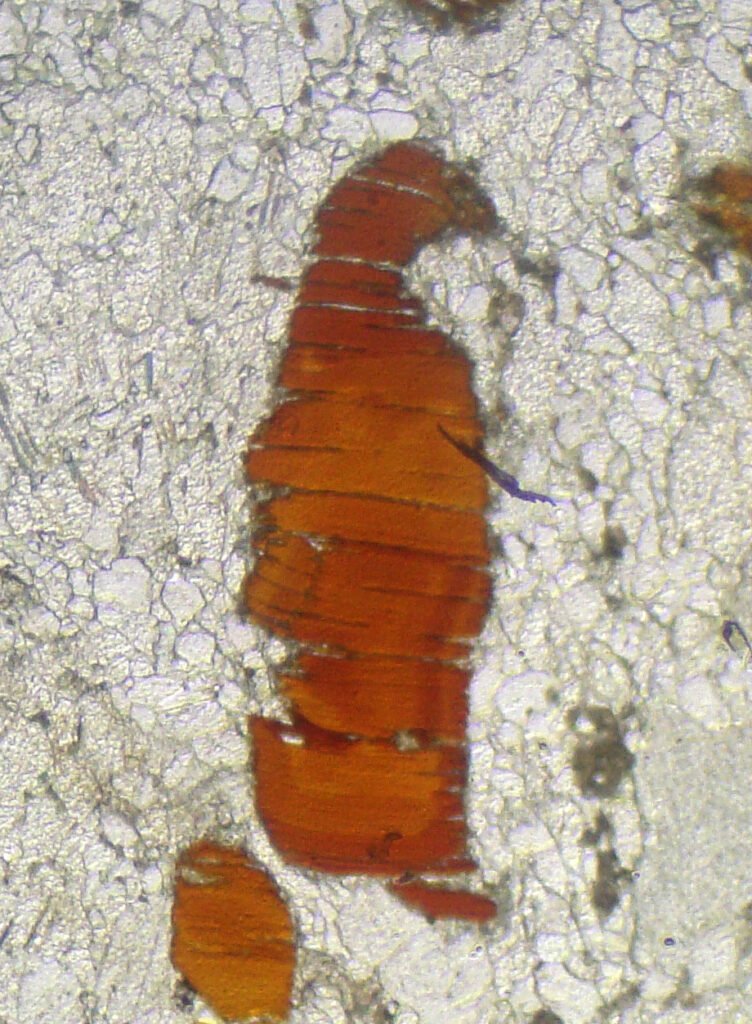
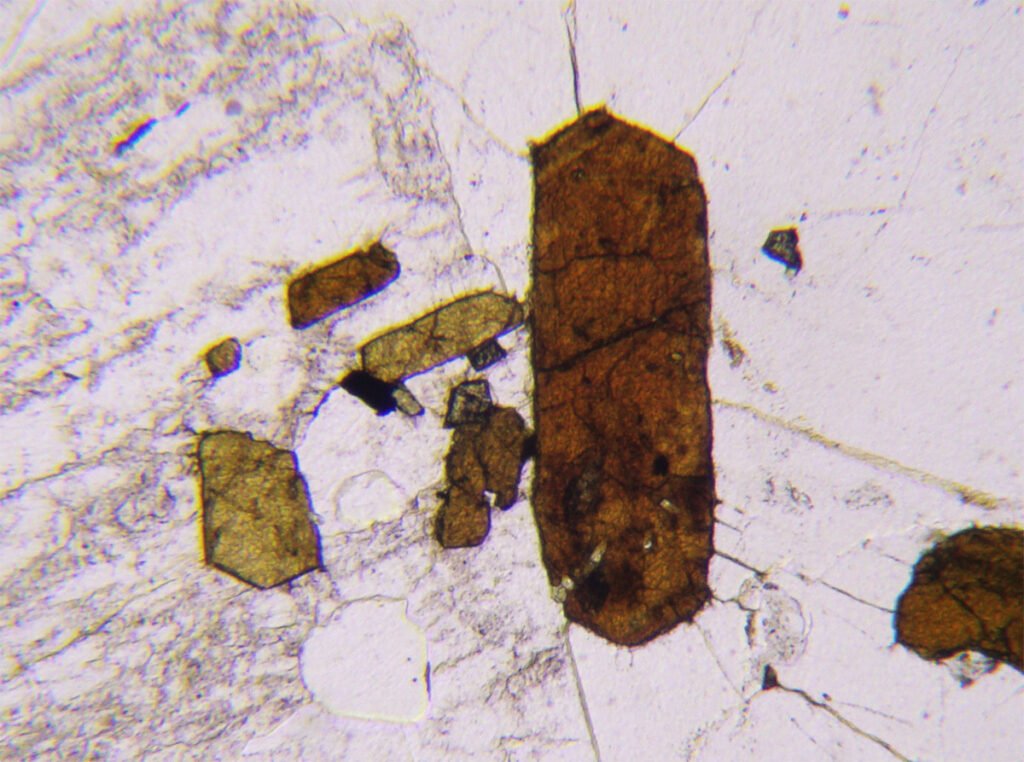
PPL: Strongly pleochroic in red (may be pink, yellow, orange or violet). High to extremely high relief, 1 perfect cleavage. Long prisms, sections with 6 sides.
XPL: Intense colors, masked by the red color of the mineral. 0-34º or parallel extinction. ES(+/-), B(+/-).
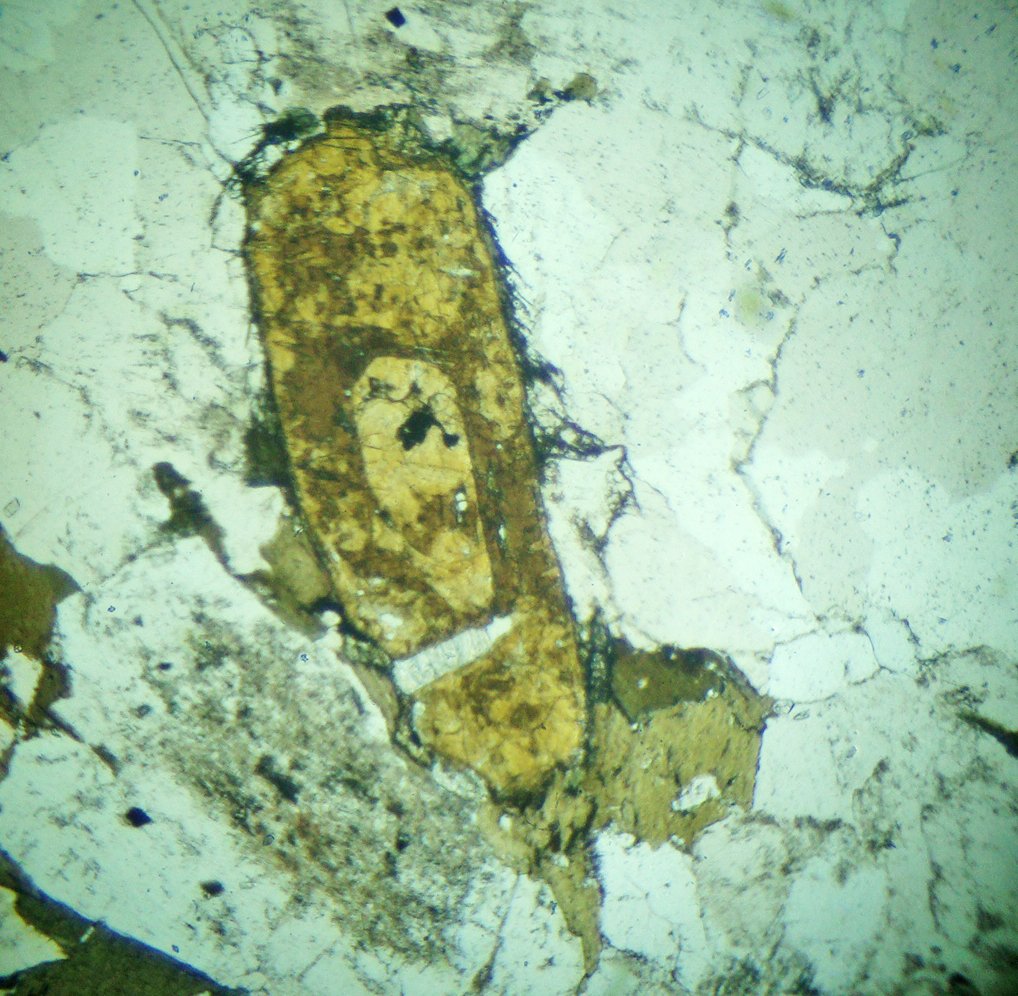
PPL: Strongly pleochroic in red, may be brown, greenish, reddish or yellow. Medium relief. One perfect cleavage if not altered.
XPL: 3rd and 4th order colors, masked by the strong own mineral color. Extinction paralell and mottled. ES(+), B(-) with 2V from 0 to 35º (usually difficult to determine).
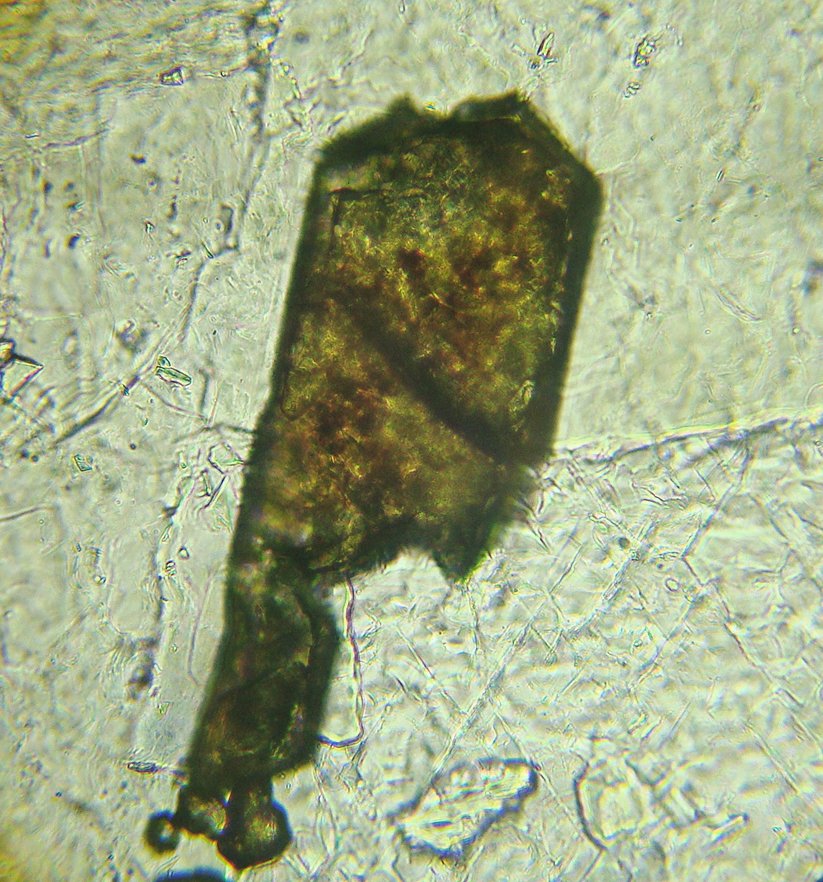
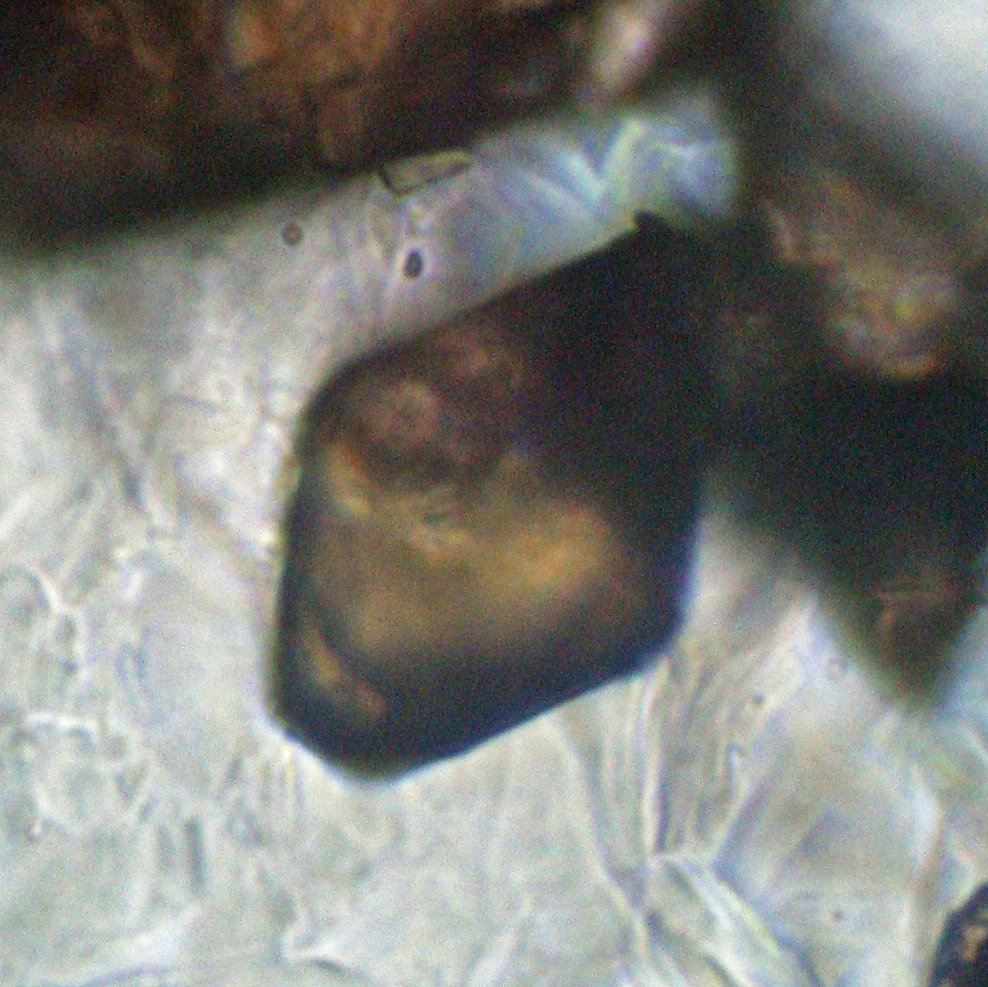
Less common trigonal cyclosilicate of the Tourmaline Group (>40 different minerals).
PPL: Strong pleochroism in red-orange (may be in many different colors like yellow, blue, green, black and brown). High relief, cleavage not visible, fractures perpendicular to elongation. Basal sections (without pleochroism!) triangular or pseudo-hexagonal.
XPL: Paralell extinction, ES(-), frequent zonation. U(-), can have 2V of 5º.
Most common iron hydroxide, occurs in many types of rocks.
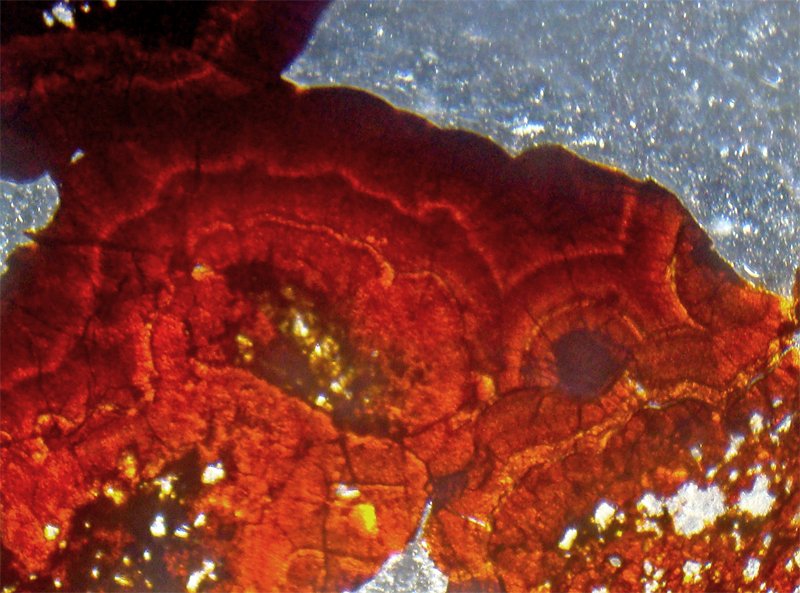
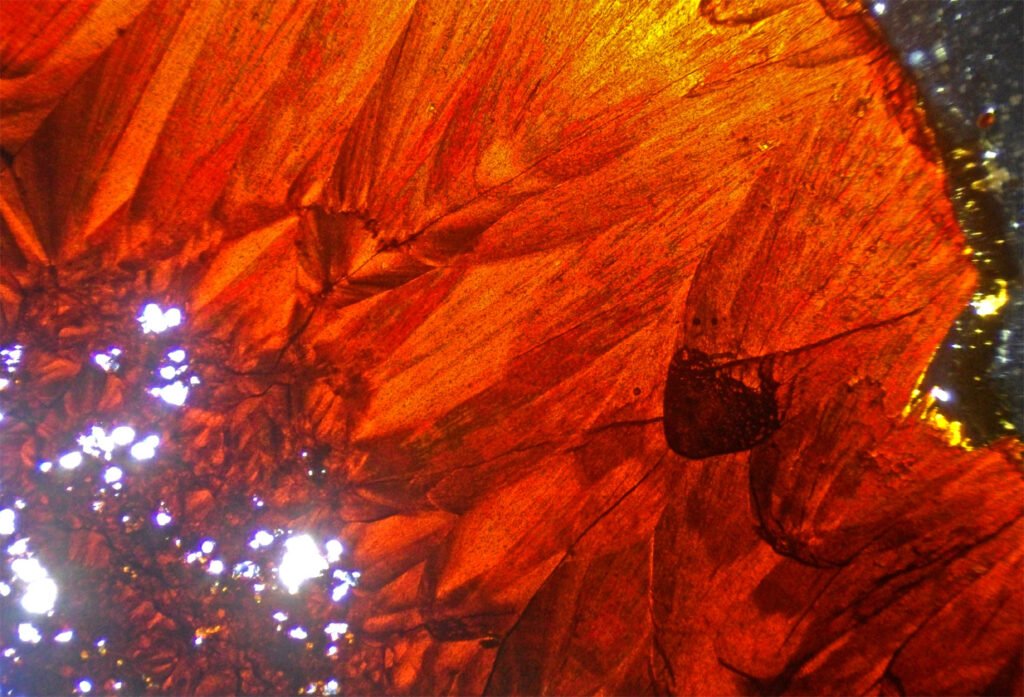
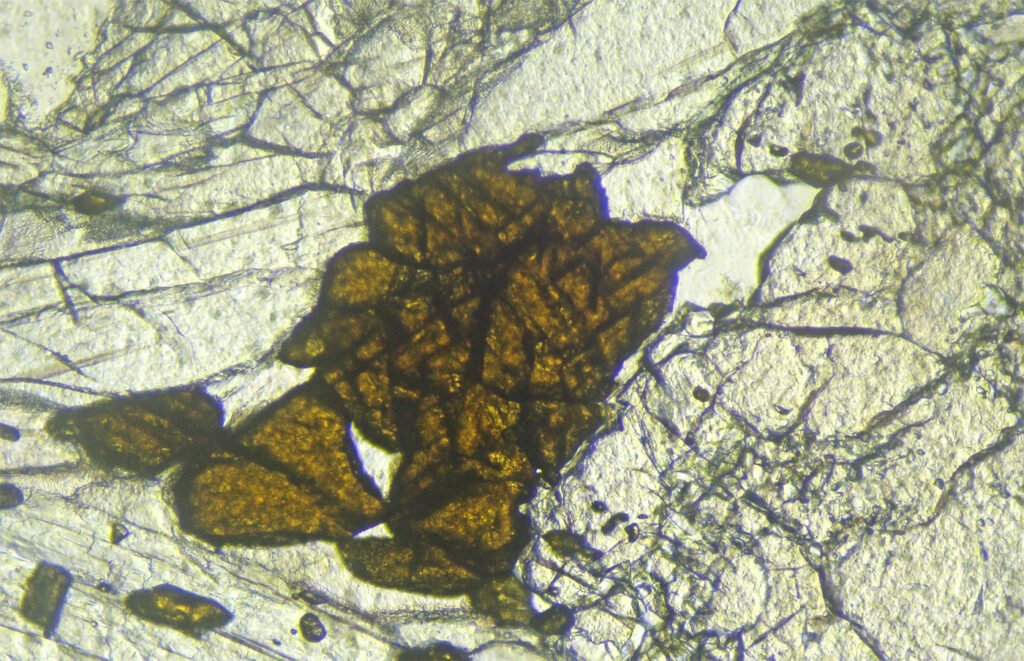
PPL: Strong orange colors, can be red-brown. Pleochroism of variable intensity. It forms spherulites or radiated fibrous aggregates. The structure often resembles that of chalcedony.
XPL: The color is almost the same. It has high birefringence and parallel extinction.
Very common tetragonal Ti-oxide, accessory in many types of rocks.
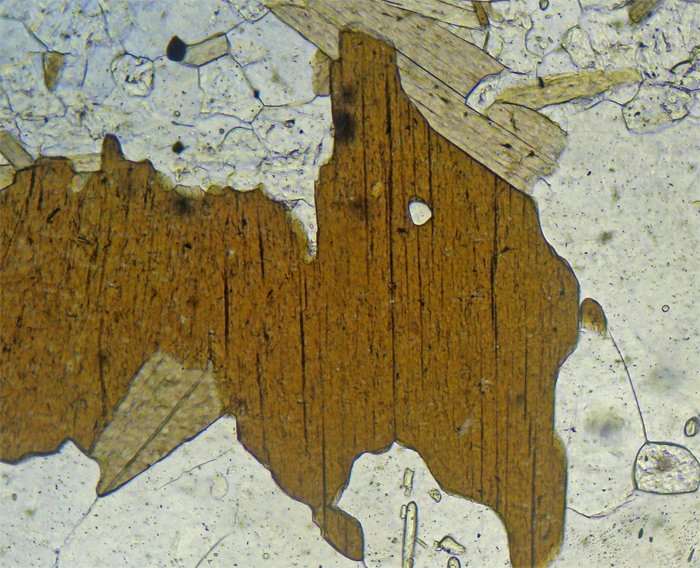
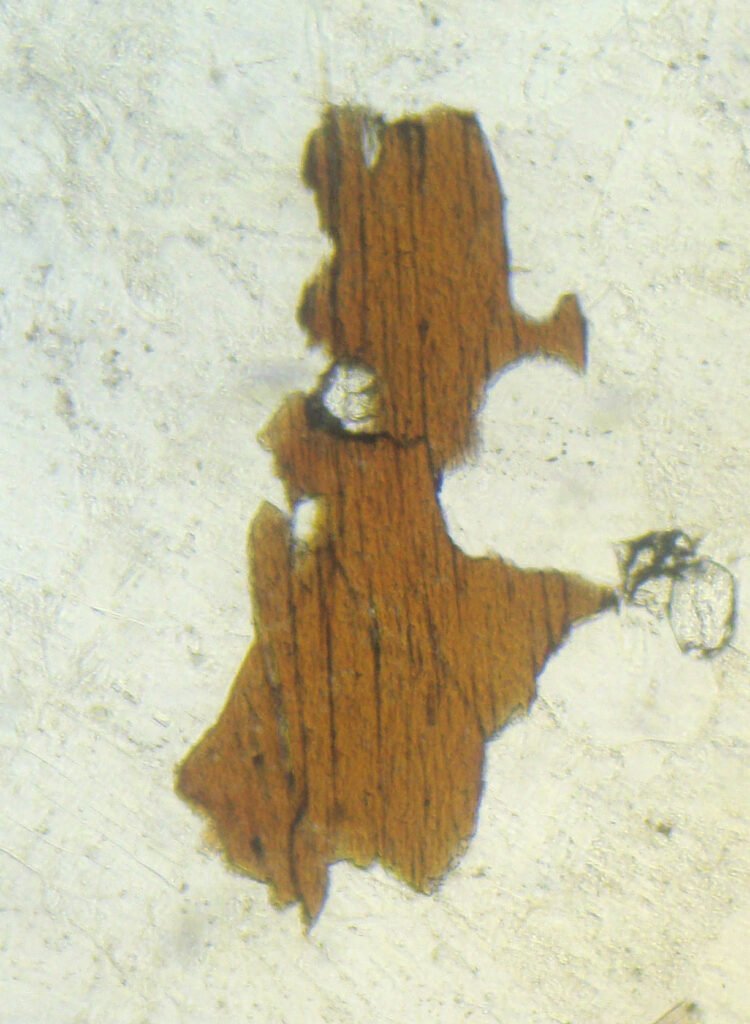
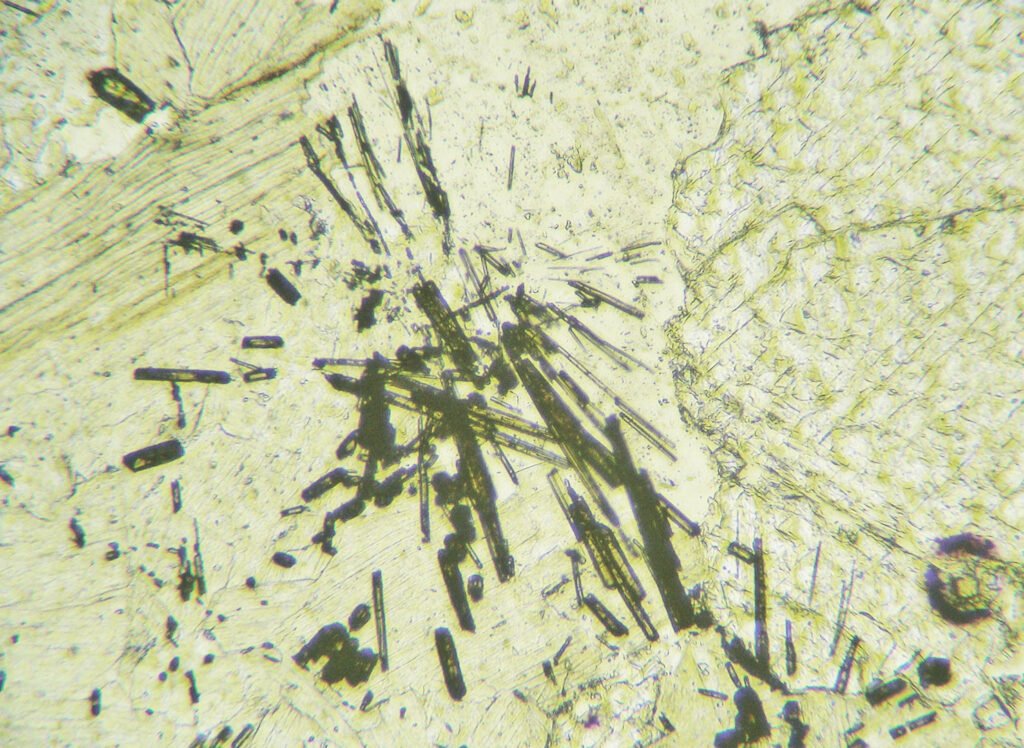
PPL: Weakly pleochroic in red-brown to yellow-brown. Very high relief, granular or acicular crystals. The color is almost the same in PPL and XPL (like titanite).
XPL: Parallel extinction, ES(+), twins possible. No zoning, no alteration, dark halos possible. U(+).
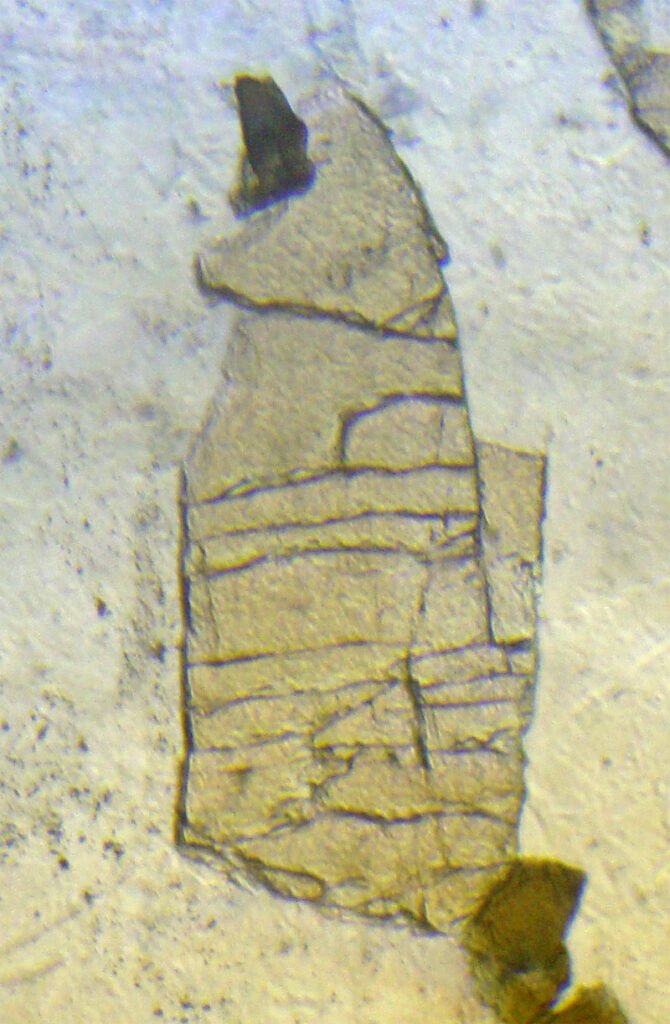
Common tetragonal accessory Ti-oxide in magmatic and metamorphic rocks, easily goes unnoticed.
PPL: Varied and well-defined colors: yellow, yellow-brown, brown, dark blue, pale green, black. Weak pleochroism possible, stronger if colors are more intense. Very high relief.