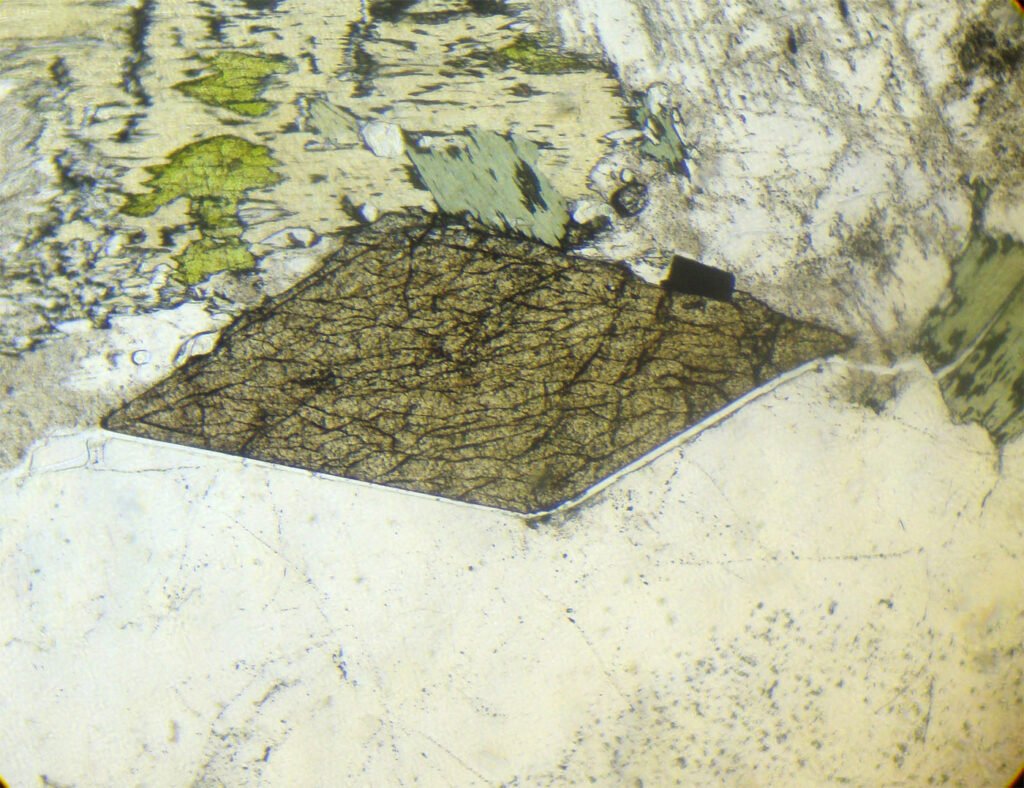
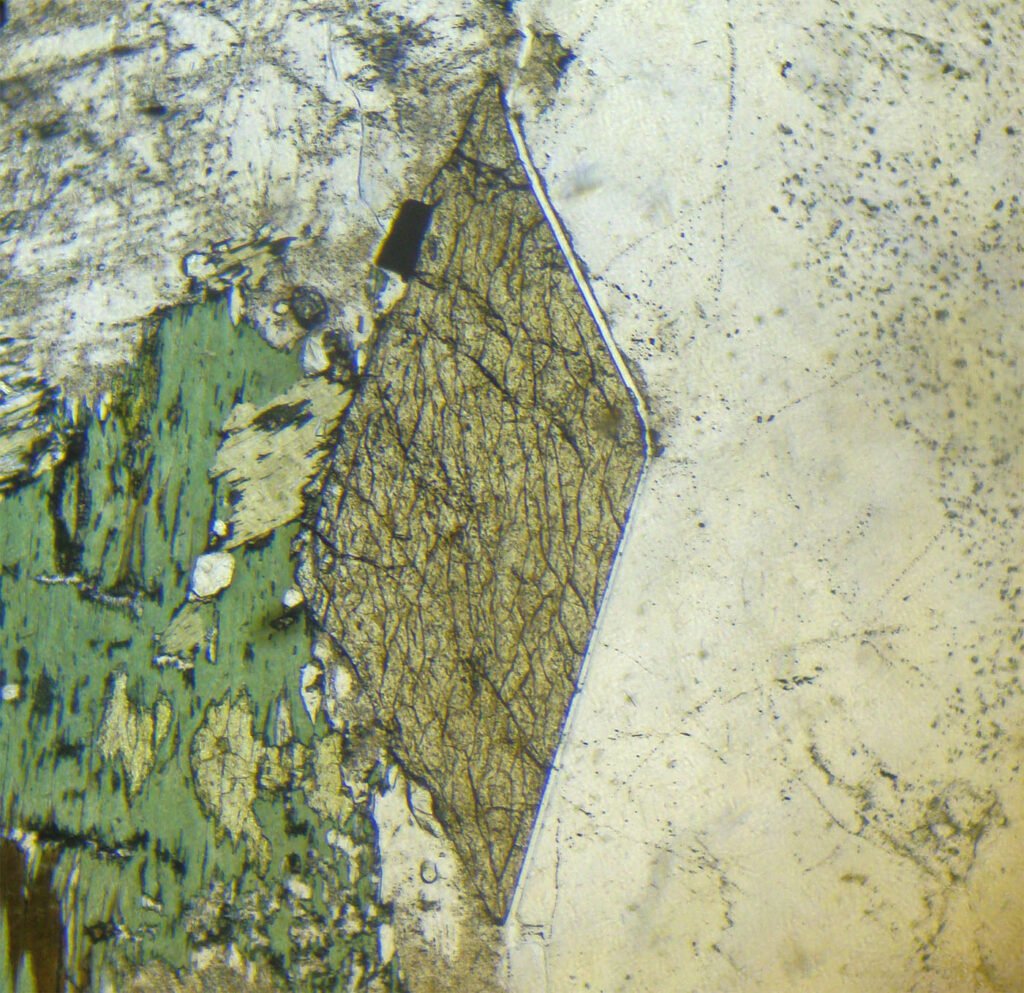
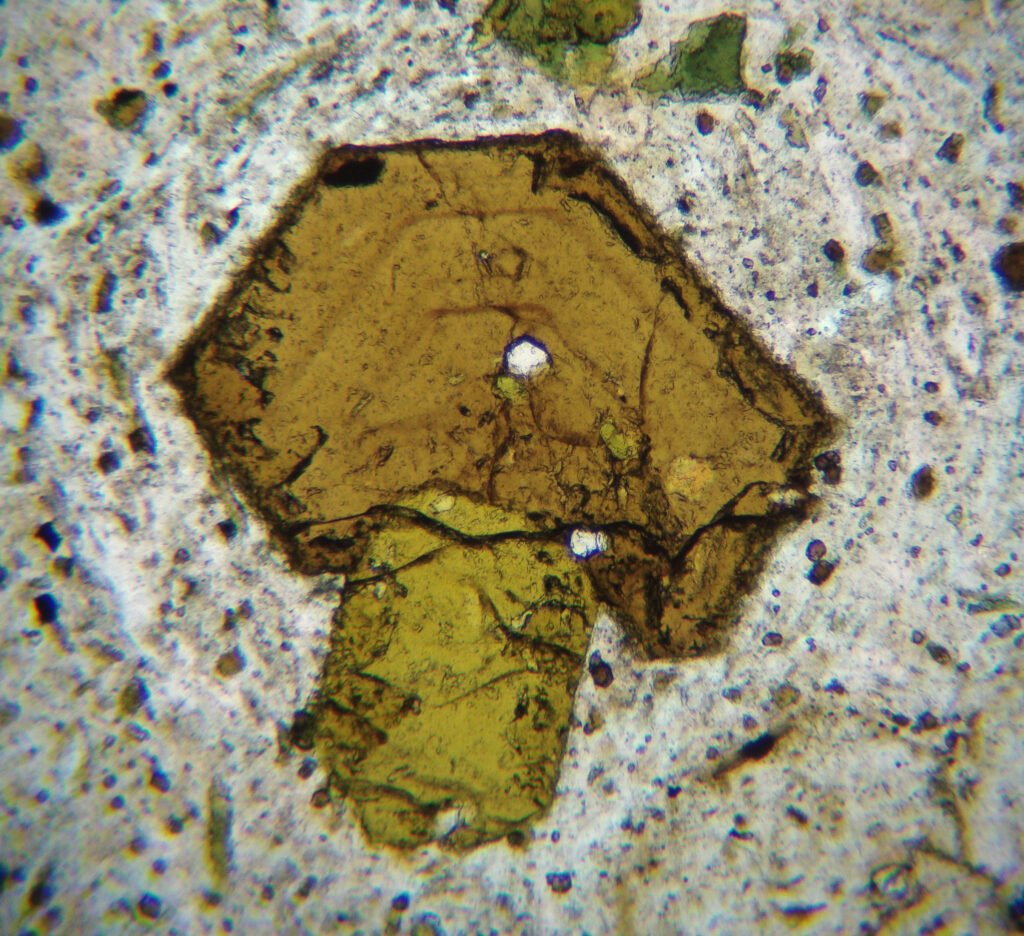
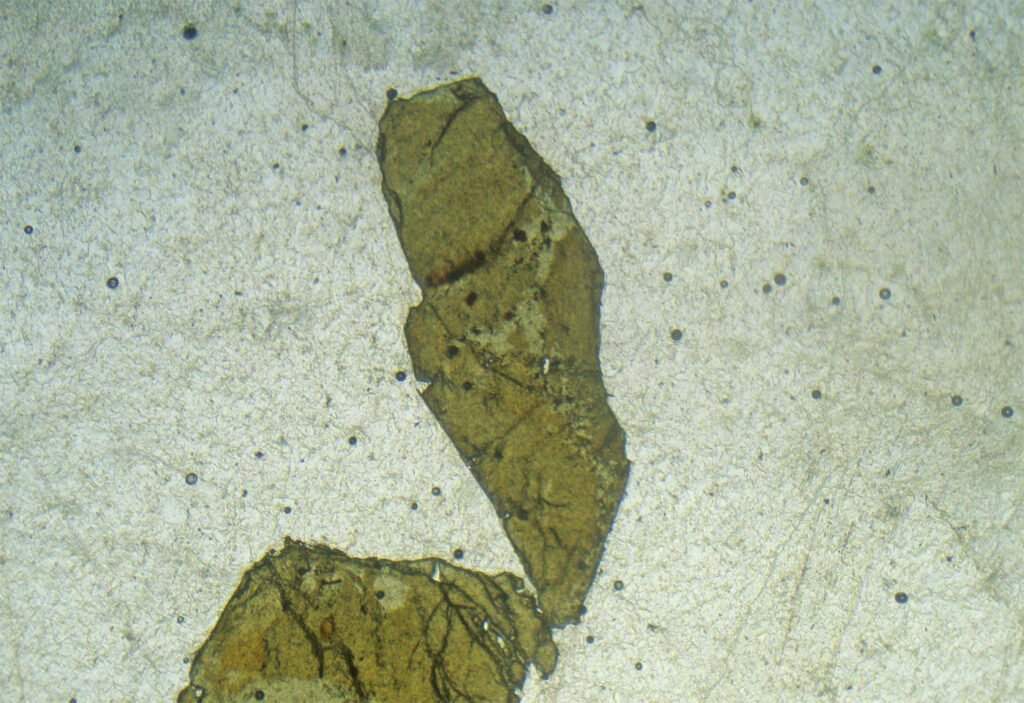
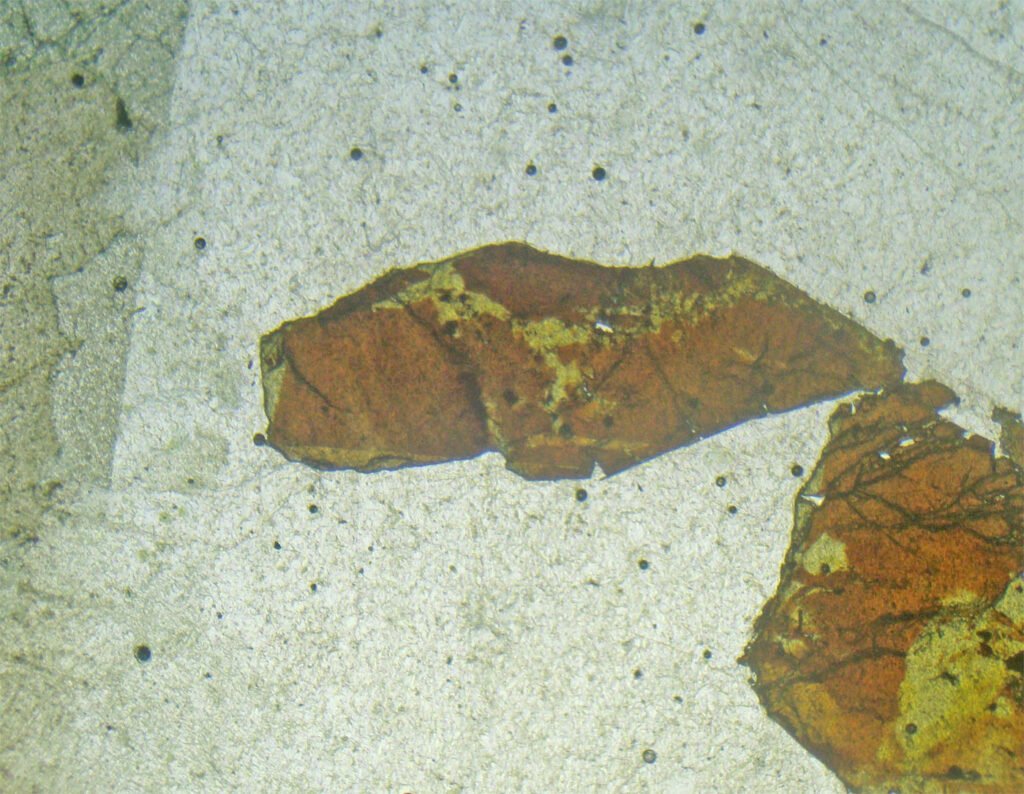
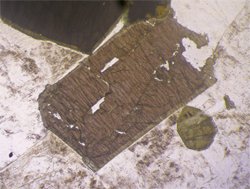
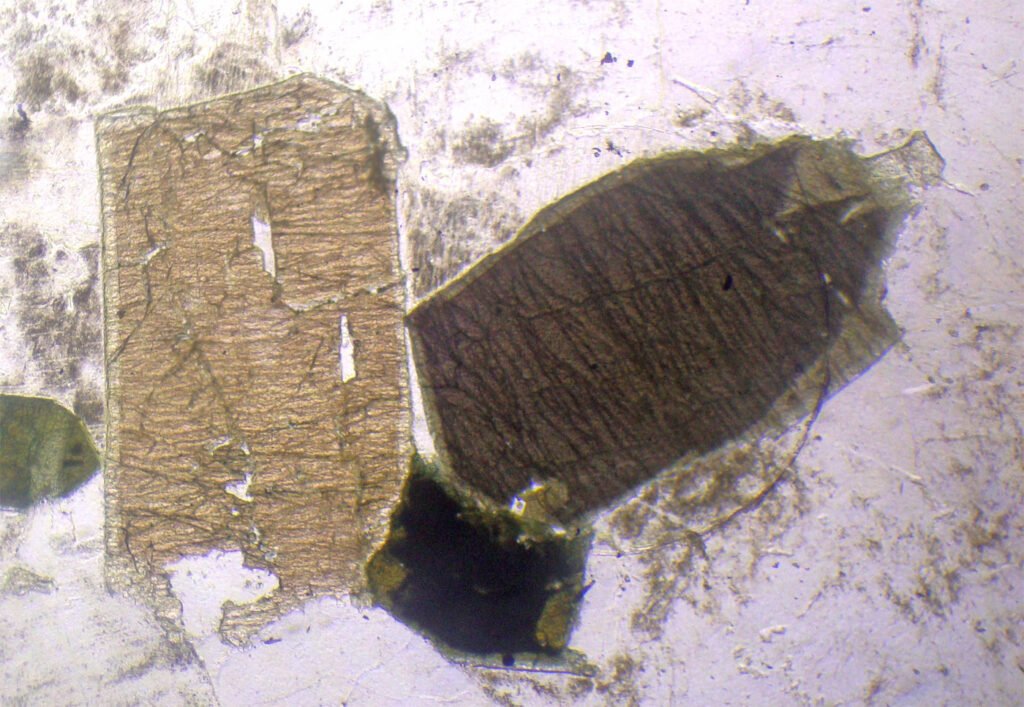
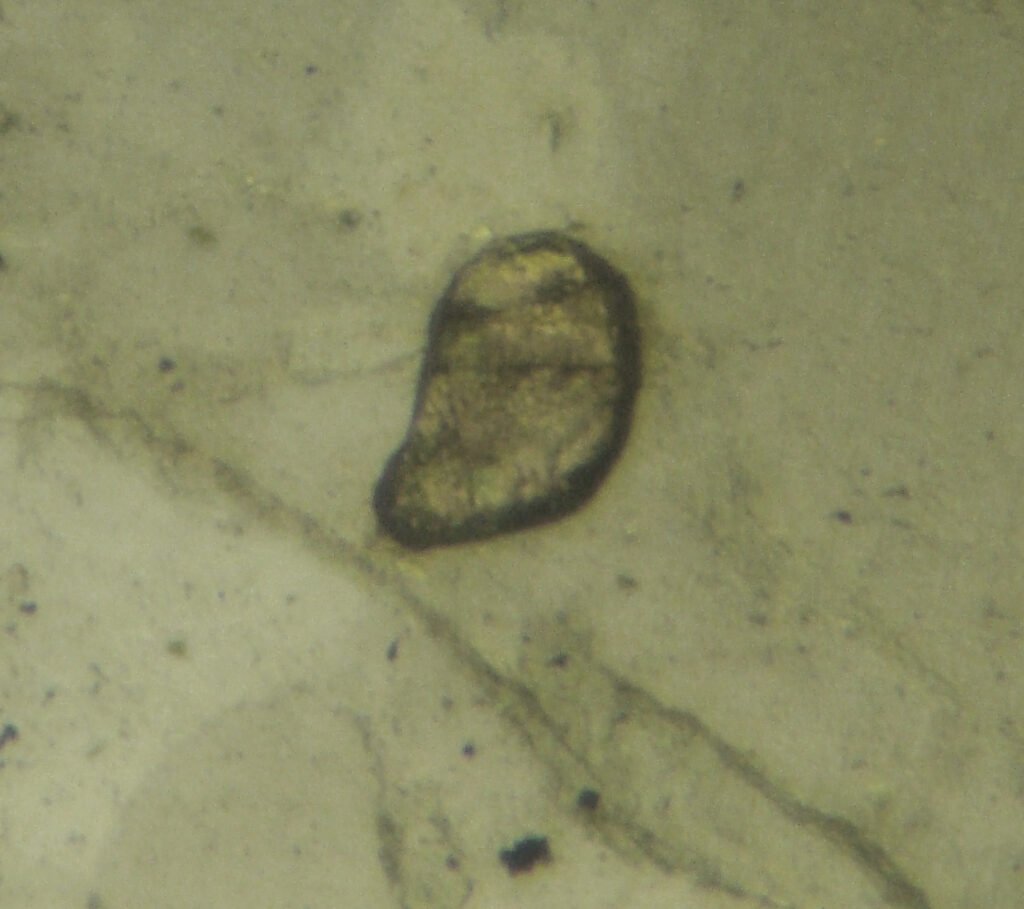
Very common monoclinic nesosilicate found in many types of rock.
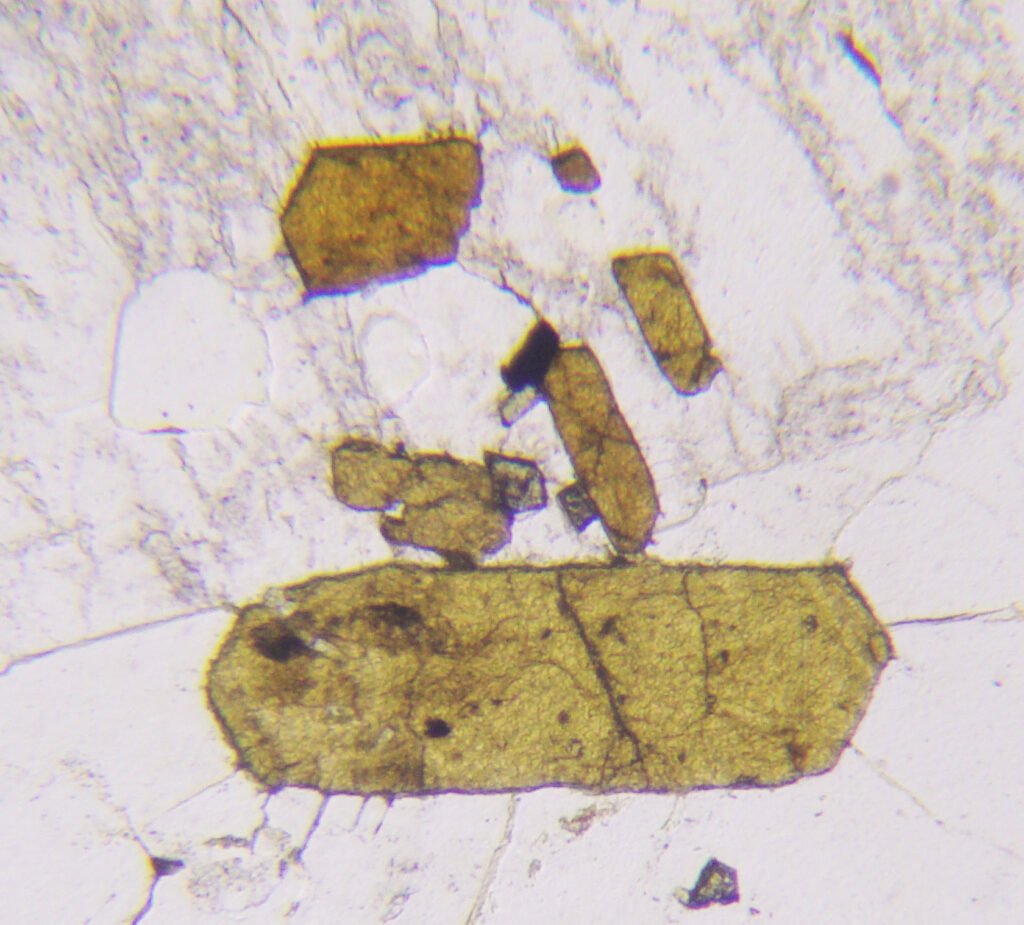
PPL: Brown color, may have gray or yellow tones, may have weak pleochroism. Granular, only sometimes with rhombic basal sections as in the images below. High relief. Fractured, 1 good cleavage, often absent.
XPL: Its color is almost the same as in PPL. Zoning and twins occur. B(+), (2V=17-56º). The strong color make it difficult to see the interference figure.
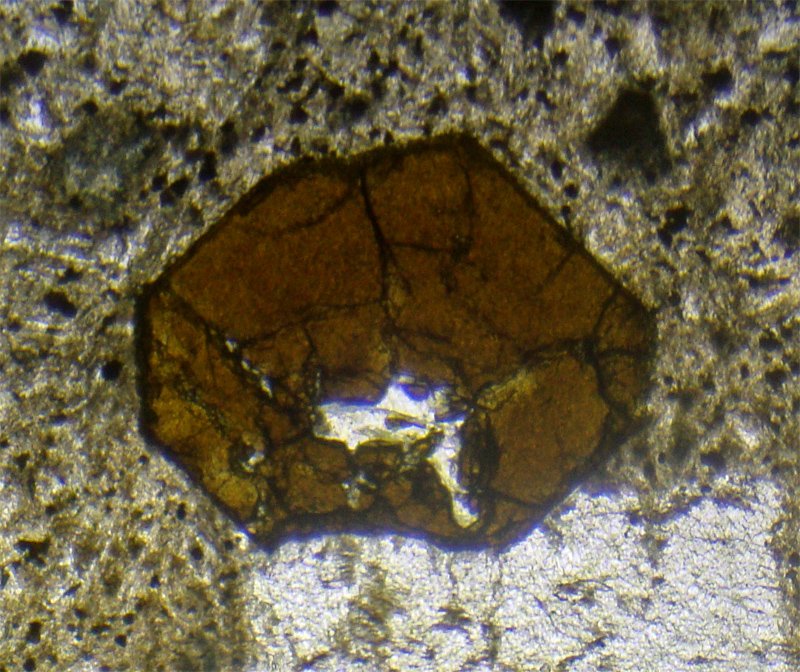
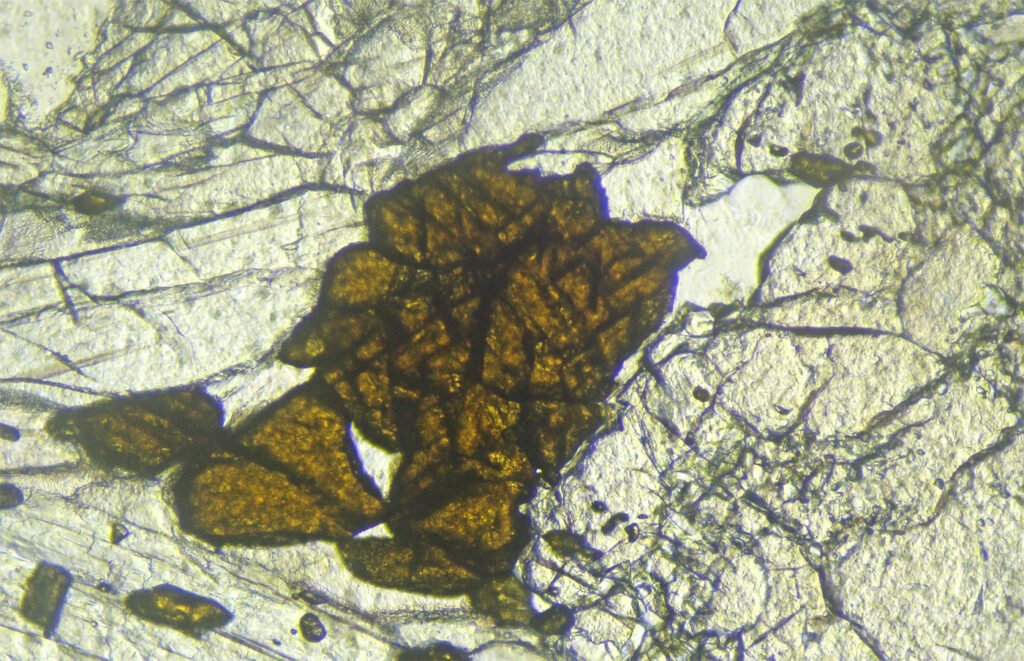
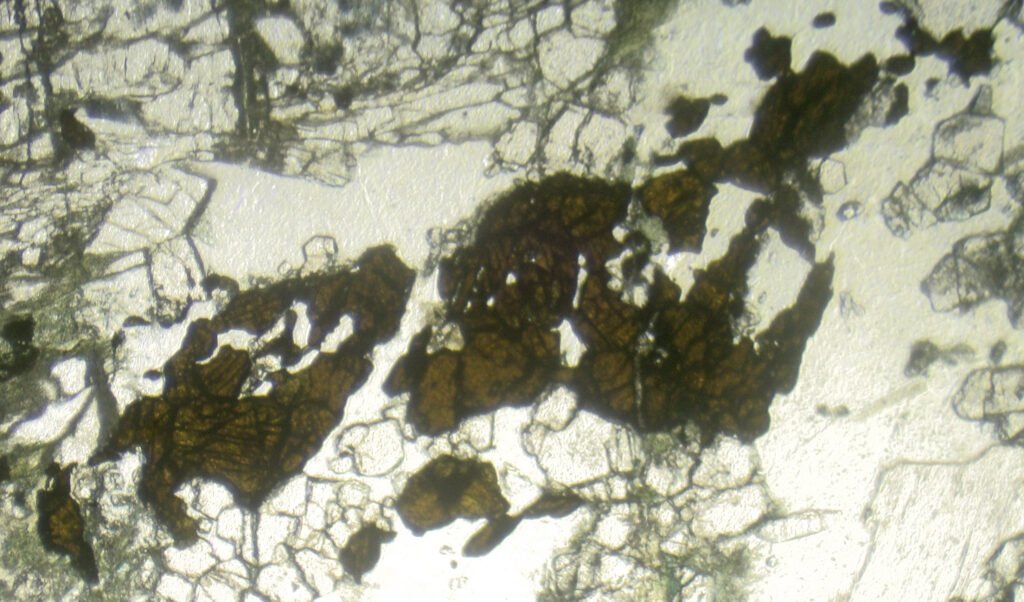
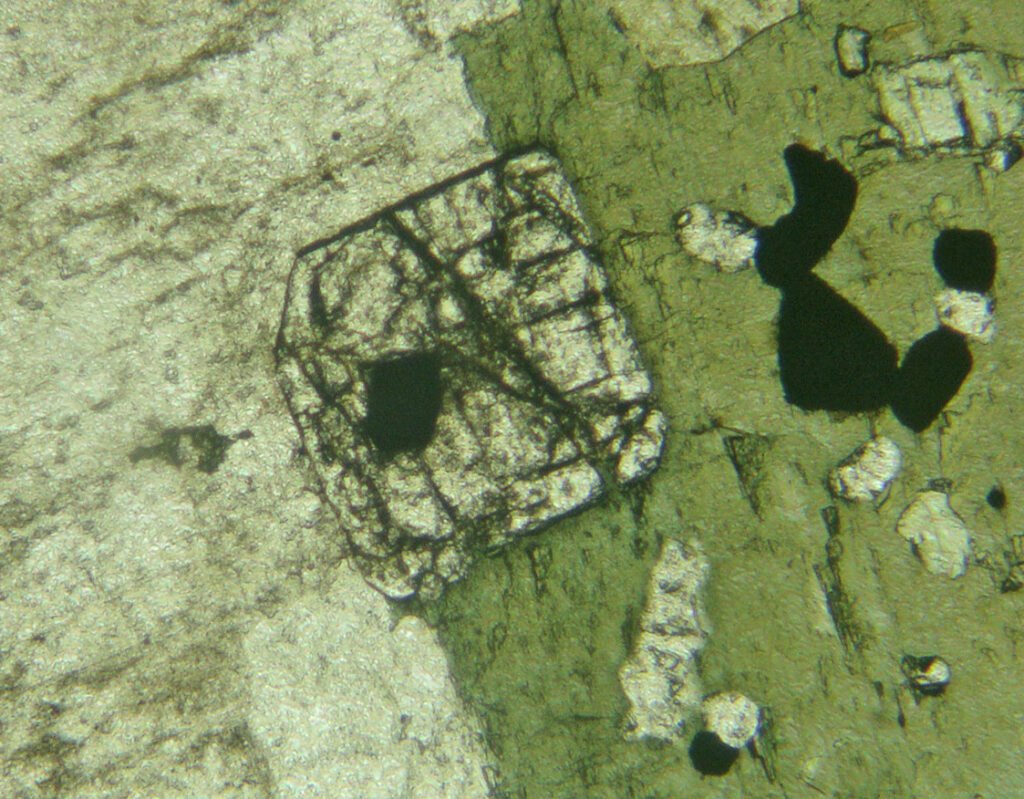
Cubic garnet exclusive to alkaline volcanic rocks.
PPL: Strong brown color, may suggest pleochroism, but does not. Mineral generally in polygonal grains of high relief, without cleavage. May have inclusions.
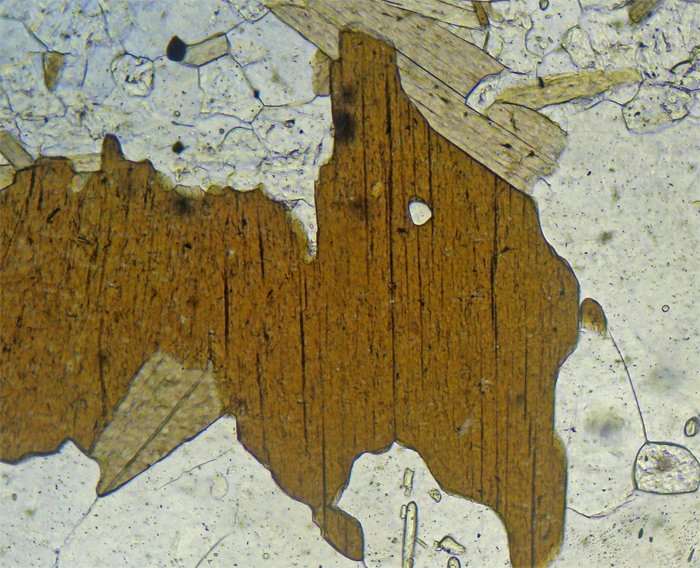
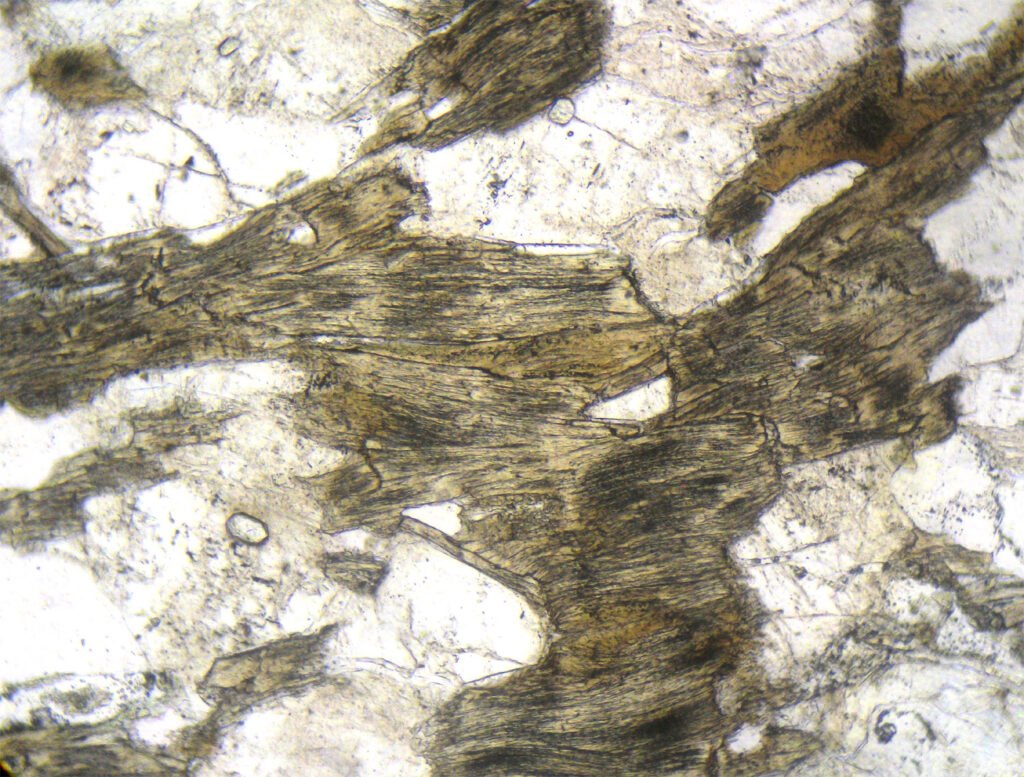
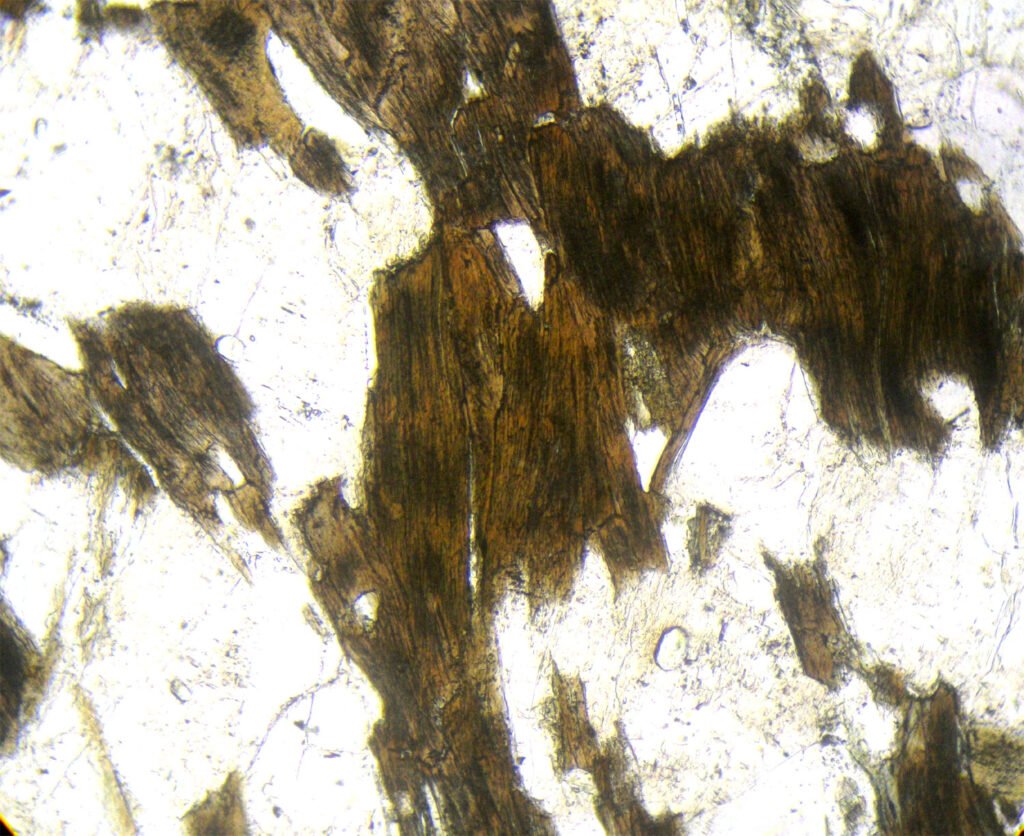
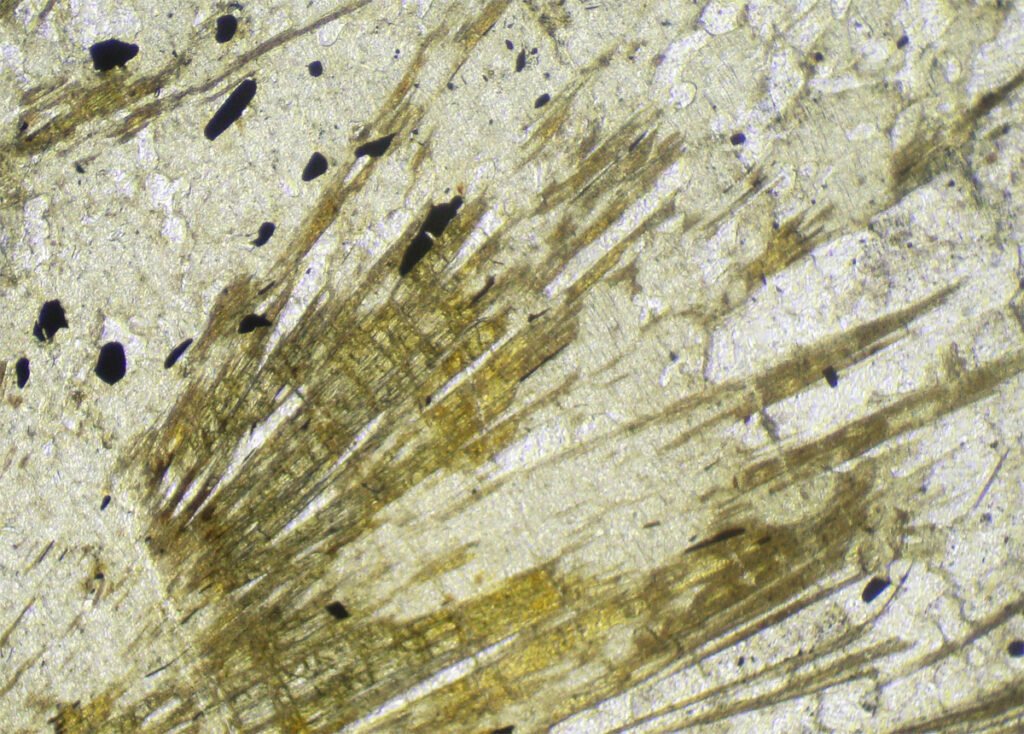
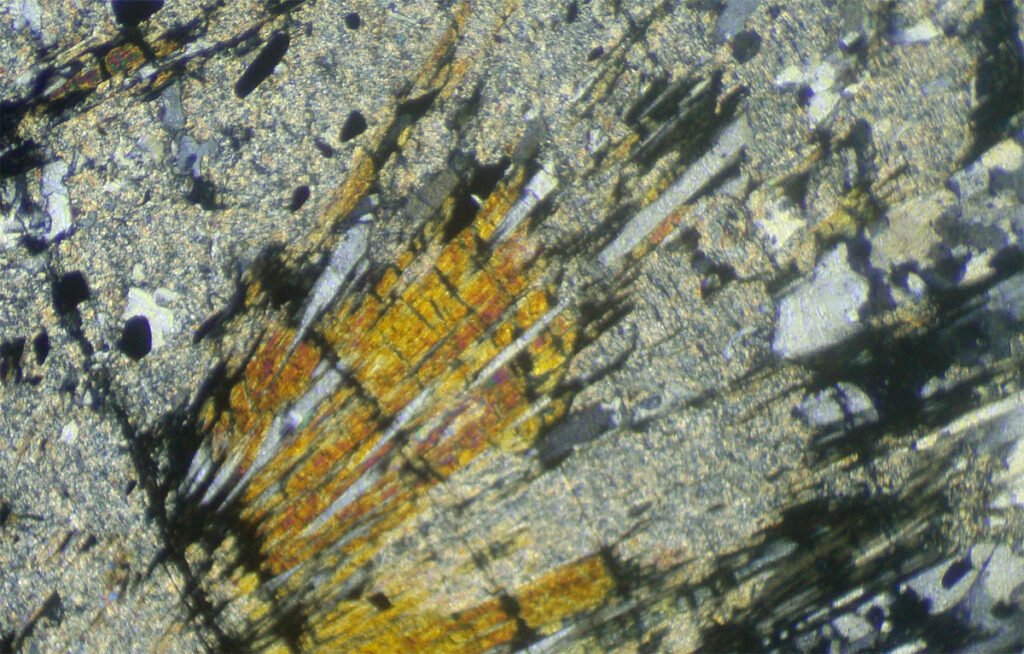
Rarer triclinic phyllosilicate of some specific metamorphic rocks.
PPL: Strong pleochroism in various shades of yellow and brown to greenish. Medium-high relief, 1 perfect cleavage. Lamellae, fibers and needles.
XPL: Intense 2nd to 4th order colors. Paralell extinction. B(-) with 2V from 0º (pseudo-uniaxial) to 30º. Looks like biotite, but has no mottled extinction!
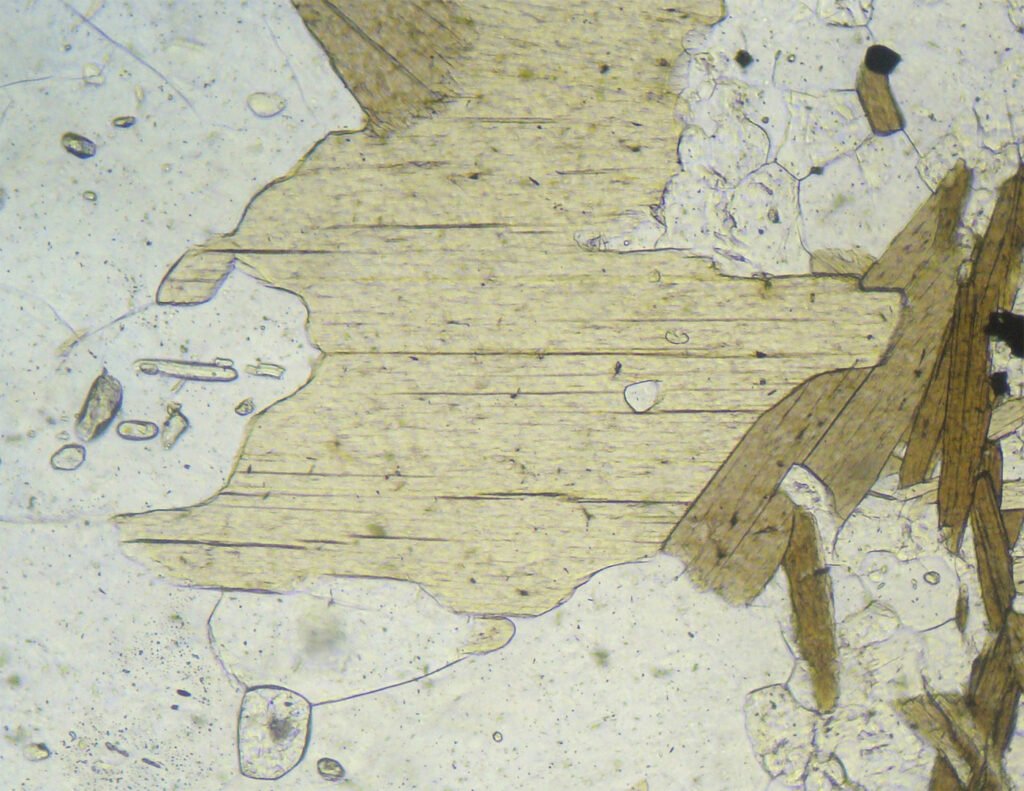
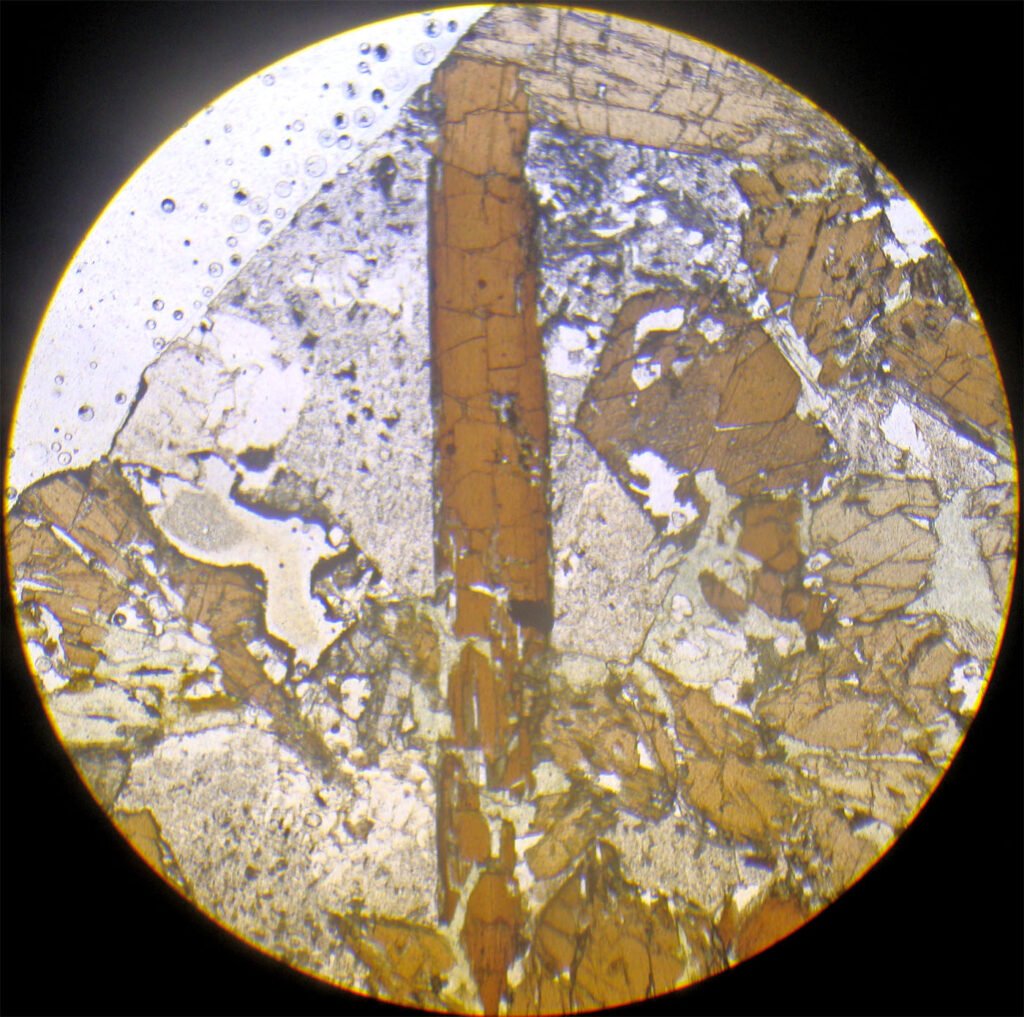
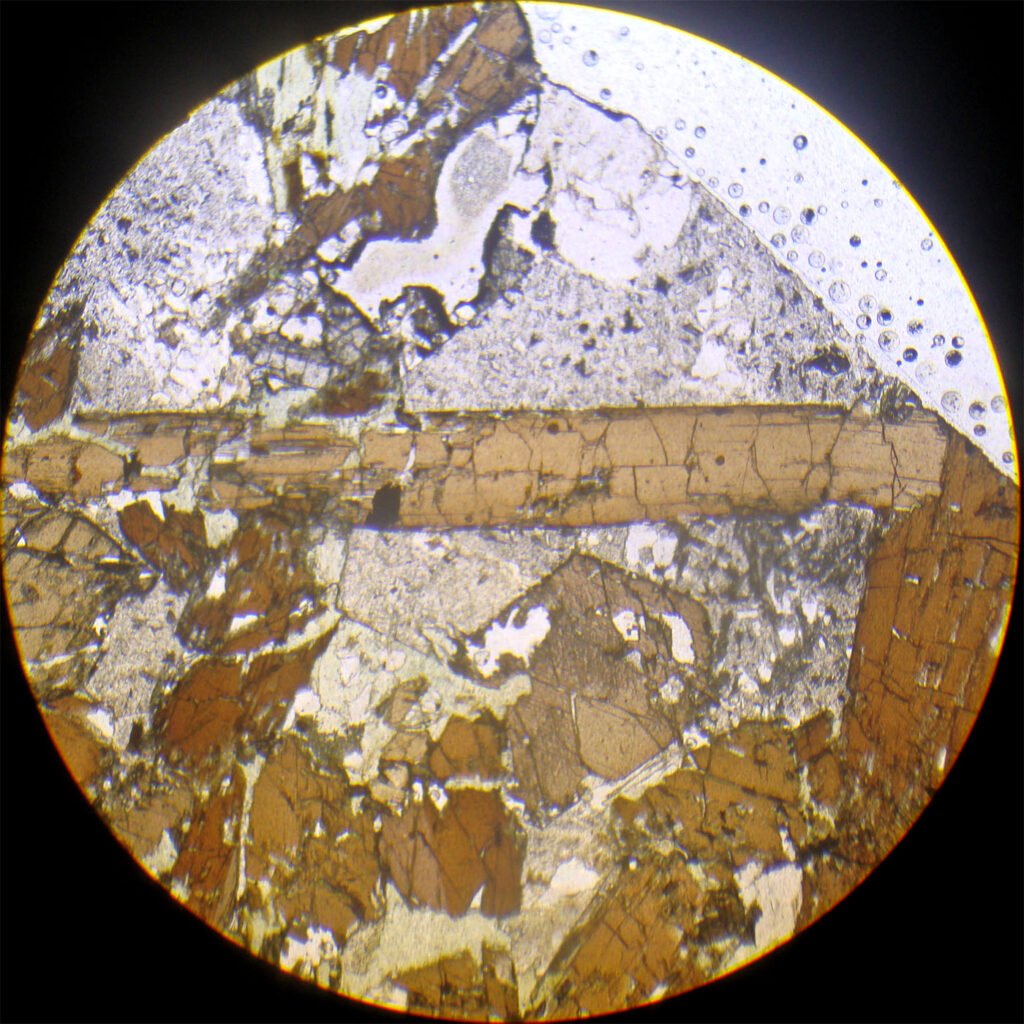
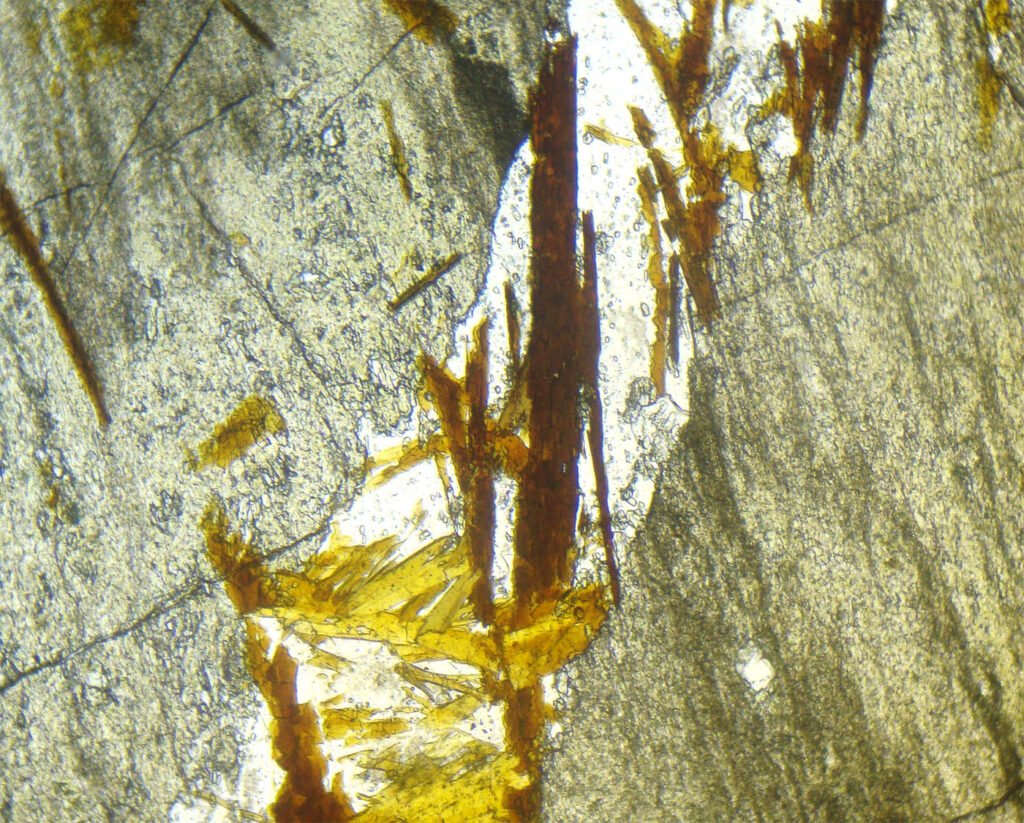
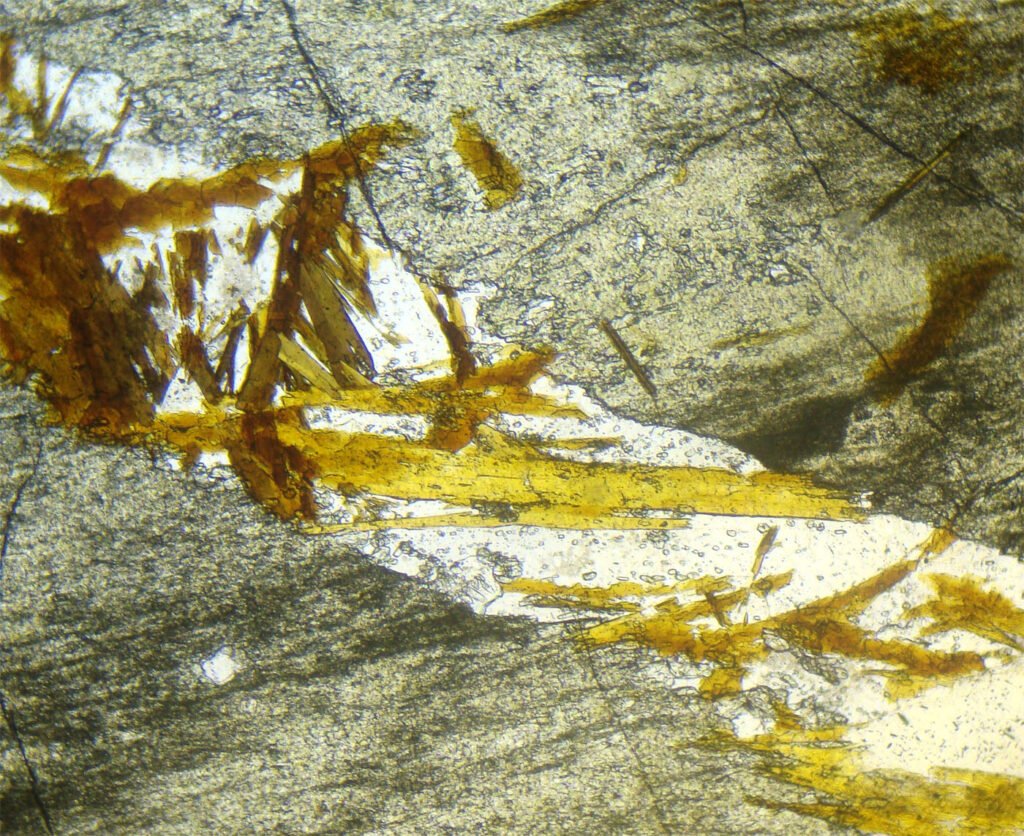
Somewhat rarer monoclinic phyllosilicate, typical mineral of rocks undersaturated in silica and rich in Ca.
PPL: colorless, but may have moderate brown pleochroism in sections perpendicular to (001); sections parallel to (001) almost without pleochroism. Moderate relief, perfect cleavage, lamellar habit.
XPL: Paralell and mottled extinction. ES(+) and B(-) with small 2V, can simulate to be uniaxial. Very similar to biotite.
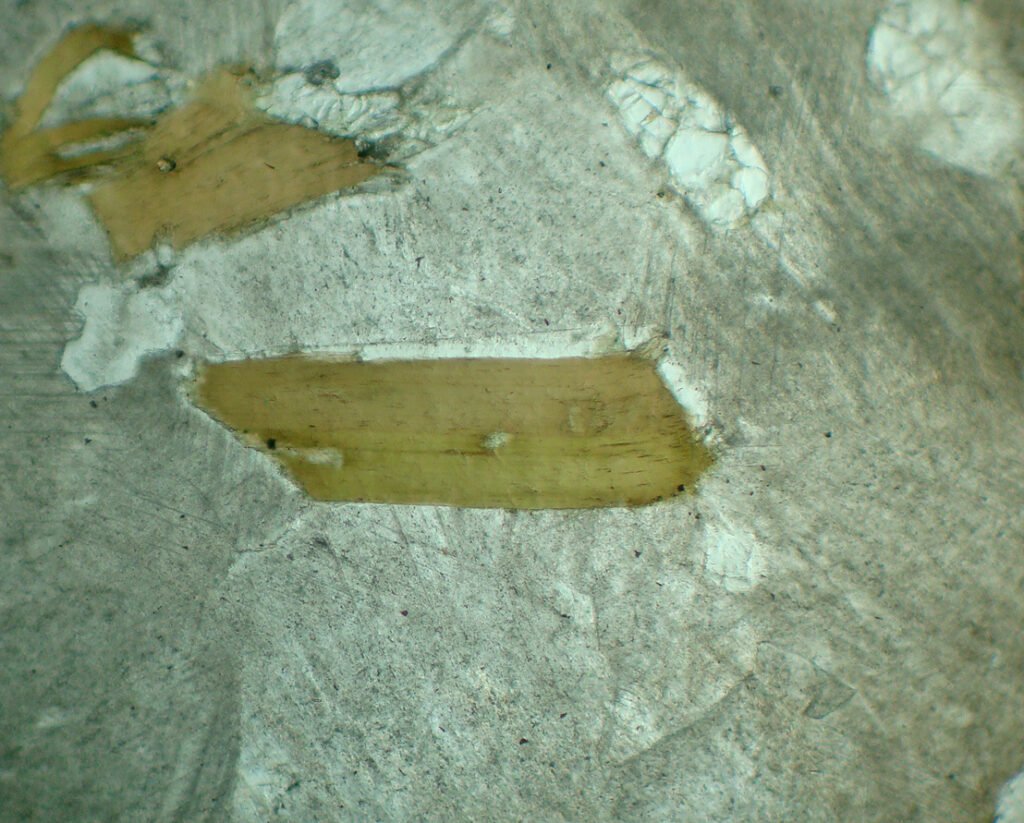
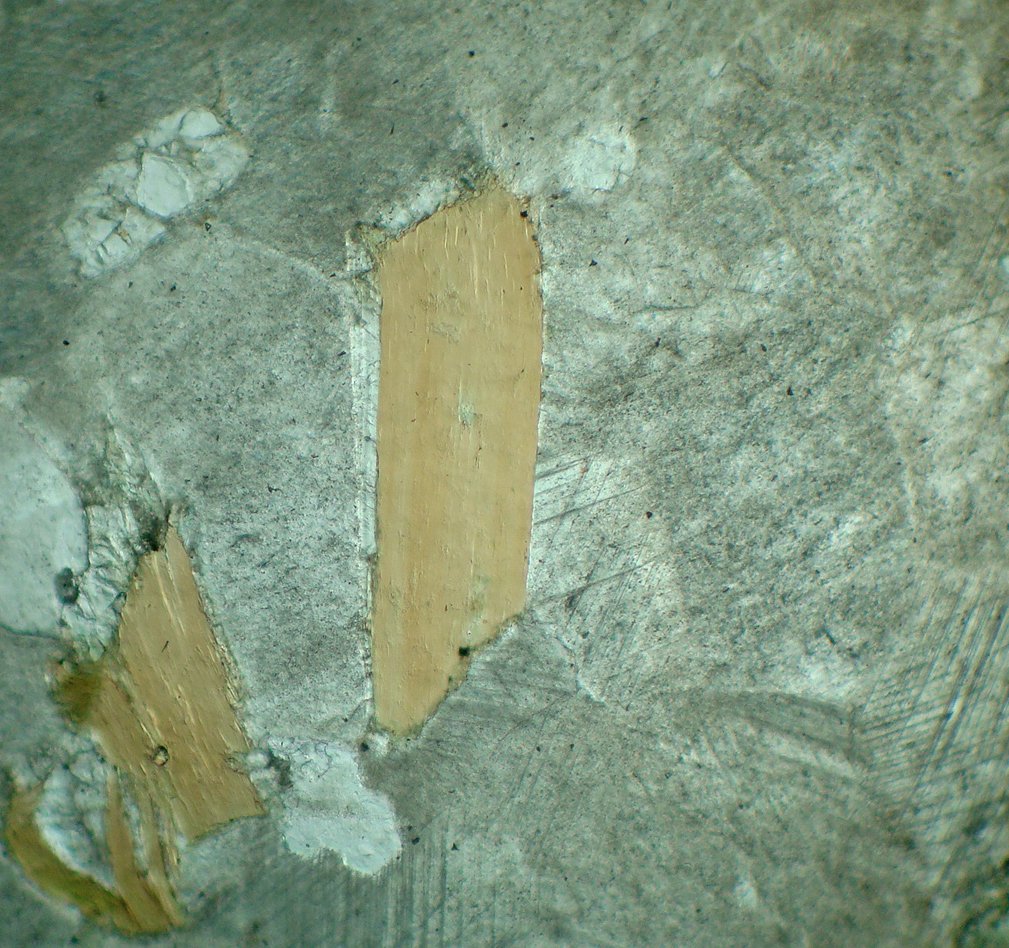
Images: Phlogopite with calcite in PPL, rotated 90 degrees.
Rather common monoclinic sorosilicate, of the Allanite Group.
PPL: Usually pleochroic in red-brown (in green is possible). High relief, no visible cleavage. Anhedral or tabular grains. Zoning common.
XPL: Colors up to 3rd order, masked by the mineral color. Dark halos around the grains may occur. Twins are common. B(-/+). Similar to brown hornblende. May be metamict (almost isotropic).
Relatively rare tetragonal Sn-oxide, occurs associated with granites.
PPL: Weak to strong pleochroism in brownish and reddish (may be orange or green). Very high relief, cleavage not visible.
XPL: Its own color masks the very high interference colors. Extinction tends to parallel. ES(+), twins are very common. U(+), can have anomalous 2V up to 38º.
Very common tetragonal Ti-oxide, accessory in many types of rocks.
PPL: Weakly pleochroic in red-brown to yellow-brown. Very high relief, granular or acicular crystals. The color is almost the same in PPL and XPL (like titanite).
XPL: Parallel extinction, ES(+), twins possible. No zoning, no alteration, dark halos (due to radioactivity) possible. U(+).
Less common trigonal cyclosilicate of the Tourmaline Group (>40 different minerals).
PPL: Strong pleochroism in brown (may be in many different colors like yellow, blue, green, black and red-orange). High relief, cleavage not visible, fractures perpendicular to elongation. Basal sections (without pleochroism!) triangular or pseudo-hexagonal, if idiomorphic.
XPL: Paralell extinction, ES(-), frequent zonation. U(-), can have 2V of 5º.
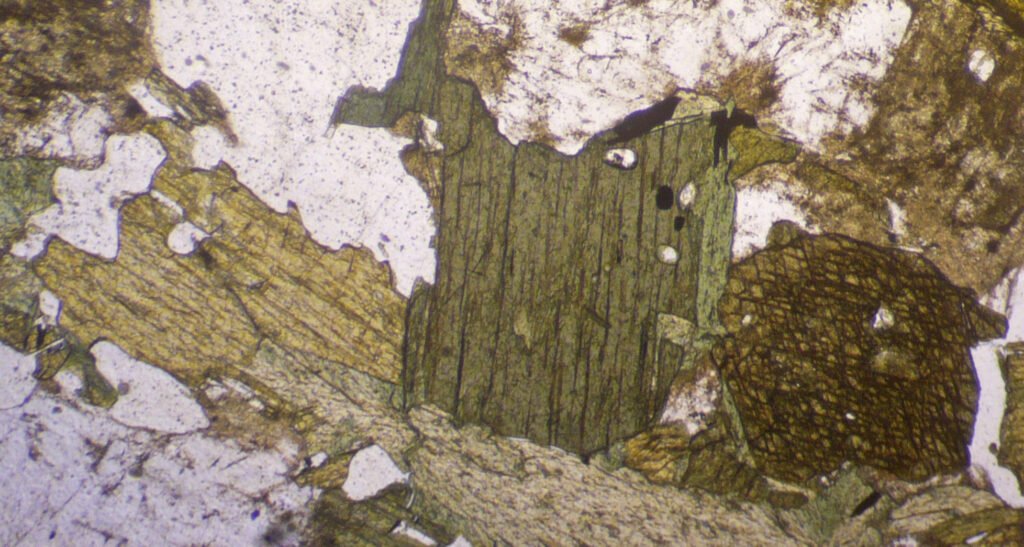
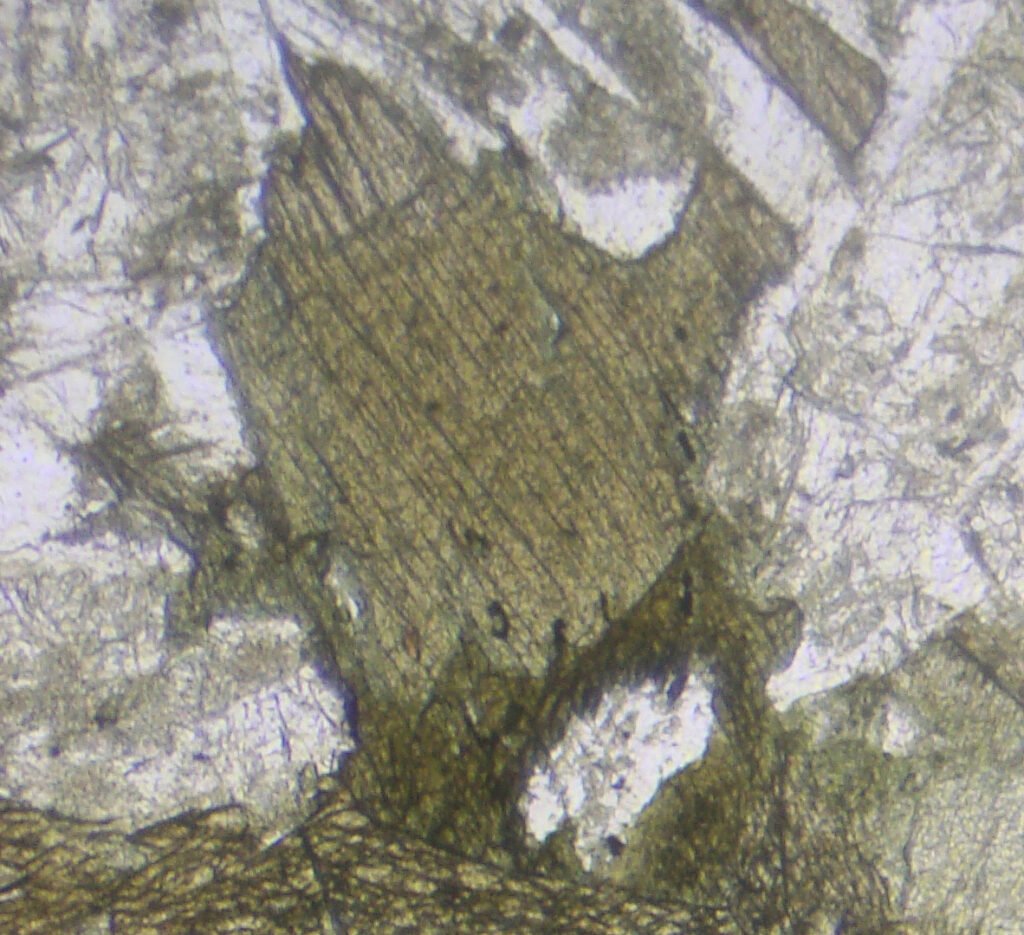
PPL: Strong pleochroism in green, yellow-green to bluish-green. Two cleavages at 56º-124º in the basal sections (pseudo-hexagonal, rhombic, if idiomorphic). Long to short prismatic, medium-high relief.
XPL: Shows 1st to end 2nd order colors, oblique extinction (14-22º), ES(+), twins and zoning are common, B(-).
Very rare monoclinic amphibole of Ca-poor metamorphic rocks.
PPL: Usually colorless, but can be pleochroic between pale brown or pale green, stronger when Fe-rich. Forms clusters of prismatic crystals. In the basal section (rhombic!), 2 cleavages at 56/124º.
XPL: Extinction 15-21º. Colors up to 2nd and 3rd order. ES(+), B(+/-).