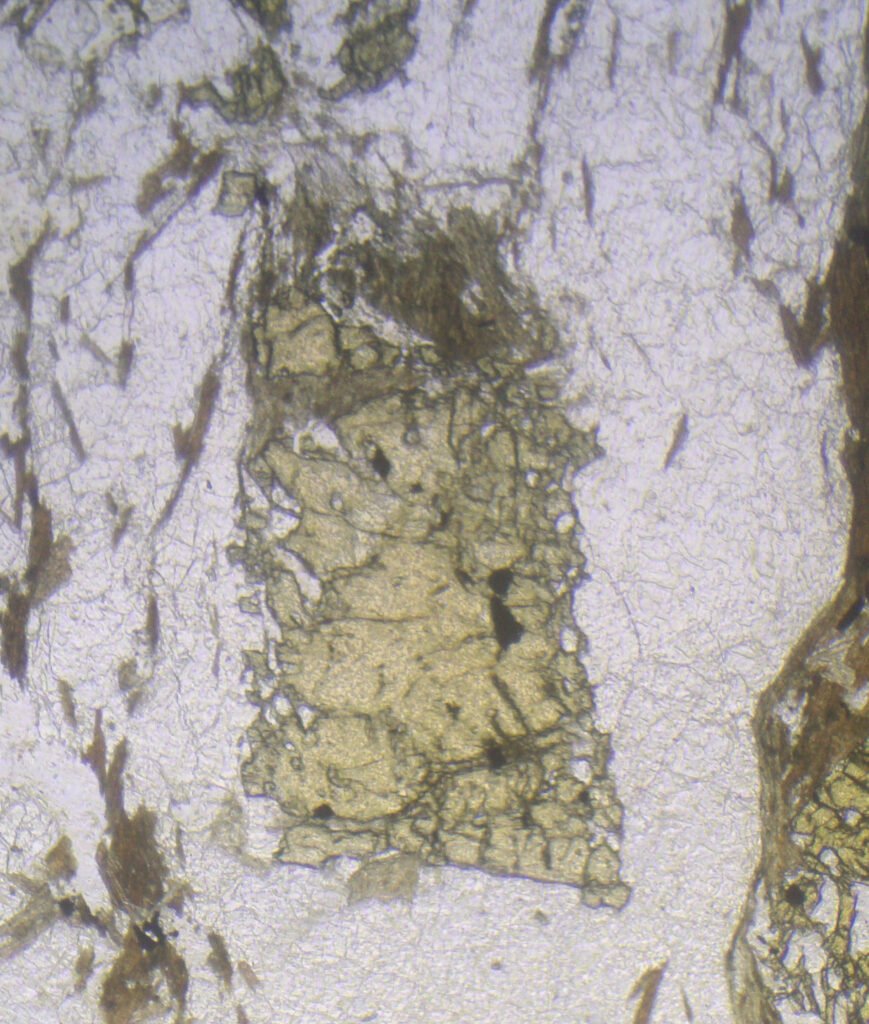
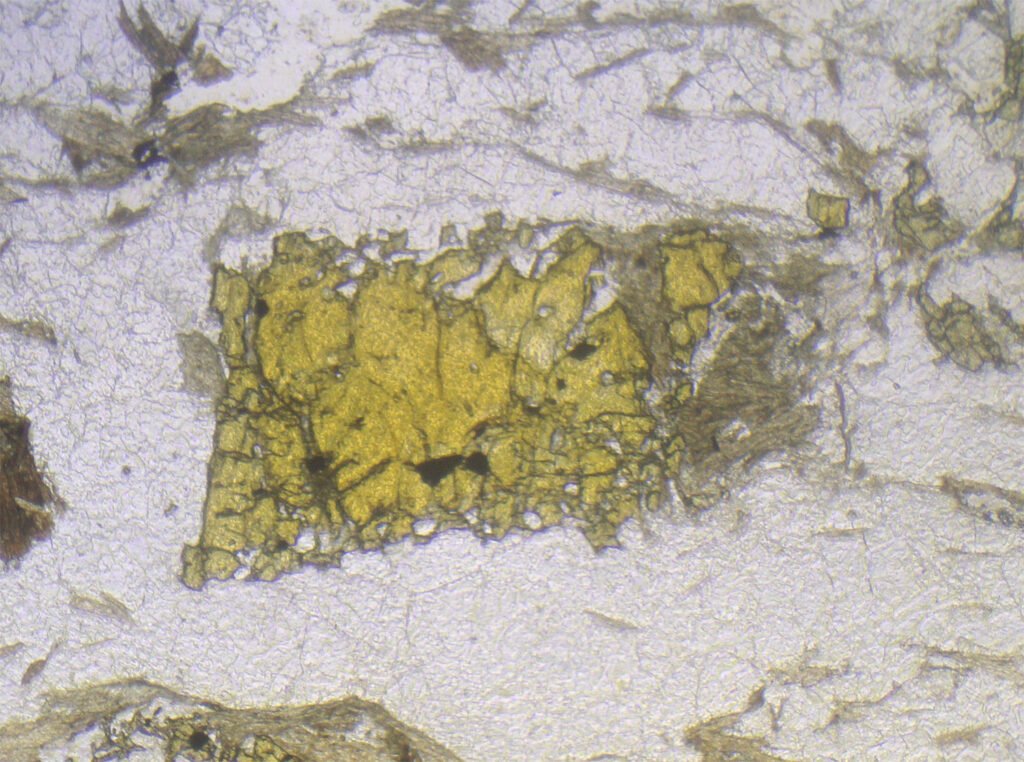
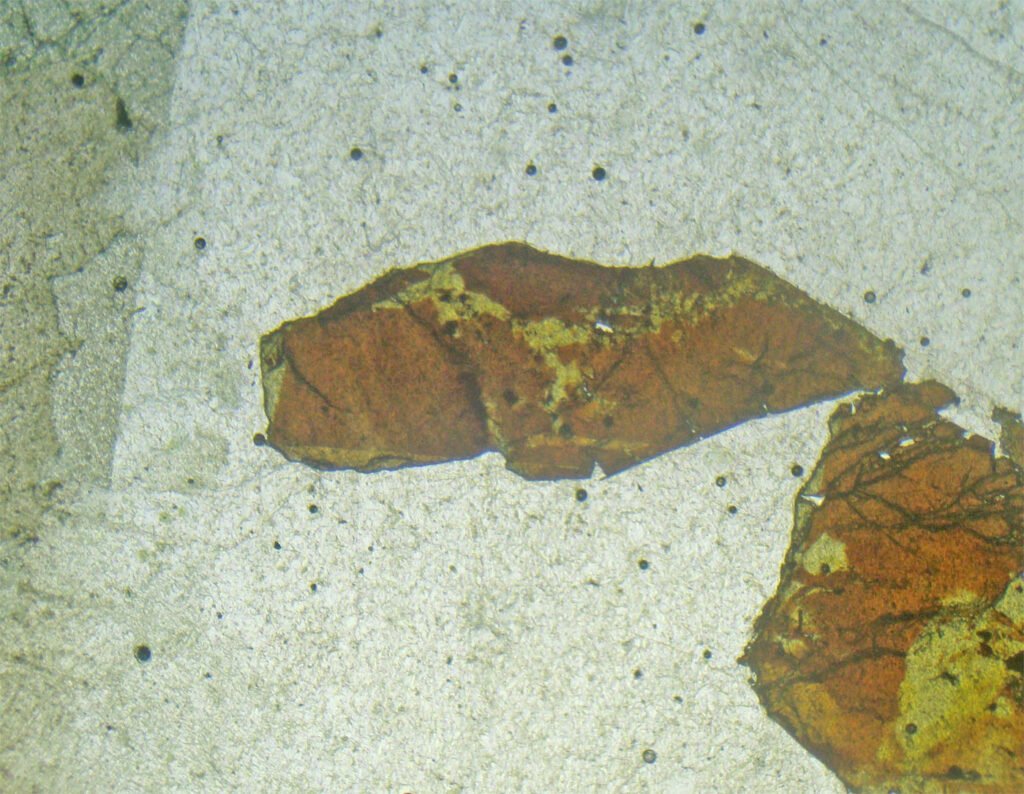
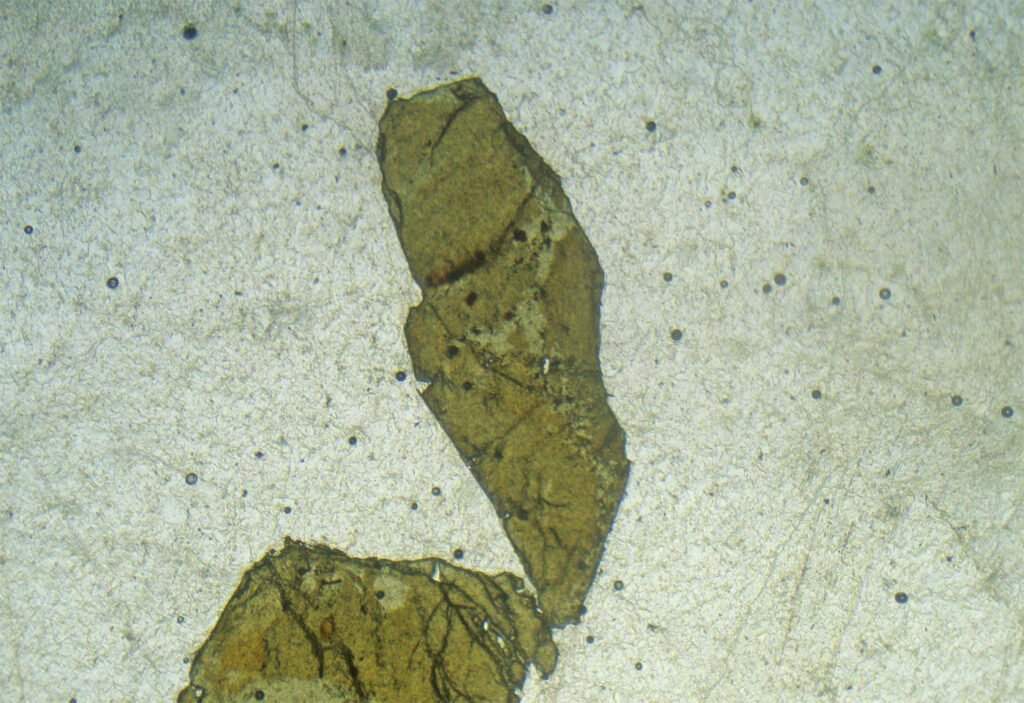
Less common pseudo-orthorhombic nesosilicate, occurs in metamorphic rocks.
PPL: Moderate, sometimes weak, pleochroism from colorless to yellow (pale to intense) to golden. Distinct cleavage, high relief. May have many inclusions (“sieve texture”). Short prisms with pseudo-hexagonal sections.
XPL: Low interference colors (only up to 1st order orange - very diagnostic!). ES(+), B(+), 2V from 80-90º.
Rarer triclinic phyllosilicate of some specific metamorphic rocks.
PPL: Strong pleochroism in various shades of yellow and brown to greenish. Medium-high relief, 1 perfect cleavage. Lamellae, fibers and needles.
XPL: Intense 2nd to 4th order colors. Paralell extinction. B(-) with 2V from 0º (pseudo-uniaxial) to 30º. Looks like biotite, but has no mottled extinction!
Relatively rare tetragonal Sn-oxide, occurs associated with granites.
PPL: Weak to strong pleochroism in brownish and reddish (may be orange or green). Very high relief, cleavage not visible.
XPL: Its own color masks the very high interference colors. Extinction tends to parallel. ES(+), twins are very common. U(+), can have anomalous 2V up to 38º.
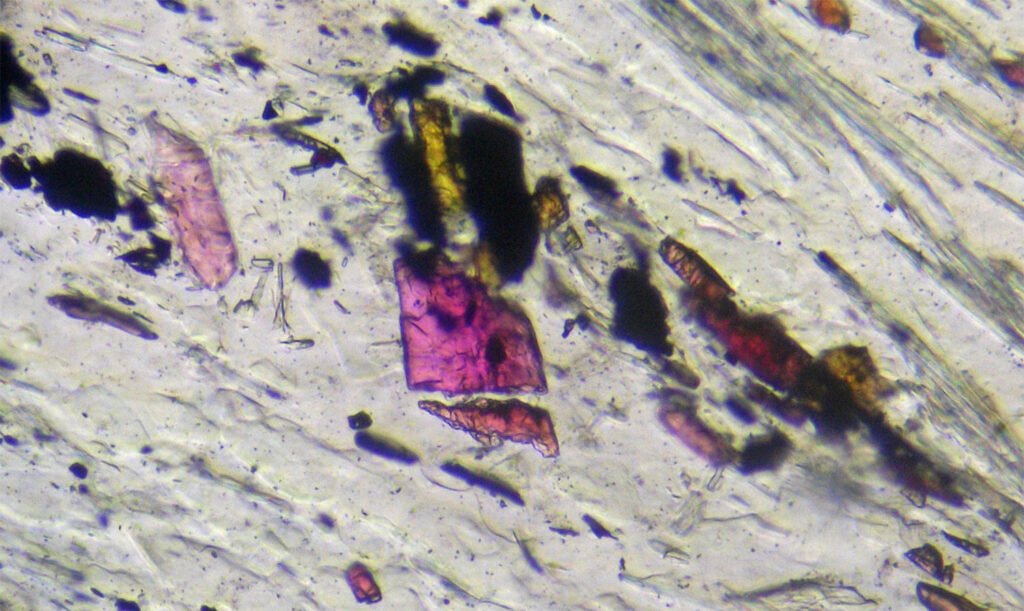
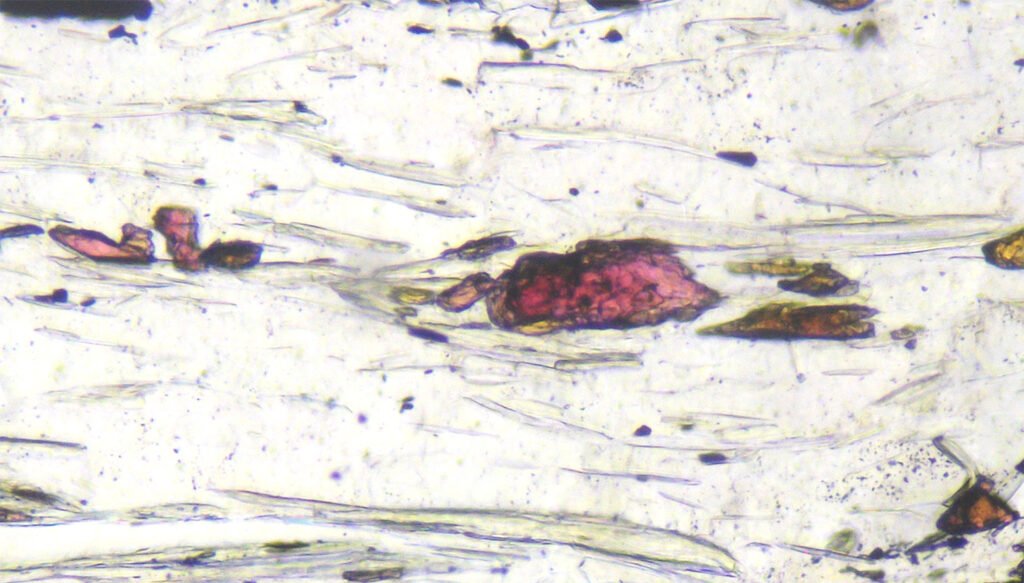
Rare monoclinic sorosilicate of Mn-rich metamorphic rocks.
PPL: Strongly pleochroic in red (may be pink, yellow, orange or violet). High to extremely high relief, 1 perfect cleavage. Long prisms, sections with 6 sides.
XPL: Intense colors, masked by the red color of the mineral. 0-34º or parallel extinction. ES(+/-), B(+/-).
Somewhat rarer monoclinic phyllosilicate, typical mineral of rocks undersaturated in silica and Ca-rich.
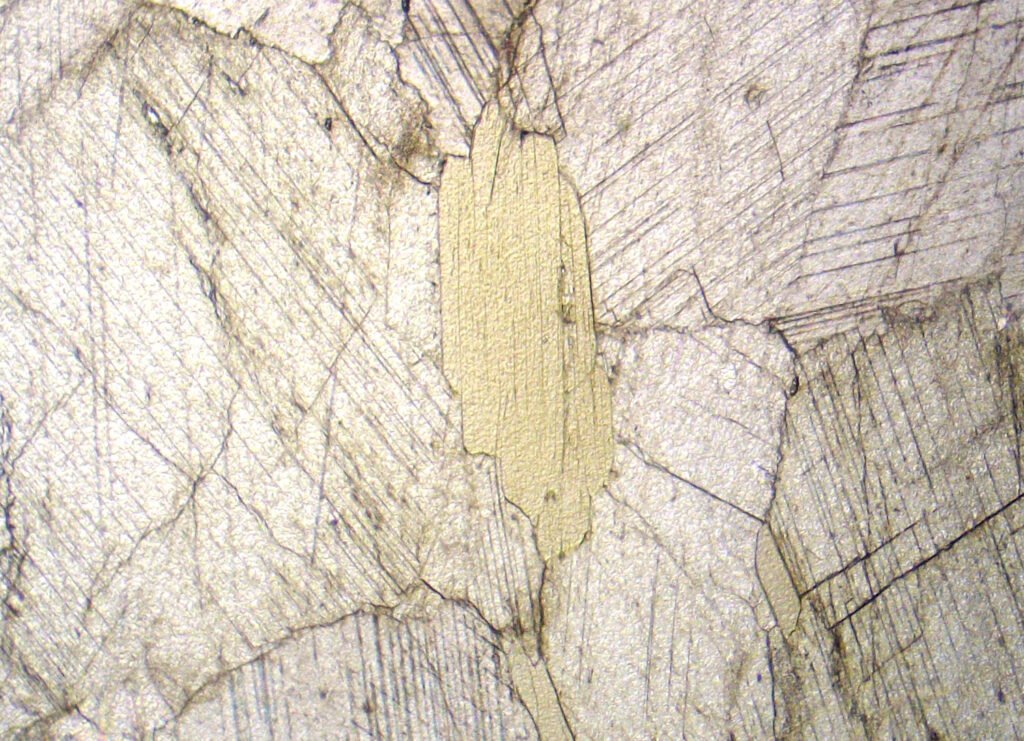
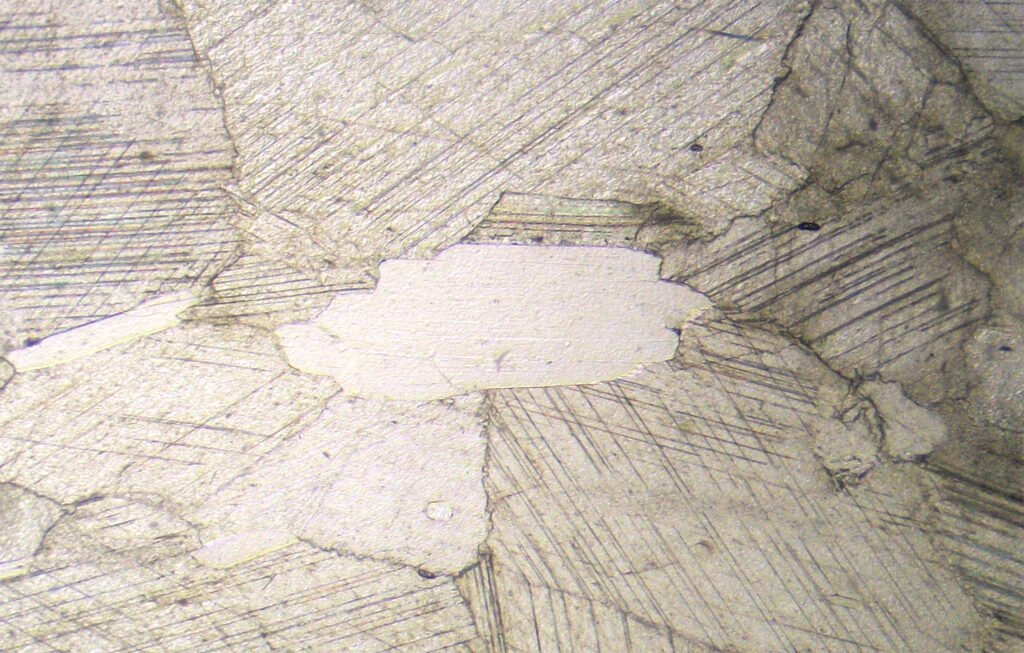
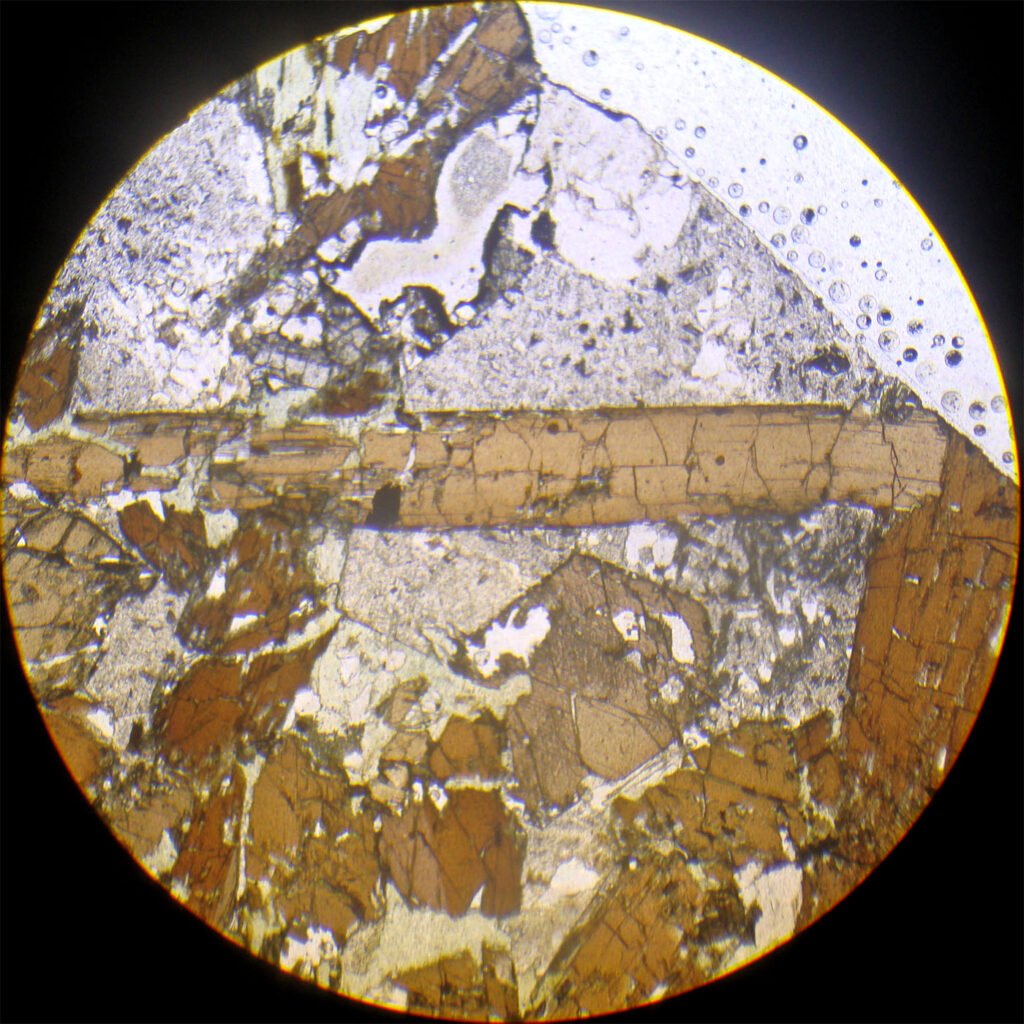
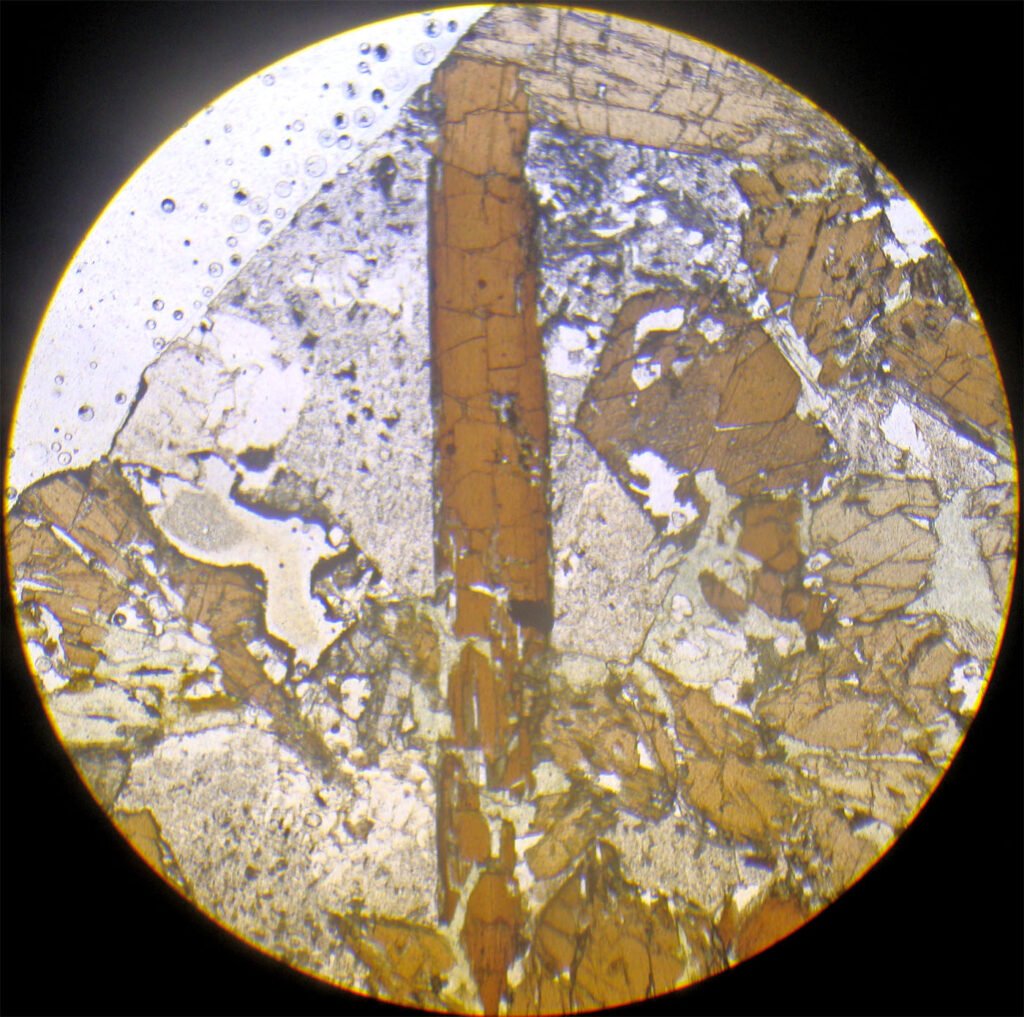
PPL: colorless, but may have moderate brown pleochroism in sections perpendicular to (001); sections parallel to (001) almost without pleochroism. Moderate relief, perfect cleavage, lamellar habit.
XPL: Paralell and mottled extinction. ES(+) and B(-) with small 2V, can simulate to be uniaxial. Very similar to biotite.
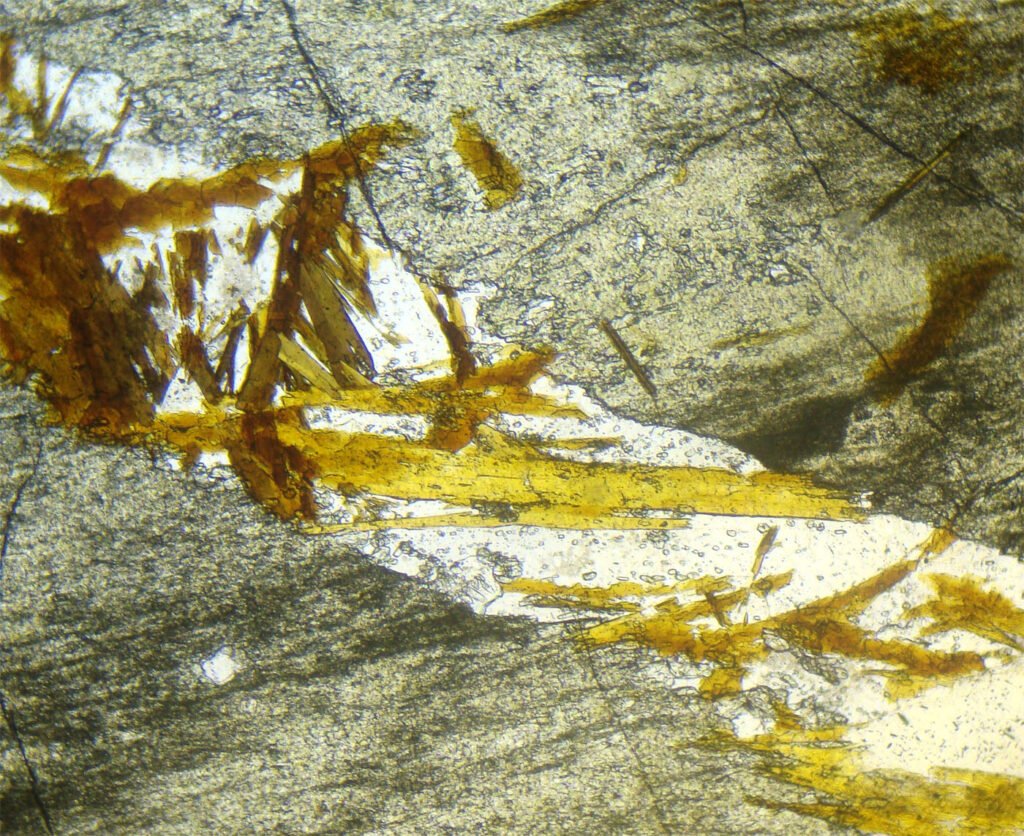
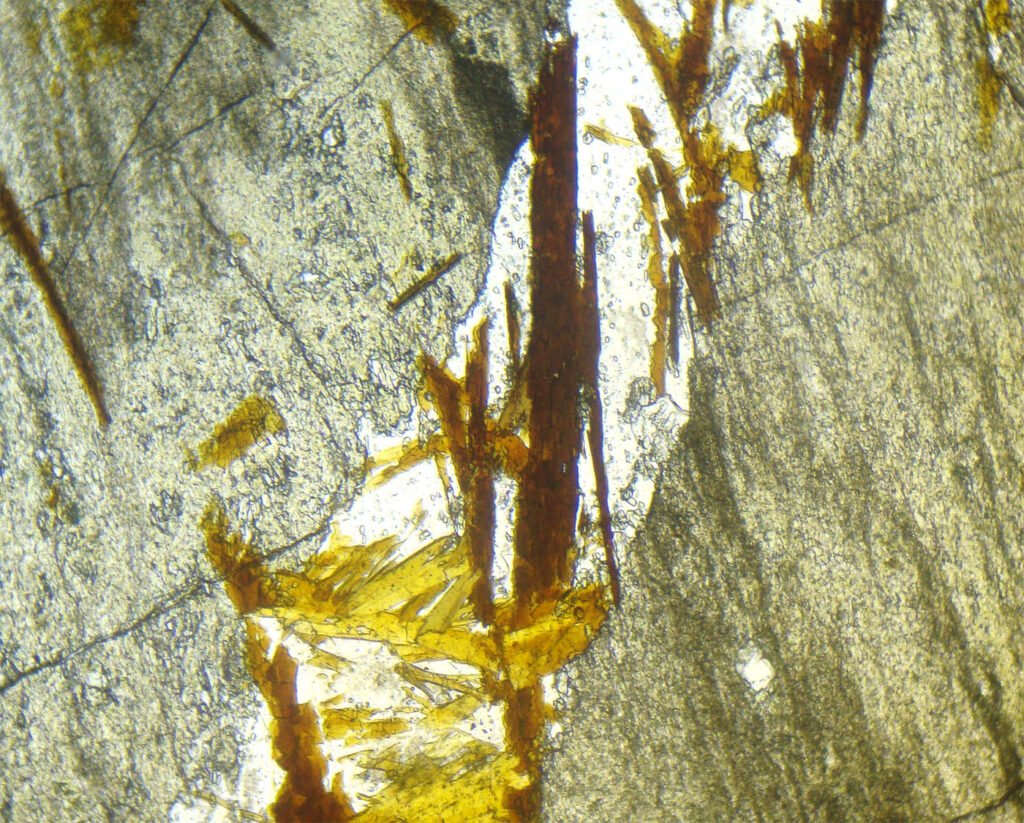
Images: Phlogopite with calcite in PPL, rotated 90 degrees.
Most common iron hydroxide, occurs in many types of rocks.
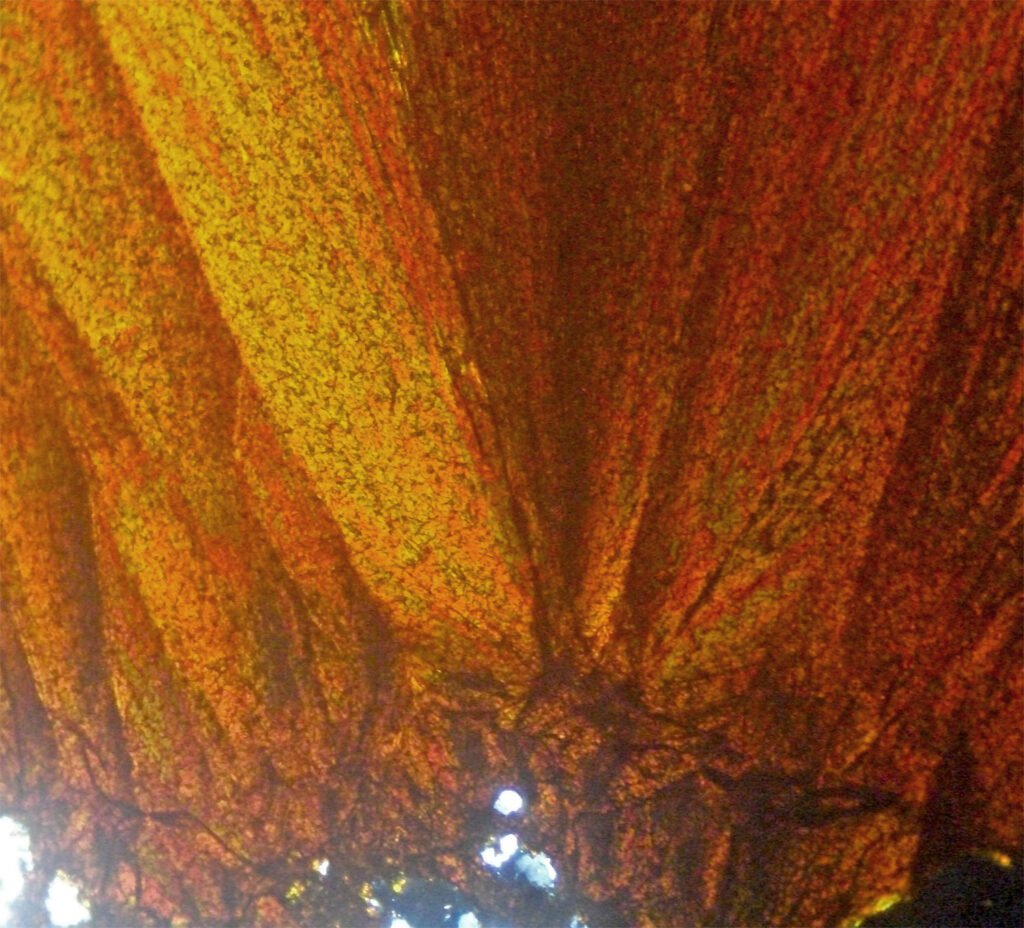
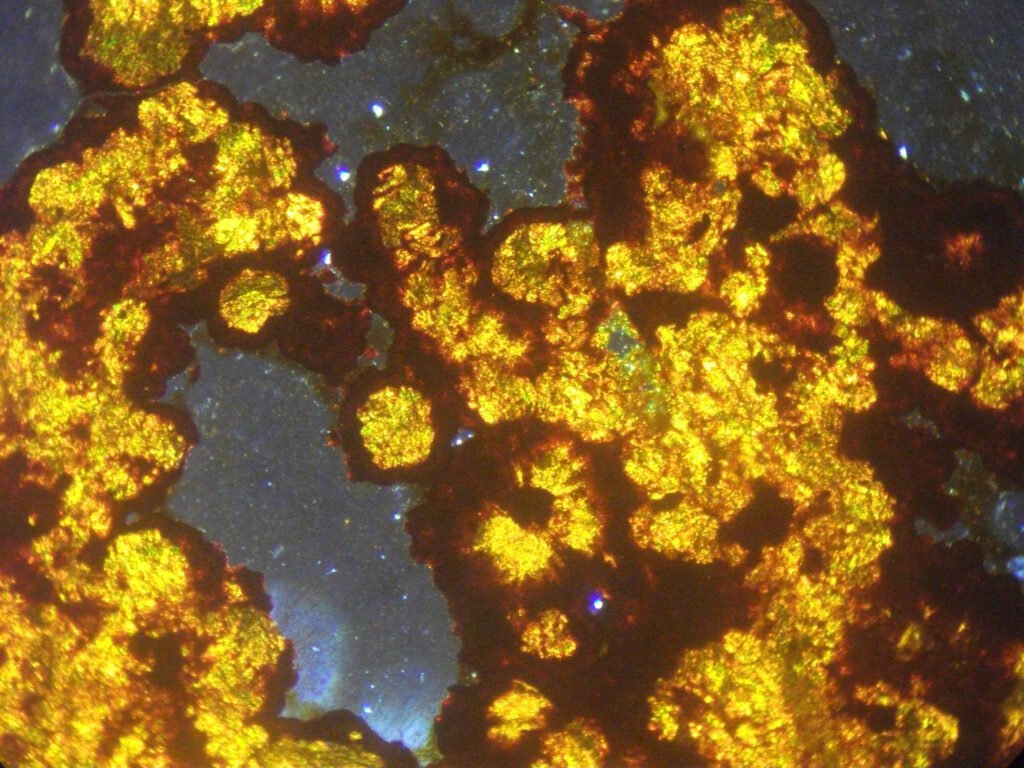
PPL: Strong orange colors, can be red-brown. Pleochroism of variable intensity. It forms spherulites or radiated fibrous aggregates. The structure often resembles that of chalcedony.
XPL: The color is almost the same. It has high birefringence and parallel extinction.