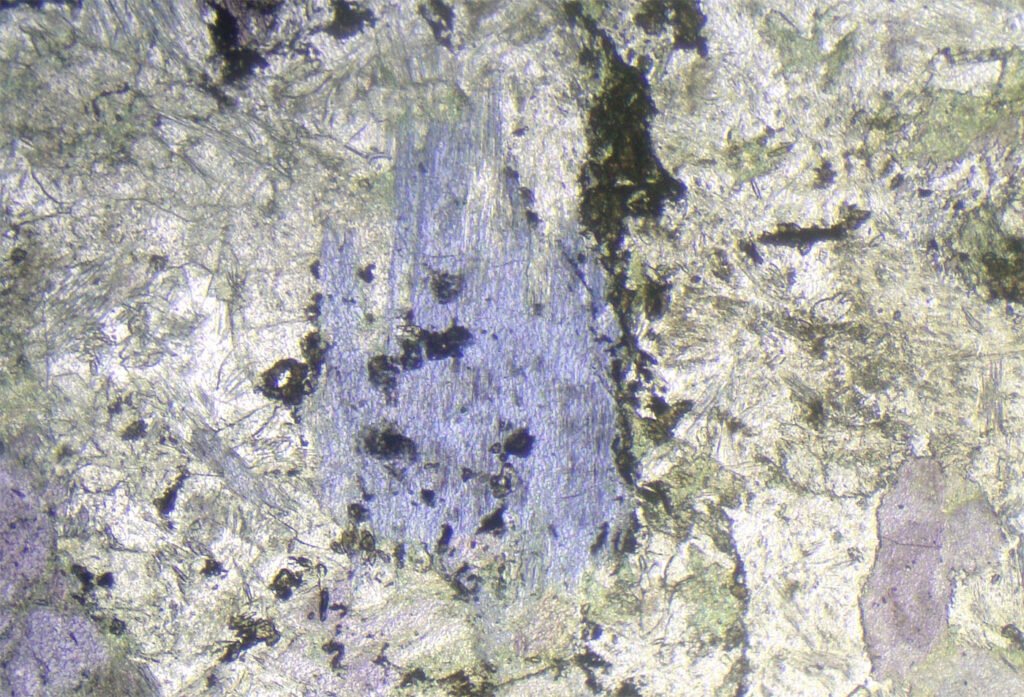
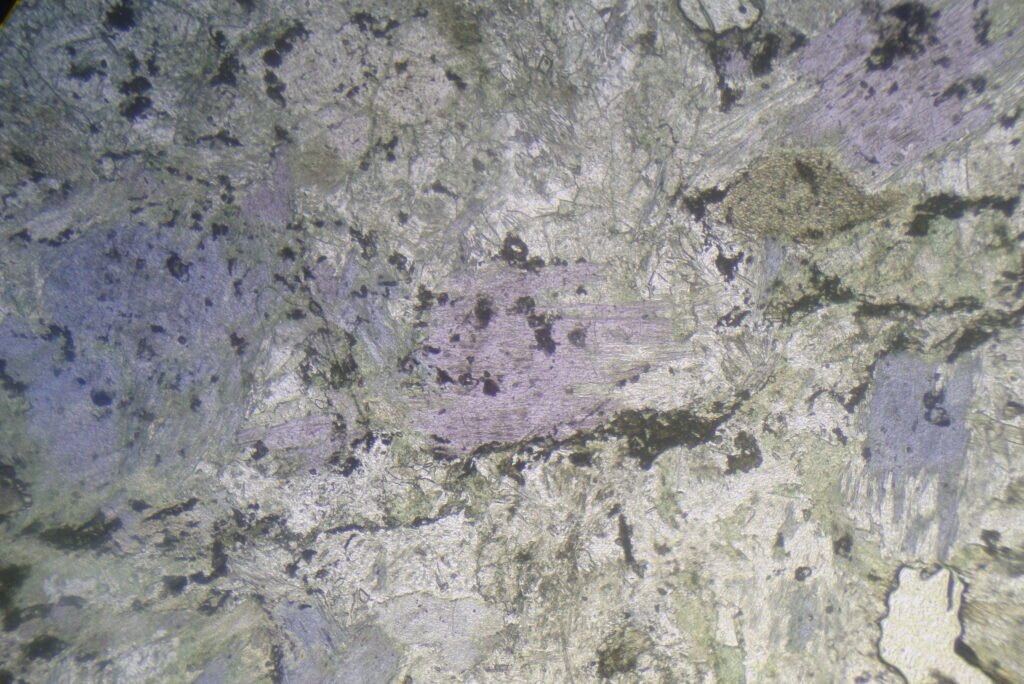
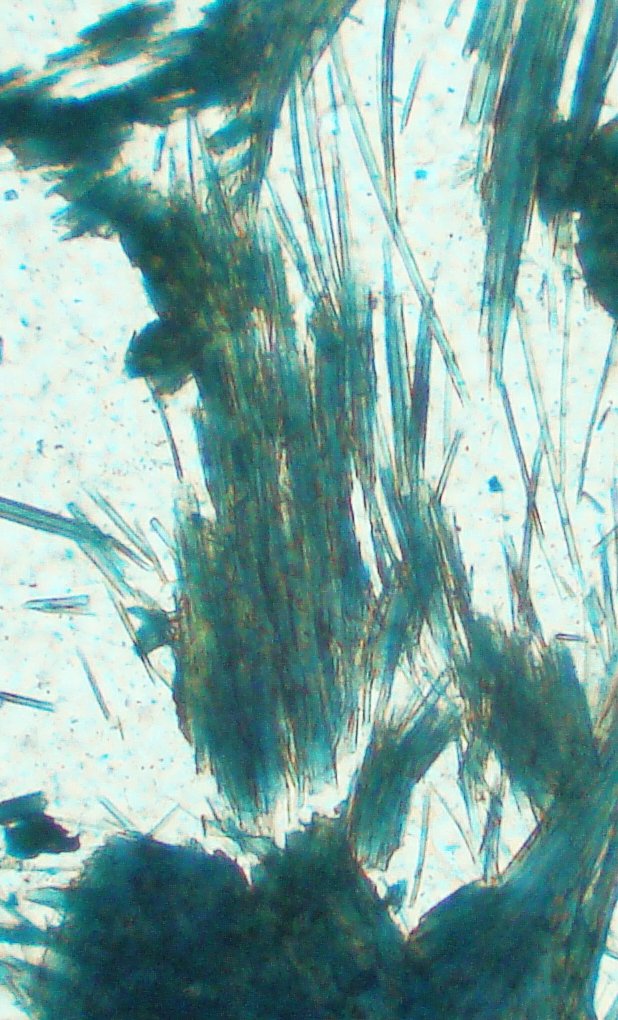
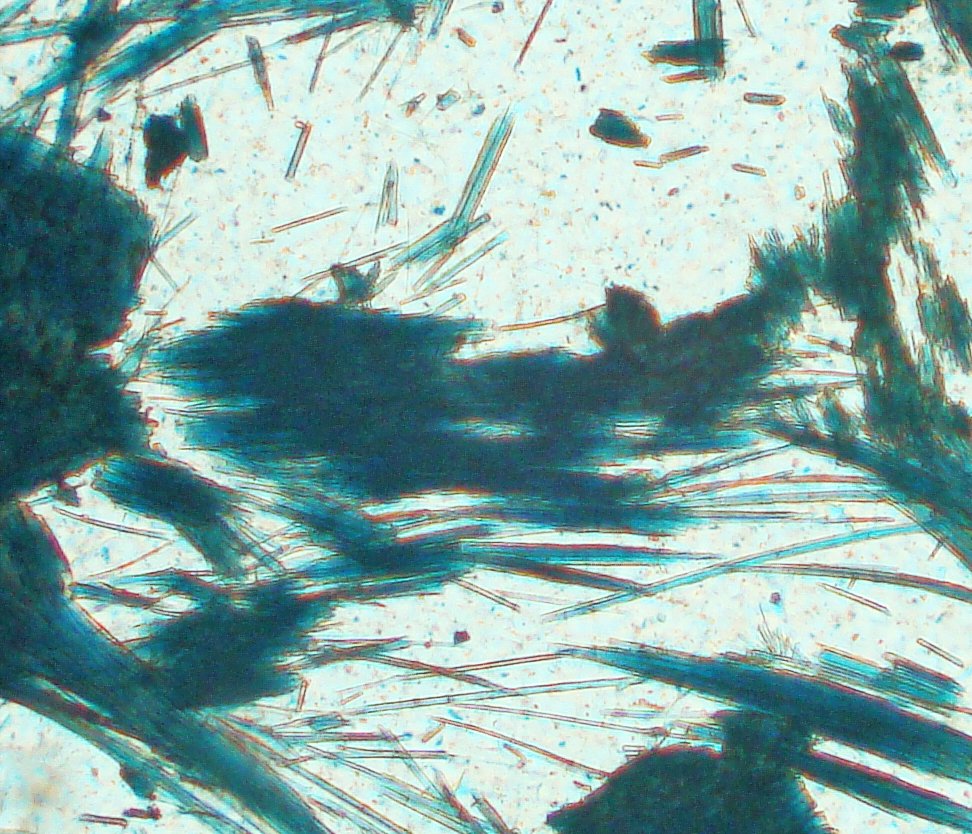
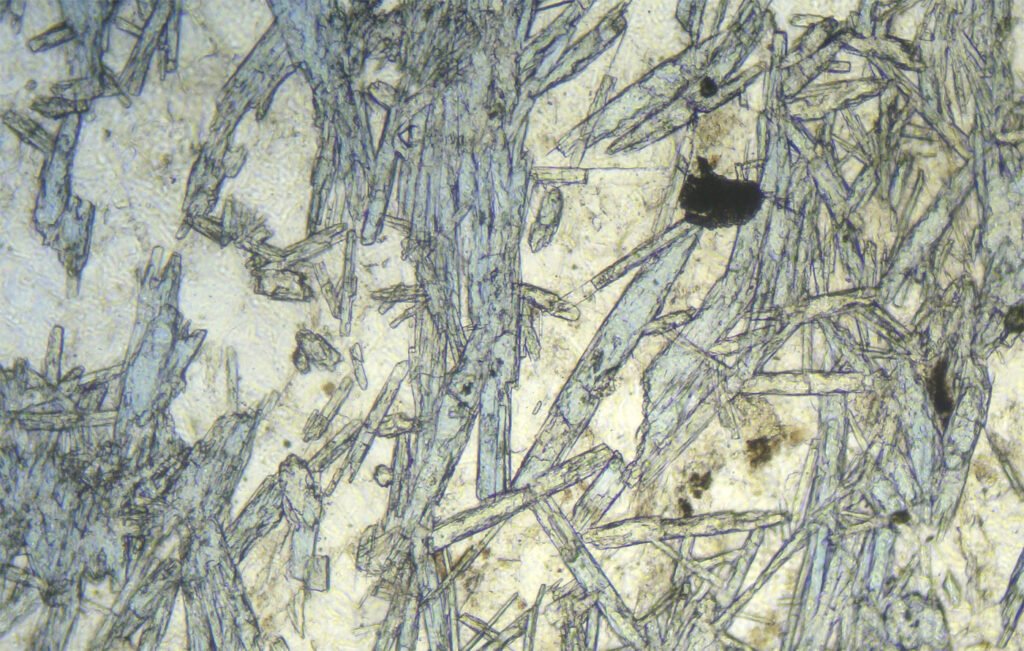
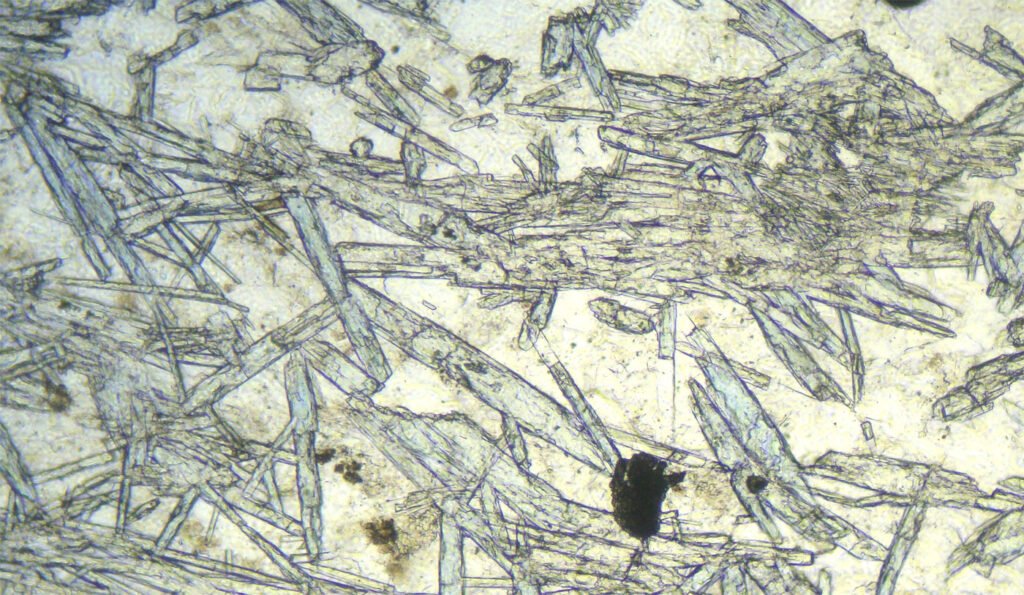
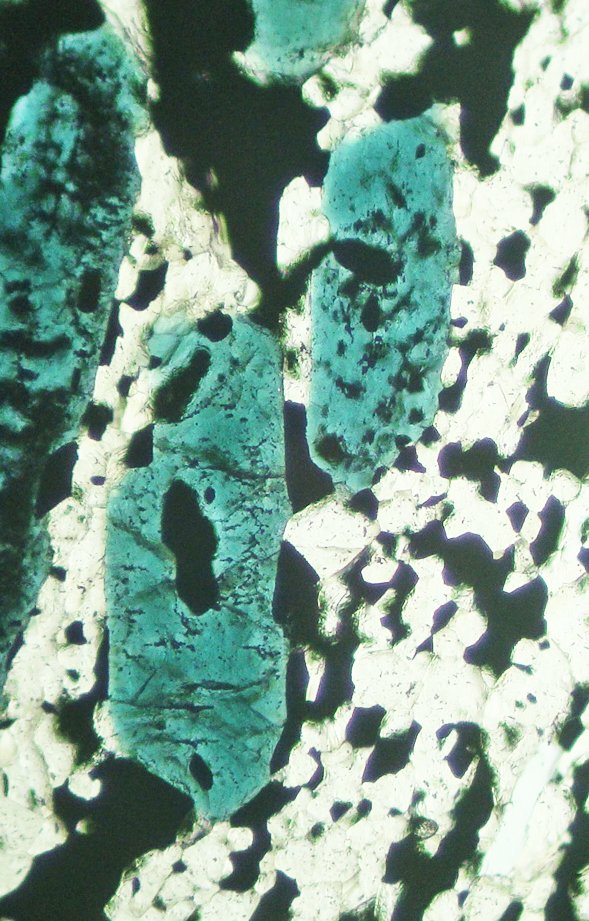
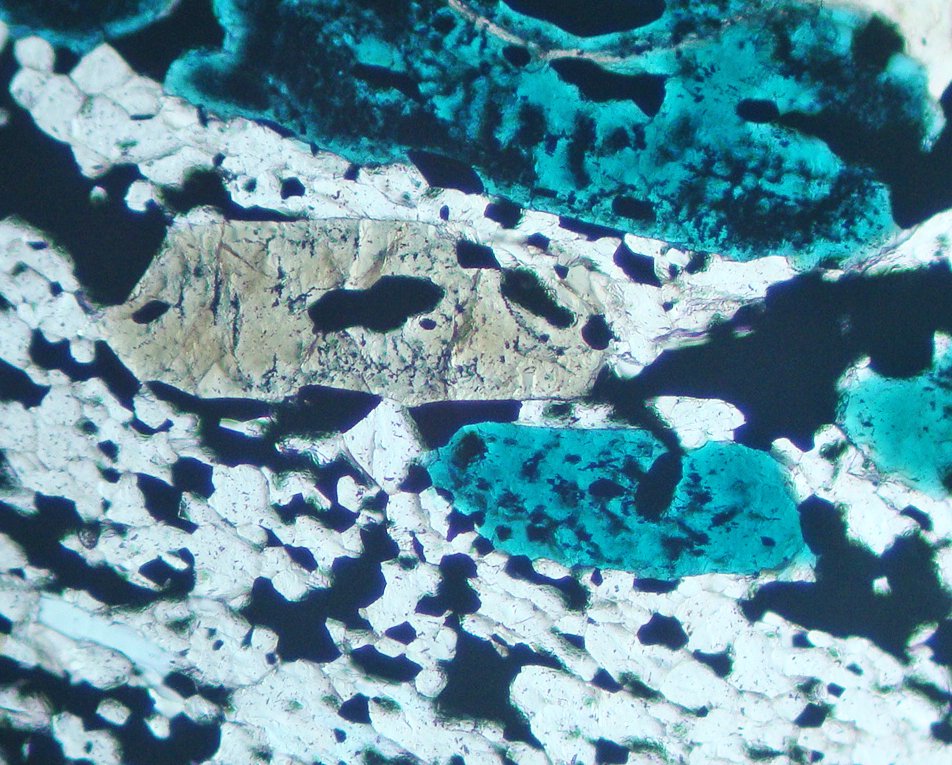
Rare monoclinic inosilicate found in Na-rich igneous rocks and in some metamorphic rocks.
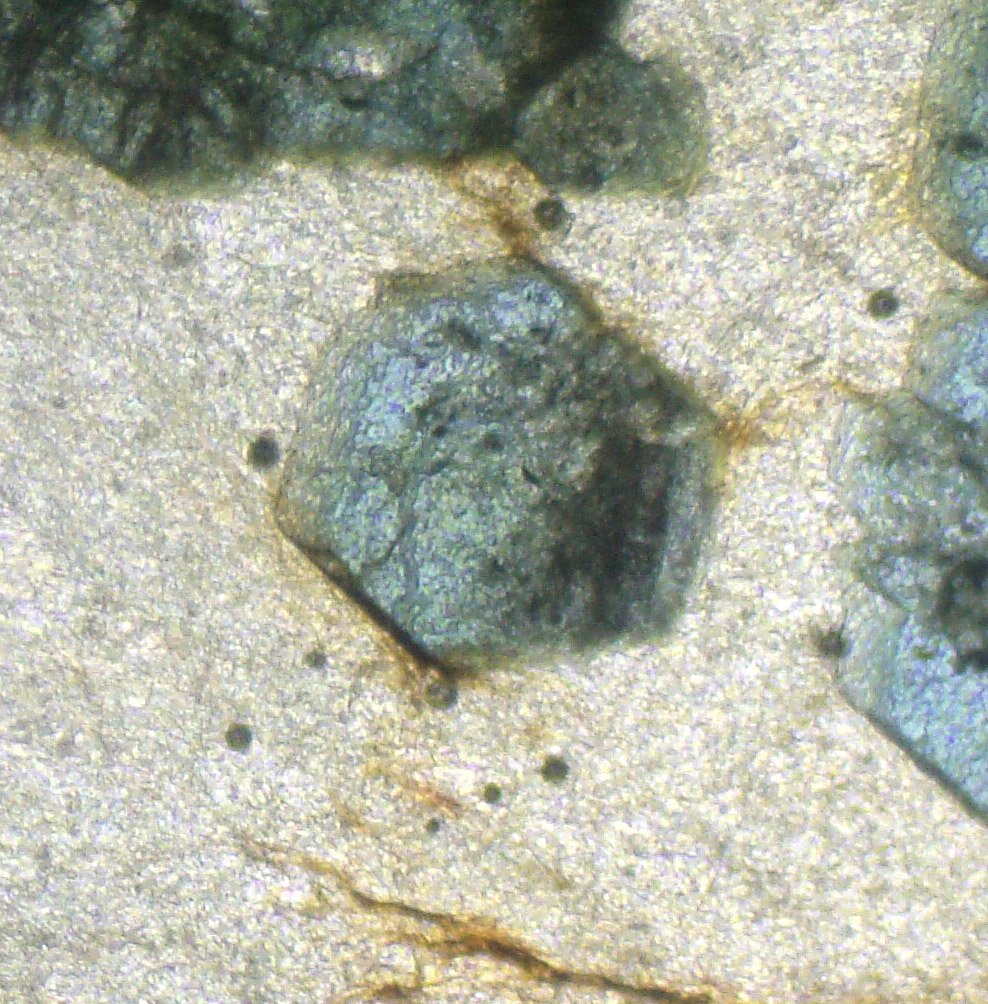
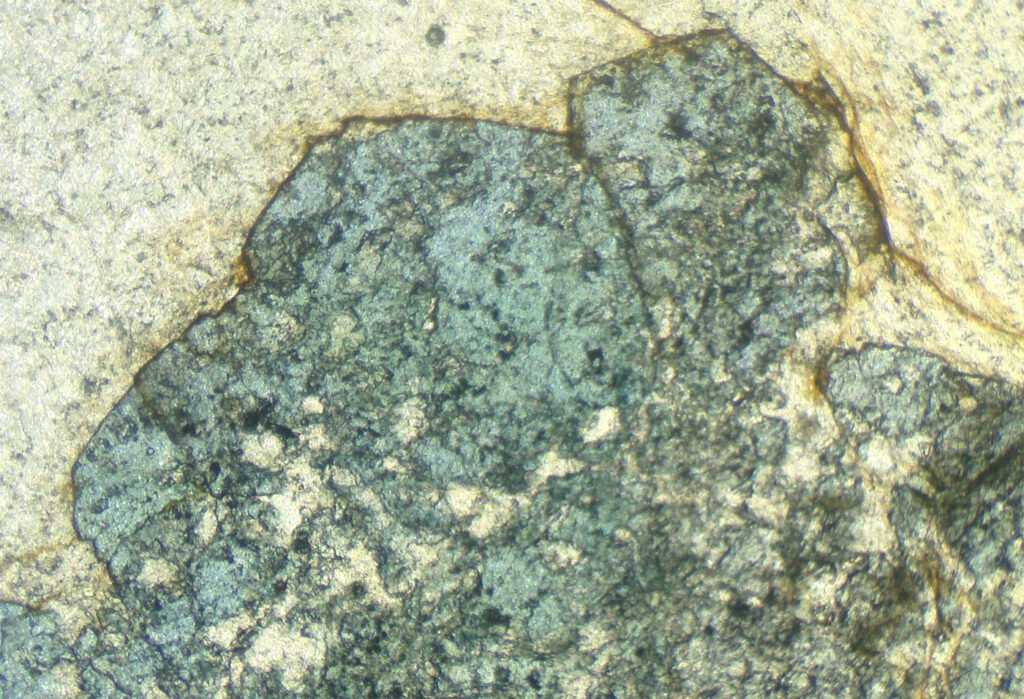
PPL: Strong pleochroism between dark blue, blue-green, yellow-green and black. Typical amphibole cleavage. Medium-high relief. Prismatic, acicular and fibrous (in BIFs).
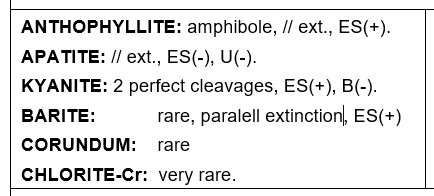
XPL: Interference colors masked by the own blue color. ES(-), 0-30º extinction, B(+/-). Glaucophane and tourmaline may be similar.
Less common trigonal cyclosilicate of the Tourmaline Group (>40 different minerals).
PPL: Moderate pleochroism in blue (many other colors are possible, like green, yellow, red, black and brown). High relief, cleavage not visible, fractures perpendicular to elongation. Basal sections (without pleochroism!) triangular or pseudo-hexagonal.
XPL: Paralell extinction, ES(-), almost always zoned. U(-), can have 2V of 5º.
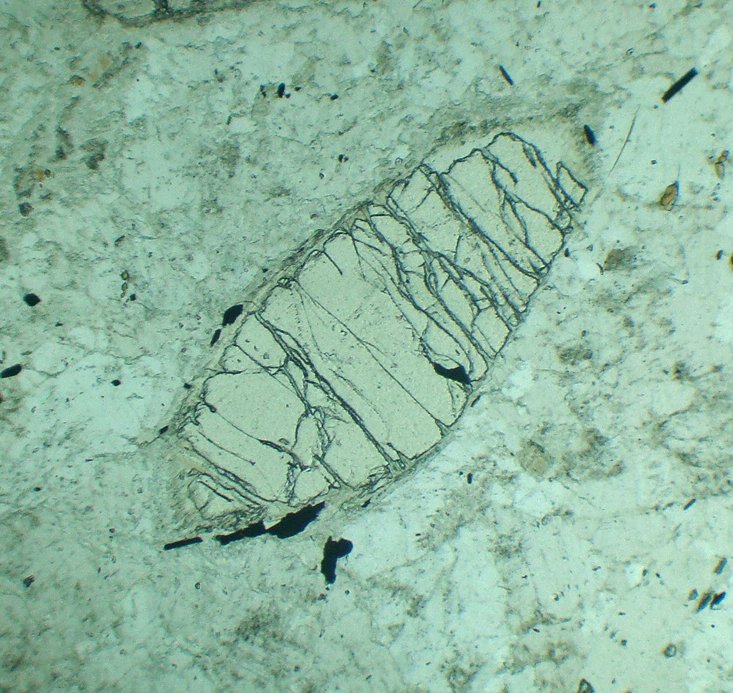
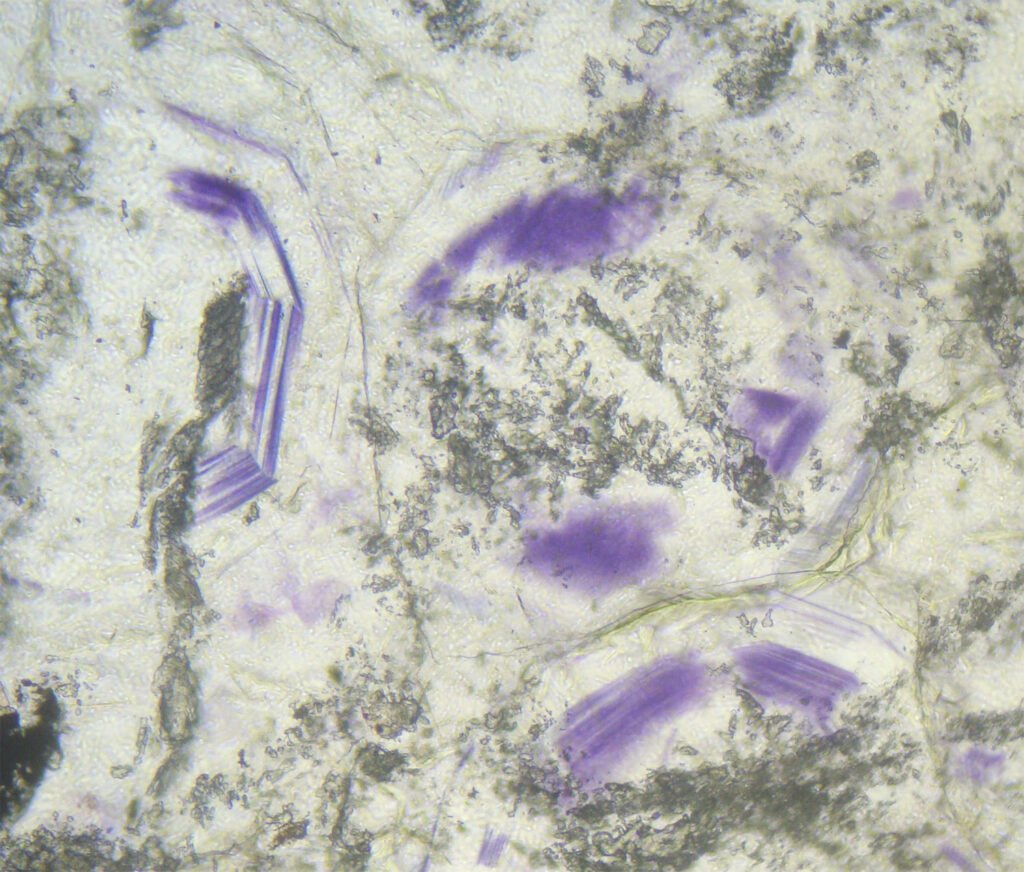
PPL: May show weak, irregular pleochroism in blue (diagnostic!) and violet tones, but usually colorless. High relief. Prismatic, tabular or barrel-shaped. No cleavage. 2 partitions at 94º.
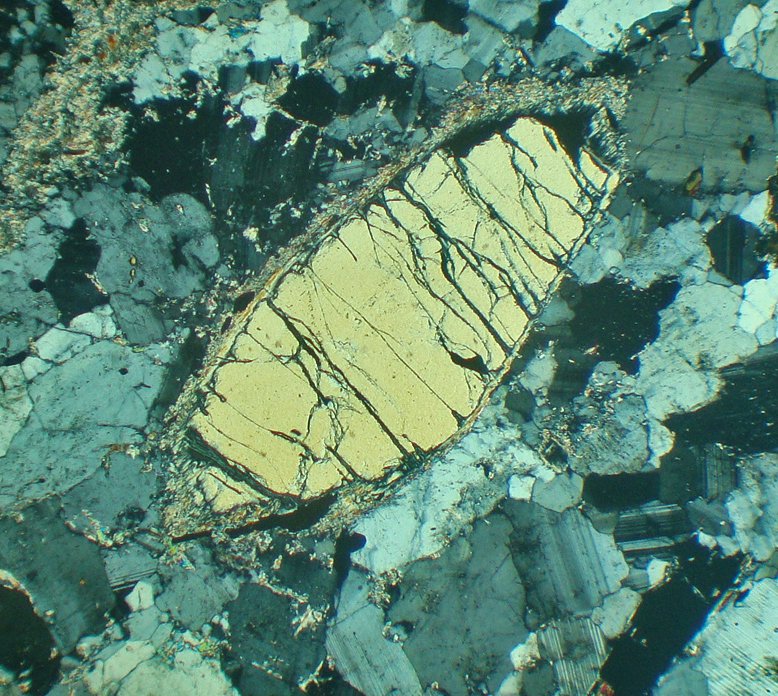
XPL: Gray colors. Extinction tends to parallel. ES(-) in prismatic crystals. Very frequent twins and zoning. U(-), 2V of 5-7º possible.
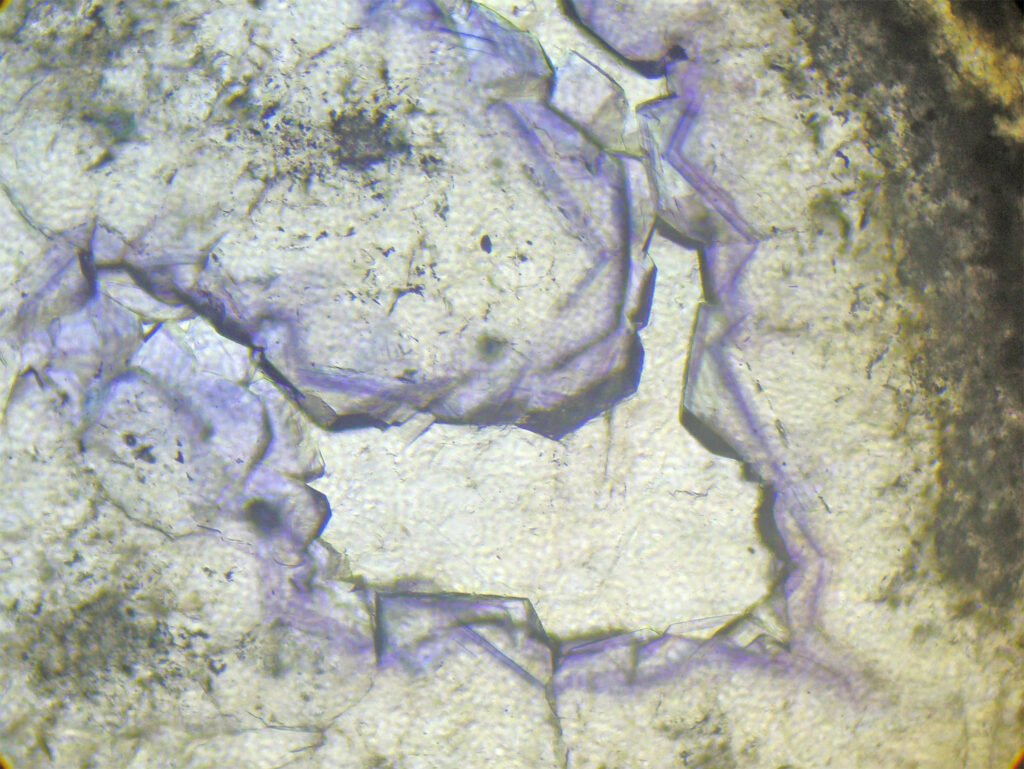
Very common cubic halide, often associated to granites, but can occur in many types of rocks.
PPL: Colorless, but very commonly exhibits irregular blue or violet zonation. Simulates pleochroism in blues, but is not pleochroic. Relief moderate. Perfect (111) cleavage: or two cleavages intercept at 70º/110º or three at 60º/120º. Usually anhedral crystals, sometimes cubes.
XPL: As it is a cubic mineral, it is isotropic (completely black). Anomalous birefringence is possible.
Rare triclinic nesosilicate of specific types of metamorphic rocks.
PPL: Moderate to strong pleochroism between bluish, green, green-gray, colorless or yellow-green. Hourglass zoning possible. High relief, cleavage not visible.
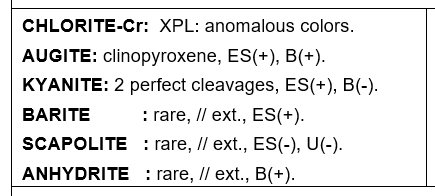
XPL: Low 1st order colors or anomalous. Extinction tends to oblique. ES(-), twins common, B(+/-).
PPL: Strong pleochroism in green, yellow-green, bluish-green and bluish. Two cleavages at 56º-124º in the basal sections (pseudo-hexagonal, rhombic). Long to short prismatic, medium-high relief.
XPL: 1st to end 2nd order colors, oblique extinction (14-22º), ES(+), twins and zoning are common, B(-).