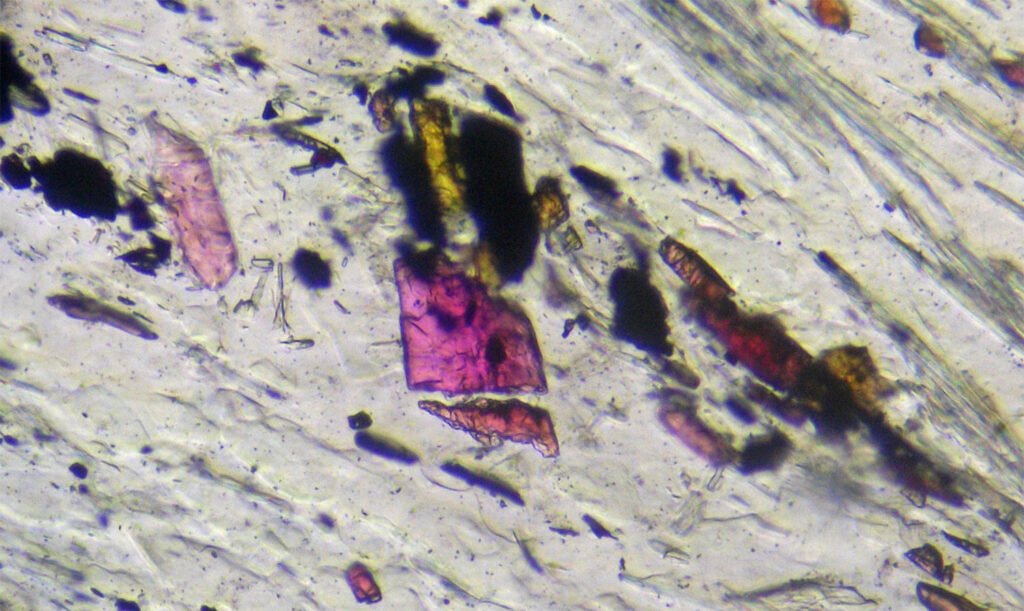
Very common cubic mineral, occurs in many types of rocks.
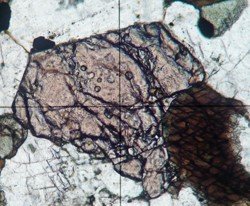
PPL: Sometimes garnets show a well-defined pink color, may suggest pleochroism, but does not. Usually in rounded grains. High relief, very fractured and without cleavage. It can have many inclusions.
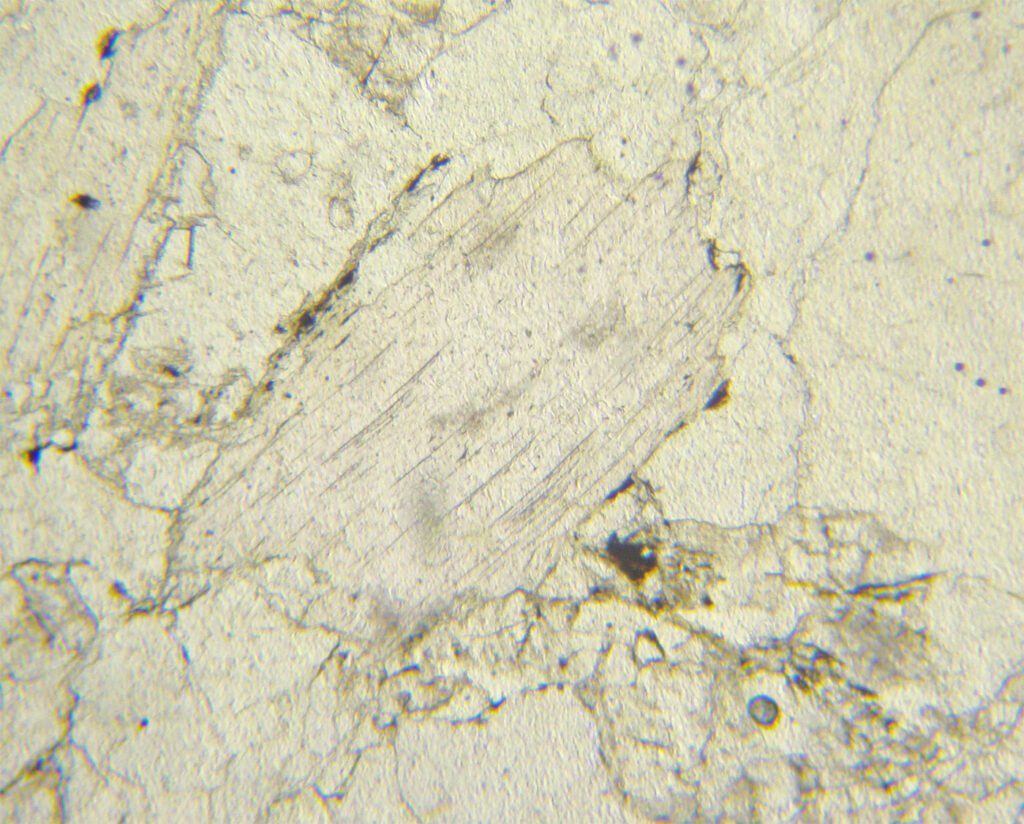
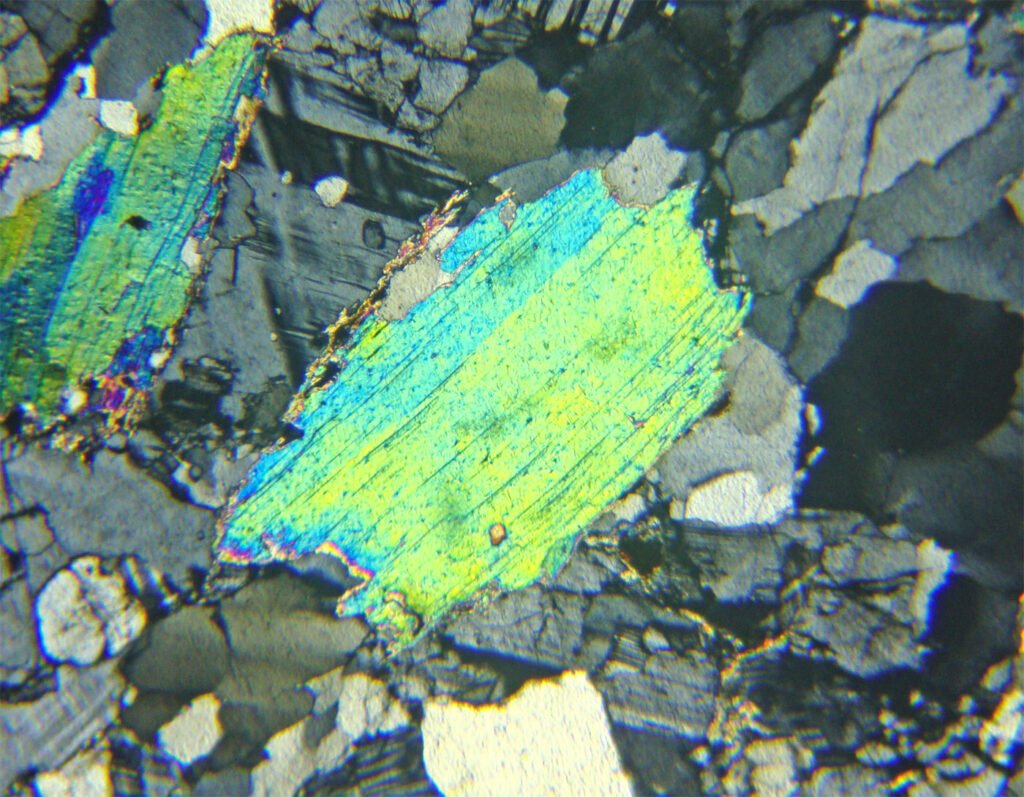
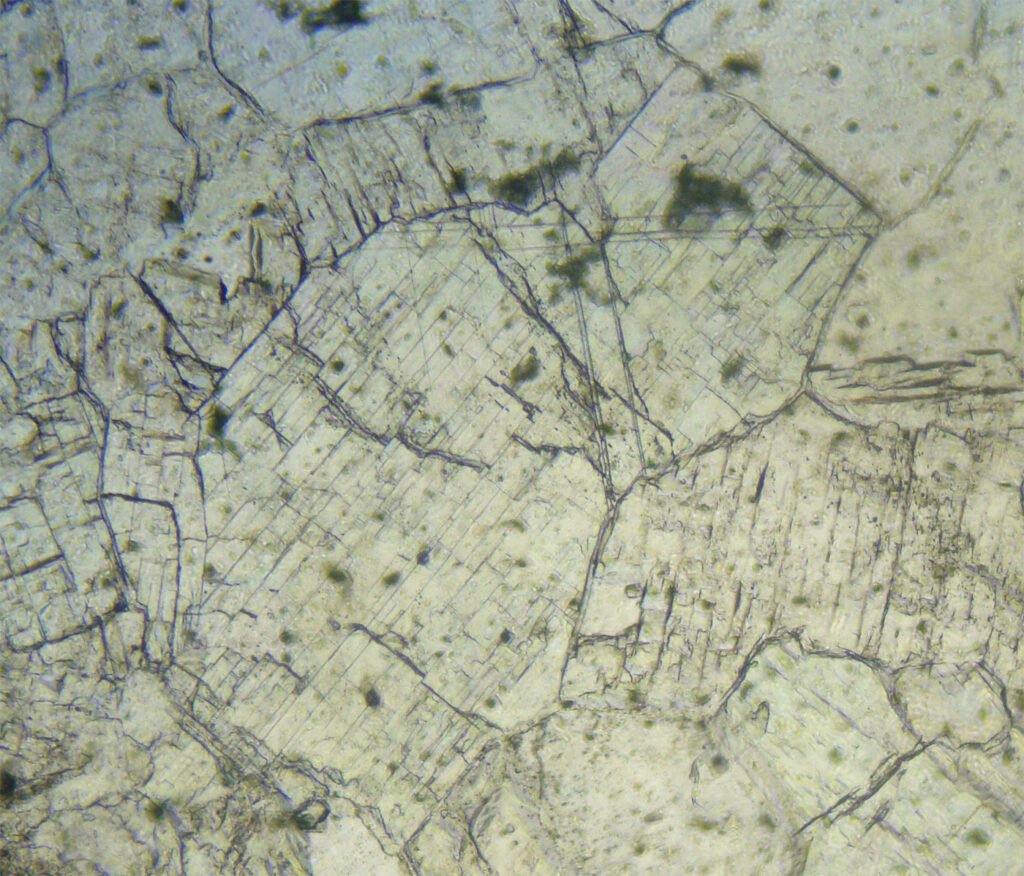
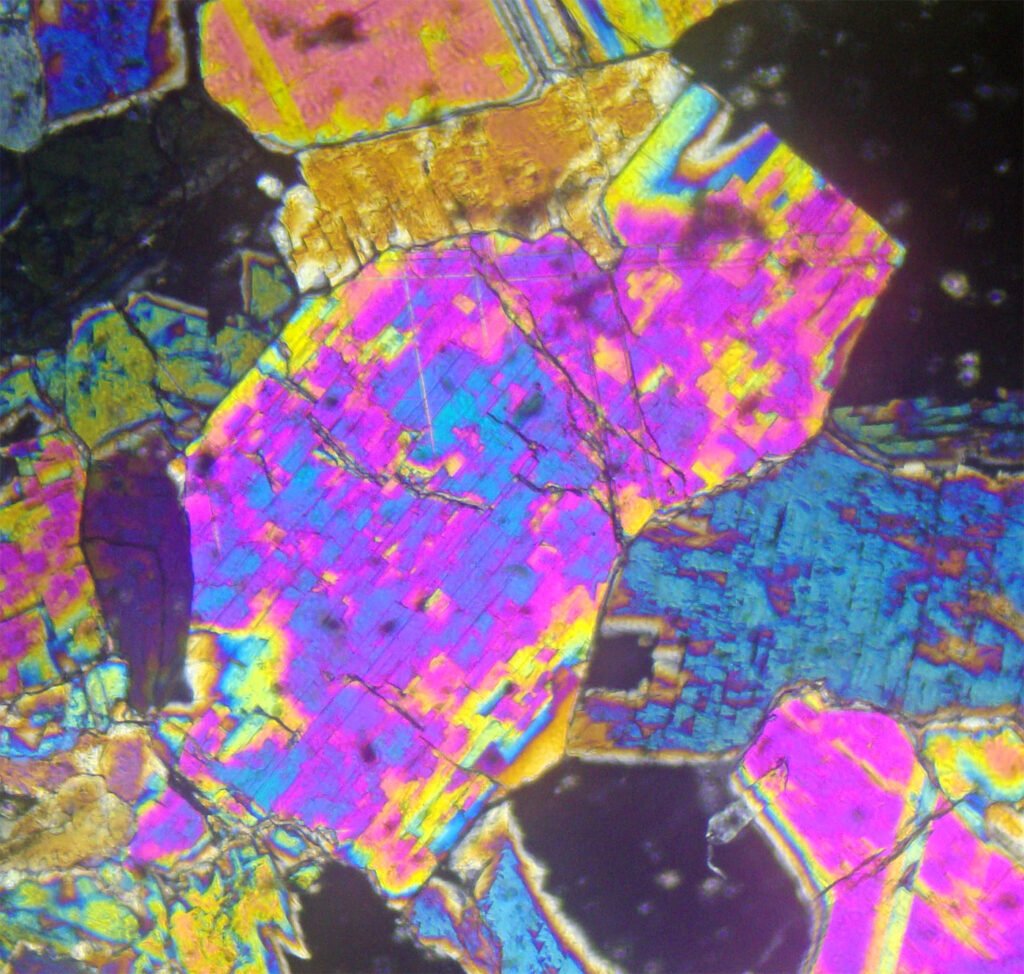
Orthorhombic pyroxene common in ultramafic and basaltic rocks.
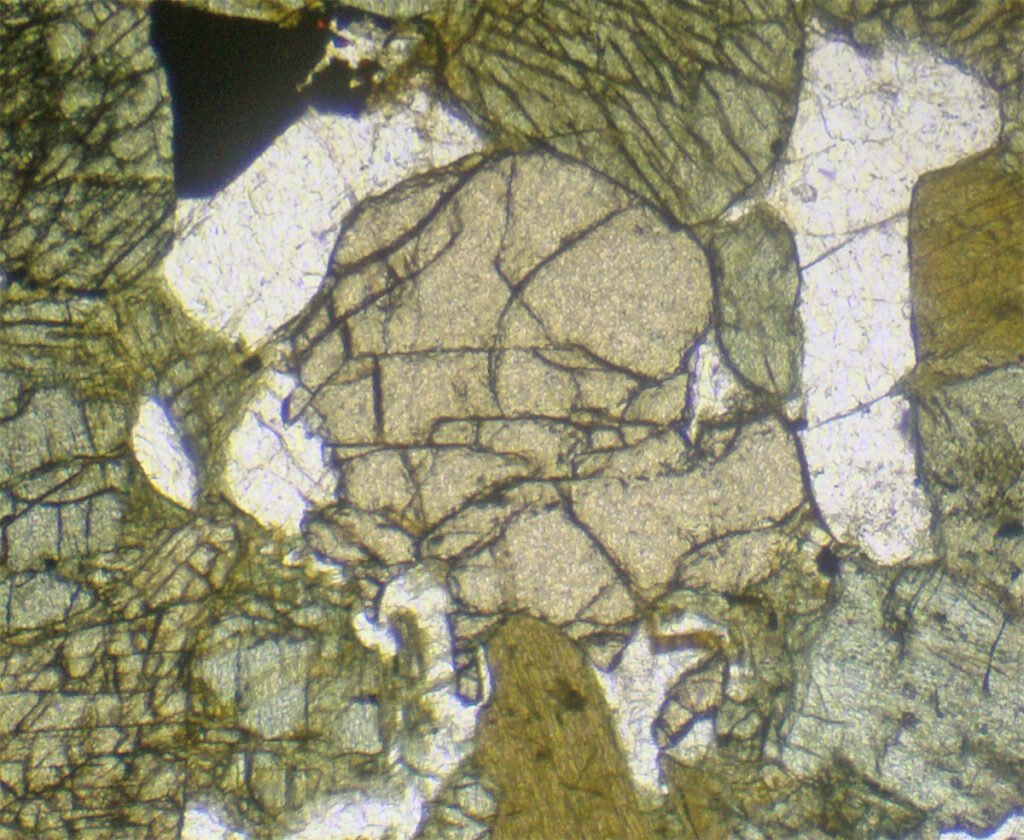
PPL: Distinct pleochroism in pink, yellow-brown or pale green.Short prismatic, granular, basal section with 4 or 8 sides and 2 cleavages at ~90º.
XPL: Parallel extinction! Colors up to 1st order orange (lower than the colors of clinopiroxenes!). ES(+), common zonation, rare twins. B(+/-), 2V from 58-86°.
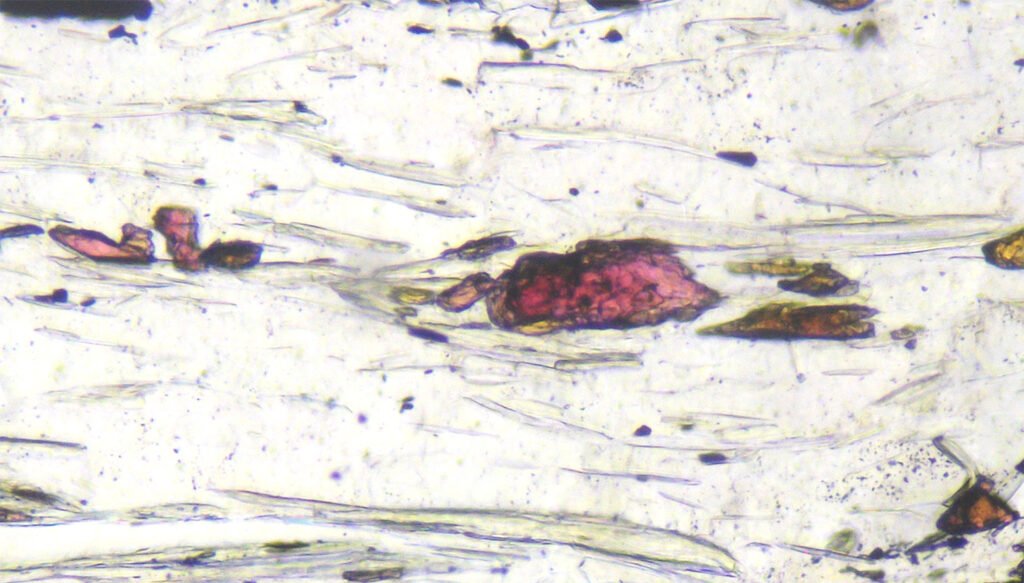
Less common orthorhombic nesosilicate of the Al2SiO5 Group, typical of high P and T pelitic metamorphic rocks.
PPL: Colorless, but the variety "fibrolite" shows a well-defined pink pleochroism. Long prismatic crystals with fractures perpendicular to the elongation, acicular or in fibrous masses (fibrolite). Basal sections are square with diagonal cleavage.
XPL: Extinction paralell (symmetrical in basal sections), ES(+), without twins or zoning. B(+), 2V from 21-30º.
Very rare orthorhombic nesosilicate, of Al-rich metamorphic rocks.
PPL: Usually pleochroic in pale blue colors, but moderate to strong pleochroism between colorless and pink may occur. High relief, cleavage not visible.
XPL: Upper 1st order colors. Parallel extinction, ES(-), twins are common. B(-), with 2V = 20 – 52º.
Rare monoclinic sorosilicate of Mn-rich metamorphic rocks.
PPL: Strongly pleochroic in red (may be pink, yellow, orange or violet). High to extremely high relief, 1 perfect cleavage. Long prisms, sections with 6 sides.
XPL: Intense colors, masked by the red color of the mineral. 0-34º or parallel extinction. ES(+/-), B(+/-).
Very common orthorhombic sulphate, typical of evaporitic sequences.
PPL: Usually colorless, but may show a distinct pleochroism in pink with very light yellow and violet. Low relief, 3 perfect cleavages. Anhedral, granular, massive to fibrous.
XPL: Extinction parallel to cleavages. Intense interference colors up to 3rd order green, can show twins, ES(+/-), B(+), 2V = 36-45º. Occurs associated with gypsum (XPL=gray).
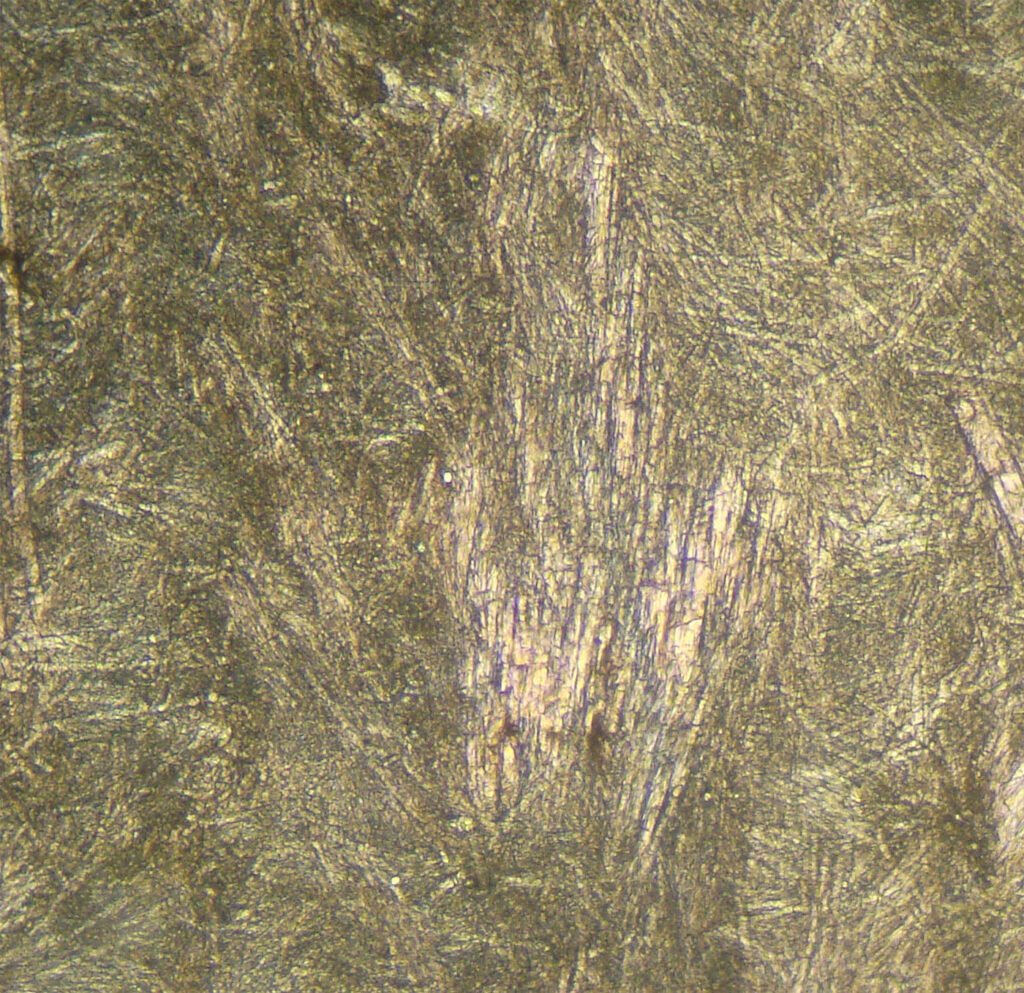
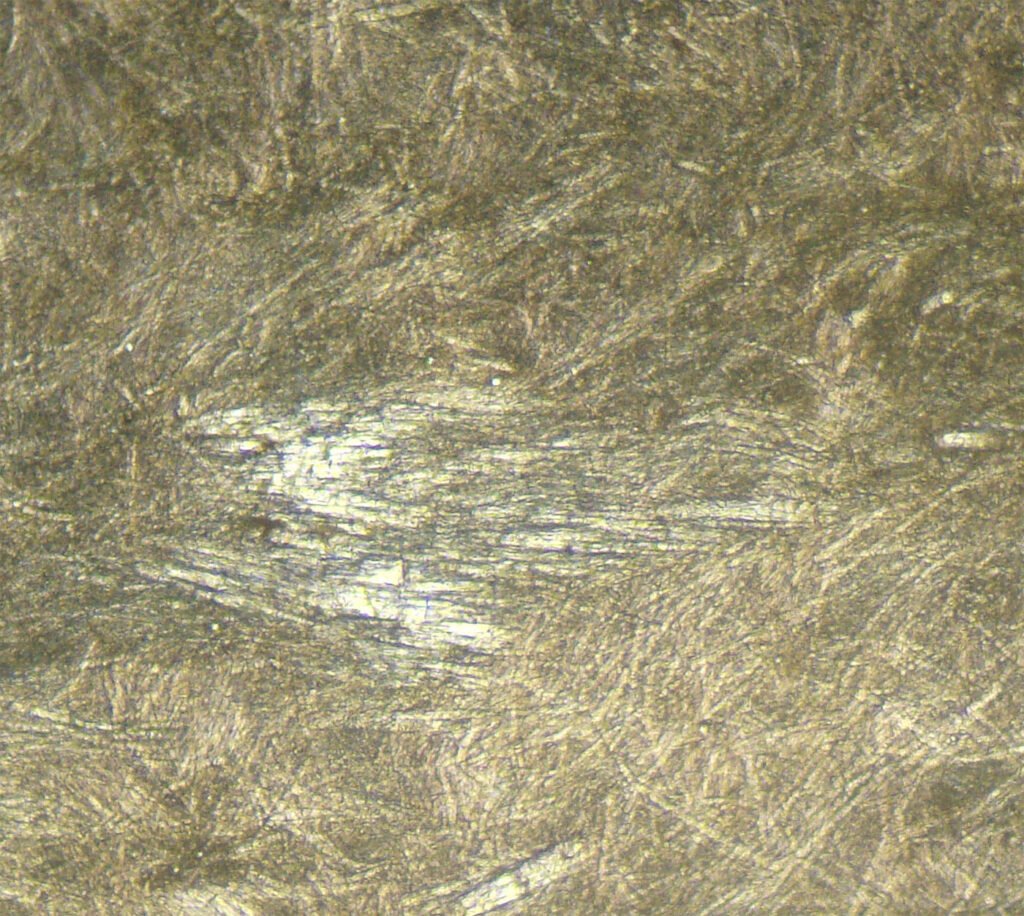
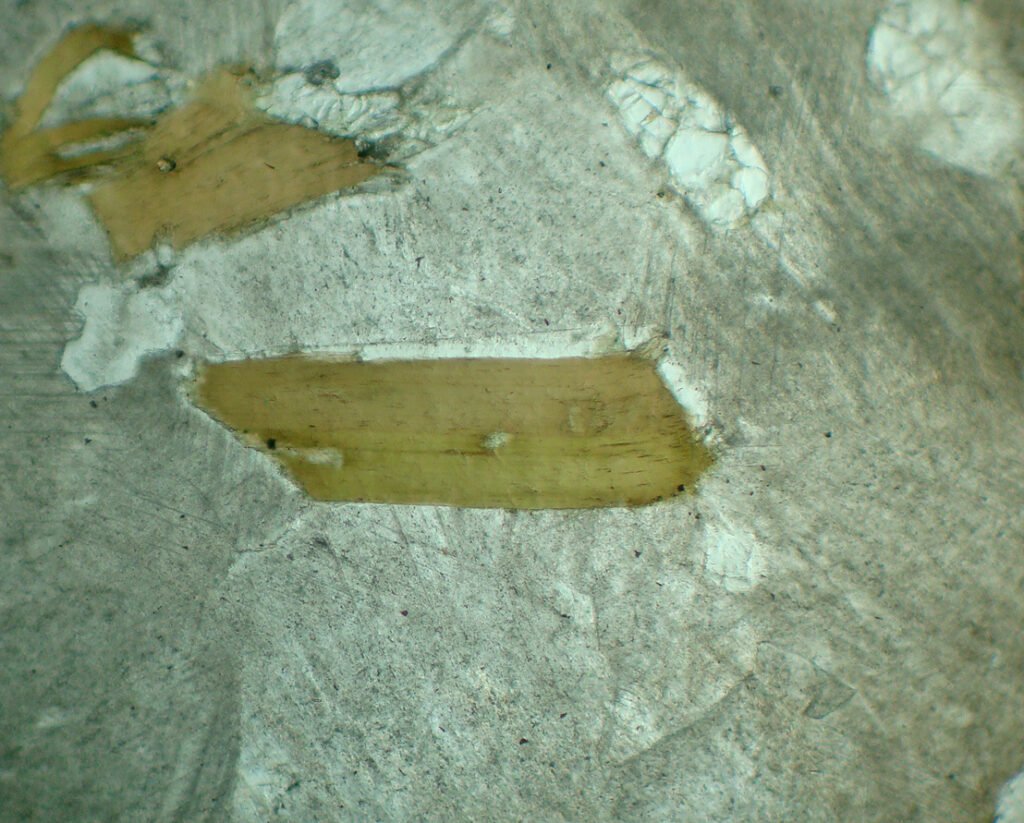
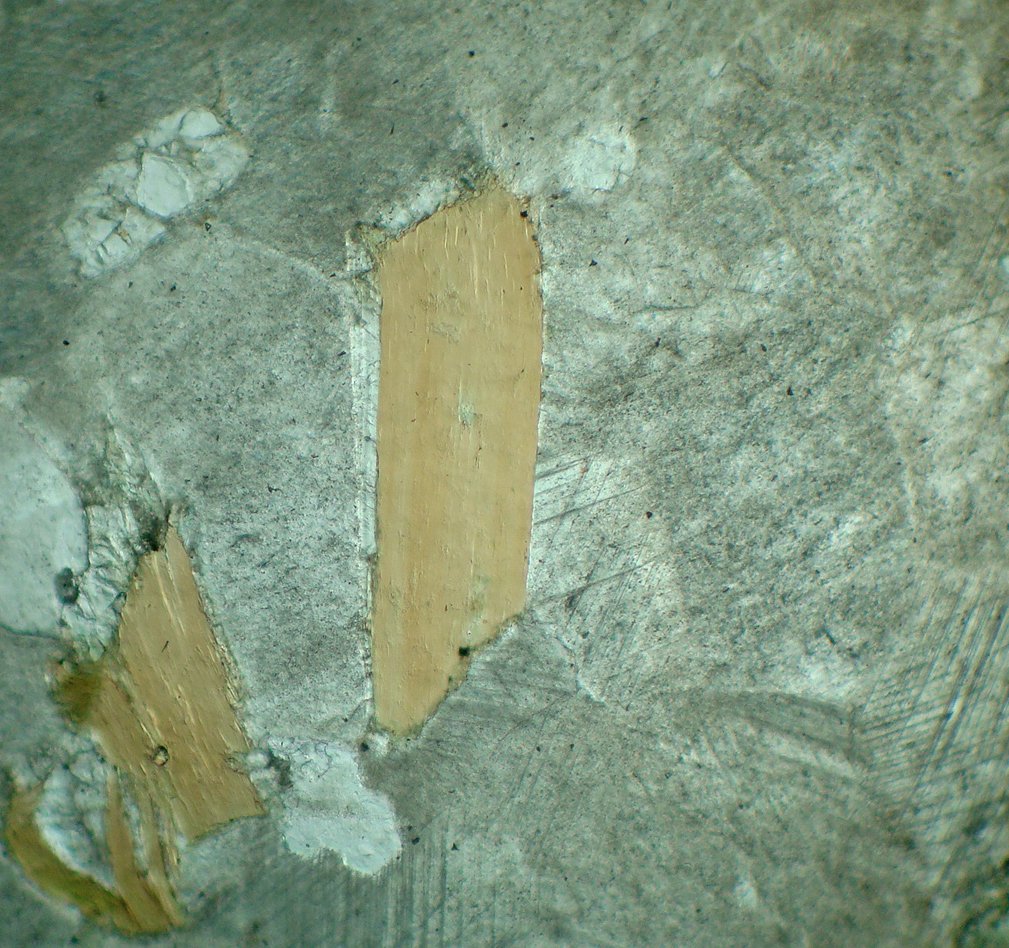
Somewhat rarer monoclinic phyllosilicate, typical mineral of rocks undersaturated in silica and Ca-rich.
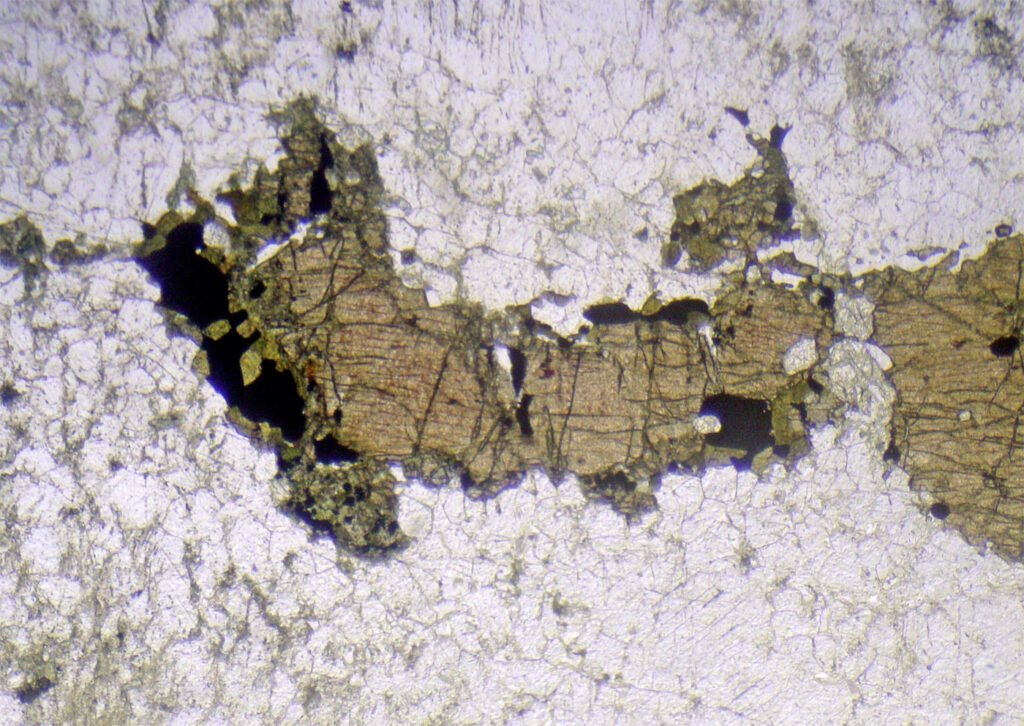
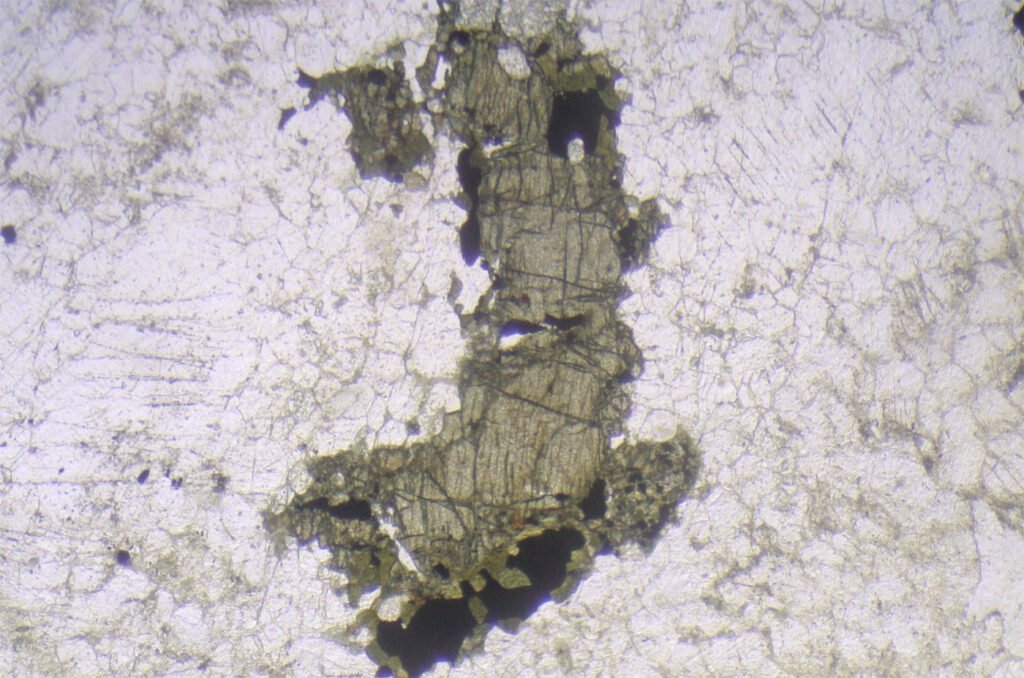
PPL: colorless, but may have moderate brown pleochroism in sections perpendicular to (001); sections parallel to (001) almost without pleochroism. Moderate relief, perfect cleavage, lamellar habit.
XPL: Paralell and mottled extinction. ES(+) and B(-) with small 2V, can simulate to be uniaxial. Very similar to biotite.
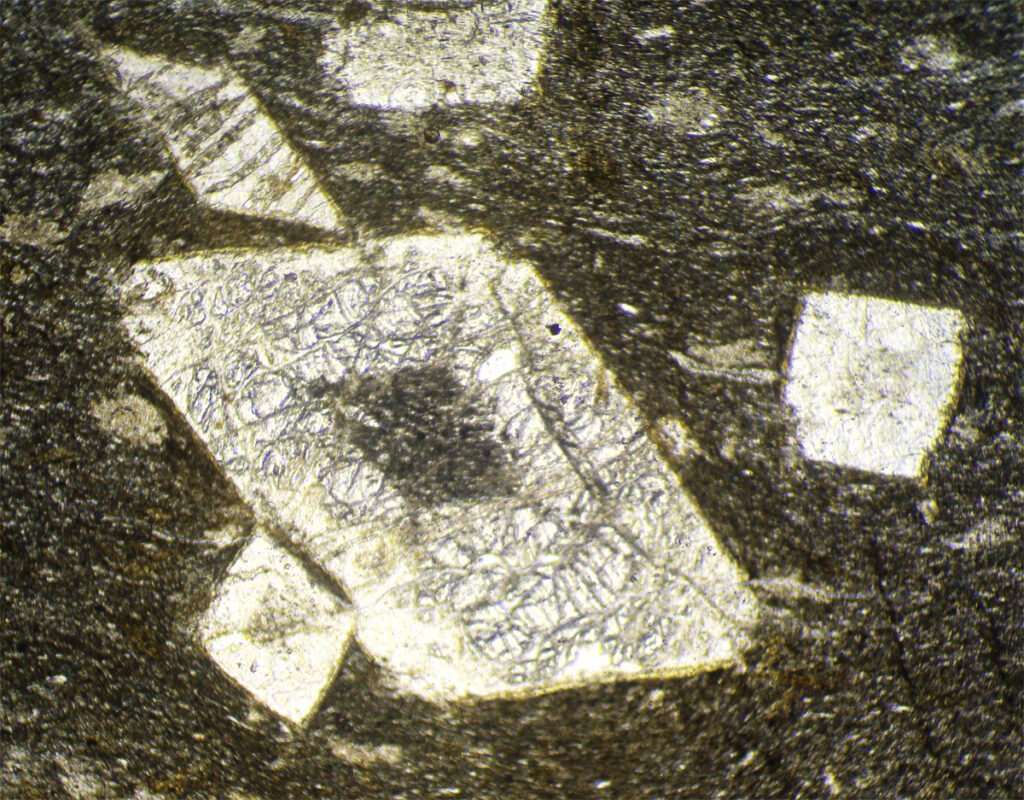
Images: Phlogopite with calcite in PPL, rotated 90 degrees.
Rare orthorhombic sorosilicate, occurs in some specific types of rocks.
PPL: Moderate pink to yellow pleochroism in the variety thulite (of Mn). High relief, short to radiated prisms with rhombic or hexagonal basal sections. One perfect cleavage.
XPL: Anomalous or lower 1st order colors. Extinction paralell, ES (-), B(+) with 2V from 0 to 69º.