Extremely common monoclinic phyllosilicate, occurs in many types of rocks.
PPL: Colorless or pleochroic in pale green. Monoclinic, forms lamellae, fibers or masses.
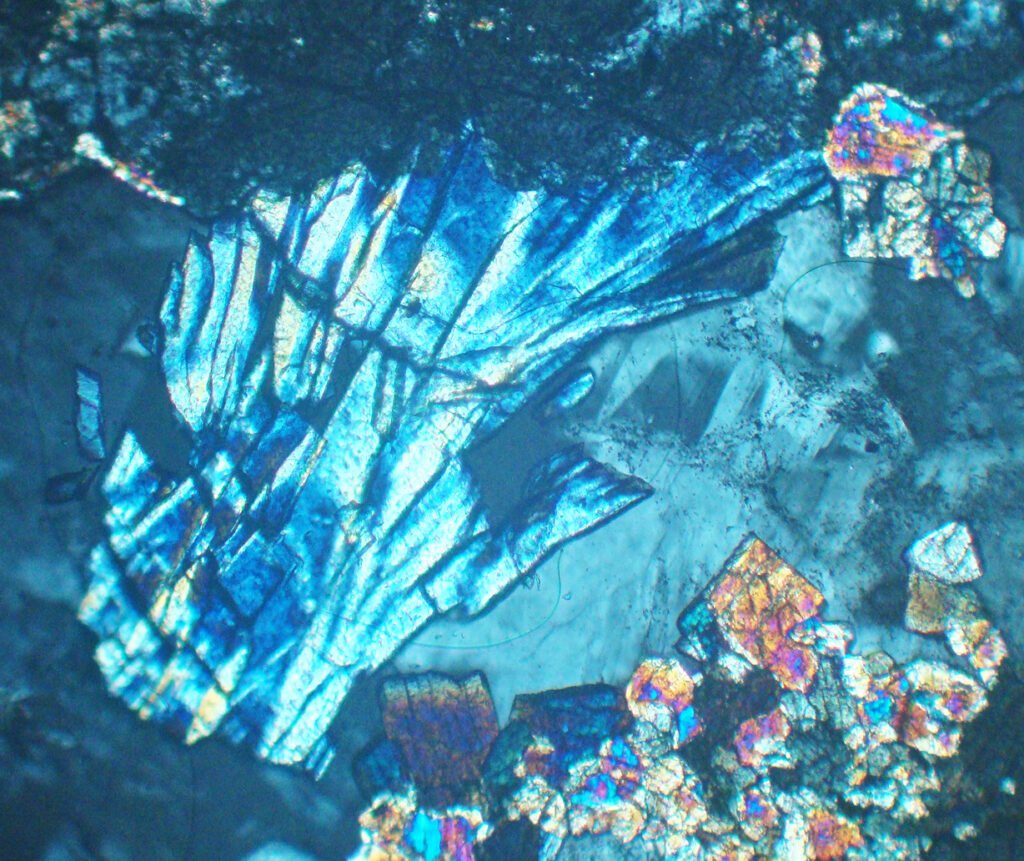
XPL: Anomalous colors in blue (berlin blue), bluish-gray, purple or brown (leather brown). Extinction of 0-9º (simulates parallel extinction!), but not mottled like the micas! ES(+/-), B(+/-), but crystals usually too small to determine these characteristics. Very common as metamorphic mineral or alteration product.
Common monoclinic sorosilicate, occurrs in many types of rocks.
PPL: Colorless or pleochroic in pale yellow, lime green, pale green, yellow-green and brown-green. Monoclinic. High relief. Granular, columnar, acicular. Rhombic basal sections. One perfect cleavage.
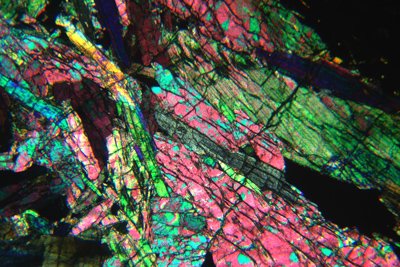
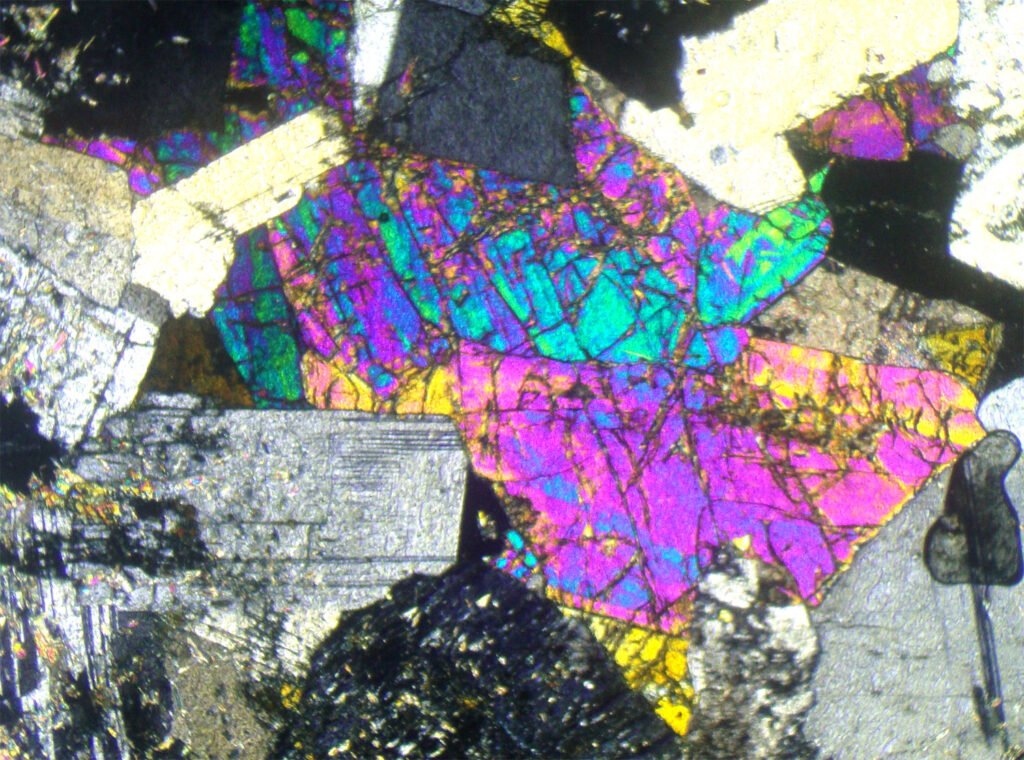
XPL: Intense anomalous colors (very colorful) with zonation (irregular distribution). Extinction paralell or oblique. ES(+/-), B(-), 2V=64-90º.
Less common monoclinic sorosilicate of the Epidote Group.
PPL: Colorless. Prismatic, acicular in radiated aggregates, granular with pseudohexagonal sections. Monoclinic, one perfect cleavage.
XPL: Intense and/or anomalous blue colors. Extinction paralell to cleavage or oblique of 30º. ES(+/-), B(+), 2V from 40-90º. Twins rare, zonation frequent. Epidote and pumpellyite are similar.
Less common orthorhombic sorosilicate, mainly of metamorphic rocks.
PPL: Colorless, rarely pink without pleochroism. The variety thulite (of Mn) shows moderate pink to yellow pleochroism. Orthorhombic. Short to radiated prisms with rhombic or hexagonal basal sections. One perfect cleavage.
XPL: Anomalous colors (blue-gray, brown) or of lower 1st order. Extinction //, ES(-), B(+), with 2V 0-69º.
XPL: Anomalous brown, gray or beige colors. Parallel extinction, ES(+/-). U(+), may be anomalously biaxial. Rare mineral, usually secondary, in cavities (vesicles) of basaltic volcanic rocks.
Rare triclinic nesosilicate of specific types of metamorphic rocks.
PPL: Moderate to strong pleochroism between bluish, green, green-gray, colorless or yellow-green. High relief, cleavage not visible.
XPL: Lower 1st order or anomalous colors. Monoclinic or triclinic, pseudo-hexagonal. Hourglass zoning possible. Extinction tends to oblique. ES(-), twins common, B(+/-) with 2V 36-70º.
Rare orthorhombic inosilicate (Strunz) or phyllosilicate (Dana), typical of cavities in basic and intermediate volcanic rocks.
PPL: Colorless. Tabular crystals, prismatic or radiated, in bow-tie patterns. Orthorhombic. Medium relief. Good {001} cleavage.
XPL: 2nd order or anomalous colors (blue or brown). Parallel, undulating or checkered extinction. ES(+/-), rare twins, zoning possible. B(+), 2V from 64-71°. Typical of alkalinic volcanic rocks.
Rare sorosilicate, typical of alkaline volcanic rocks.
PPL: Colorless. Trigonal, prismatic or tabular crystals, with square and elongated basal sections. Poor cleavages.
XPL: May have anomalous colors such as blue or leather brown. Parallel extinction, rare twins and zonation. U(+/-). It forms small crystals (~plagioclases) in the matrix of silica-undersaturated volcanic rocks.
Tetragonal sorosilicate of contact metamorphic impure marbles.
PPL: Colorless, sometimes yellowish, pale green or brownish. Uneven color distribution is common. Granular, anhedral or short prisms. Poor cleavage. Tetragonal.
XPL: Anomalous colors are typical (low interference colors or Berlin blue, brown, purple, etc.). Extinction tends to parallel, ES(-). Rare twins. Usually zoned. U(-), can have 2V from 17-33º.
Rather rare monoclinic sorosilicate, typical of specific metamorphic rocks.
PPL: Weak to moderate pleochroism between colorless, yellowish, light green and blue-green. Monoclinic. Lamellar, acicular or fibrous. Medium to high relief, 2 good cleavages.
XPL: Colors between 1st and 2nd order or anomalous (indigo blue and leather brown). Zoning common. ES(+/-), twins common, B(+), 2V 7º-110º. Rare mineral.
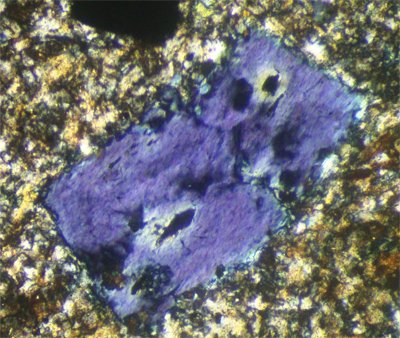
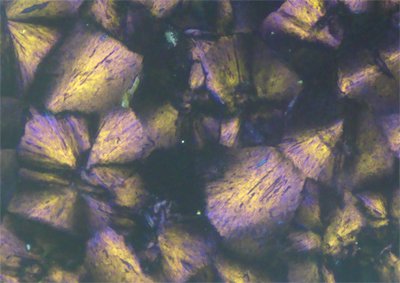
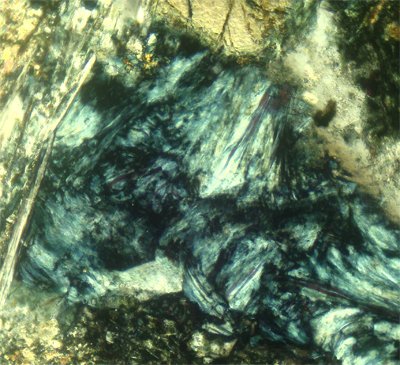
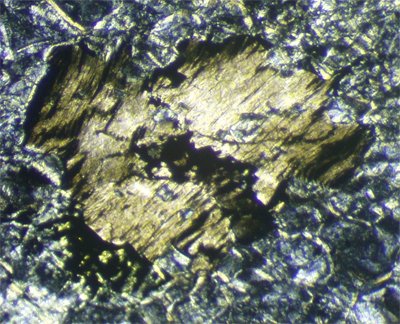
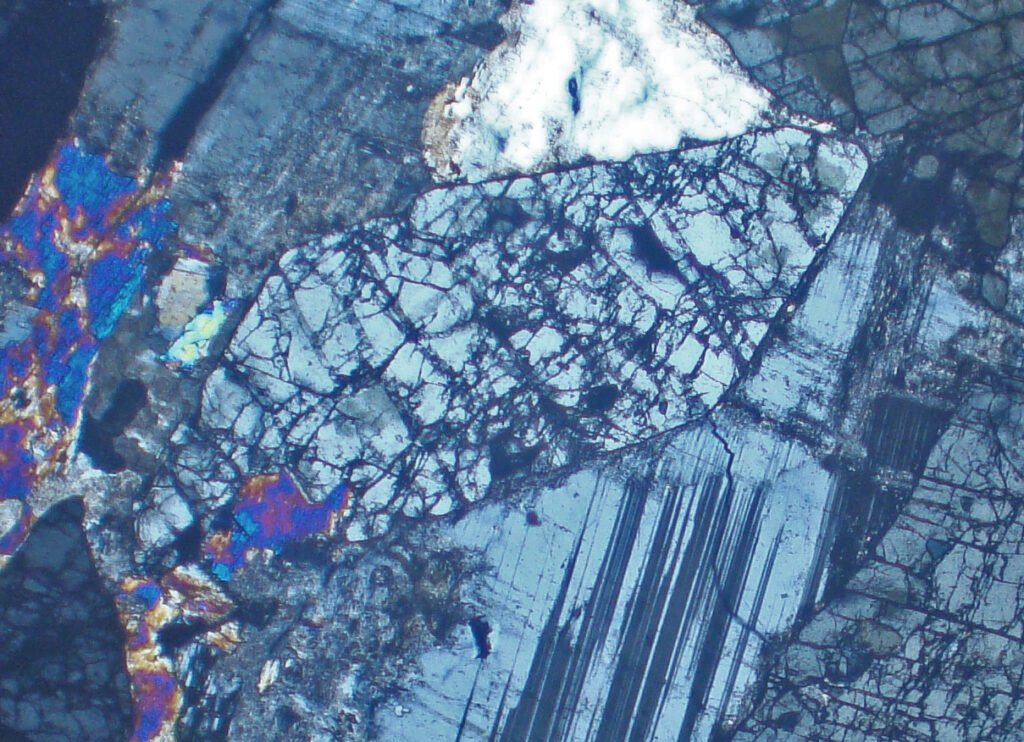
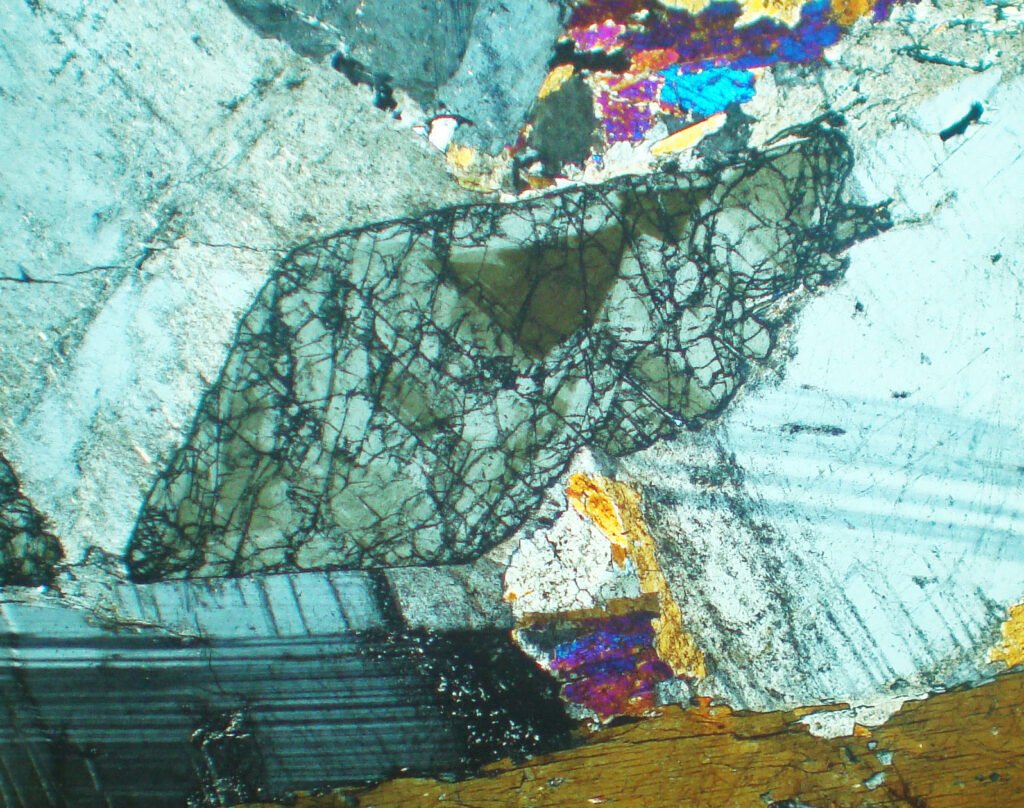
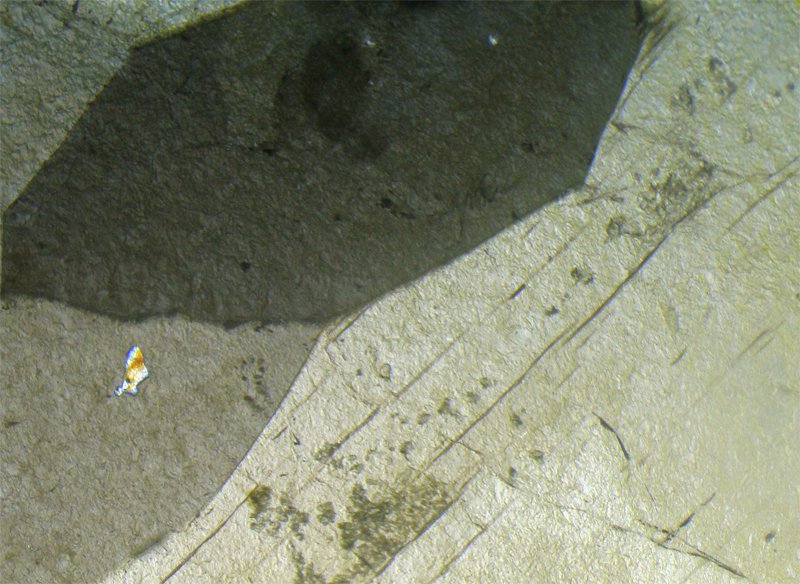
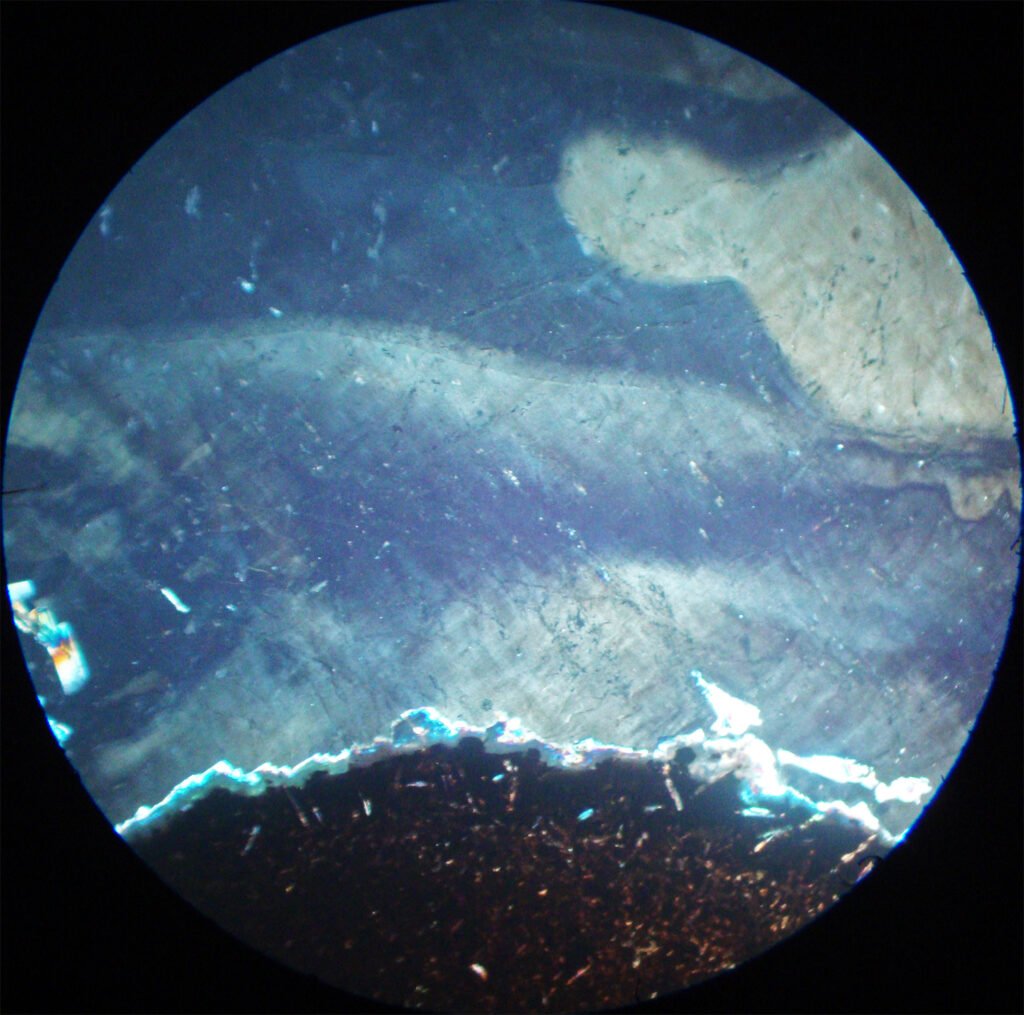
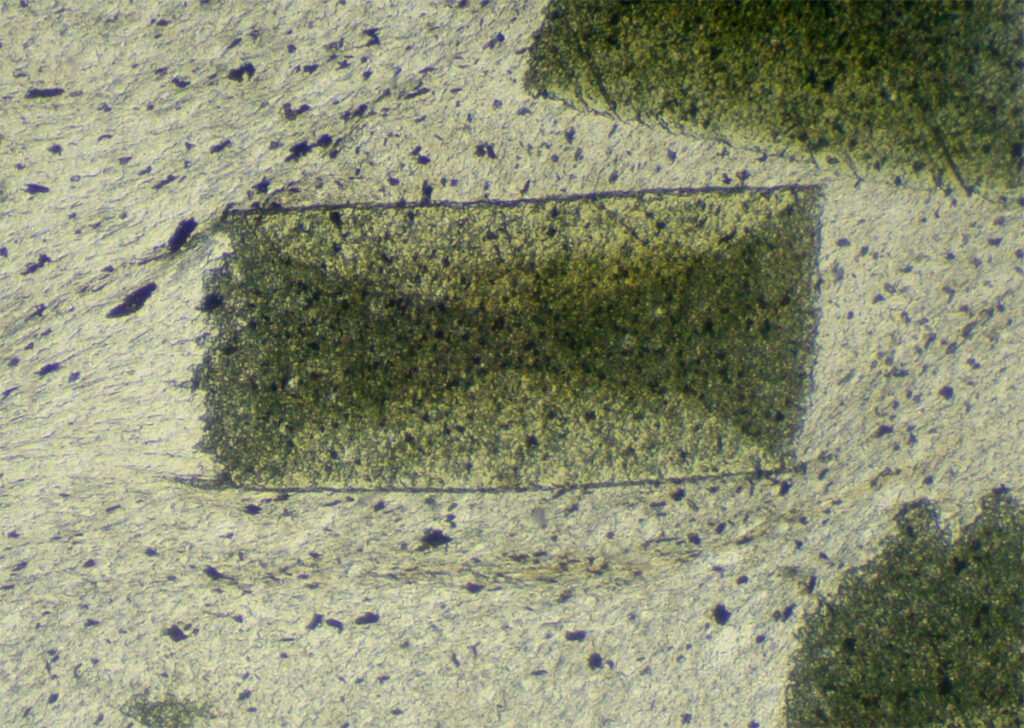
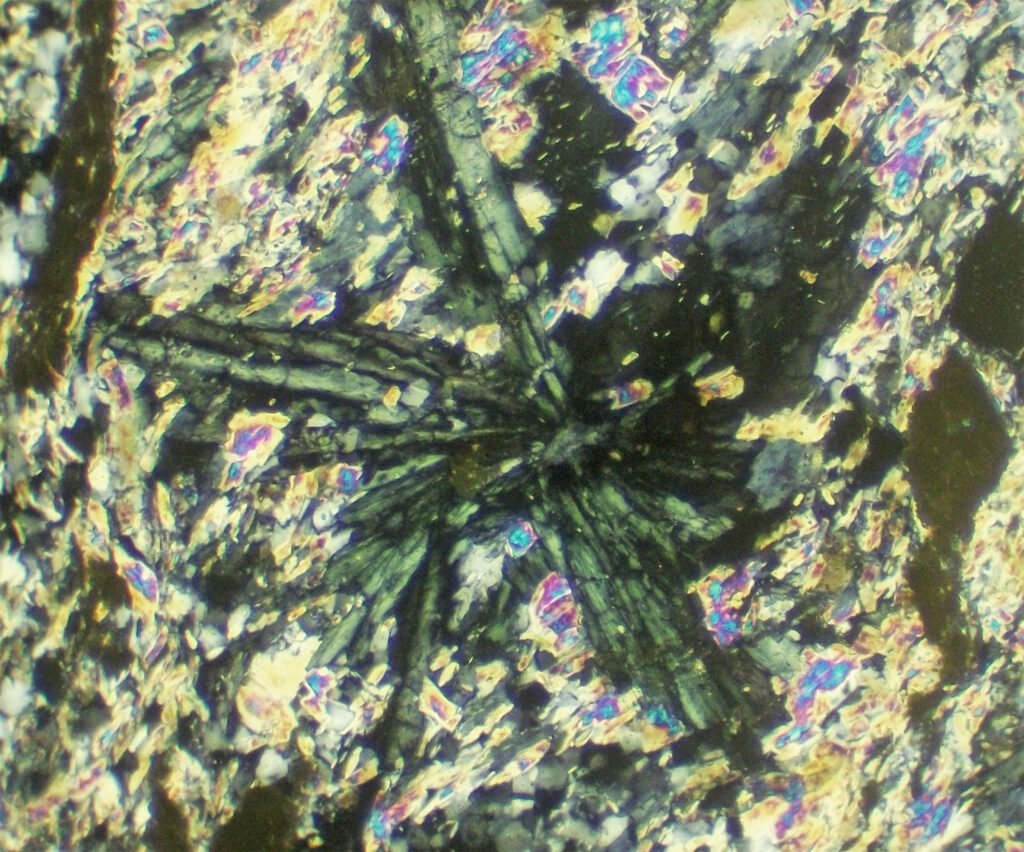
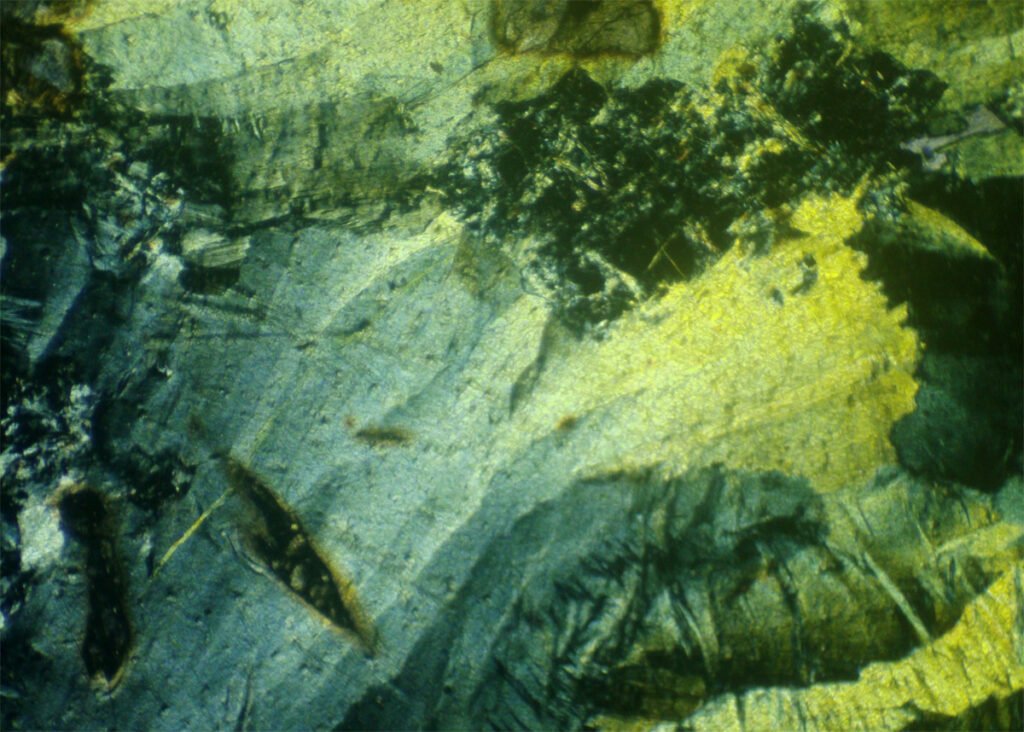
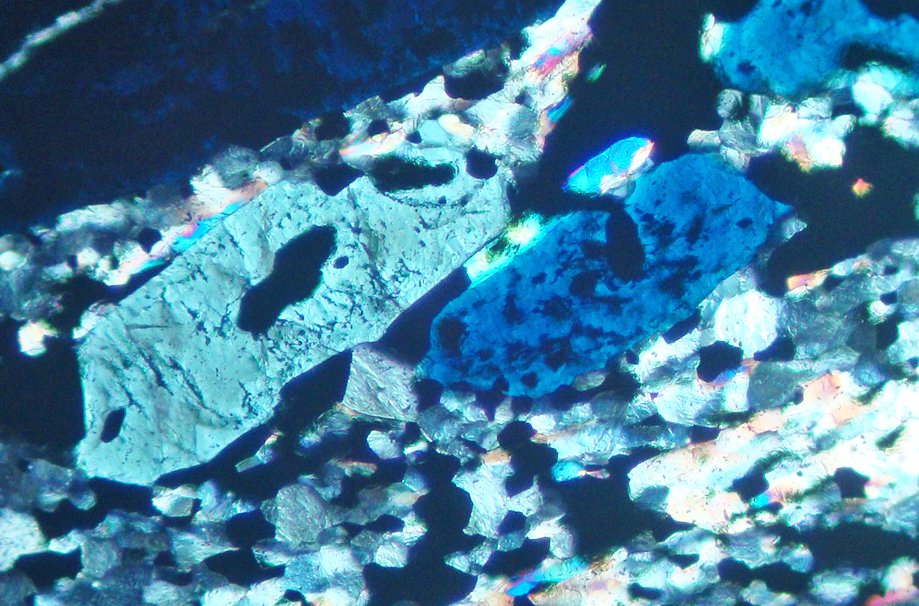
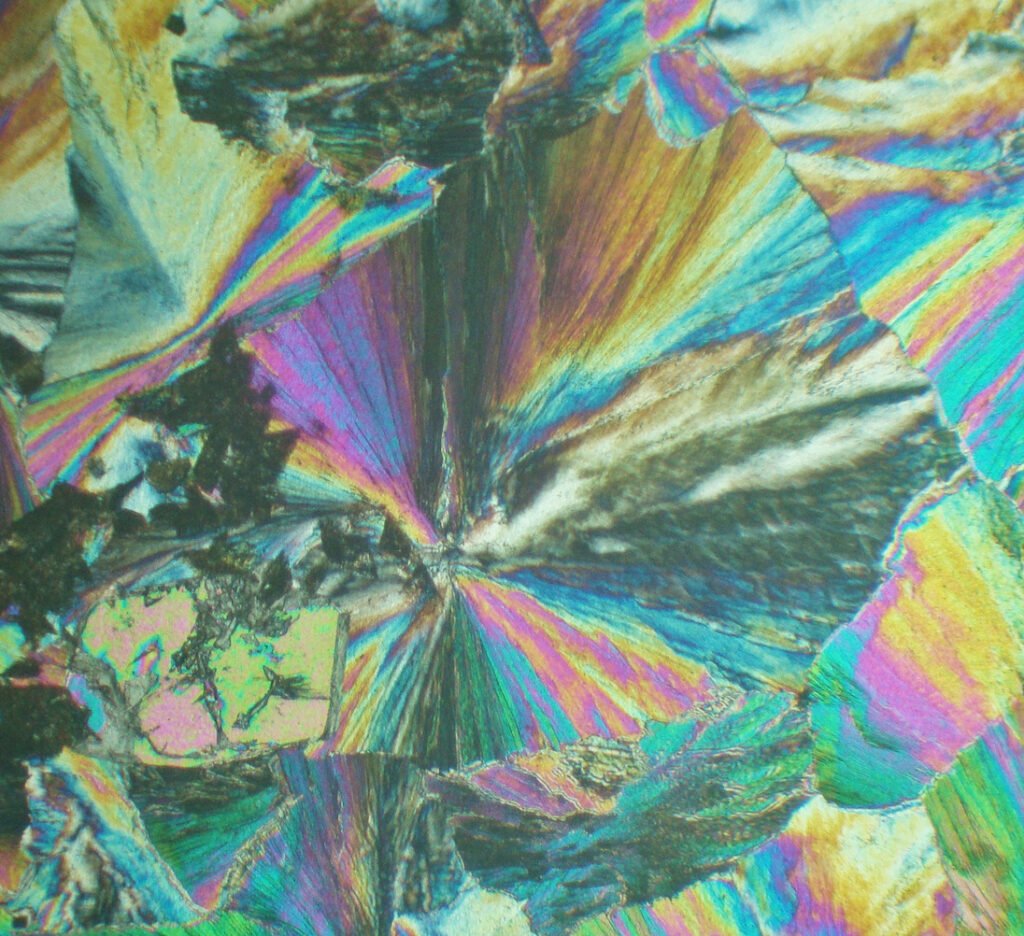
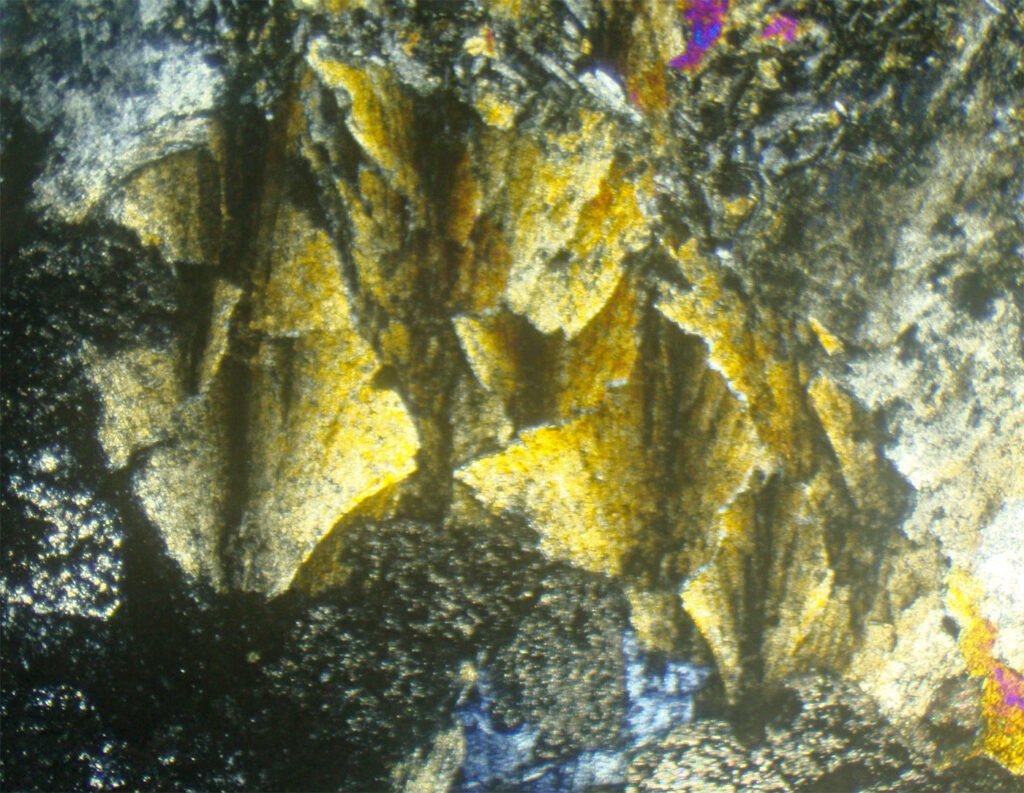
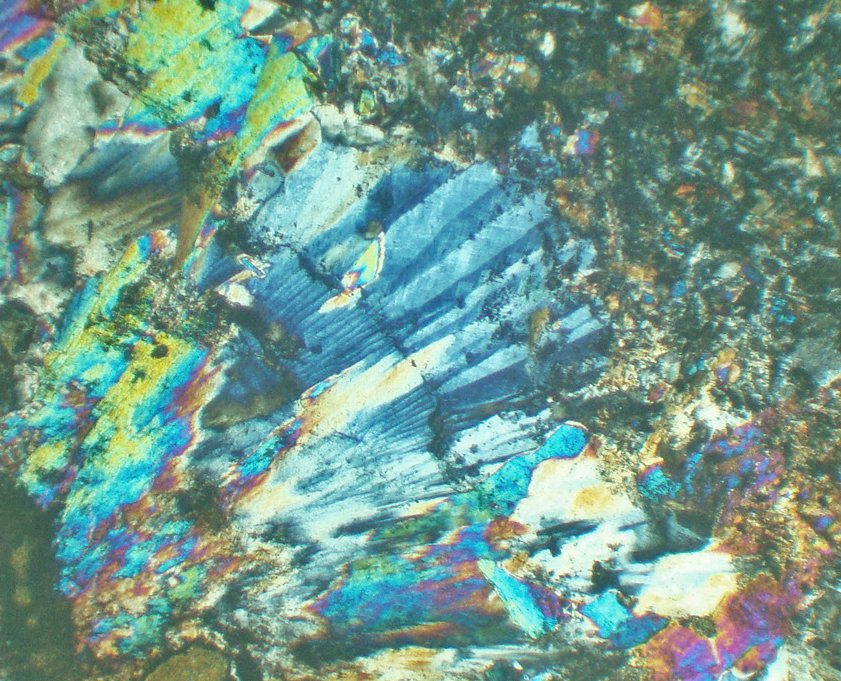
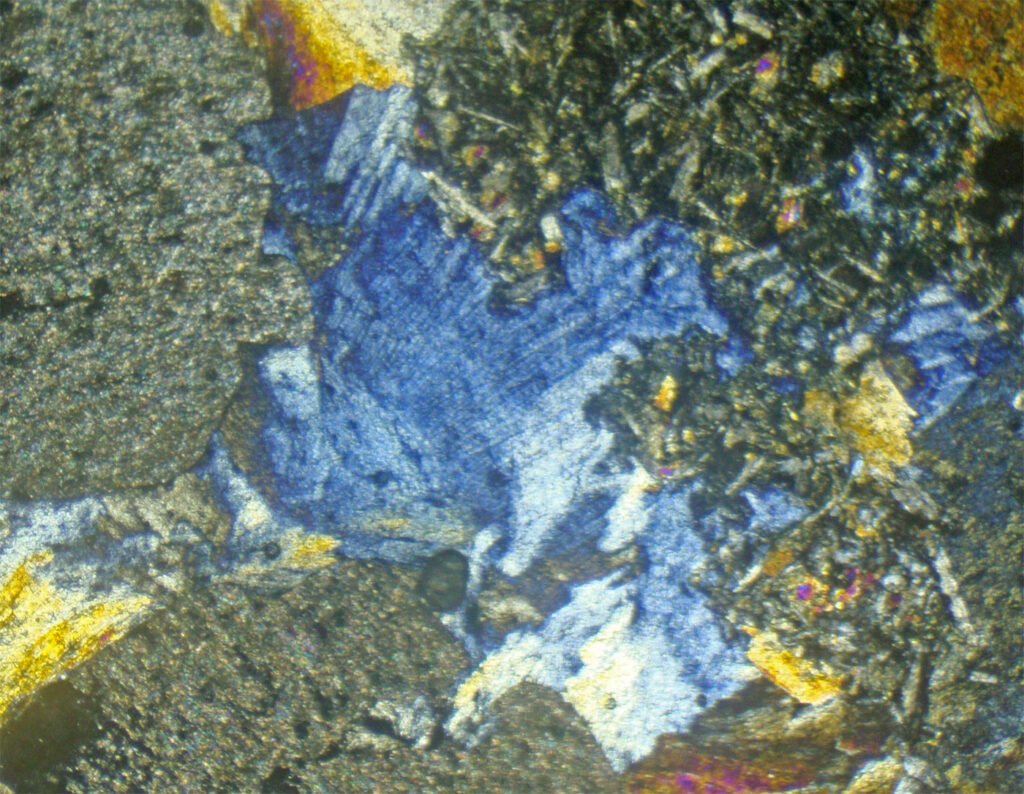
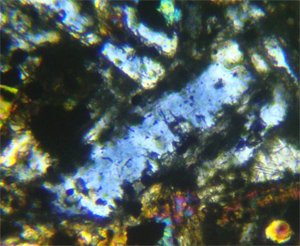
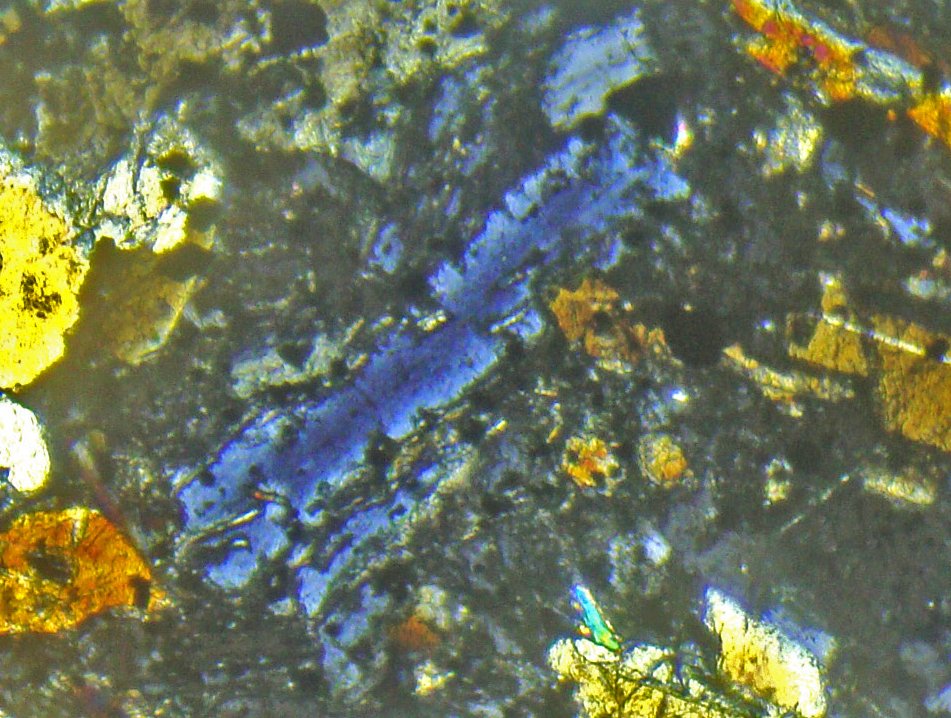
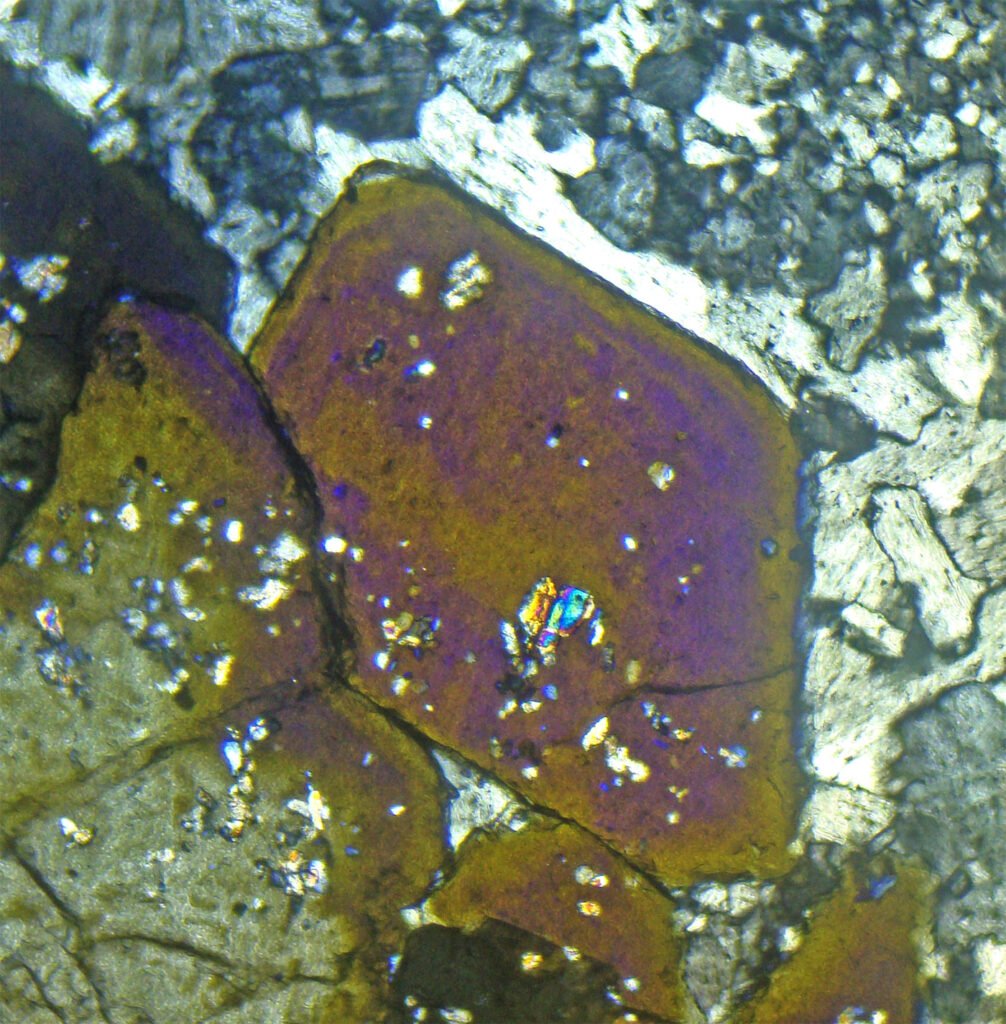
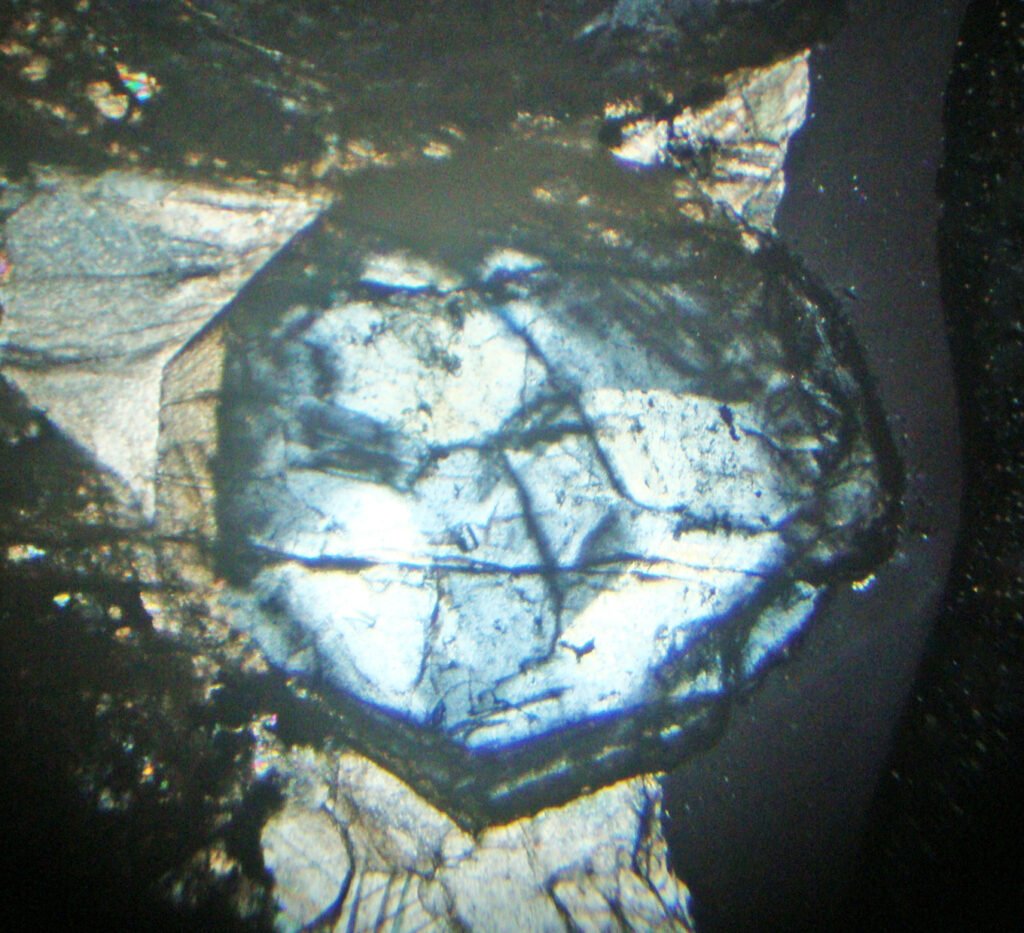
Colorless or pleochroic minerals in PPL, with anomalous interference colors in XPL.
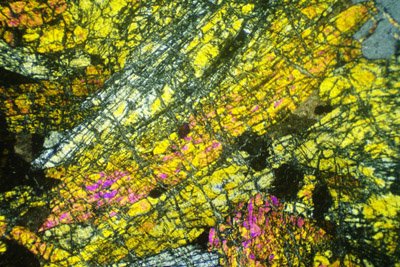
The images are of the anomalous colors.