1. Characteristics
The characteristics below refer to schorlite.
Crystal system: Trigonal, piramidal ditrigonal.
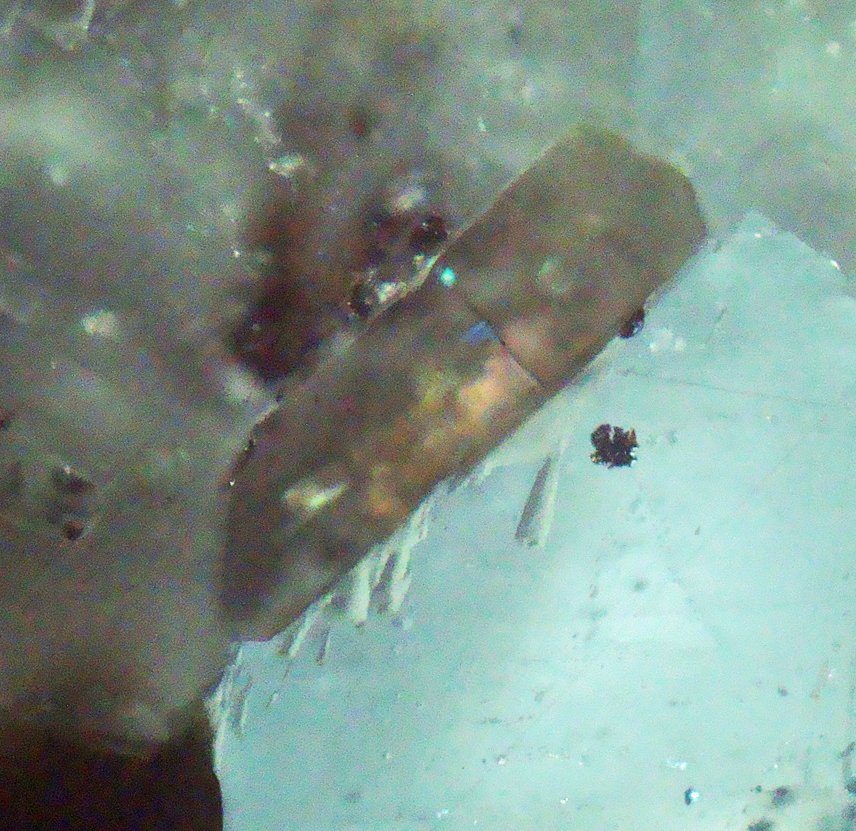
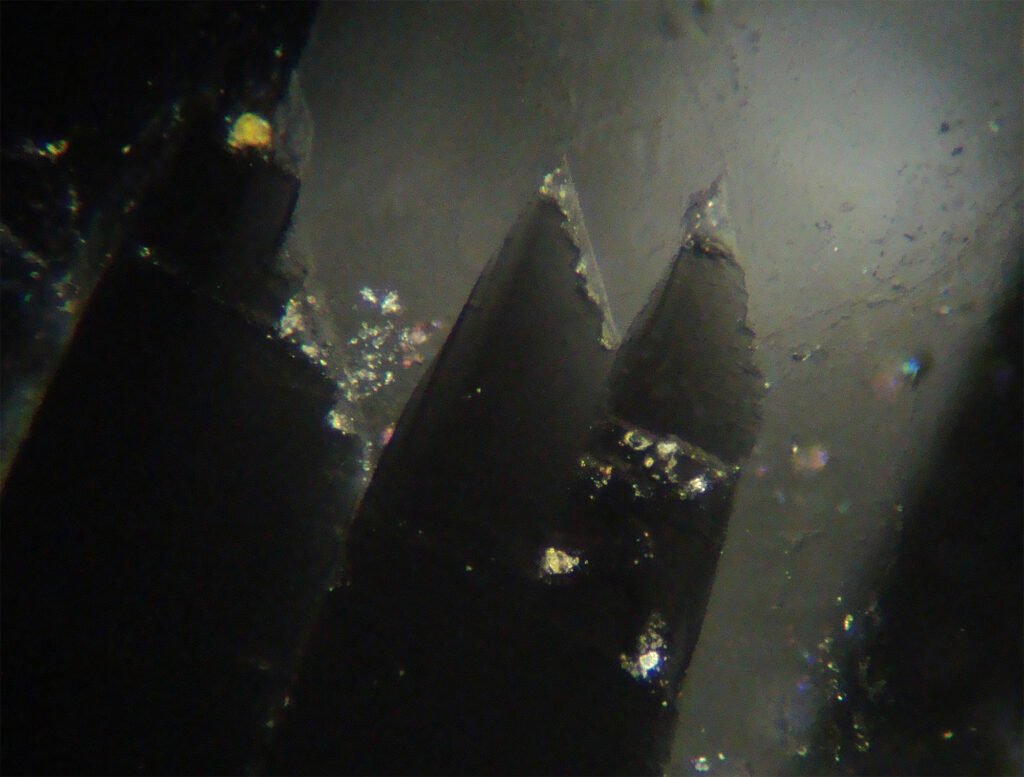
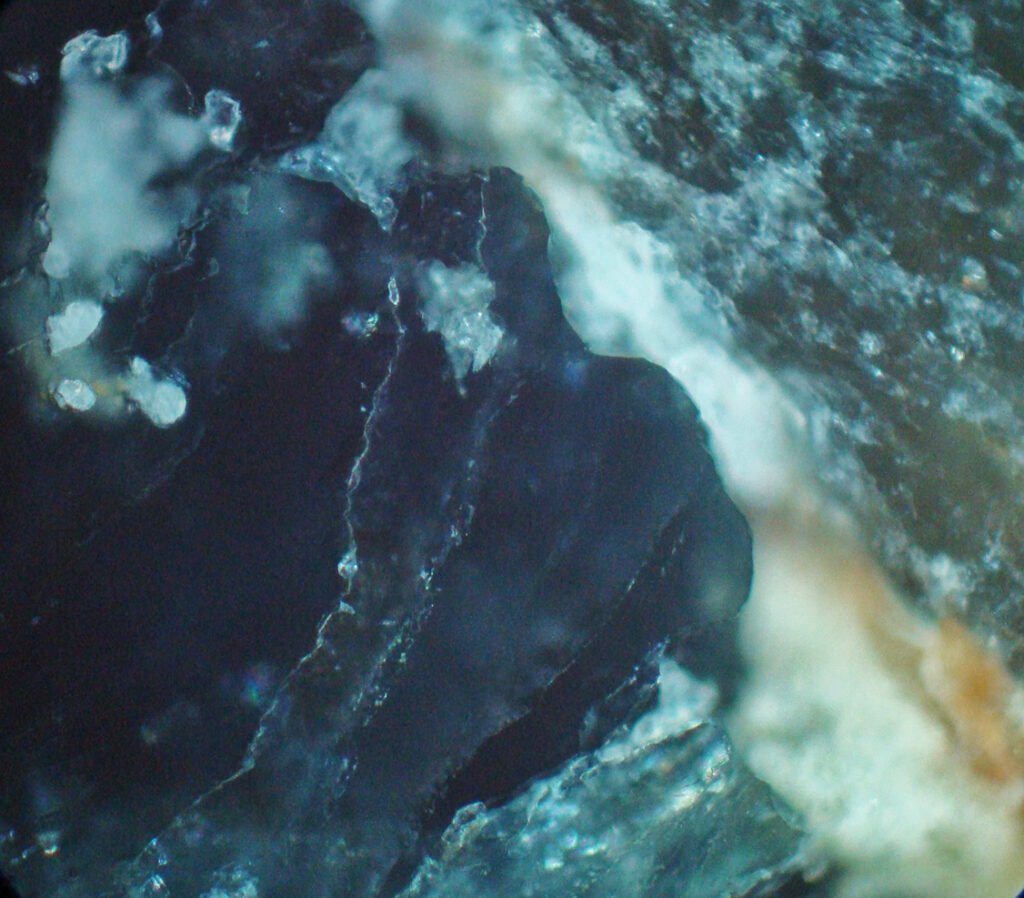
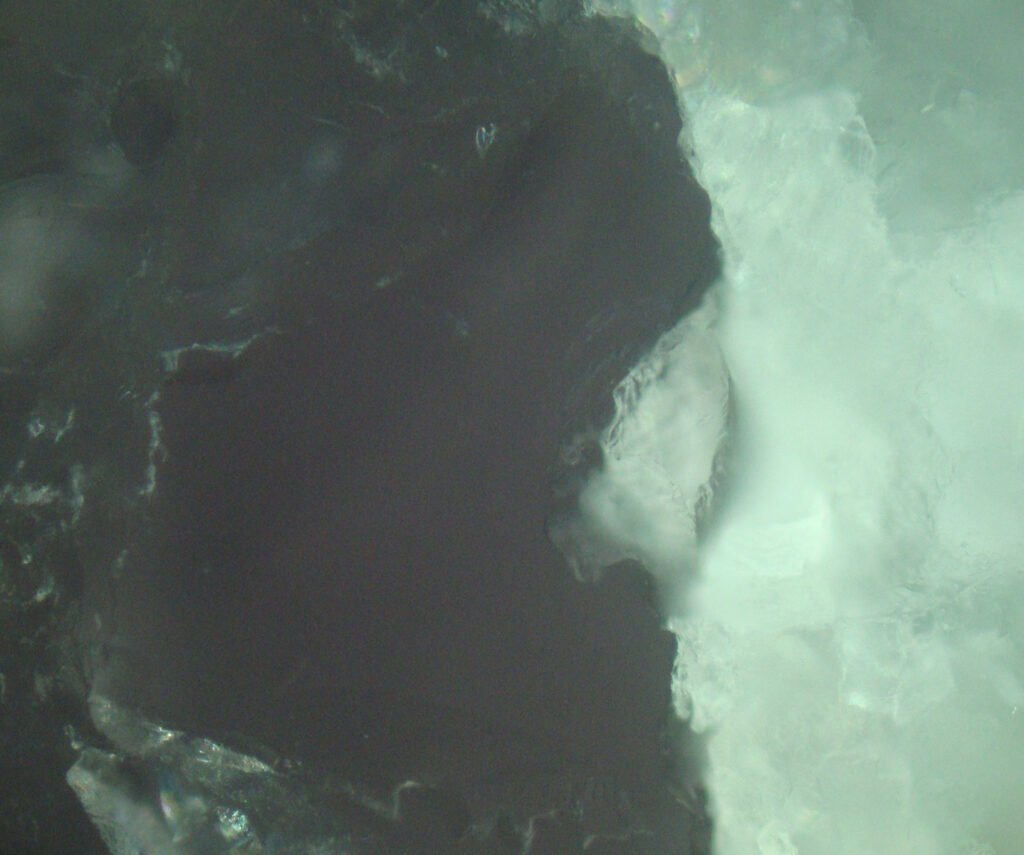
Color: Bluish black to black, sometimes brownish black, rarely greenish black.
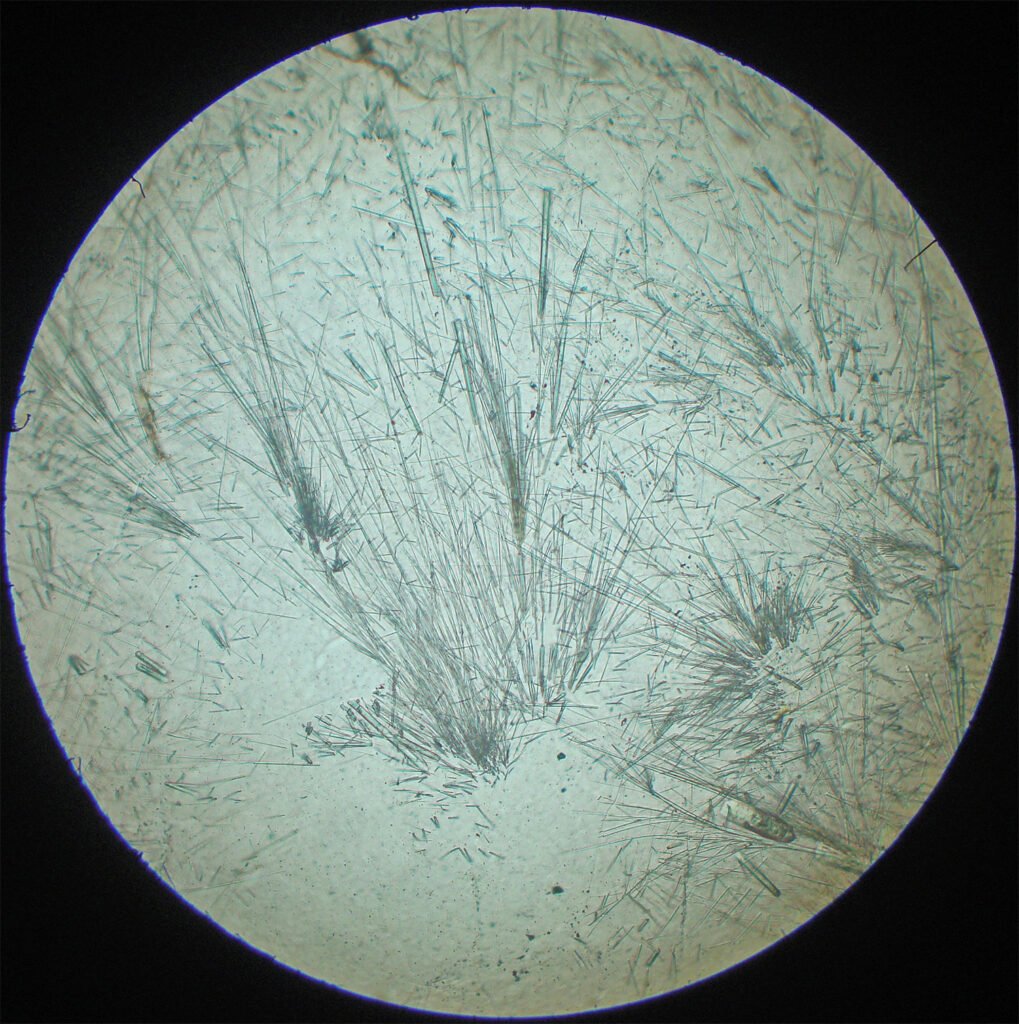
Habit: Trigonal prisms with convex faces, can be granular to acicular.
Cleavage: {11-20} poor, {10-11} poor.
Tenacity: Brittle.
Twinning: Rare.
Fracture: Irregular, conchoidal.
Mohs Hardness: 7
Parting: No.
Streak: Grayish white to bluish.
Lustre: Vitreous, greasy.
Diaphaneity: Transparent.
Density (g/cm³): 3.18 – 3.22
2. Geology and Deposits
Tourmaline is typical of granitic pegmatites and high temperature hydrothermal veins, being accessory in granites, granodiorites and related felsic rocks.
In metamorphic rocks, it is common in schists, gneisses, quartzites and phyllites. It also occurs in dolomites and metasomatic limestones (skarns) in contact metamorphic zones, as well as in some cornubianites.
Sometimes it occurs in greisen and also in albitites related to carbonatites.
It is found in sediments (placers) and sedimentary rocks such as sandstones (graywackes).
3. Mineral Associations
In granitic pegmatites, it is associated with the typical minerals of this paragenesis: quartz (rock crystal and smoky crystal), albite (cleavelandite), potassic feldspar (microcline), mica (muscovite, lepidolite), beryl (aquamarine), fluorite, topaz and others.
In metamorphic rocks, paragenesis changes and the number of associated minerals increases.
Dravite, another very common tourmaline, is associated with quartz, feldspar (albite), micas (muscovite, phlogopite), carbonates (calcite, magnesite), corundum, anatase and pyrite.
4. Transmitted Light Microscopy
Refraction indices: no: 1.660 – 1.672 ne: 1.635 – 1.650
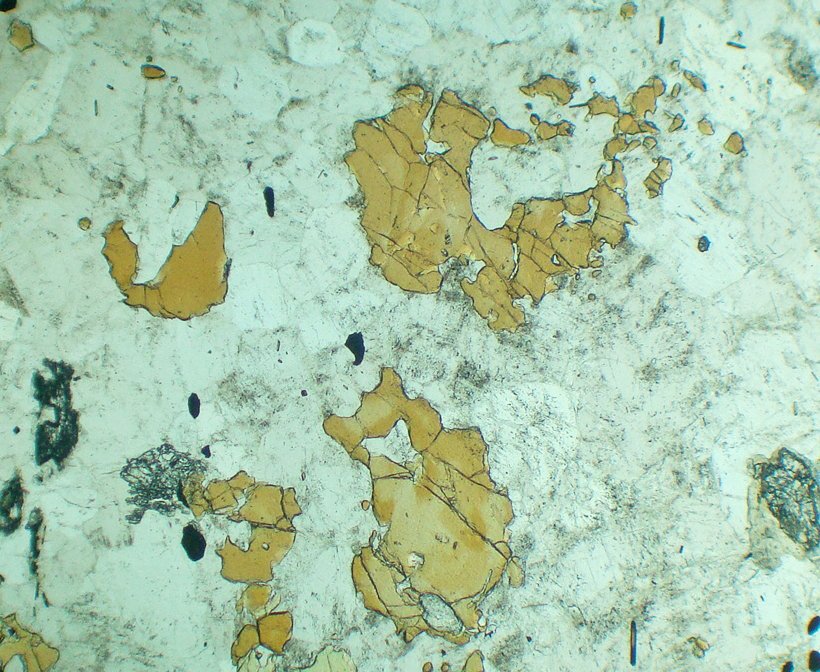
PLANE POLARIZED LIGHT – PPL
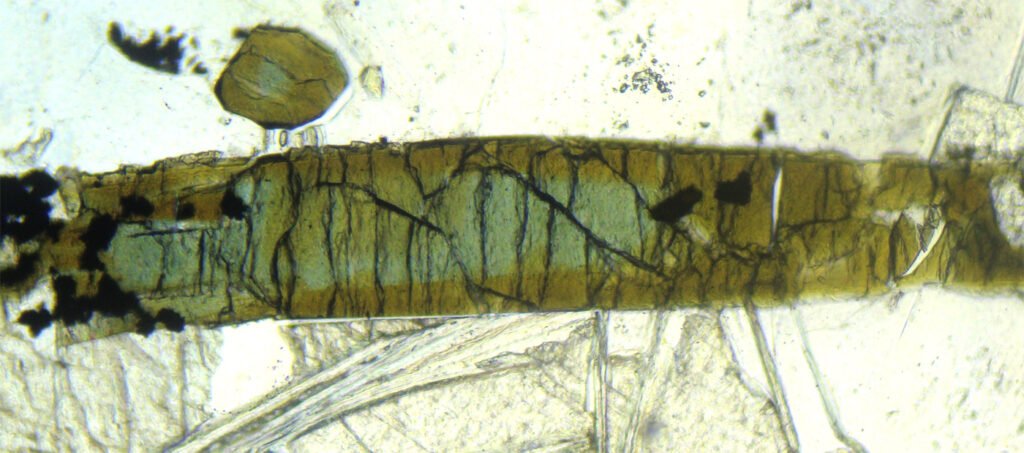
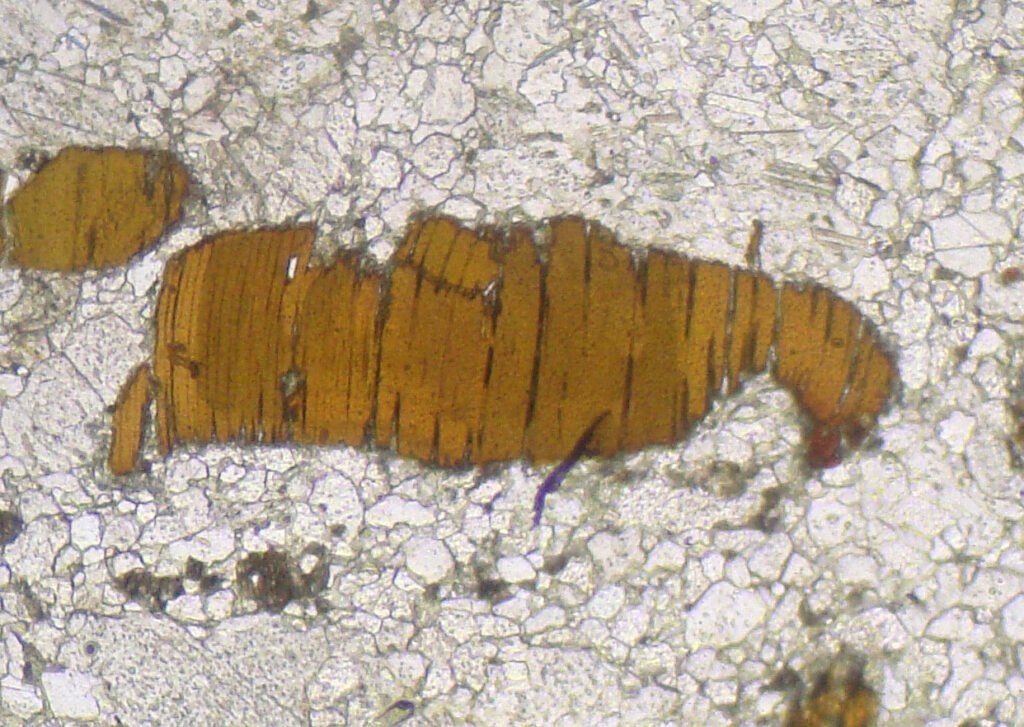
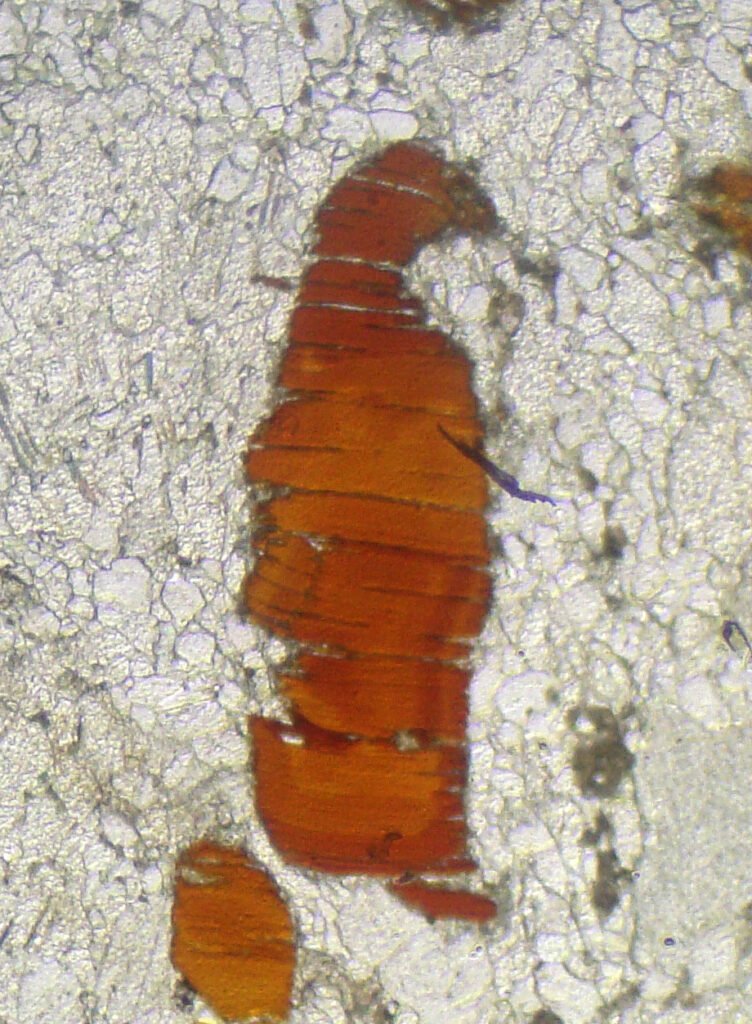
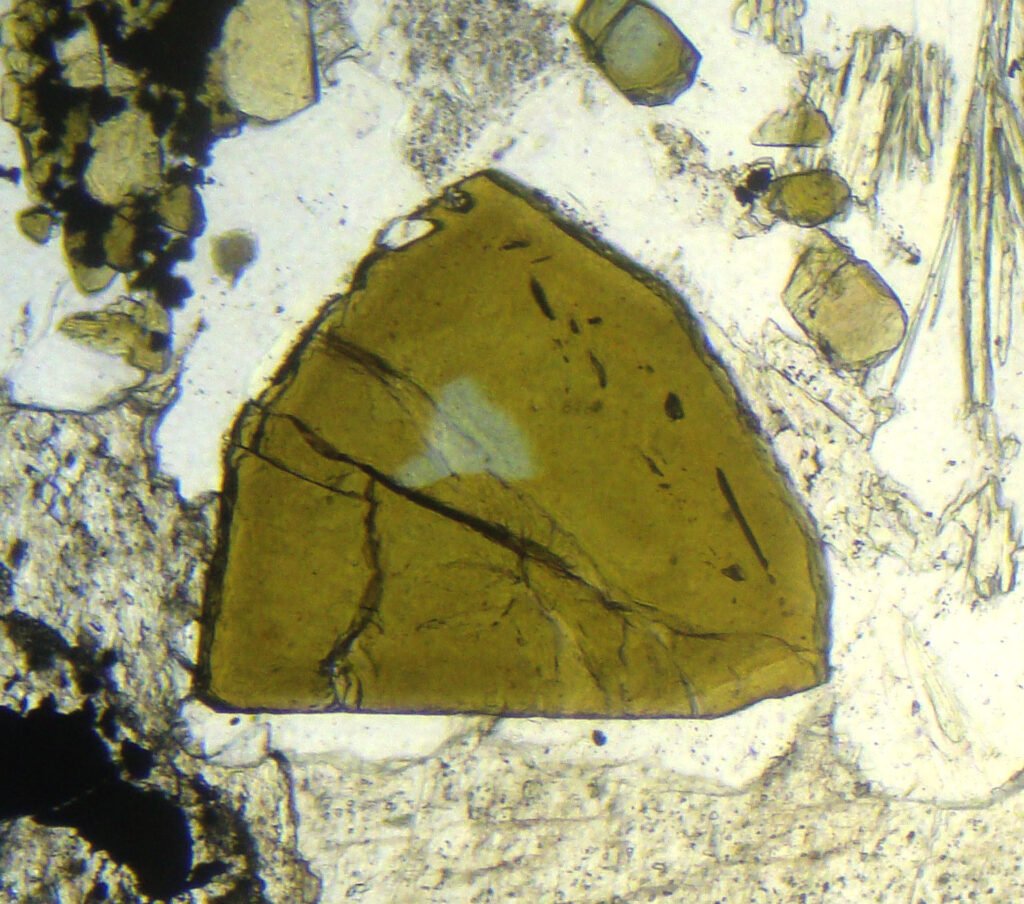
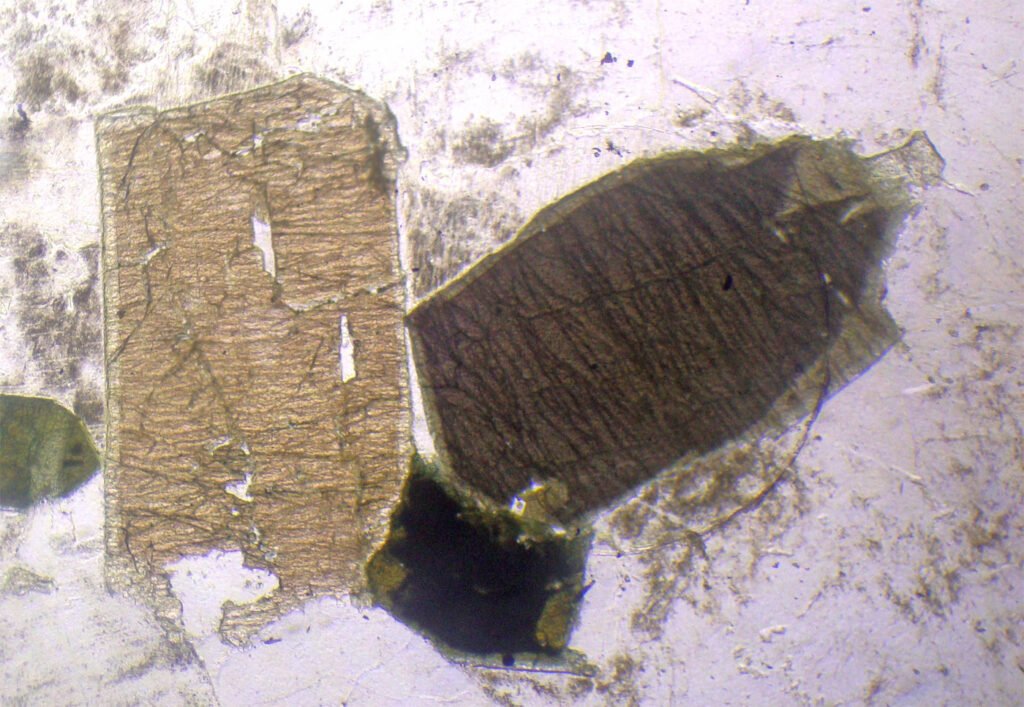
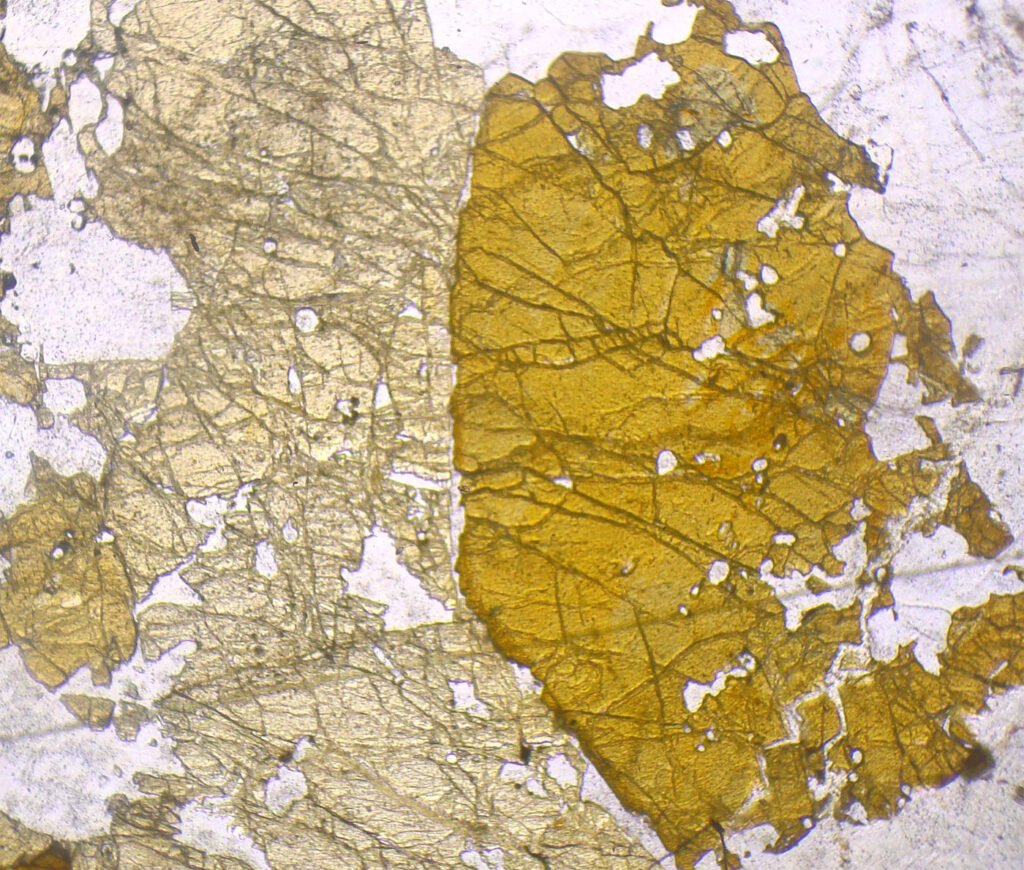
Color / Pleochroism: Colorless or intensely colored in yellow, orange, blue, green, red, black and brown, with pleochroism.
Longitudinal sections show strong pleochroism; basal sections have very weak pleochroism or no pleochroism.
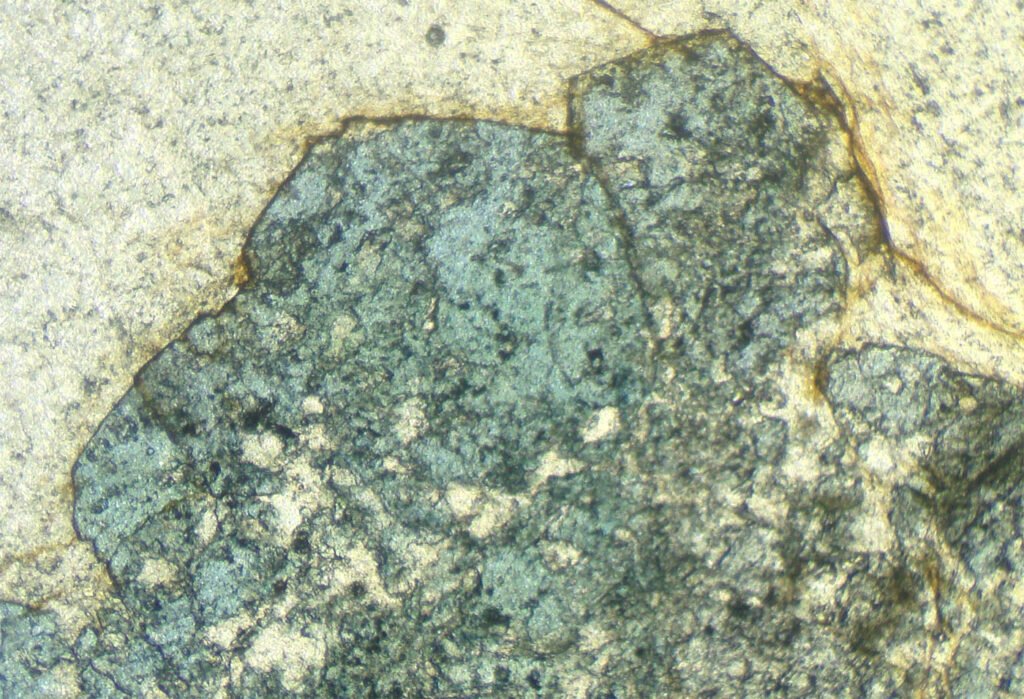
Colors are often unevenly distributed, with spots and zones of different shades, with or without a defined pattern (edges/center).
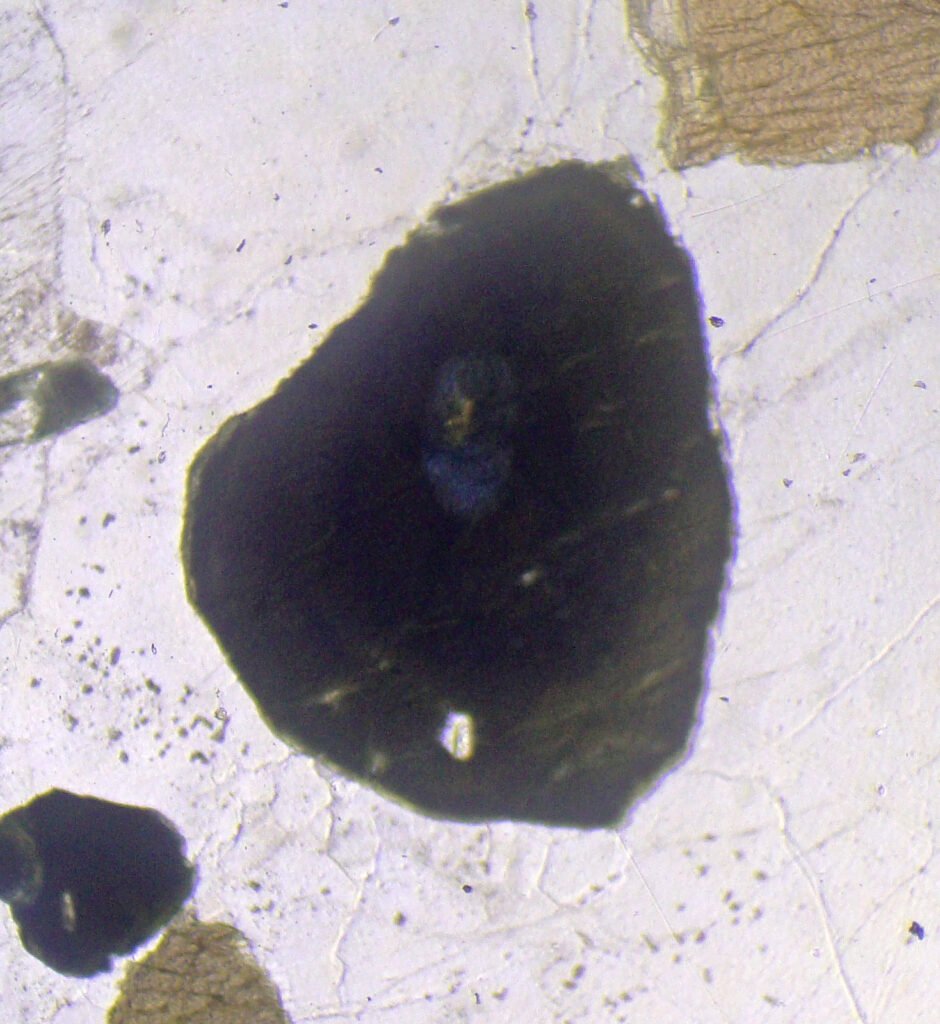
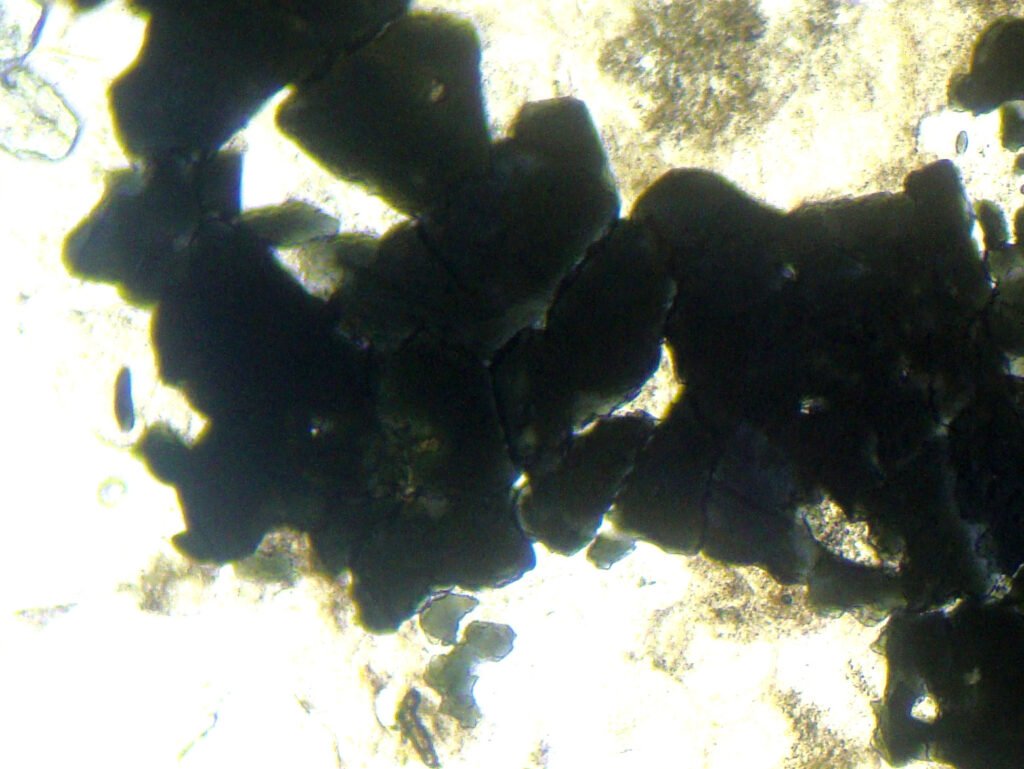
When it occurs in very dark colors, it can simulate an opaque mineral.
Relief: Moderate to high.
Cleavage: {110} and {101} weak, very poorly developed, not normally visible in thin section.
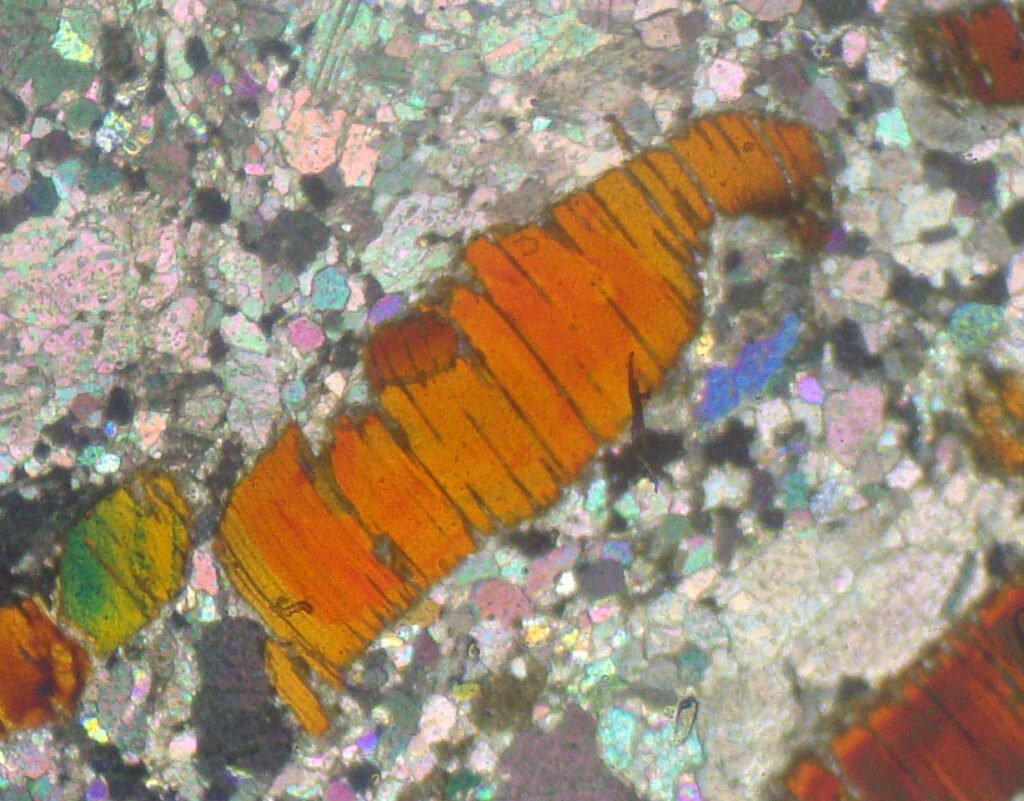
Habits: Long prismatic with fractures perpendicular to the elongation (diagnostic!).
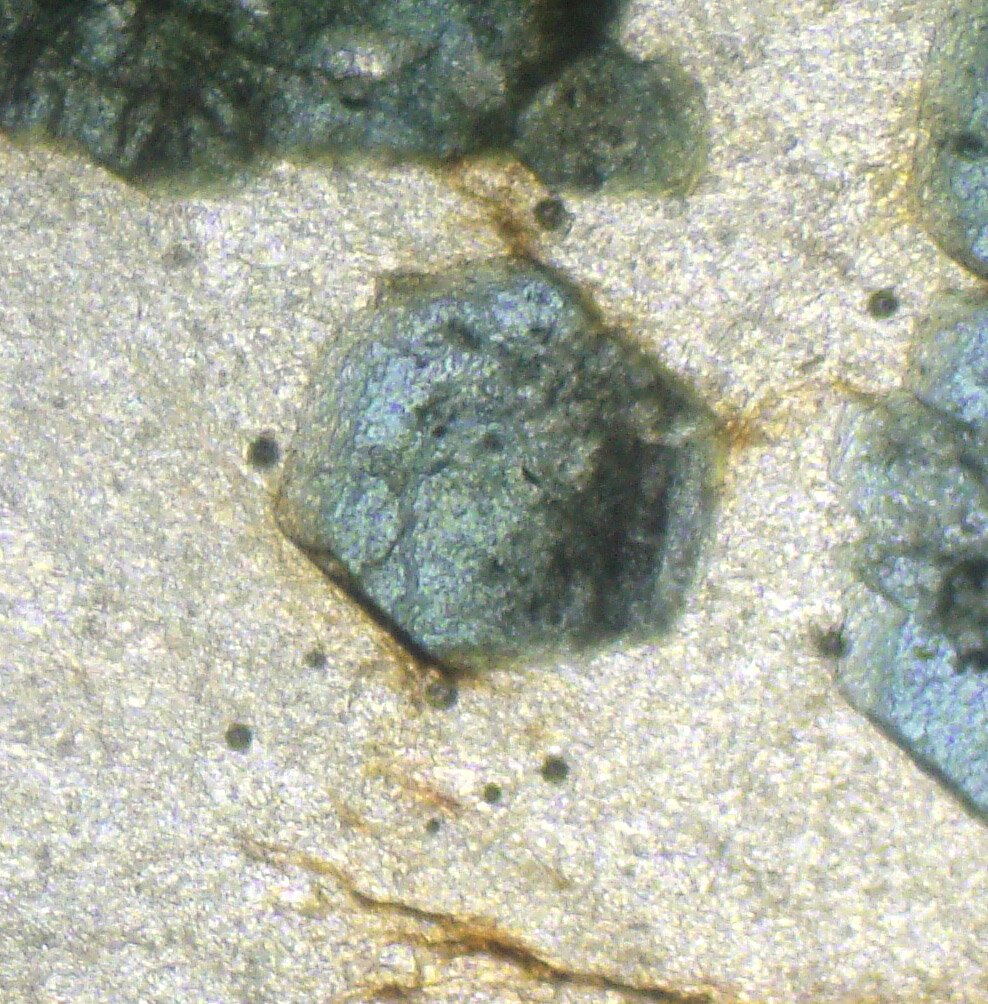
Basal sections can be rounded, triangular or hexagonal.
May form radial aggregates of microcrystals (“suns”). It can form completely xenomorphic (anhedral) grains, which make it difficult to recognize.
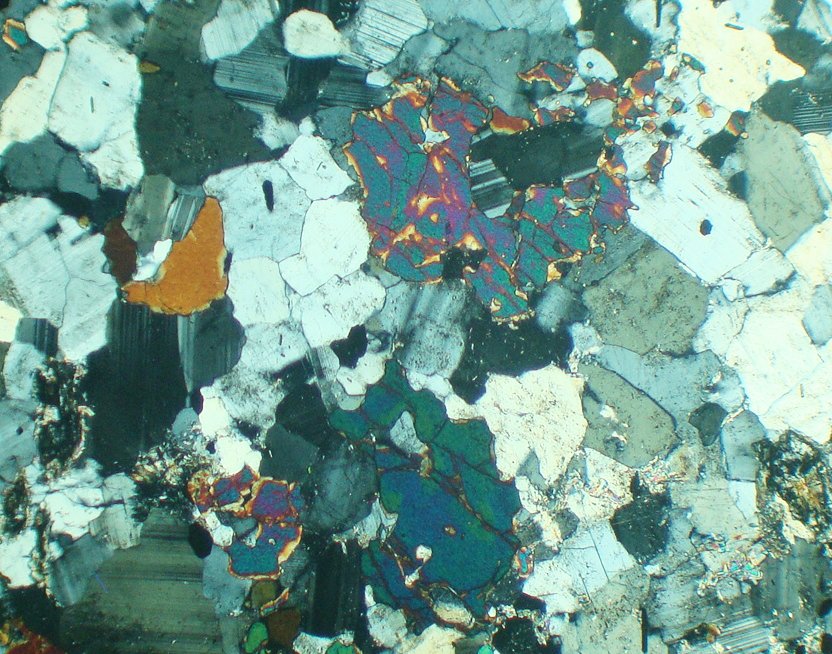
CROSSED POLARIZED LIGHT – XPL
Birefringence and Interference Colors: Moderate to high birefringence, maximum 0.025, (or 0.035 or 0.040), with 2nd order colors: orange, red, blue.
The intense colors of tourmalines often mask the interference colors.
Extinction: Parallel in the longitudinal sections.
Elongation sign: ES(-), often difficult to recognize due to the intense own colors of the tourmaline and the high interference colors.
Twins: Rare.
Zoning: Often zoned; zones tend to triangular in basal sections, but can be very irregular, in various spotted colors.
CONVERGENT LIGHT
Character: U(-), can be biaxial under stress, see 2V angle on the side. Use basal sections to see figure!
2V angle: May have a small anomalous 2V angle of up to 10°.
Alterations: Never alters. Tourmaline and quartz are two minerals that are never found with alteration.
May be confused with: strong pleochroism and uniaxial character are diagnostic. Very typical is the uneven distribution of colors, with irregular patches of different hues distributed over the grains.
Black tourmalines with deep colors can be confused with opaque minerals.
Tourmalines with strong colors and in the basal sections, without pleochroism, are more difficult to identify.
Very small tourmalines require more attention for their identification.
Arfvedsonite may be similar in that it also shows deep, dark colors.
Dumortierite, which can be blue or pink, can be quite similar.
Sillimanite, when fibrous and pink, may be similar but has ES(+).