Troilite is a rare sulfide, found here on Earth in only a few very specific geological occurrences. It has no economic use.
Troilite is classified in the Pyrrhotite Group. It is the S analogue of achávalite (FeSe) and chemically the Fe analogue of covellite (CuS). It can transform into hexagonal pyrrhotite at T<122ºC, in the pyrrhotite-2H polytype.
Generally, the literature deals with pyrrhotite and troilite together, despite the great differences between these iron sulfides in terms of texture, structure, intergrowths, twins, occurrences, etc.
5. Reflected Light Microscopy
Sample preparation: Due to its low hardness, troilite requires careful polishing and some polishing grooves are quite persistent, but good polishing is possible, except for the larger grains, as is also the case with pyrrhotite.
PLANE POLARIZED LIGHT – PPL
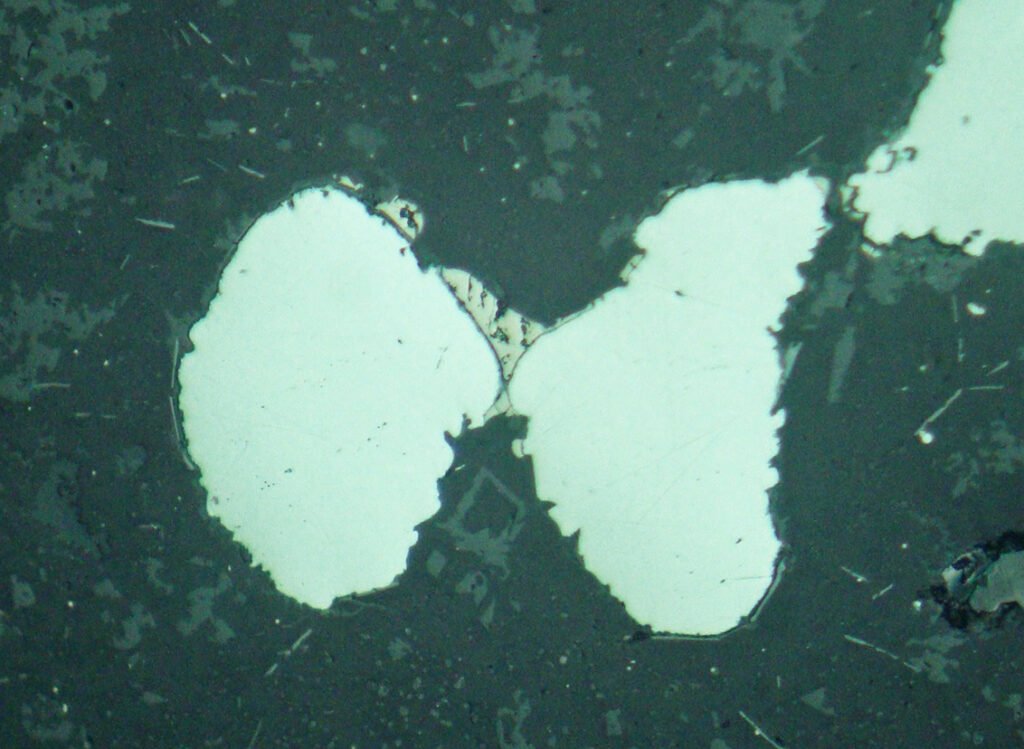
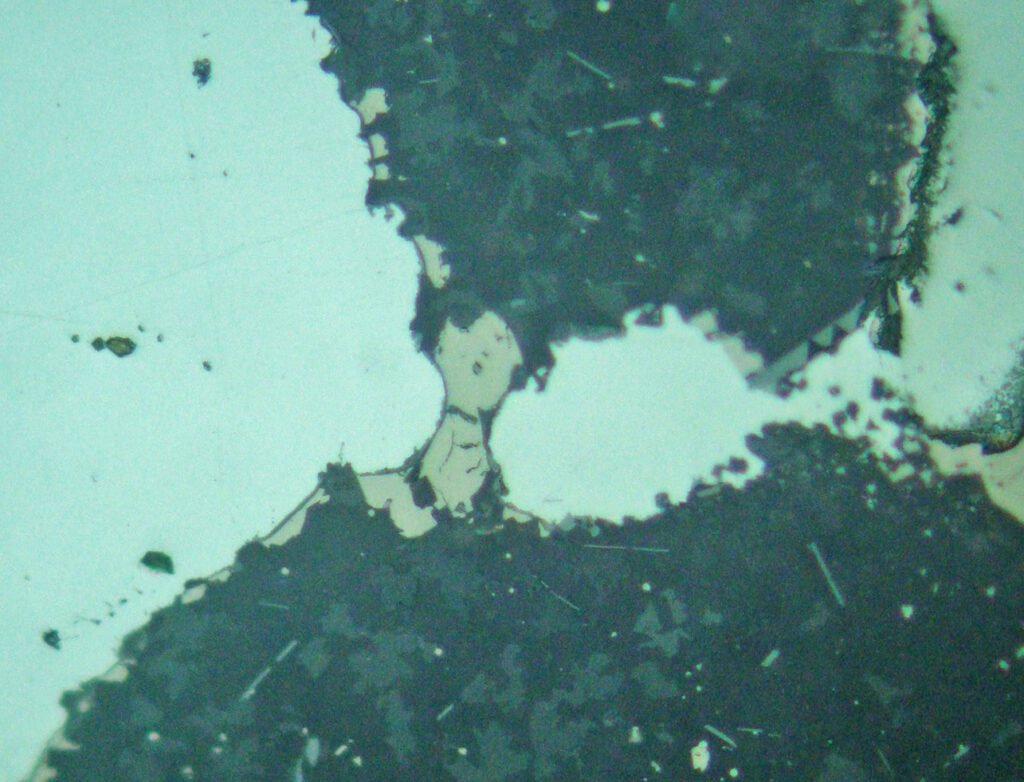
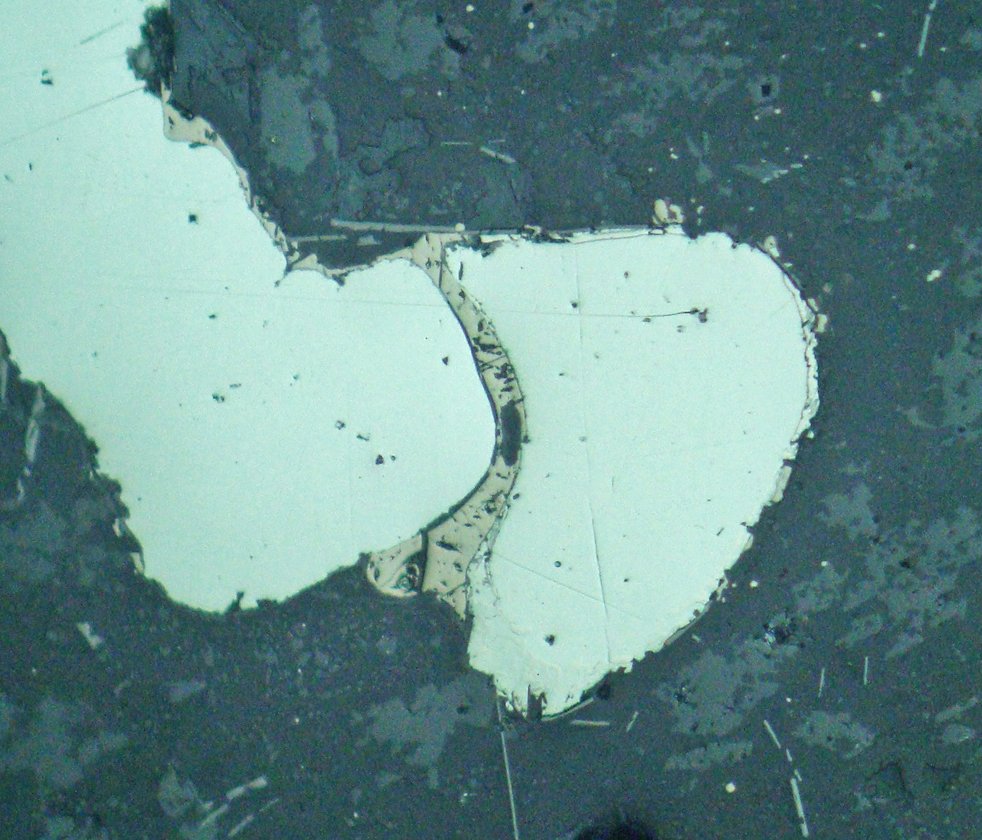
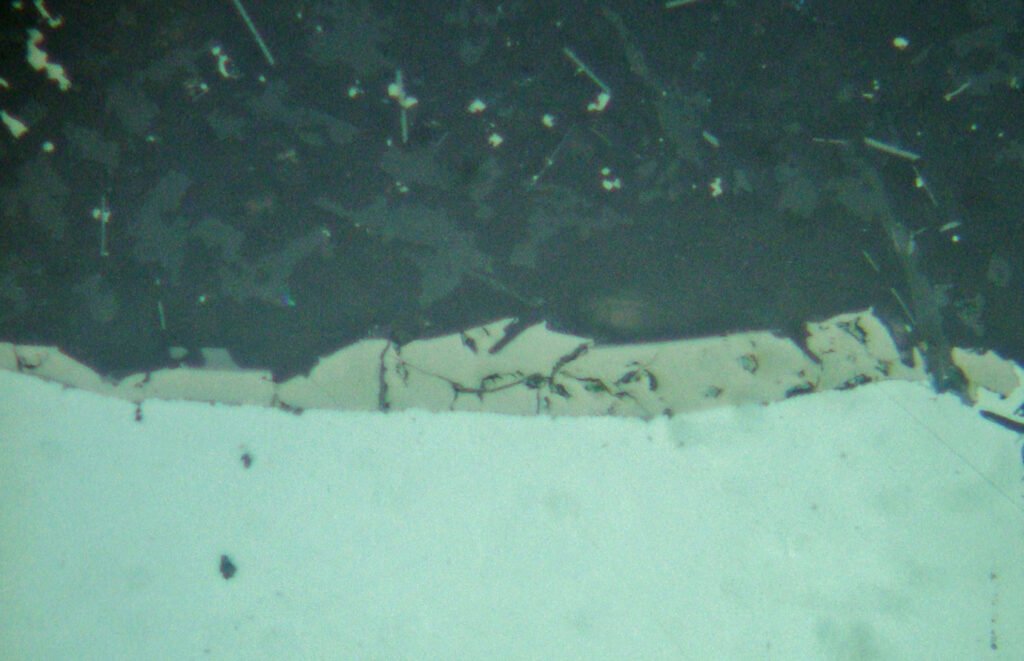
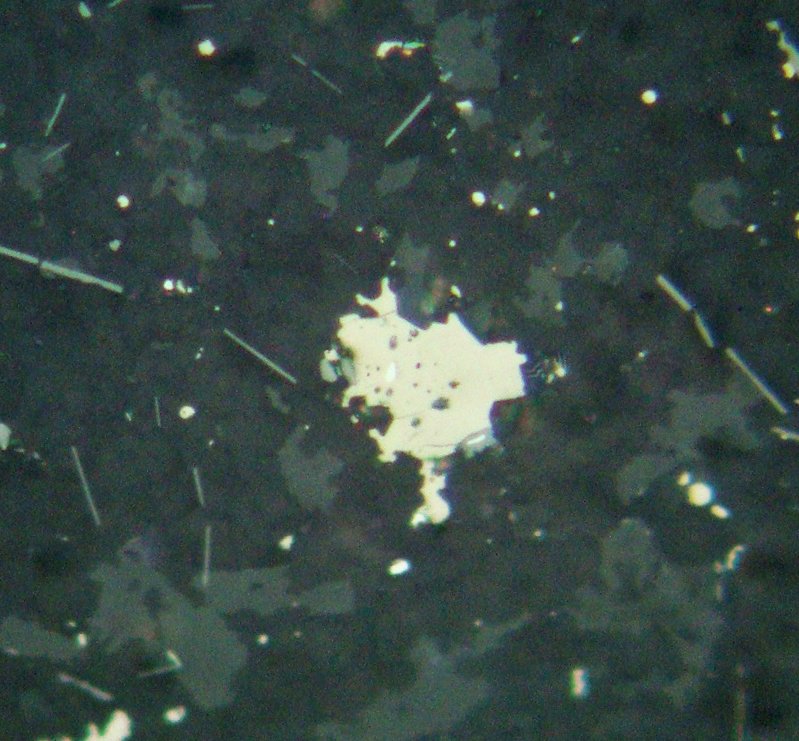
Reflection color: Light brown, very similar to the color of pyrrhotite.
Pleochroism: Discreet in light brown.
Reflectivity: ~40%
Bireflectance: No.
CROSSED POLARIZED LIGHT – XPL
Isotropy / Anisotropy: Distinct anisotropy between gray-brown and bluish.
Internal reflections: No.
May be confused with: pyrrhotite, which has the same reflection color, but its anisotropy colors and intensity are completely different.
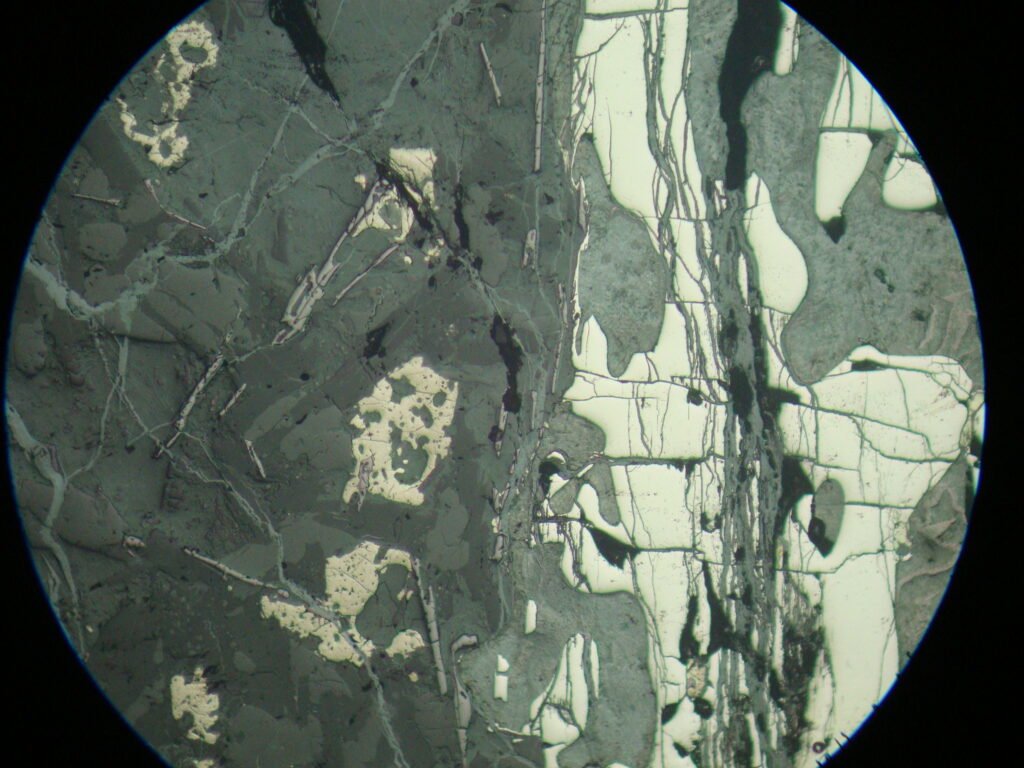
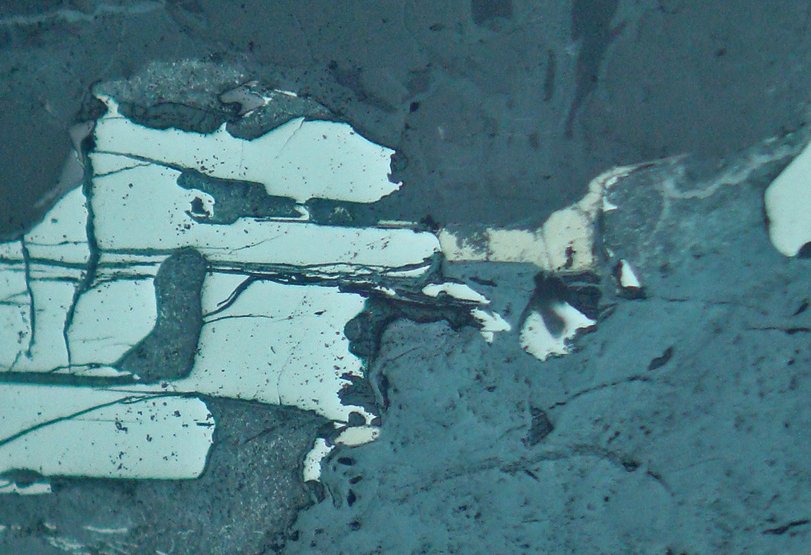
Overview of the minerals of the native iron paragenesis:
None shows birreflectance nor internal reflections. Pleochroism is weak (in cohenite and troilite) or absent.
Native iron:
Reflection color: pure white with a bluish tint.
Reflectivity: 58%
Iso/Anisotropy: isotropic, completely black.
Cohenite:
Reflection color: white cream
Reflectivity: 57 – 59%
Iso/Anisotropy: weak anisotropy, compare individual grains.
Schreibersite:
Reflection color: light cream
Reflectivity: 52%
Iso/Anisotropy: anisotropic between gray and brown.
Taenite:
Reflection color: dark gray (like silicates!)
Reflectivity: 7% (extremely weak)
Iso/Anisotropy: Isotropic.
Troilite:
Reflection color: light brown, as pyrrhotite.
Reflectivity: 40%
Iso/Anisotropy: distinc anisotropy between gray and bluish.
Wüstite:
Reflection color: medium gray.
Reflectivity: 18.65%
Iso/Anisotropy: isotropic..