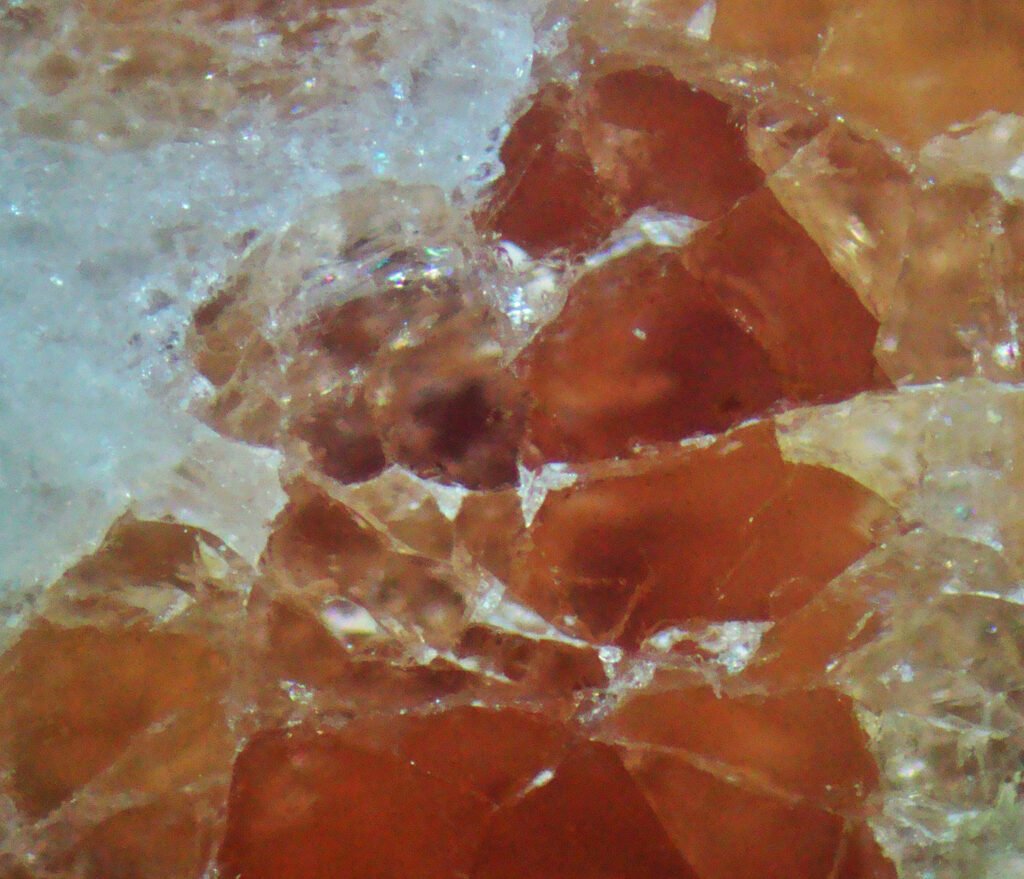
Crystal system: Tetragonal, ditetragonal bipyramidal.
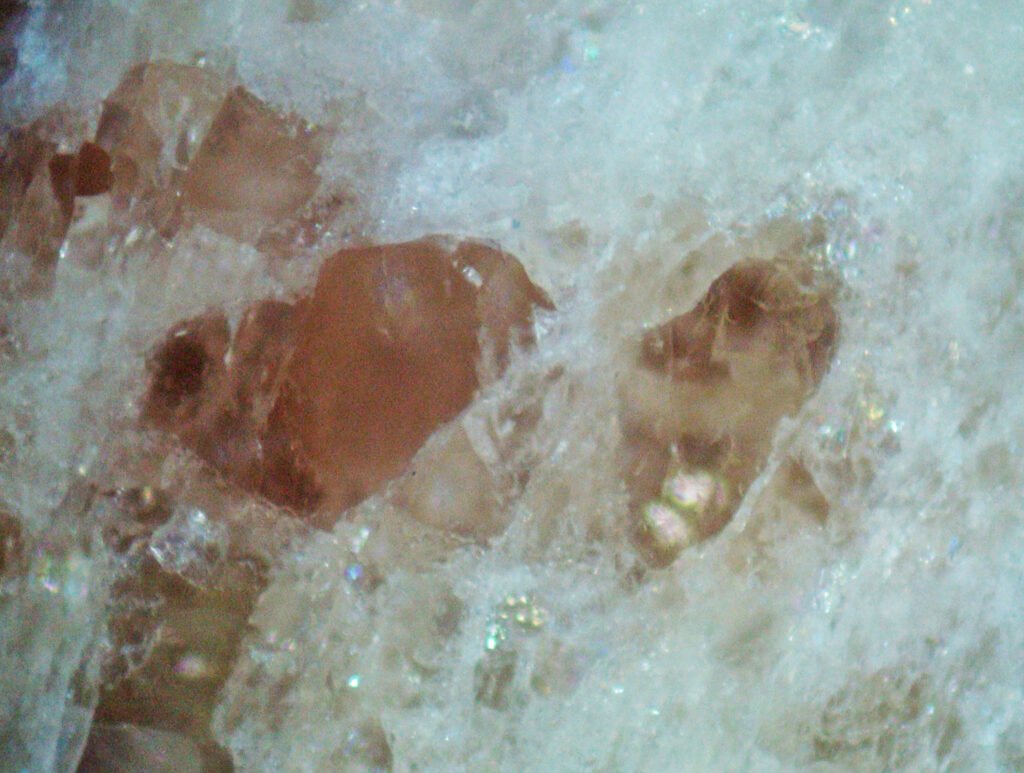
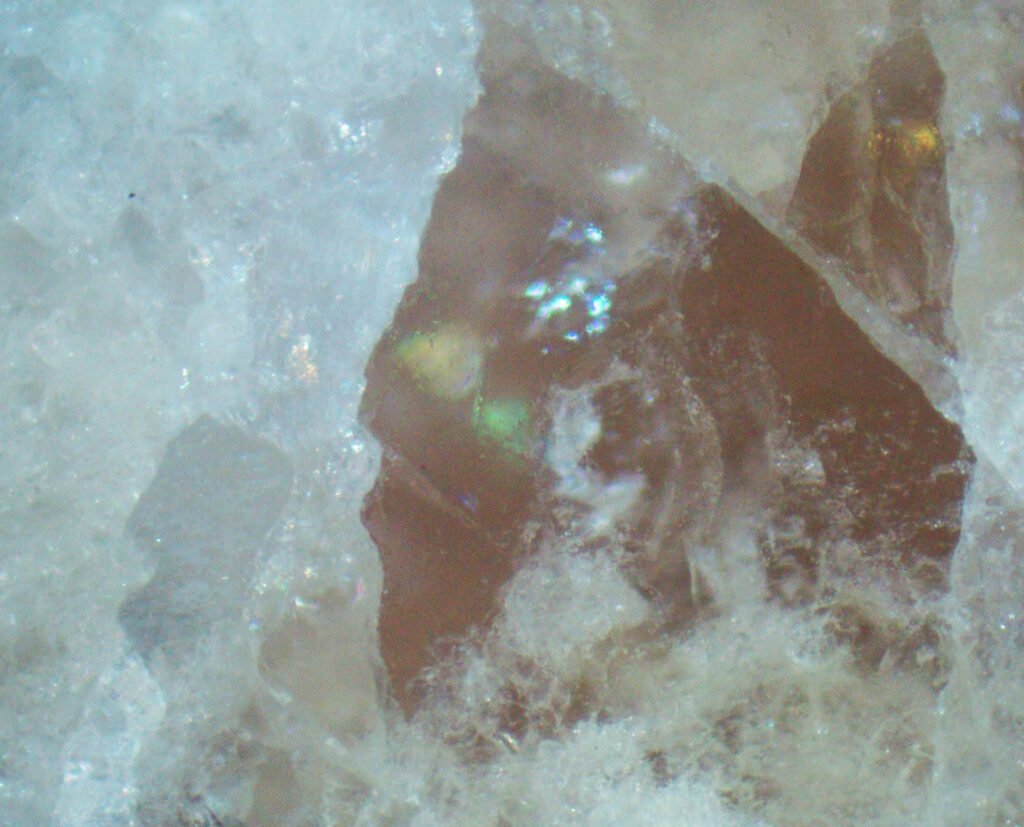
Color: Brown, caramel, yellow, dark brown, very light green, bluish green, white, red, purple, blue. Zoning is common.
Habit: Short to long prismatic, granular, massive. Crystals of great morphological complexity.
Cleavage: {110} bad, {100} e {001} very bad.
Tenacity: Brittle.
Twinning: Very thin.
Fracture: Subconchoidal to irregular.
Mohs Hardness: 6.5
Parting: No.
Streak: White.
Lustre: Vitreous to resinous.
Diaphaneity: Transparent.
Density (g/cm³): 3.32 – 3.43
2. Geology and Deposits
It commonly occurs with impure marbles and limestones that have undergone contact metamorphism (skarns, calc-silicate rocks).
Sometimes it occurs as a primary phase in alkaline igneous rocks (nepheline syenites).
It also occurs in veins and cavities of hydrothermally altered basic and ultrabasic (mafic and ultramafic) rocks, such as gabbros, serpentinites, and peridotites.
3. Mineral Associations
It is associated with the characteristic and common minerals of skarns, such as calcite, garnet (grossular, andradite), diopside, tremolite, epidote, titanite, and wollastonite.
It also occurs with fassaite (a variety of augite), pectolite, hessonite, clinochlore, scapolite, spinel, and groutite.
4. Transmitted Light Microscopy
Refraction indices: nω: 1.703 – 1.752 nε: 1.700 – 1.746
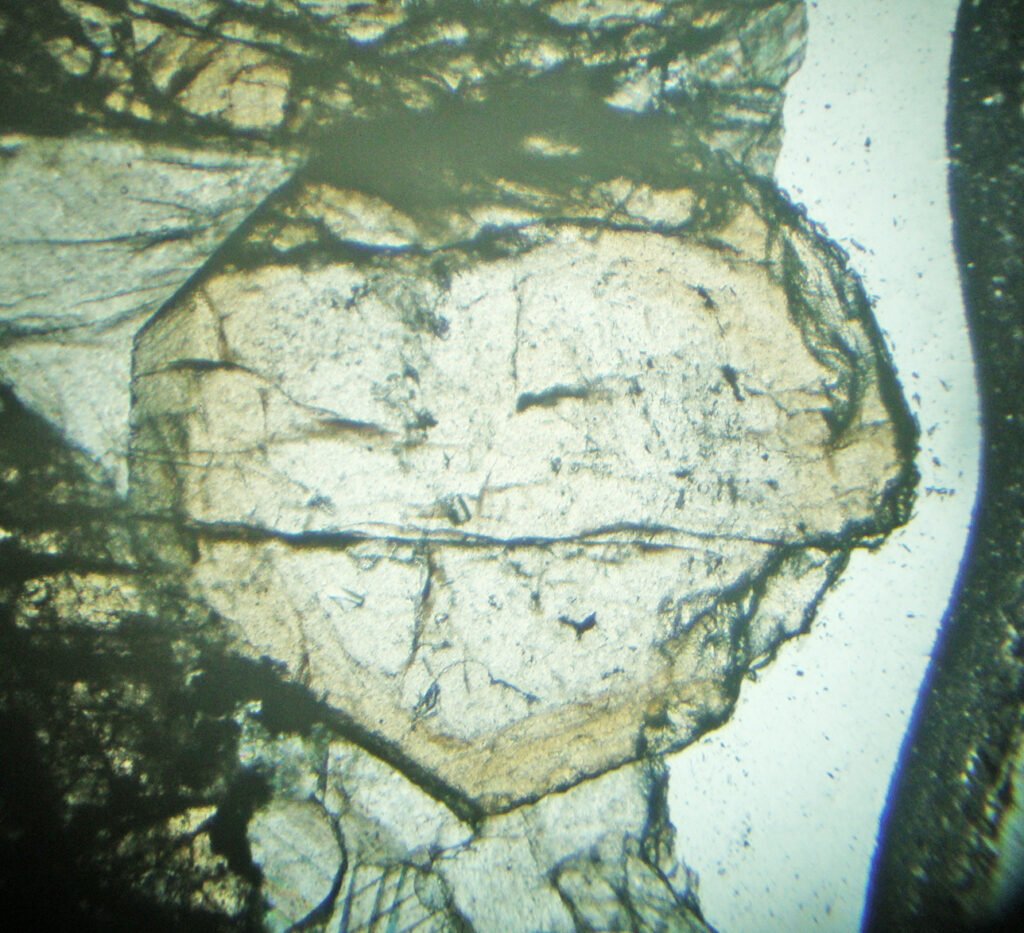
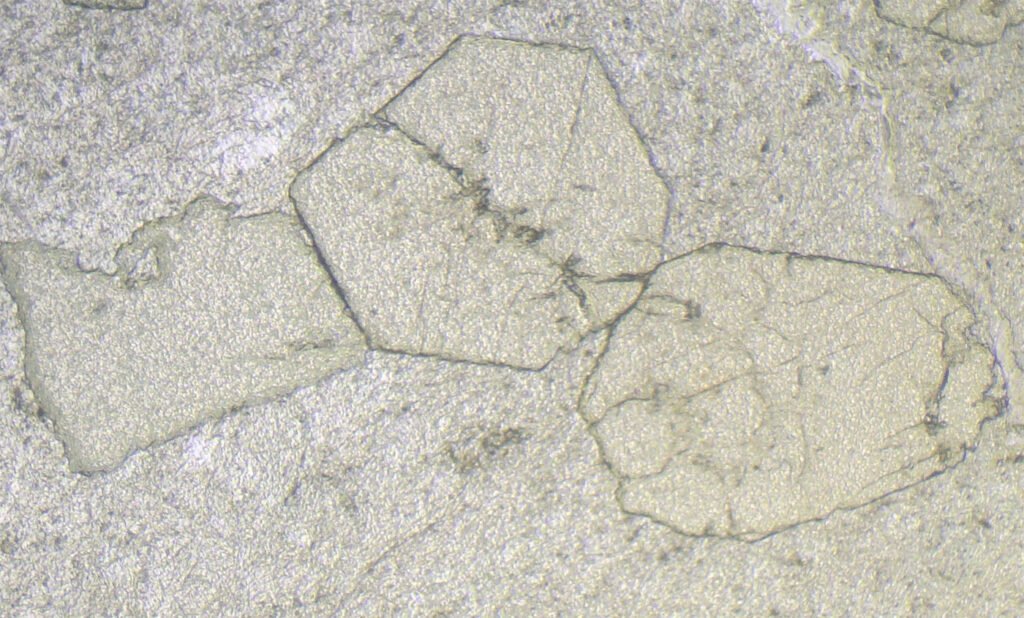
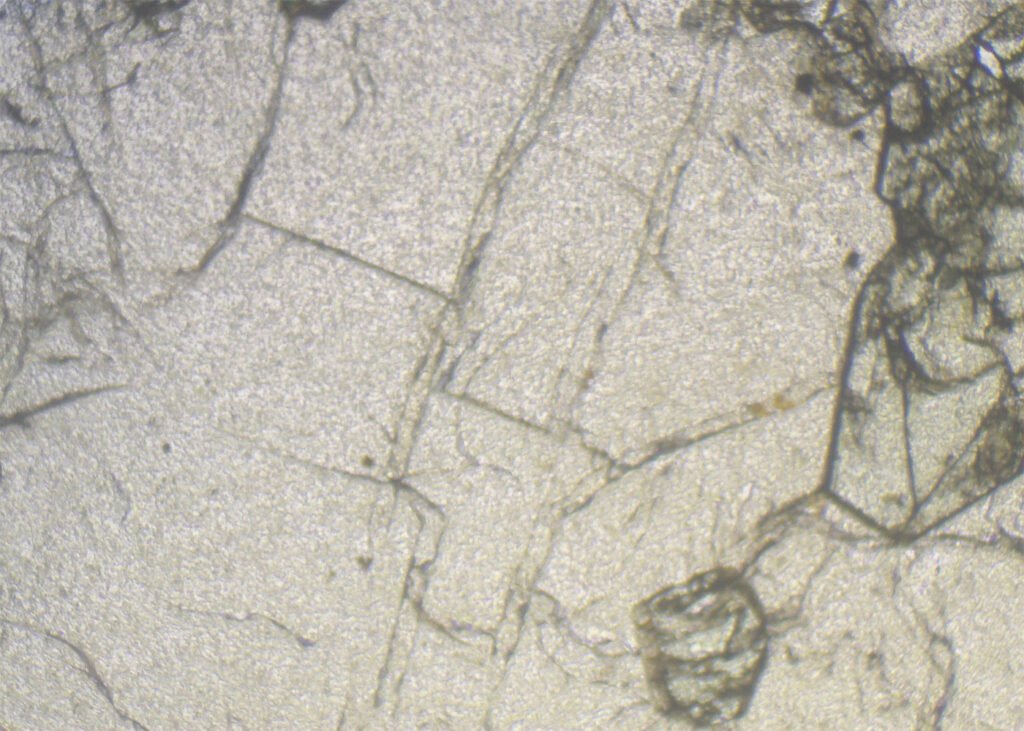
PLANE POLARIZED LIGHT – PPL
Color / Pleochroism: Colorless, pale green, pale brown, pale yellow.
It usually does not have pleochroism. Very rarely it has very weak pleochroism between:
X = colorless to yellowish;
Y = yellowish, greenish, brownish.
Relief: High.
Cleavage: {110} bad; {100} and {001} very bad, are generally not visible.
Habits: Short and long prisms, but it is usually granular anhedral.
It also occurs massive. It is rarely acicular, and may form spherulitic aggregates.
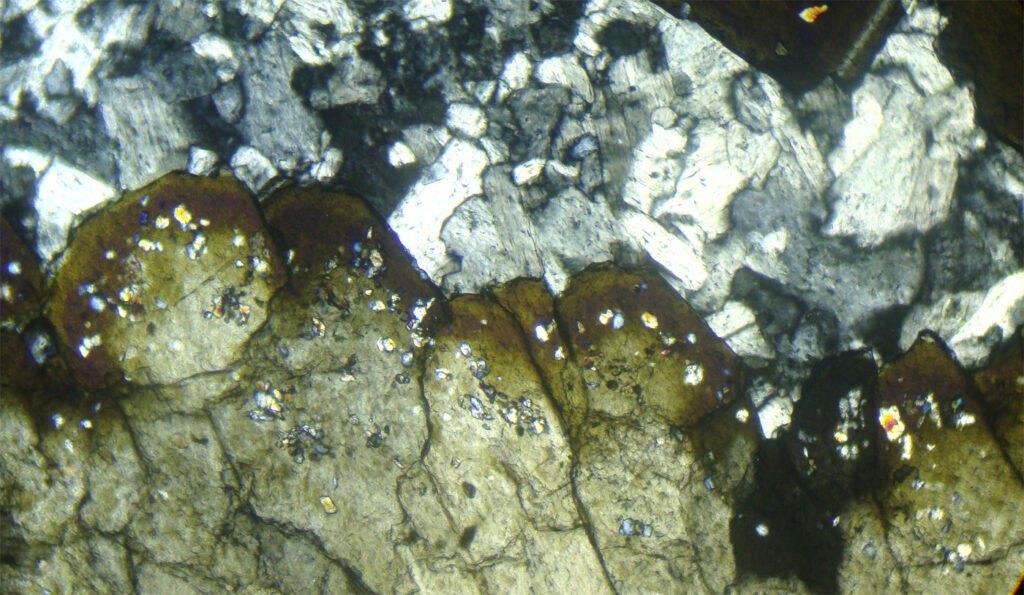
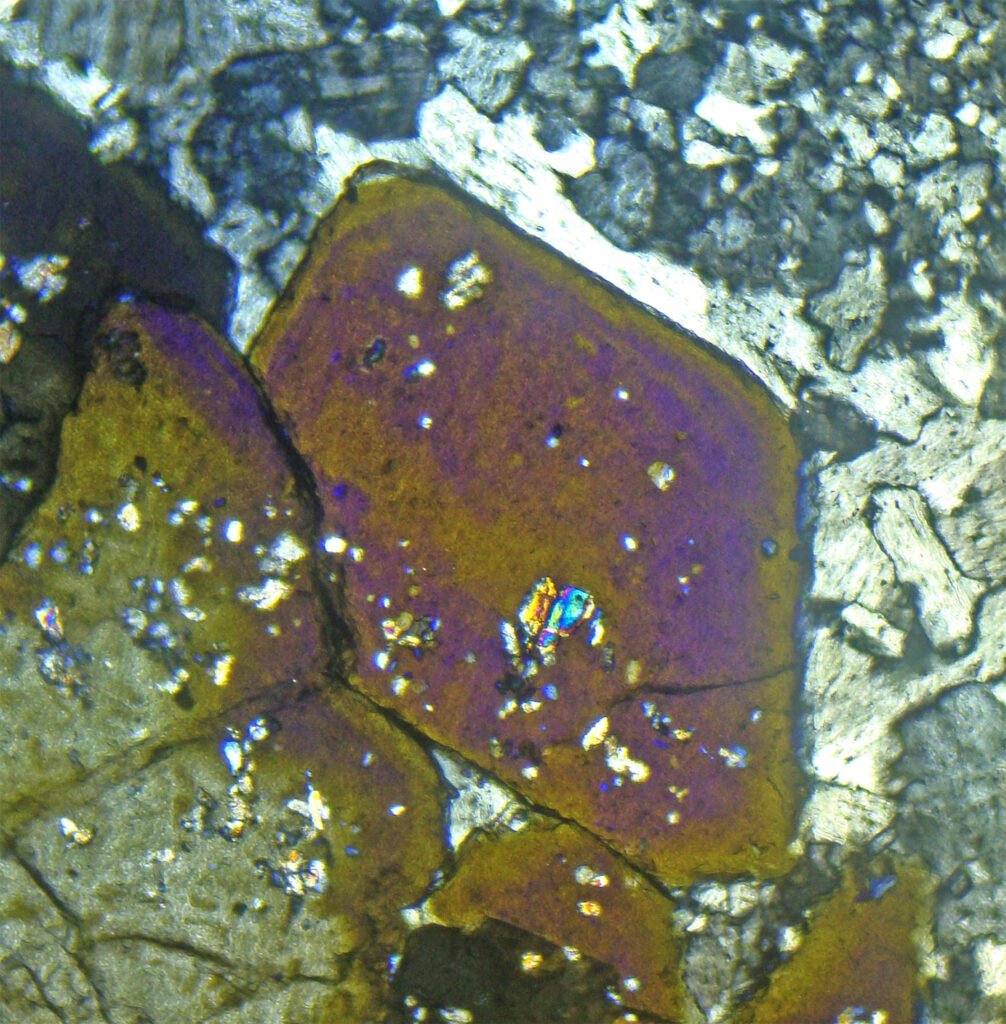
It may show growth zones with different optical characteristics (sectorized).
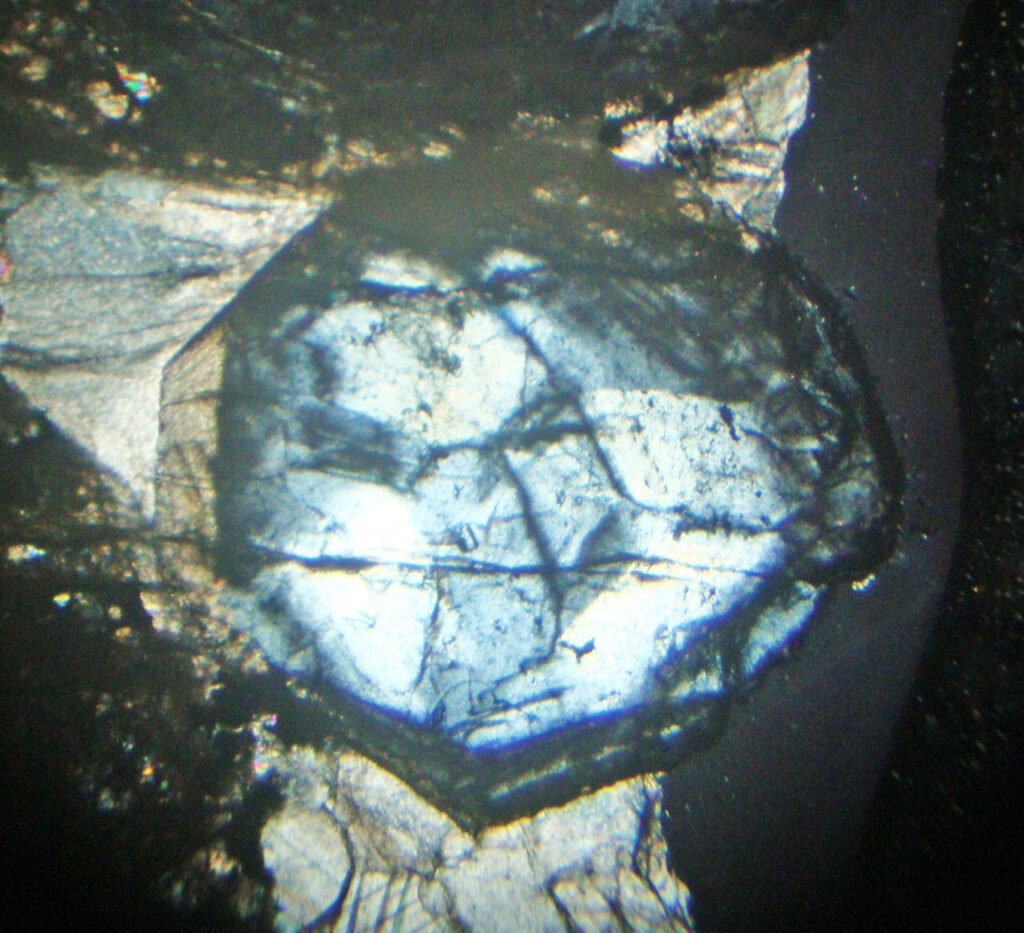
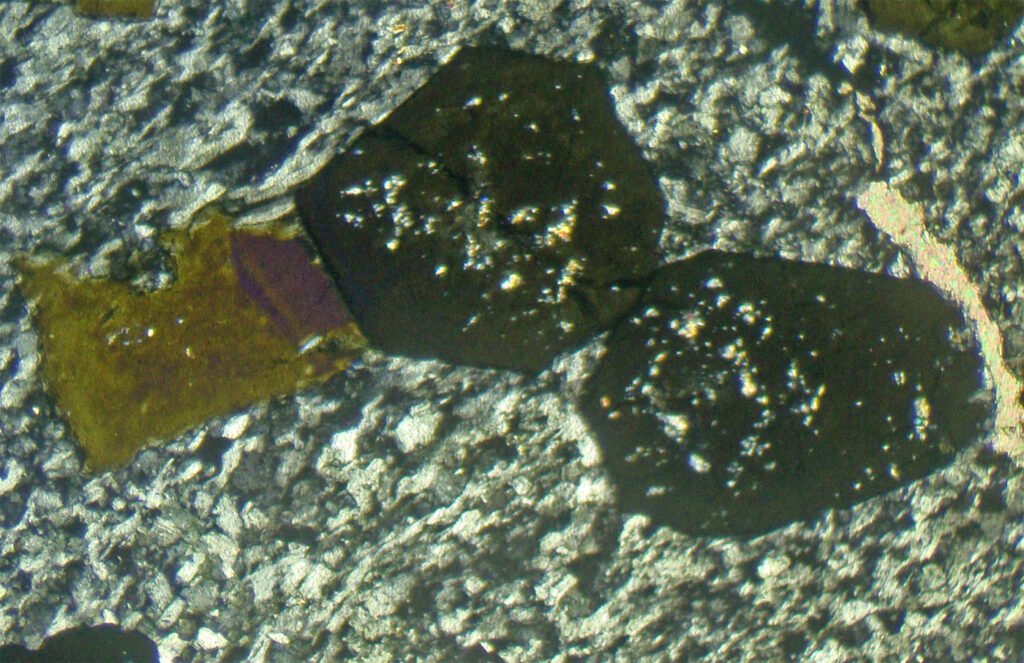
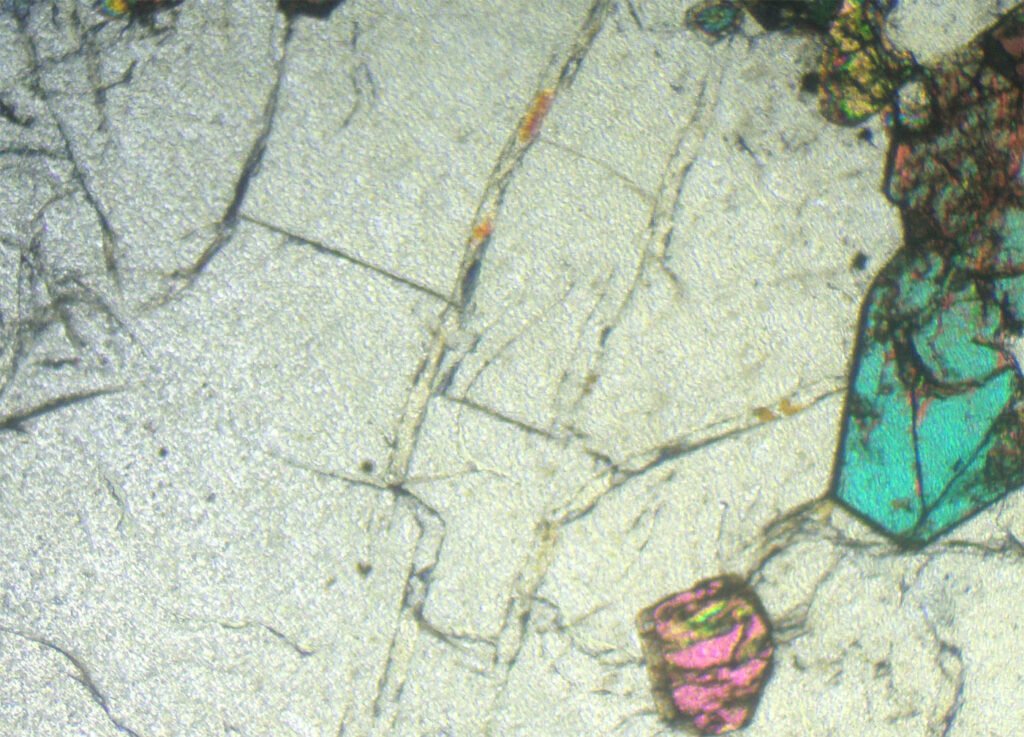
CROSSED POLARIZED LIGHT – XPL
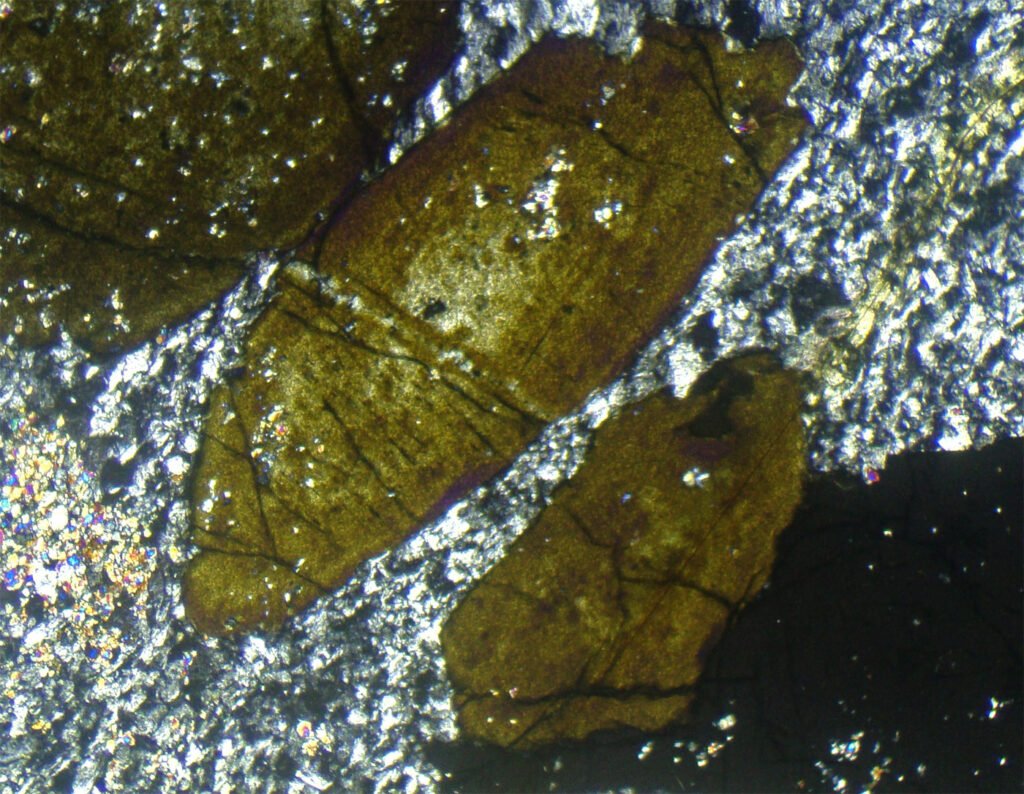
Birefringence and Interference Colors: Birefringence of 0.003 – 0.006: corresponds to first-order mid-gray colors.
Very common, however, are intense anomalous colors: gray,lavender blue, indigo blue, leather brown, gray-green, or purple.
In the section parallel to the major axis, hourglass textures may bepresent.
Extinction: Tends to paralell.
Elongation sign: SE(-). The wiluita variety exhibits SE(+).
Twins: Typically there are no twins, but the grains may show sectors.
Anomalous biaxial varieties may show four sectors in basal sections.
Zoning: typically zoned or with colored stripes (“patchy”)
CONVERGENT LIGHT
Character: U(-), can be an anomalous B(-).
The wiluite variety (very rare) is U(+) and has SE(-) and SE(+).
2V angle: It does not present. If anomalous biaxial, 2V of 17 – 33º.
Alterations: It is a very robust mineral, but in some cases it alters to prehnite.
May be confused with: Several other minerals.
Vesuvianite is a more difficult mineral to identify. Diagnostic features include high relief, absence of cleavage, low birefringence (gray colors), and, when present, anomalous interference colors distributed by sectors. Paragenesis is important: the presence of calcite and clinopyroxenes (diopside) suggests the possibility of vesuvianite occurrence.
Andalusite has a larger 2V angle and its habit is generally prismatic.
Carbonatite apatite can be very similar, but it does not exhibit anomalous interference colors, sectorized grains, or concentric zoning, which is common in vesuvianite.
Melilite has lower refractive indices, a different habit, and a different paragenesis.
Zoisite and clinozoisite can be confused with the very rare variety wiluite.