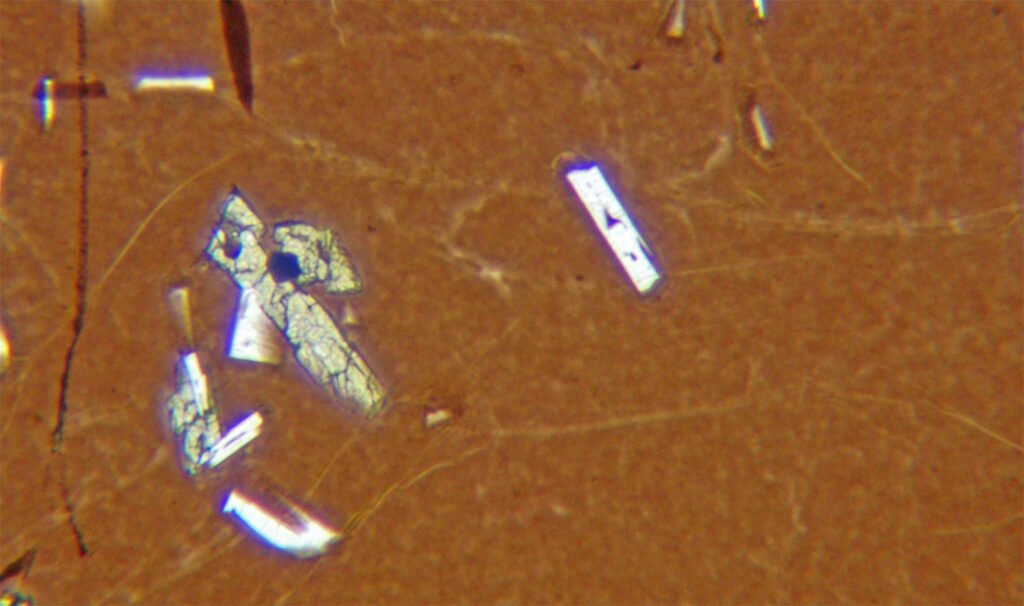
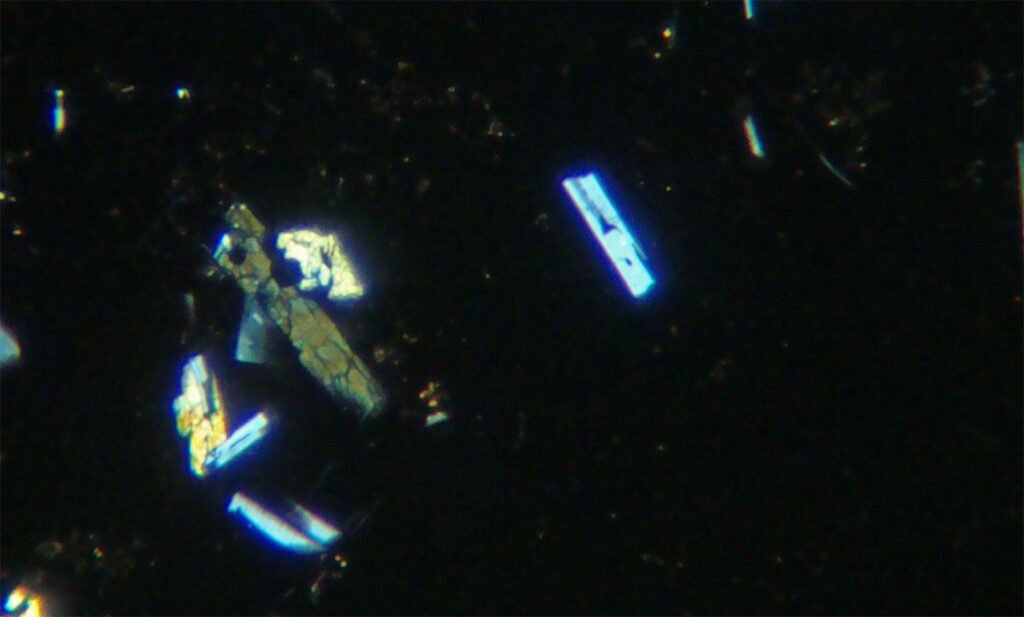
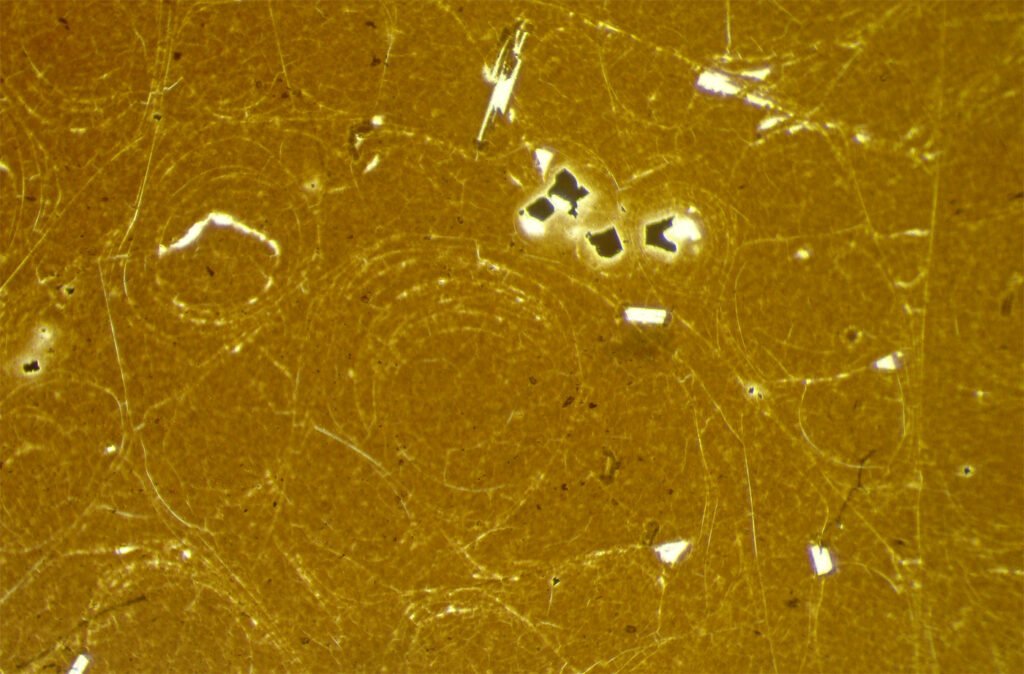
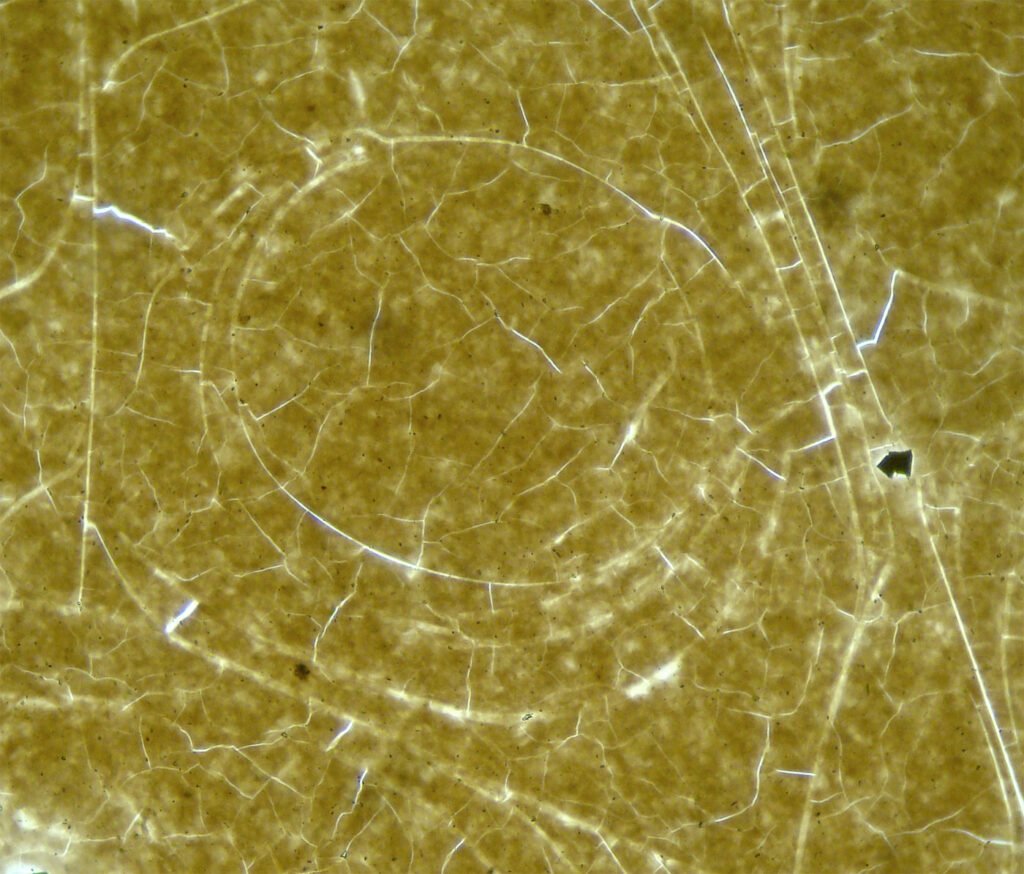
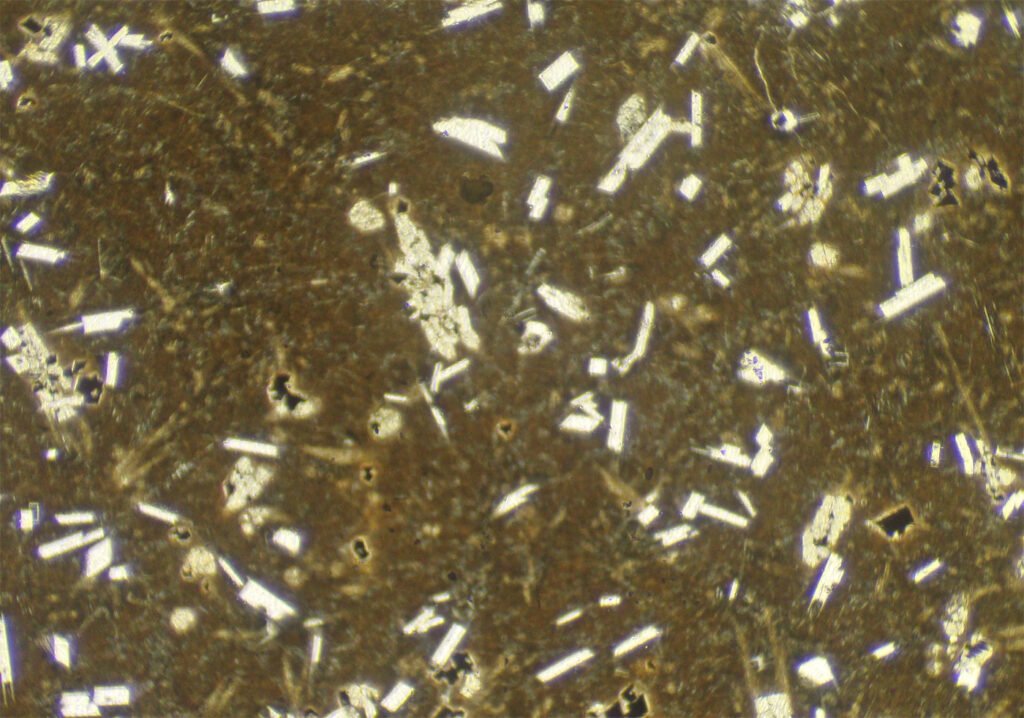
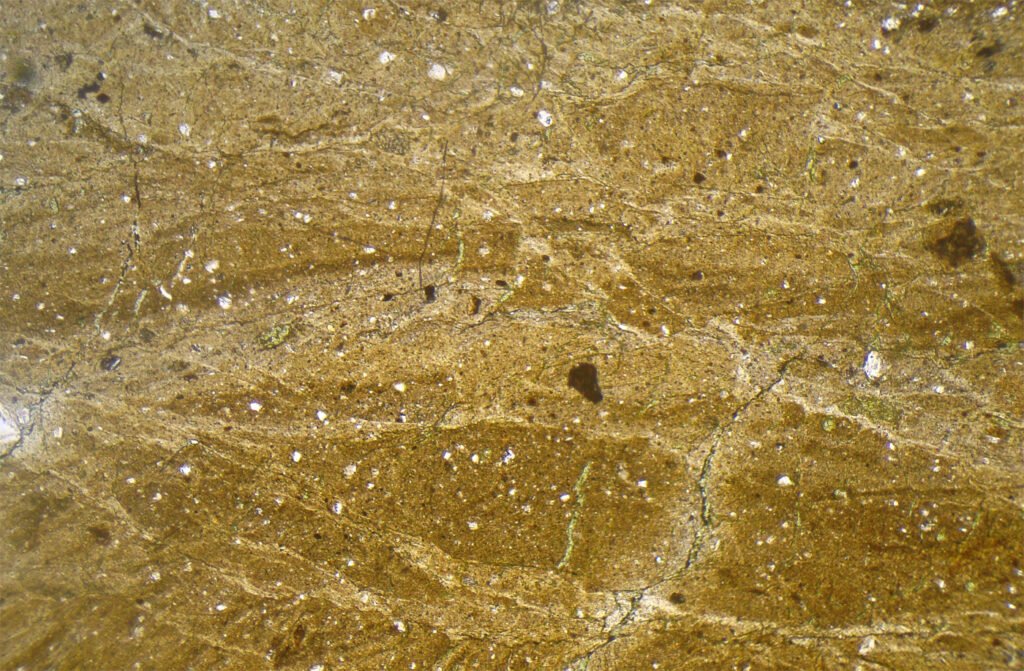
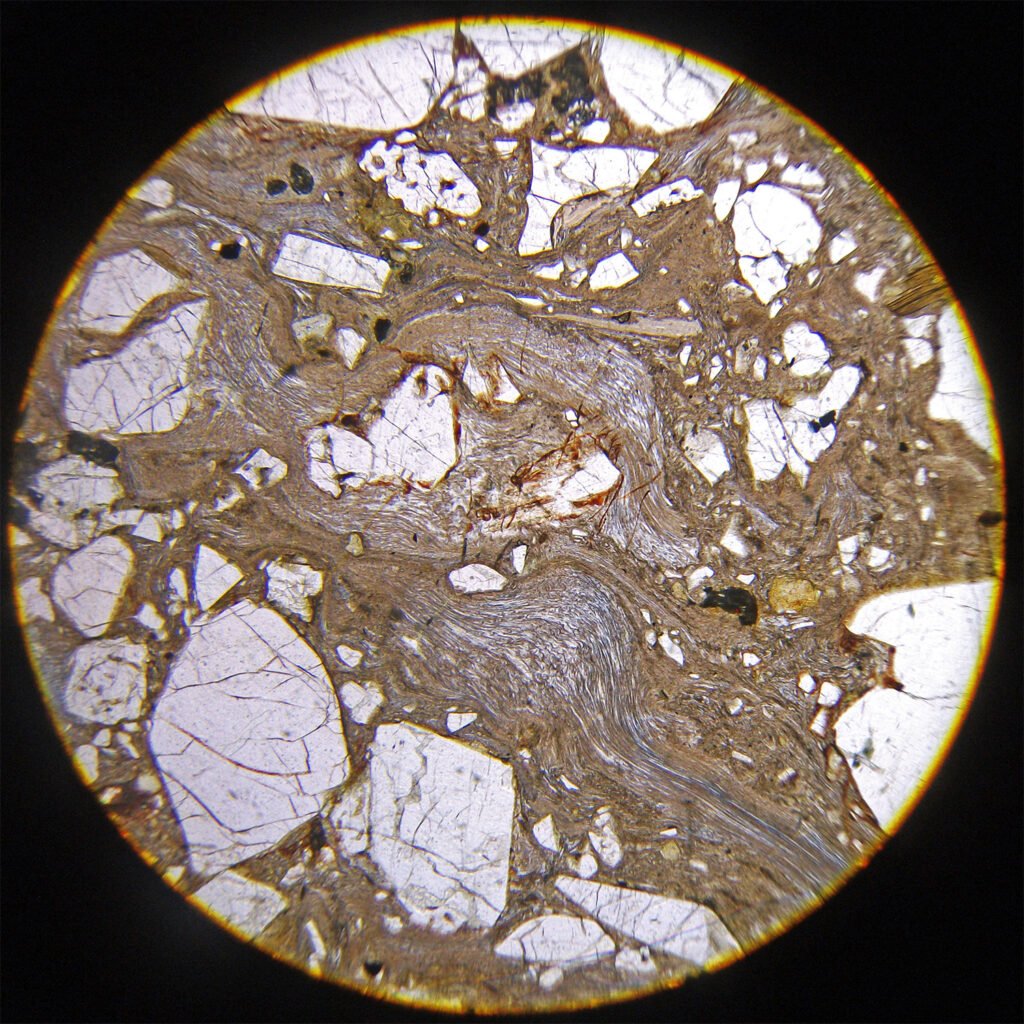
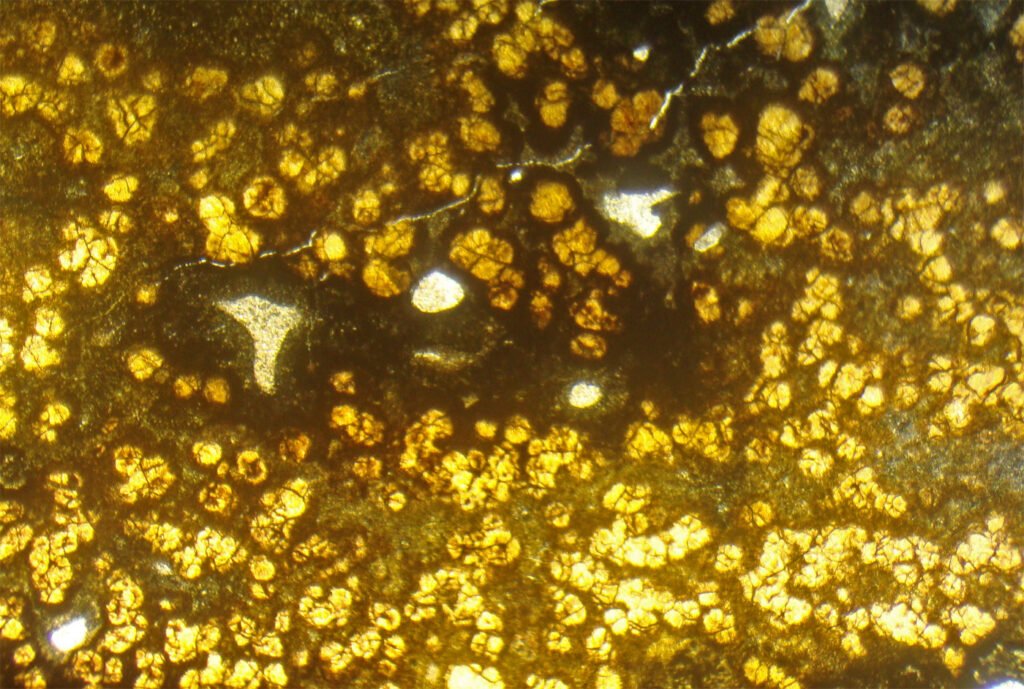
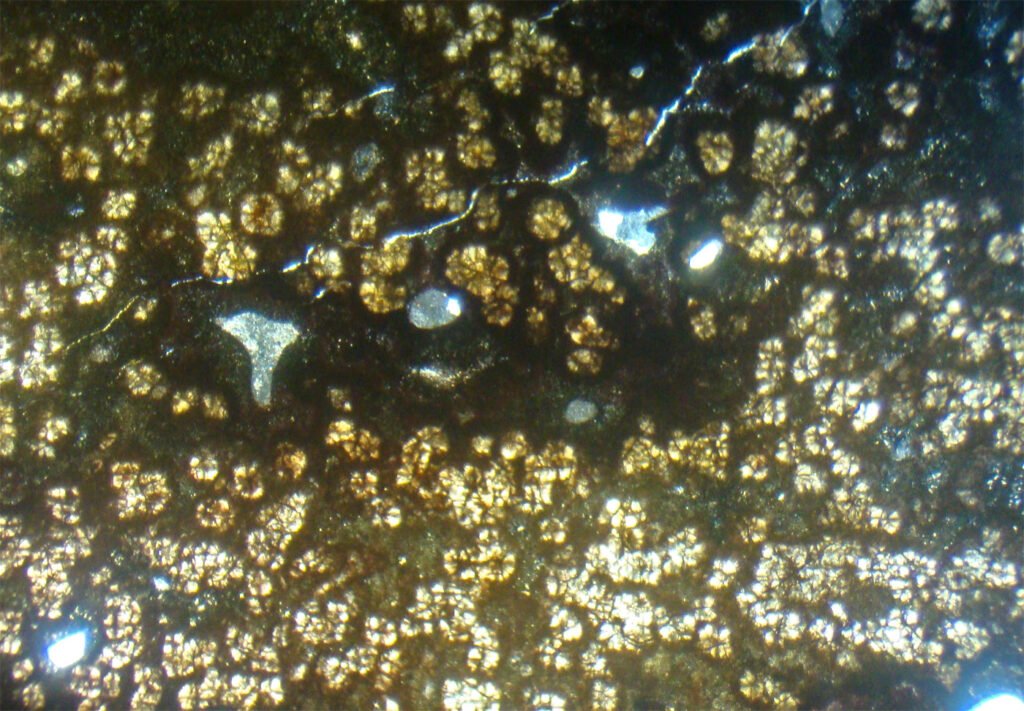
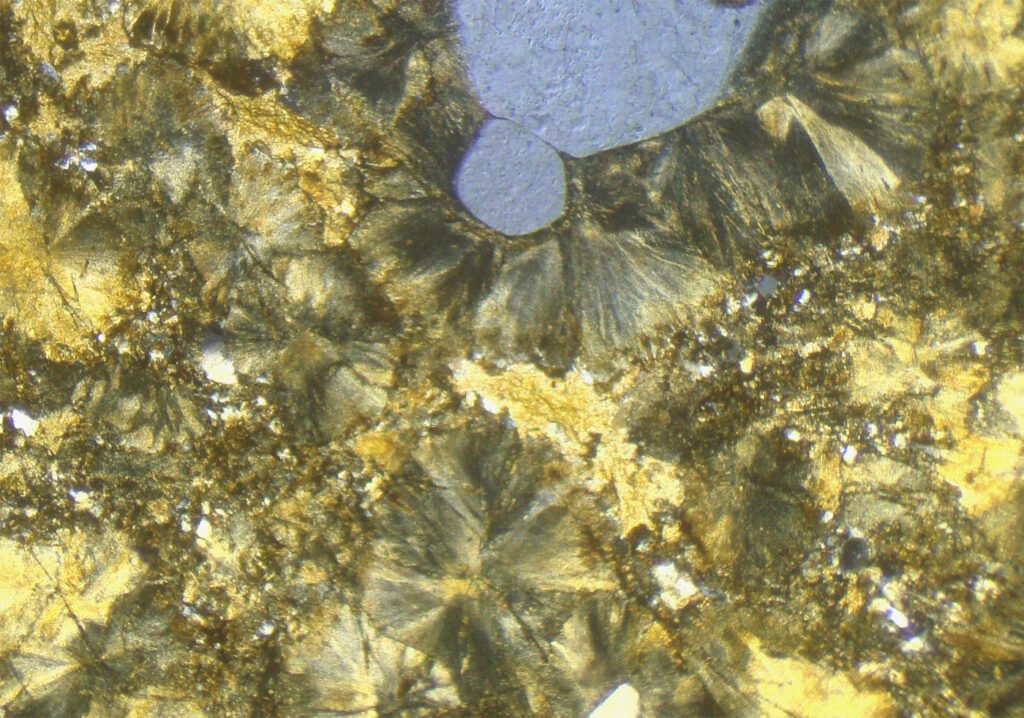
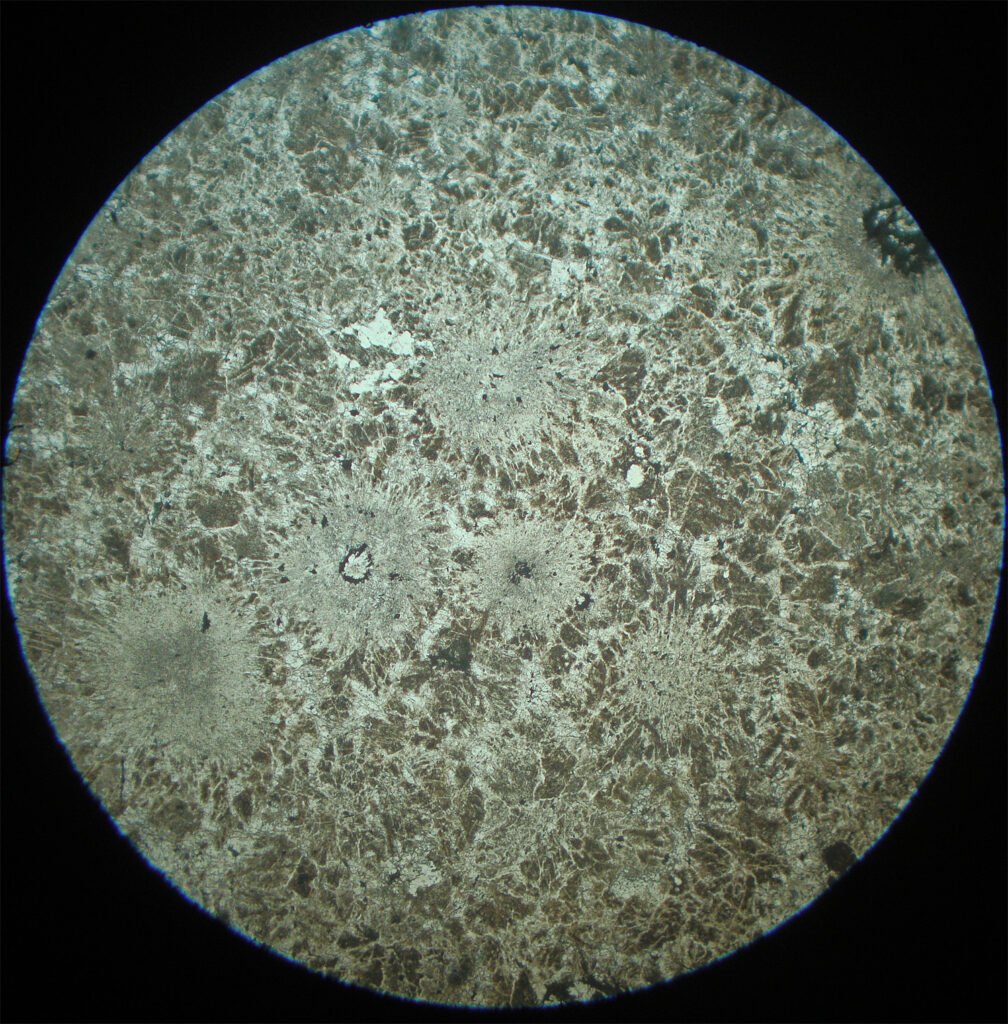
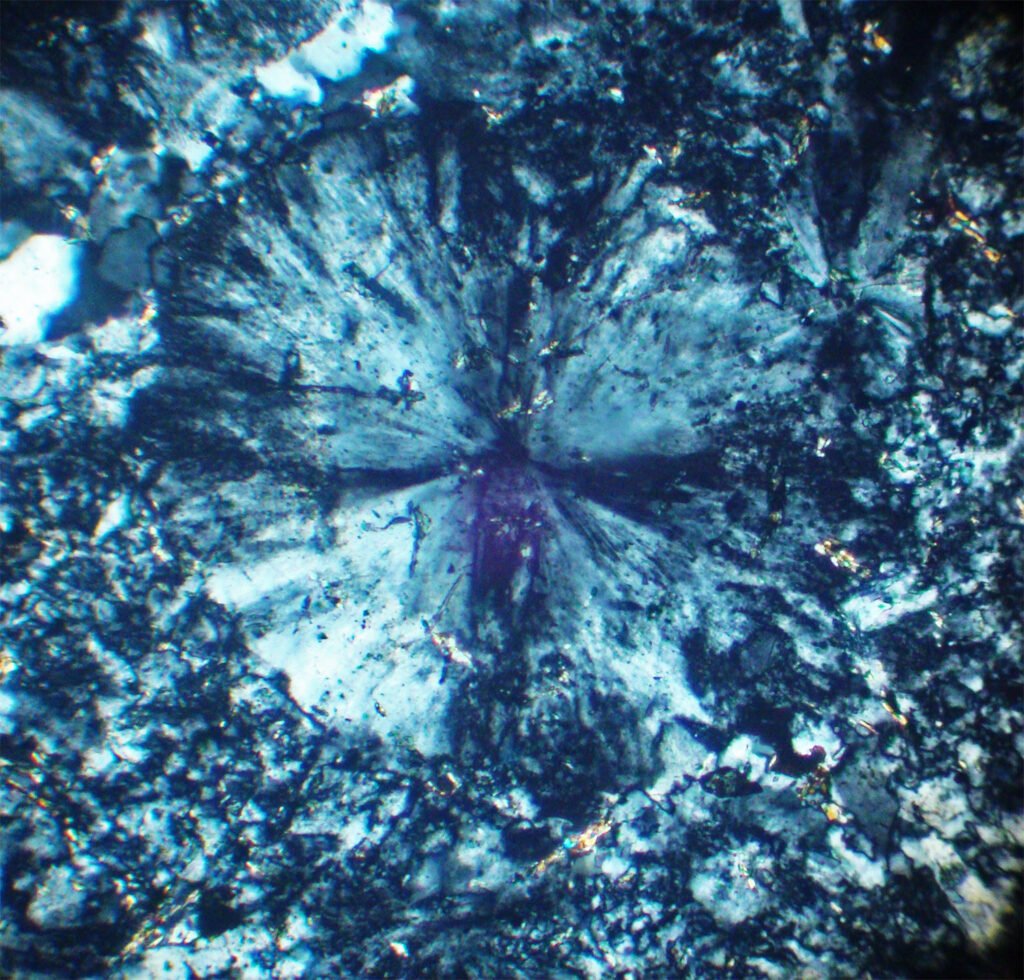
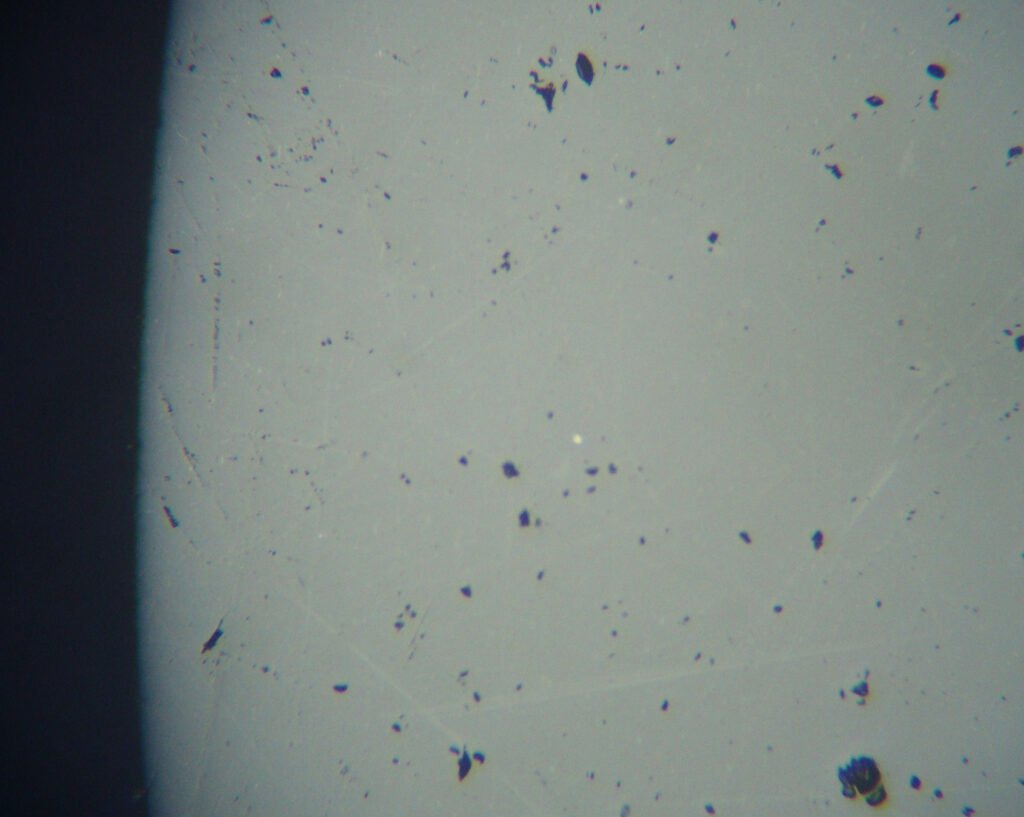
Volcanic glass, also called obsidian, is a very common, amorphous material that occurs only in lavas and hypabyssal intrusive rocks (sills and dykes), as a fundamental mass and containing small crystals and phenocrysts. Its formula depends on the type of rock and is complex, very variable.
Refraction indices: Not applicable.
PLANE POLARIZED LIGHT – PPL
Color / Pleochroism: Colorless, gray, brown, red.
Relief: Low positive in basic rocks, low negative in acidic rocks.
Cleavage: Not applicable.
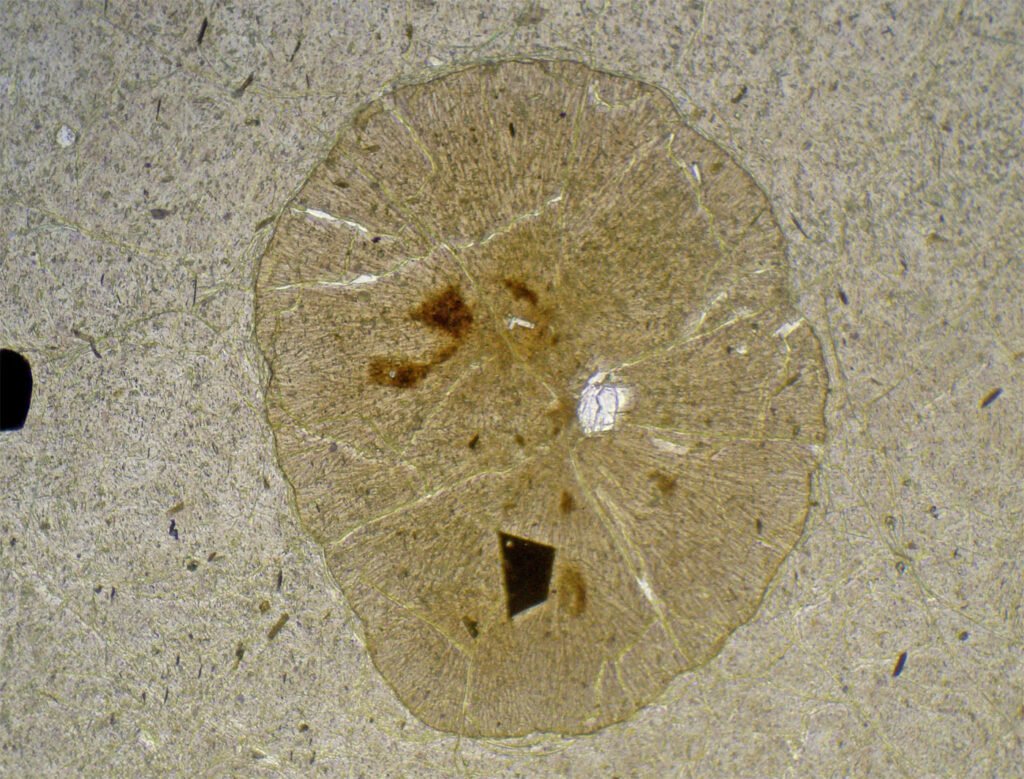
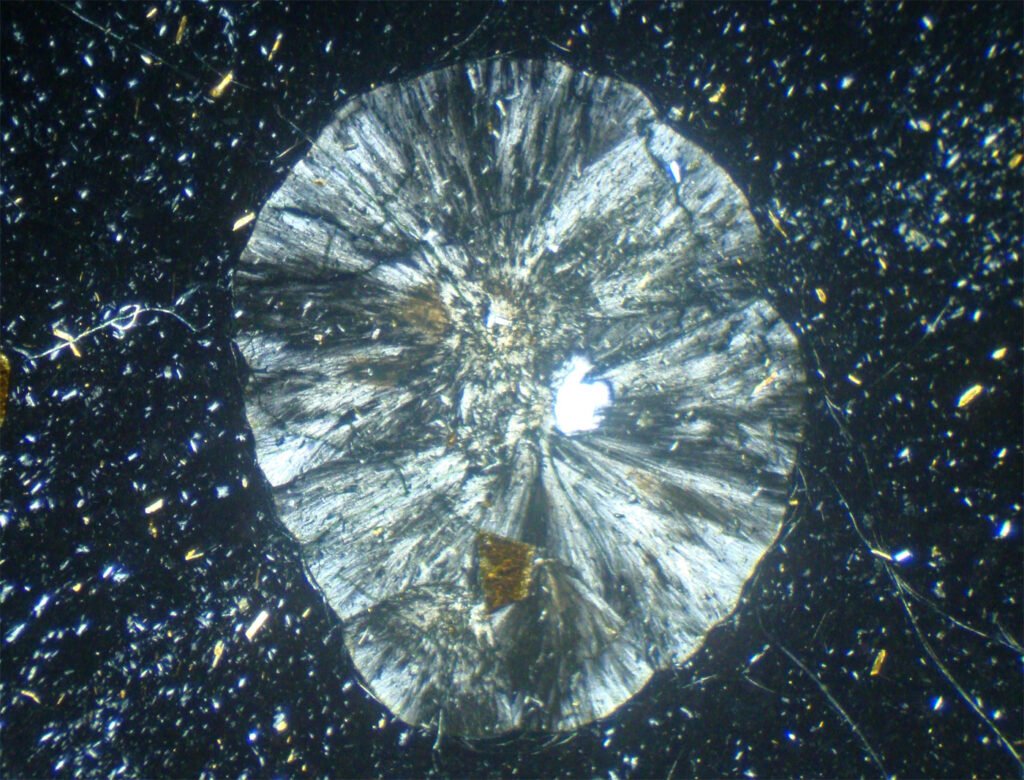
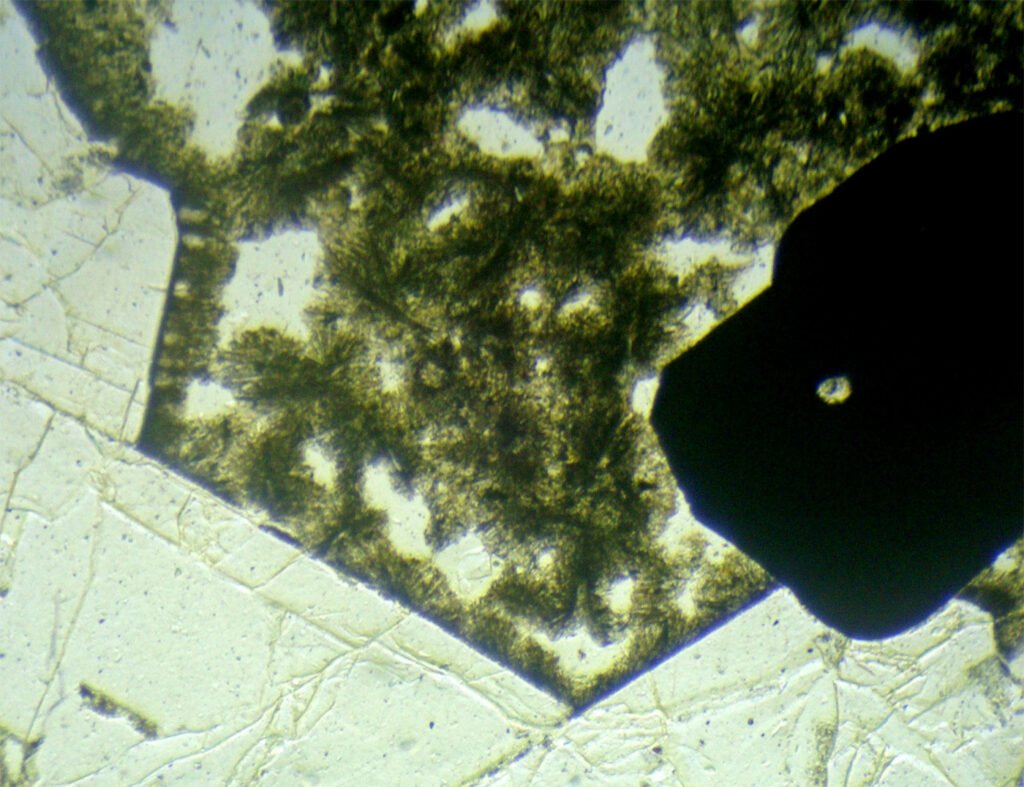
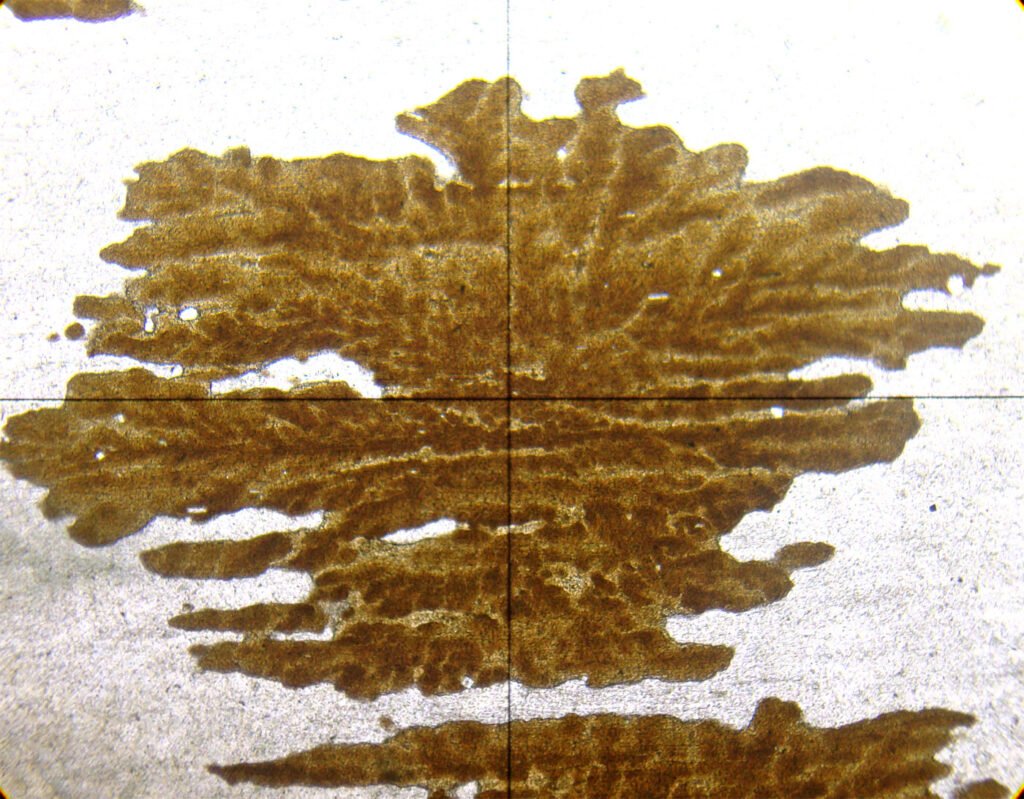
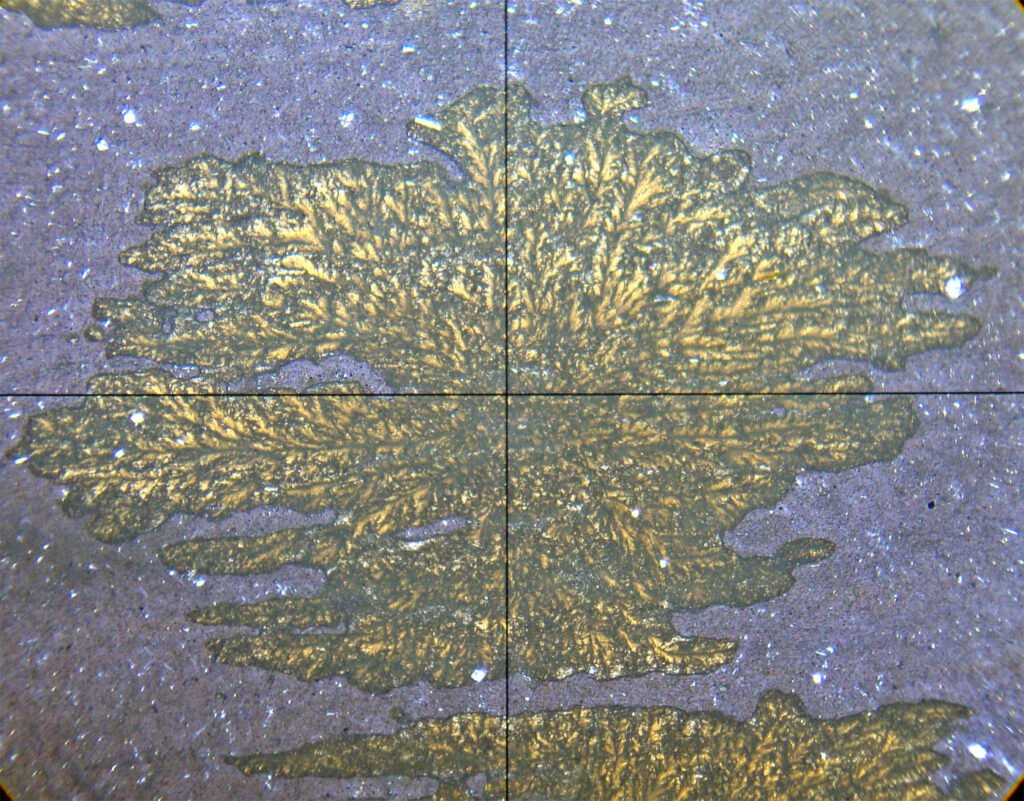
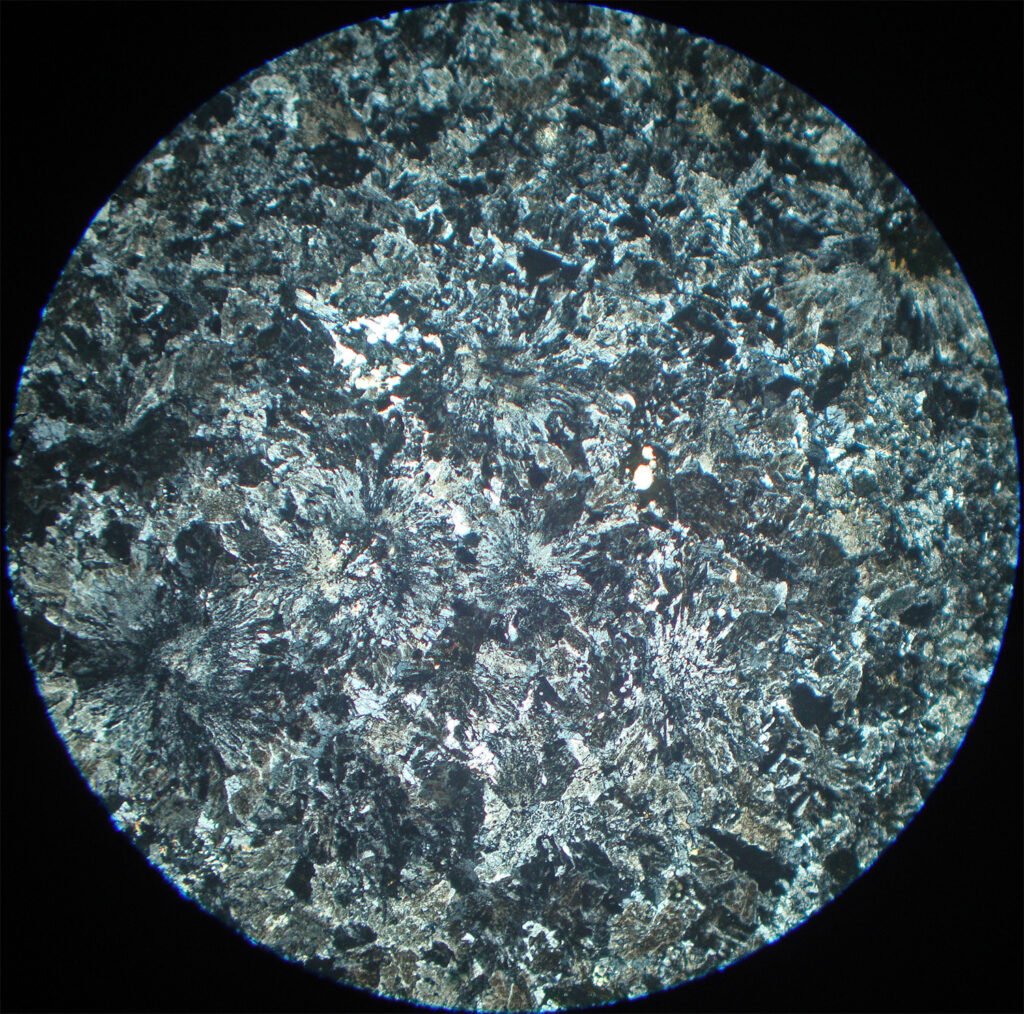
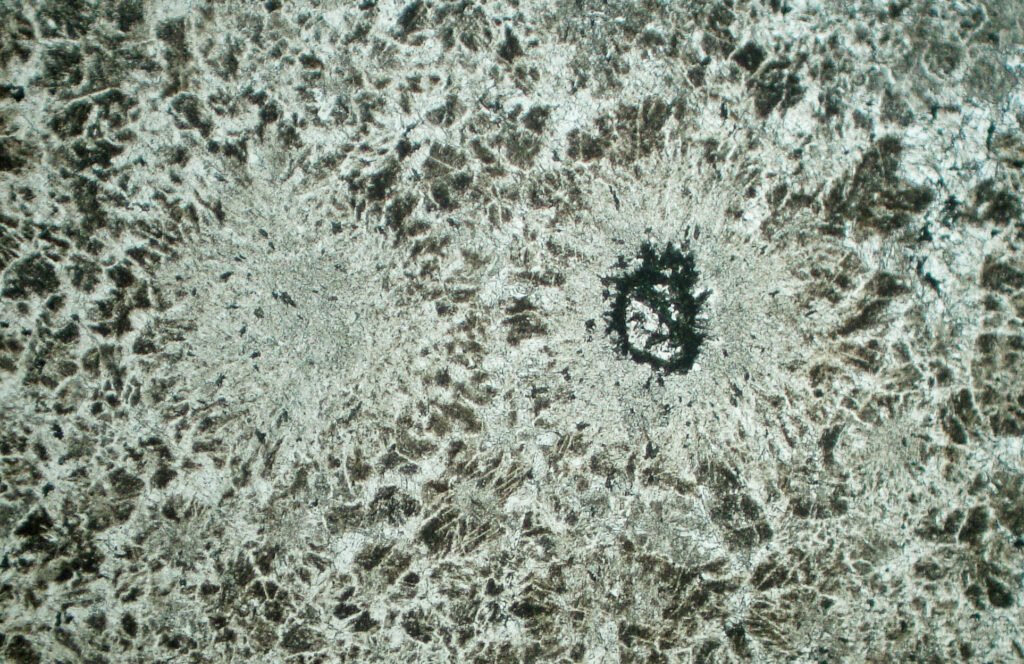
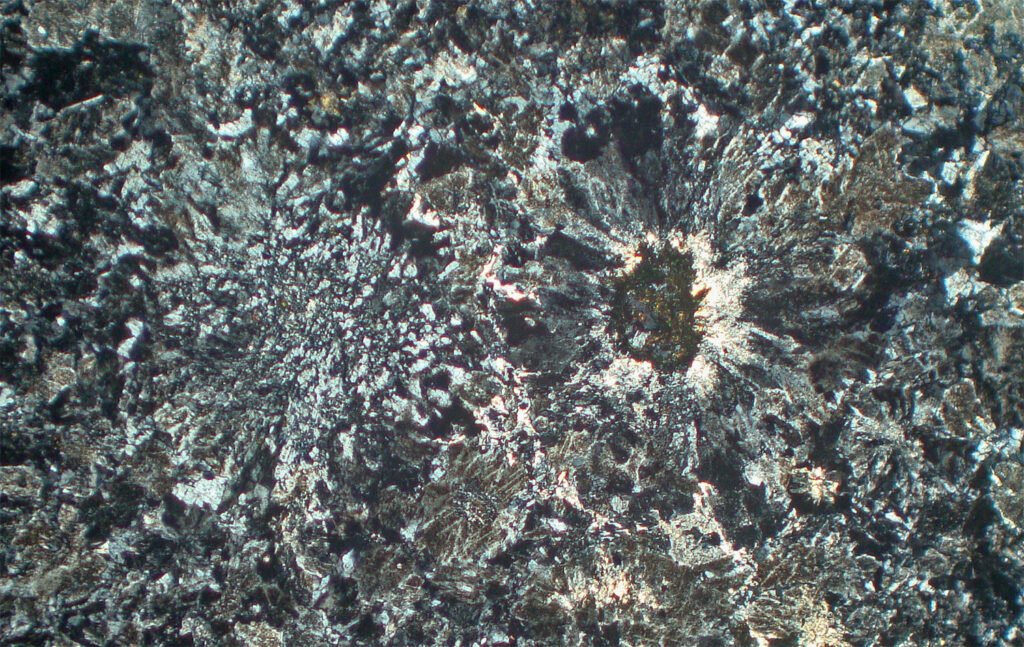
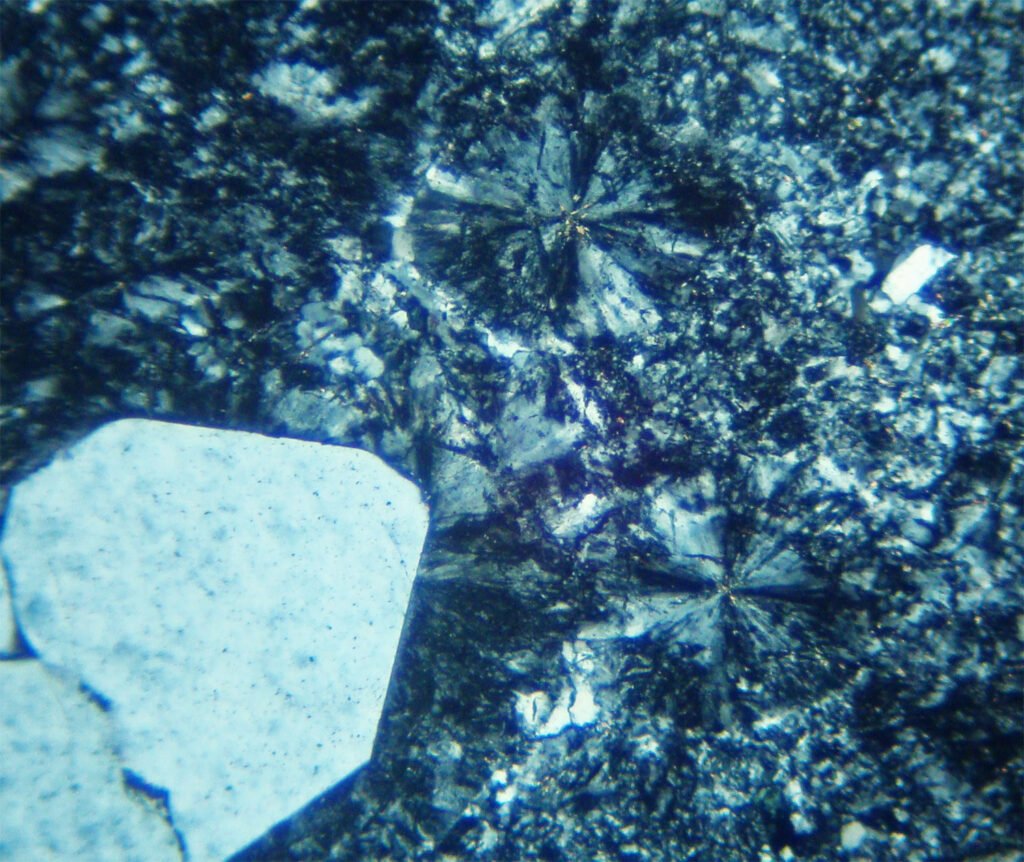
Habits: Without definite shape. It occurs as interstitial material or making up the largest percentage of the rock. It is usually massive, may have flow structures or irregular spherical fractures (perlitic texture), formed by shrinkage during cooling. May have shard textures (typical of ignimbrites) and feathery aggregates due to devitrification.
CROSSED POLARIZED LIGHT – XPL
Isotropic.
CONVERGENT LIGHT
Isotropic.Alterations: can devitrify or alter, all stages are possible. Devitrification propagates from fractures; the glass is replaced by finely crystalline aggregates composed of the minerals that would have formed if the magma had cooled more slowly. There are a number of textures generated by the alteration: acicular crystals (~needles), dendritic structures (~trees), feathery structures (~feathers); spherulites (radial aggregates), etc. Use specialized literature to work on this subject.
May be confused with: constituting the matrix of the rock, it cannot be confused with any other mineral. “Flow” textures are not actually flow, but generated by compressing the hot material. Pearlitic (circular) fractures are very characteristic but not always present. If it occurs as interstitial material in small amounts and is colorless, it is difficult to recognize.
Opal and fluorite can be very similar, but have lower refractive indices.
Analcime, leucite and minerals from the Sodalite Group show crystalline forms and/or cleavage.
Reflected light microscopy is not the recommended analytical method for the identification of volcanic glass. However, it is important to make a polished thin section or a polished section to identify the opaque minerals that occur associated with volcanic glass, like magnetite, ilmenite, chalcopyrite, pyrite and others.
Sample preparation: The polishing of volcanic glass is simple and is of excellent quality.
PLANE POLARIZED LIGHT – PPL
Reflection color: Dark gray, like quartz and feldspar.
Pleochroism: No.
Reflectivity: Low (<10%)
Bireflectance: No.
CROSSED POLARIZED LIGHT – XPL
Isotropy / Anisotropy: Complete isotropy.
Internal reflections: Generalized in the macro color of the glass, which can be black or brown.
May be confused with: transparent minerals with low reflectivity and very dark colors.
General Characteristics:
Polishing scratches may be present.
Holes and small vesicles may occur.
Magnetite in very small crystals is likely to be common.