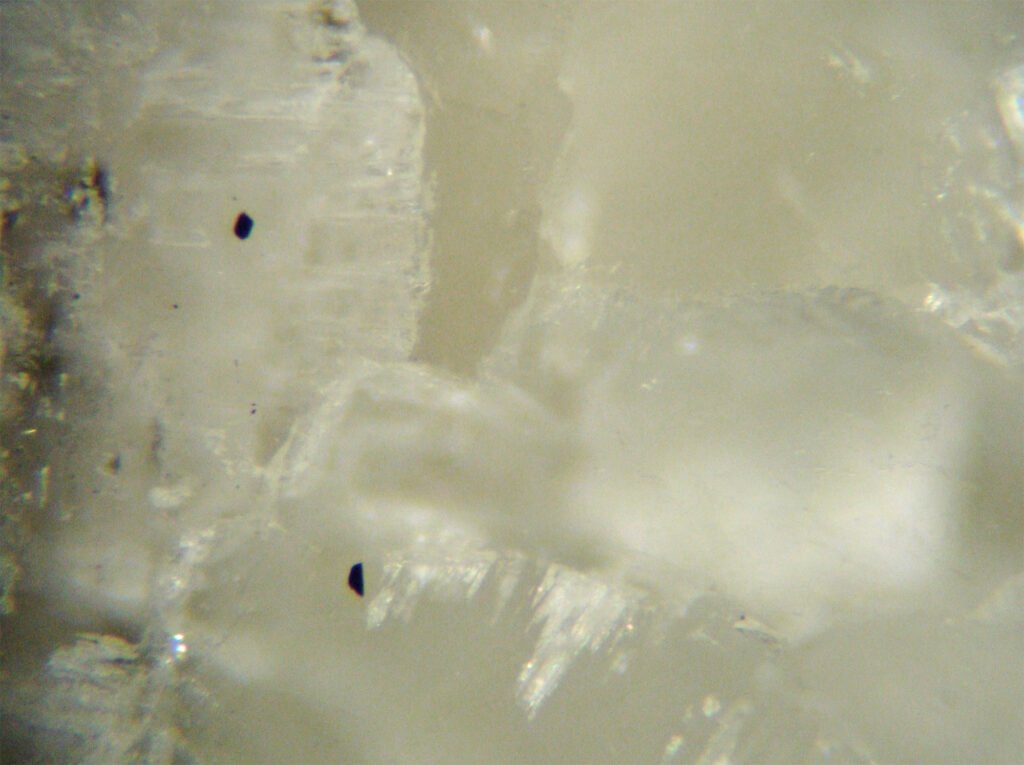
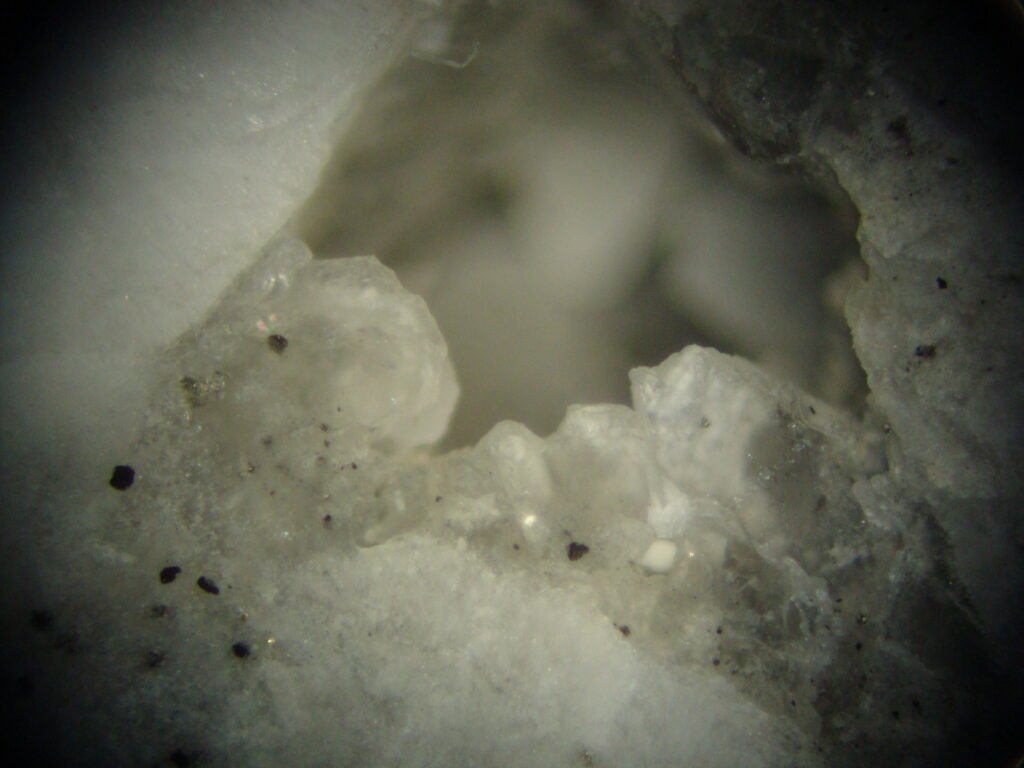
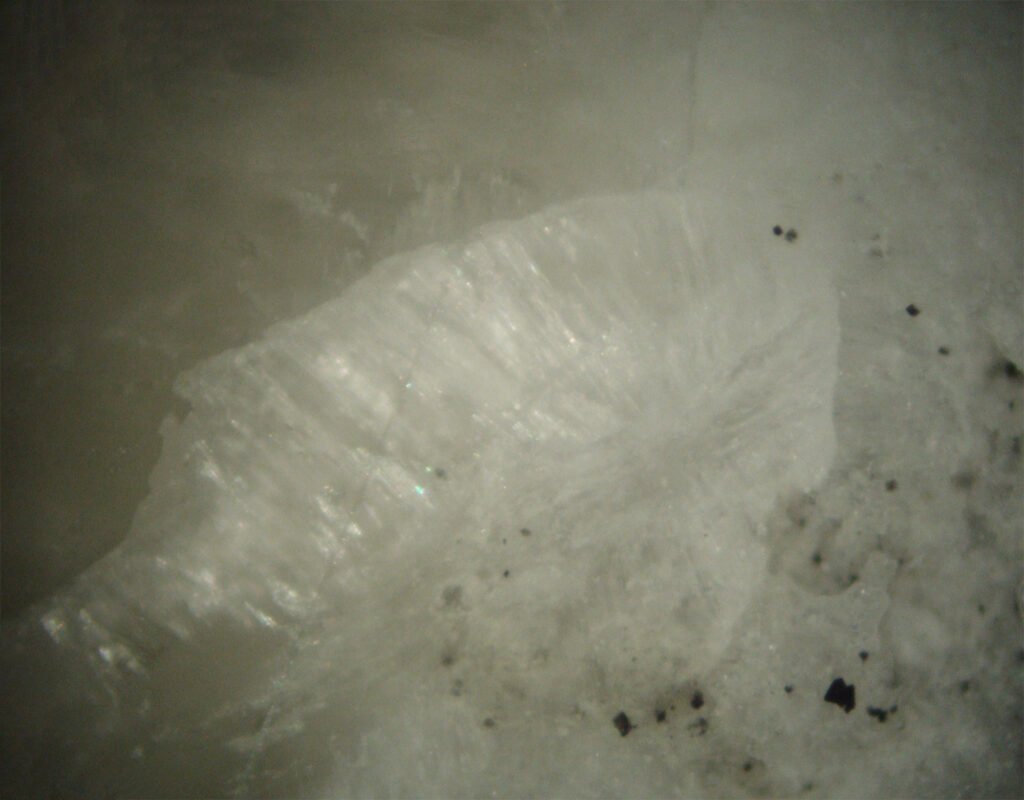
Crystal system: Orthorhombic bipiramidal.
Color: Colorless, white, pale gray. It may show shades of pale yellow, pale brown, or pale green.
Habit: See above.
Cleavage: {010} distinct, {110} poor, {012} poor. Horizontal striations.
Tenacity: Brittle.
Twinning: See above.
Fracture: Irregular.
Mohs Hardness: 3 – 3.5
Parting: No.
Streak: White.
Lustre: Vitreous, resinous.
Diaphaneity: Transparent.
Density (g/cm³): 4.3
2. Geology and Deposits
Witherite forms in small amounts in low-temperature hydrothermal veins associated with limestone or other types of limestone rock or sediment.
Typically it is an alteration product of barite; it may be a product of alteration of celestine, even forming pseudomorphs.
It may be of anoxic sedimentary origin, with the Ba coming from hot springs of volcanic origin.
It can occur in association with coal seams, but is uncommon.
3. Mineral Associations
It occurs associated with other carbonates such as calcite, aragonite, barytocalcite, siderite, alstonite, paralstonite and strontianite.
Also with sulfates (celestine, barite), sulfides (galena, sphalerite, chalcopyrite) and fluorite.
The association with barite is very typical.
4. Transmitted Light Microscopy
Refraction indices: nα: 1,529 nβ: 1,676 nγ: 1,677
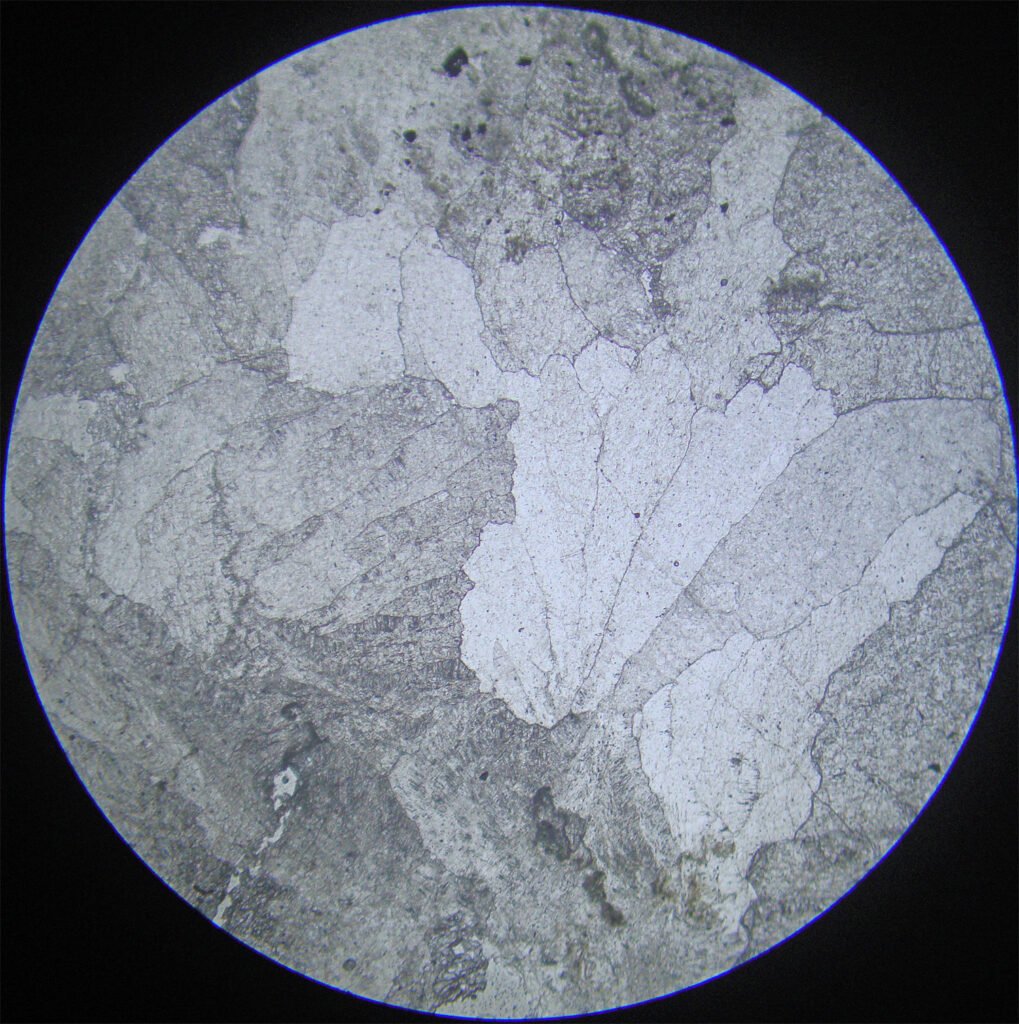
PLANE POLARIZED LIGHT – PPL
Color / Pleochroism: Colorless.
Relief: The relief varies between low and moderate to high every 90º to the platinum rotation in crystals with well defined cleavage. This phenomenon has been dubbed “relief pleochroism” or “chagrin change” and is typical of carbonates (calcite, dolomite, aragonite, siderite, rhodochrosite, magnesite, etc.).
When microcrystalline, these carbonates do not show “relief pleochroism” or it is very difficult to perceive.
Cleavage: {010} distinct, clearly visible in both basal and longitudinal sections. There are two other bad cleavages, usually not visible.
Habits: Massive, short prismatic, may be fibrous. Short prismatic crystals of pseudohexagonal habit, always twinned.
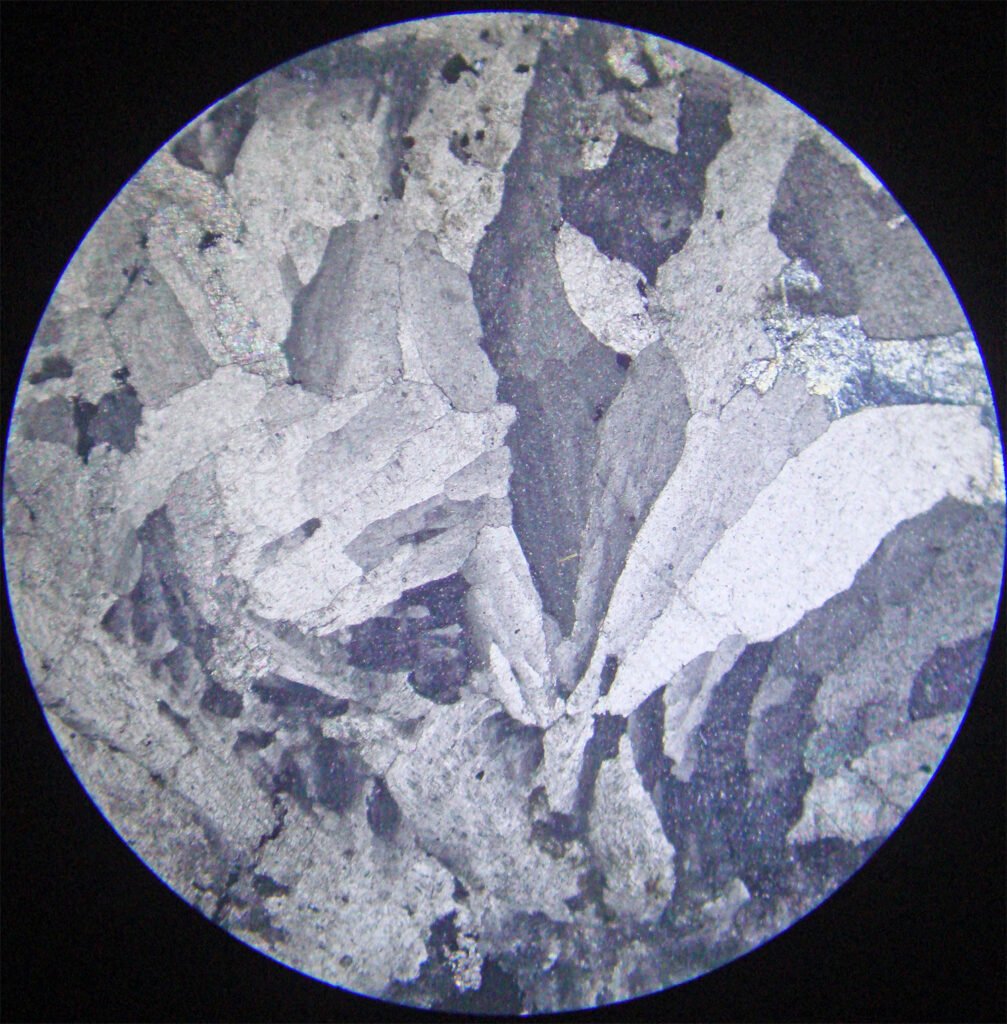
CROSSED POLARIZED LIGHT – XPL
Birefringence and Interference Colors: Maximum birefringence of 0.148: high order colors (up to 8th order), pearly, difficult to determine, as other carbonates too (calcite, dolomite, magnesite, etc.).
Extinction: Parallel to the cleavage in the longitudinal sections.
Elongation sign: ES(-) in basal and longitudinal sections in relation to cleavage.
Twins: Always occurs, pseudohexagonal, cyclic, forming sections with six zones.
Zoning: No.
CONVERGENT LIGHT
Character: B(-)
2V angle: 16º
Alterations: witherite can alter to barite. And barite can alter to witherite.
May be confused with: other orthorhombic carbonates such as aragonite and strontianite.
Trigonal (rhombohedral) carbonates such as calcite, dolomite, siderite, rhodochrosite and magnesite are uniaxial and show rhombohedral cleavage.
Aragonite has almost the same indices and cleavage, but its density is much lower.
Strontianite has lower refractive indices and two good cleavages.