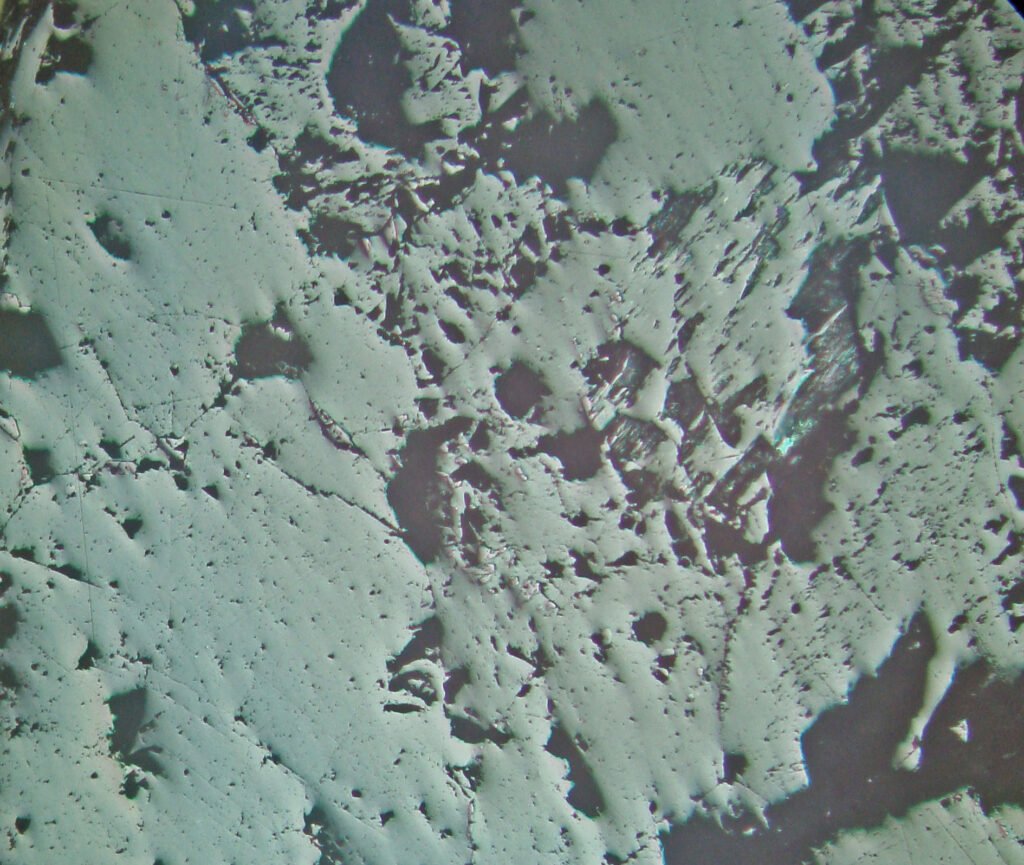
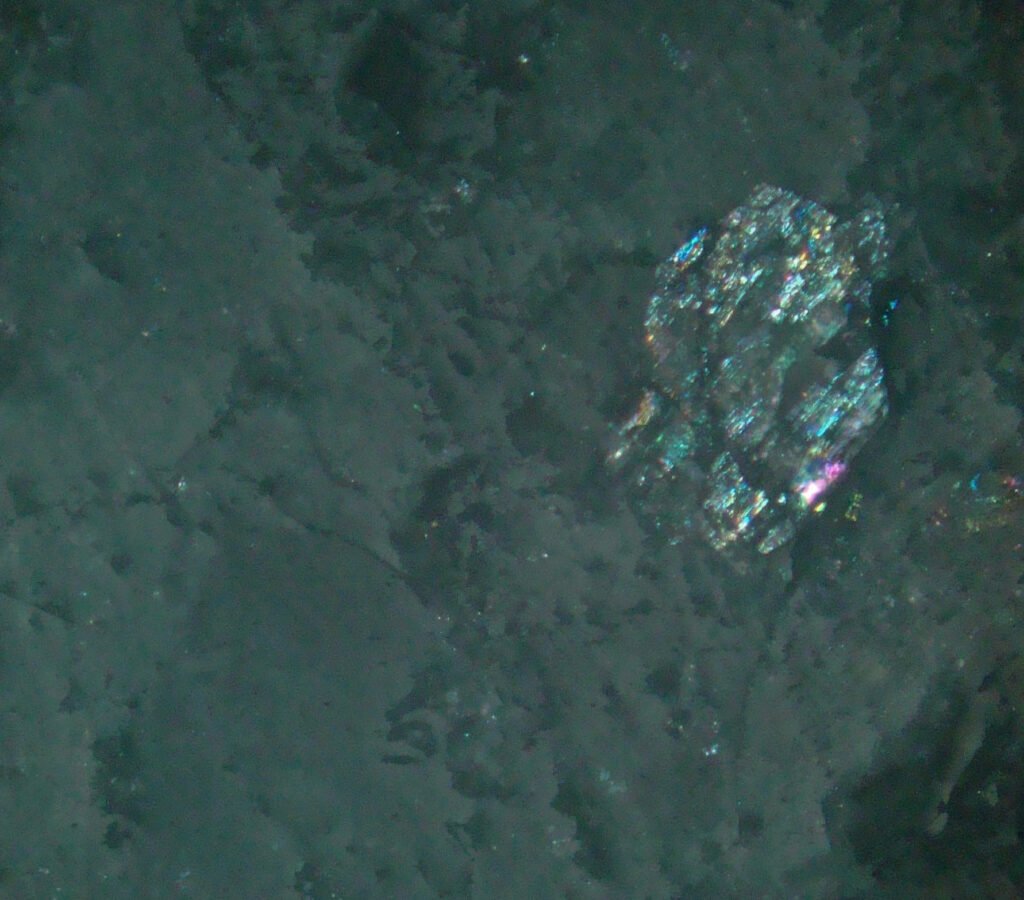
Crystal system: Triclinic pinacoidal, pseudo-monoclinic.
Color: White, gray-white, colorless, more rarely light green, pink, brown, yellow or red.
Habit: Tabular, lamellar, columnar, short to long prismatic, more rarely fibrous or acicular.
Cleavage: {001} perfect, {001} good, {-102} good.
Tenacity: Very brittle.
Twinning: Twins are common, either by the twin axis [010] or by the twin plane {100}.
Fracture: Irregular.
Mohs Hardness: 4.5 – 5
Parting: No.
Streak: White.
Lustre: Vitreous, pearly.
Diaphaneity: Transparent.
Density (g/cm³): 2.86 – 3.09
2. Geology and Deposits
Wollastonite typically occurs abundantly in impure carbonate rocks (usually marbles) that have undergone thermal metamorphism, in this case generating high-grade wollastonite marbles. This metamorphism can be generated by an intrusive igneous (generally granitic) rock which, in contact with the limestone rock, forms skarns and buchites. Similar situations occur when metamorphism occurs due to a dike intruded in limestone and in sandstone sequences. Wollastonite can also be formed by a regional metamorphism of low to high degree (amphibolite and granulite facies).
More rarely and sparsely, it occurs in phonolites, ijolites, nepheline It can occur in meteorites (chondrites).
It is common in slags and glasses in the form of pseudowollastonite, which is a cyclosilicate, a high-temperature phase, dimorphic with wollastonite, which has very rarely been found in natural geological situations.
3. Mineral Associations
Typical associated minerals are carbonates (calcite, dolomite, aragonite), clinopyroxenes (diopside, fassaite (low Fe augite)), plagioclases, garnets (grossular, andradite), olivines (forsterite), epidote and vesuvianite.
It also occurs with scheelite, monticellite, minehillite, akermanite, spurrite, larnite, merwinite and amphiboles.
4. Transmitted Light Microscopy
Refraction indices: nα: 1.616 – 1.640 nβ: 1.628 – 1.650 nγ: 1.631 – 1.653
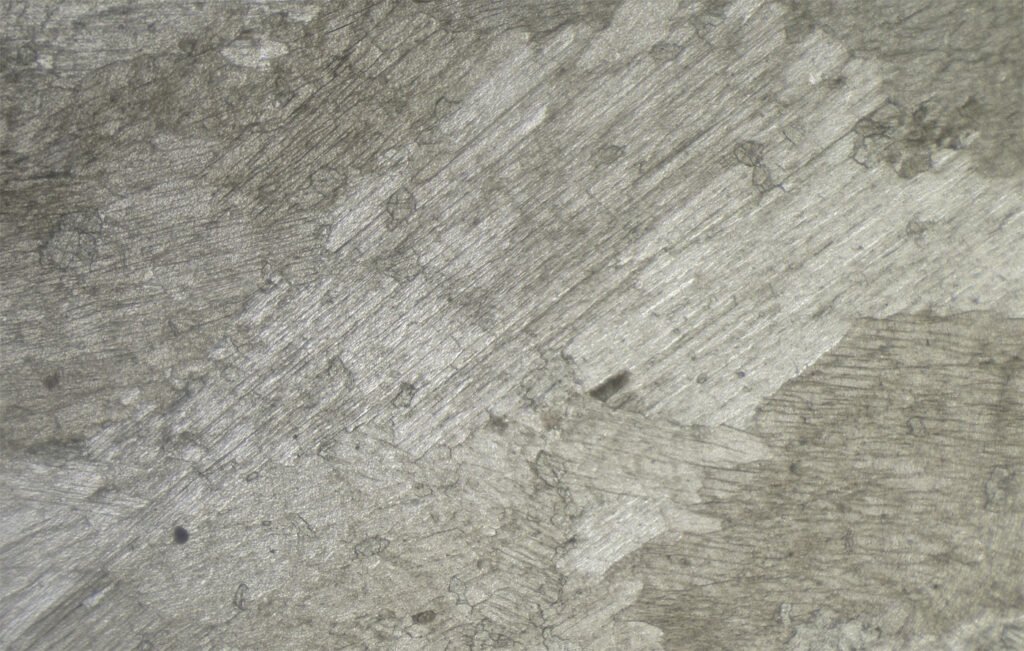
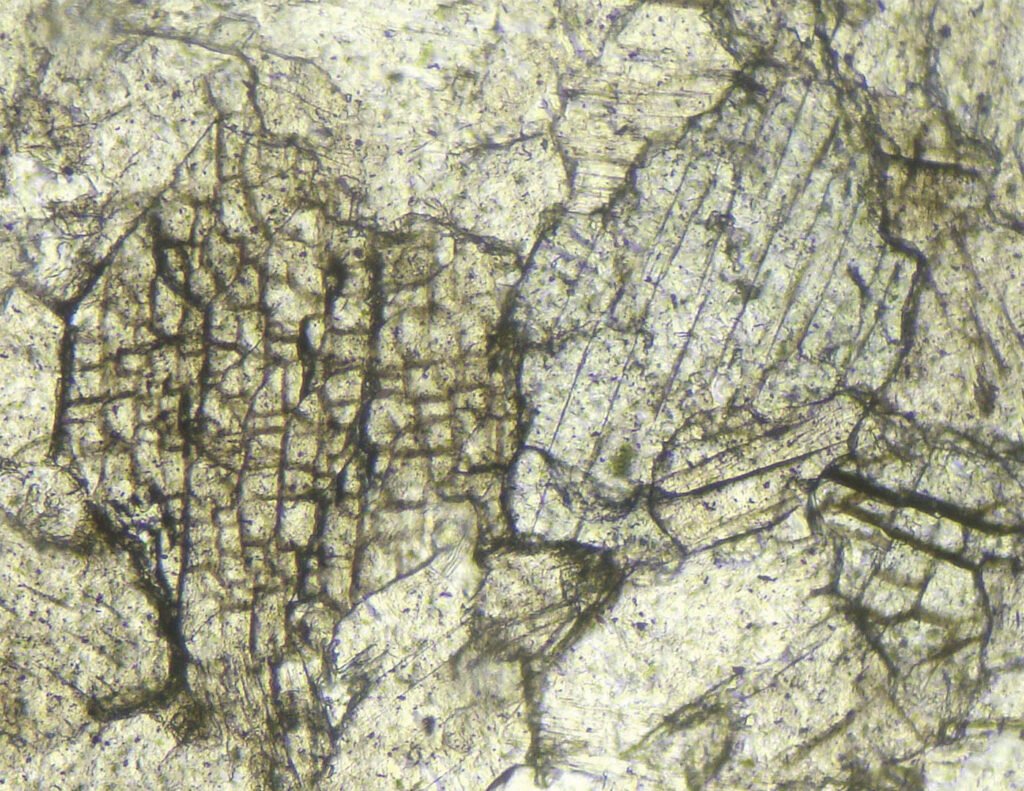
PLANE POLARIZED LIGHT – PPL
Color / Pleochroism: Colorless to grayish white, without pleochroism.
Relief: Moderate to high.
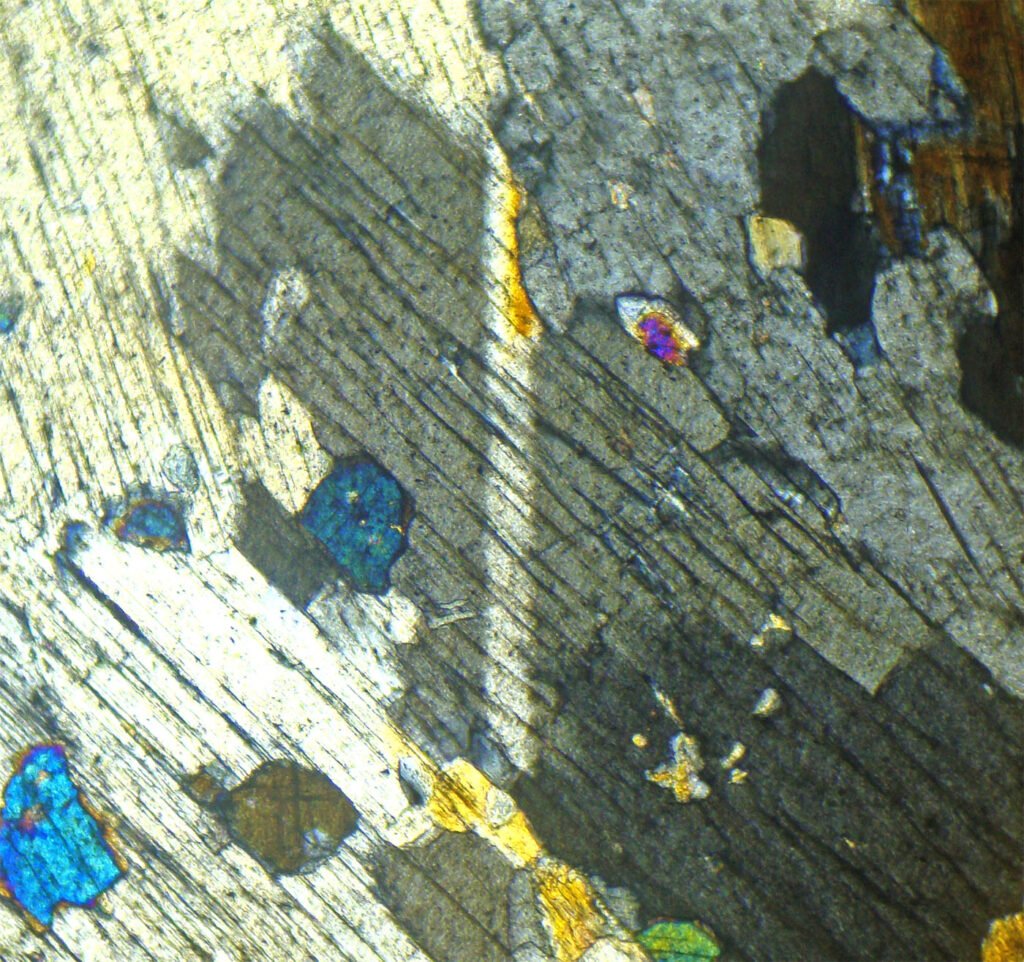
Cleavage: (100) perfect, (001) good, (-10-2) good. Fragments controlled by (100) and (001). It can show good cleavage, the quality of which is slightly inferior to that of micas, but better than that of pyroxenes.
In the basal section, cleavages {100} and {001} intersect at 84.5º. This angle is very similar to the angle formed by the two cleavages in the basal sections of the pyroxenes, but the cleavages of wollastonite are better and consequently the lattice in the basal sections of wollastonite is more defined.
The {-102} cleavage intersects the {100} cleavage at 70°. As this cleavage is of much lower quality, generally the visible angle is that of 84.5°.
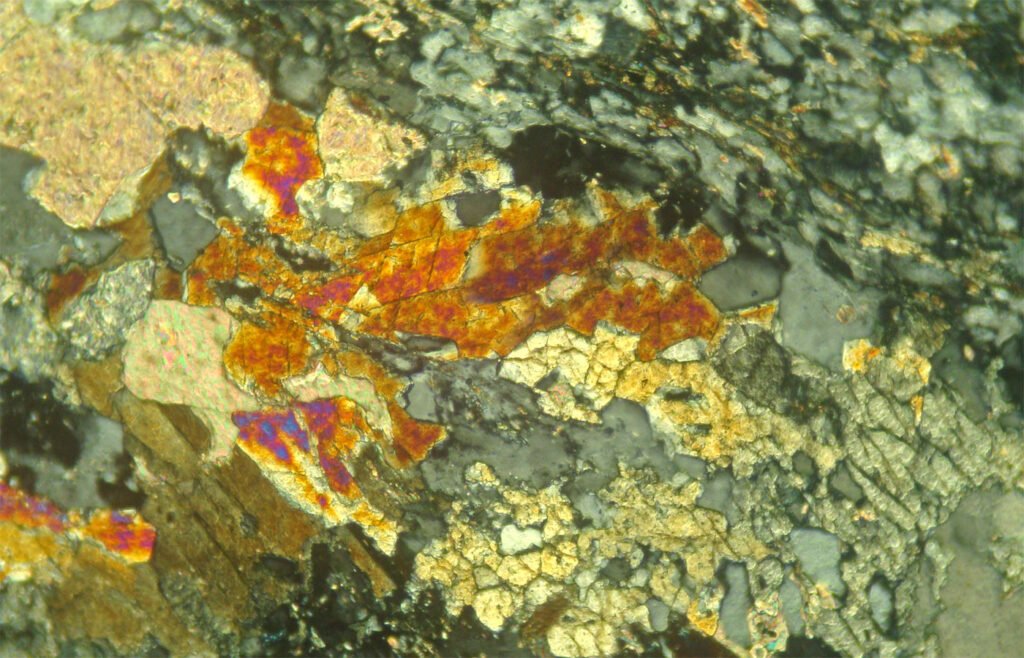
Habits: Lamellar, columnar, tabular, more rarely fibrous or acicular. Subparallel or divergent or brush-shaped aggregates are common. It can be tabular in {100}. With almost rectangular sections, poikiloblastic.
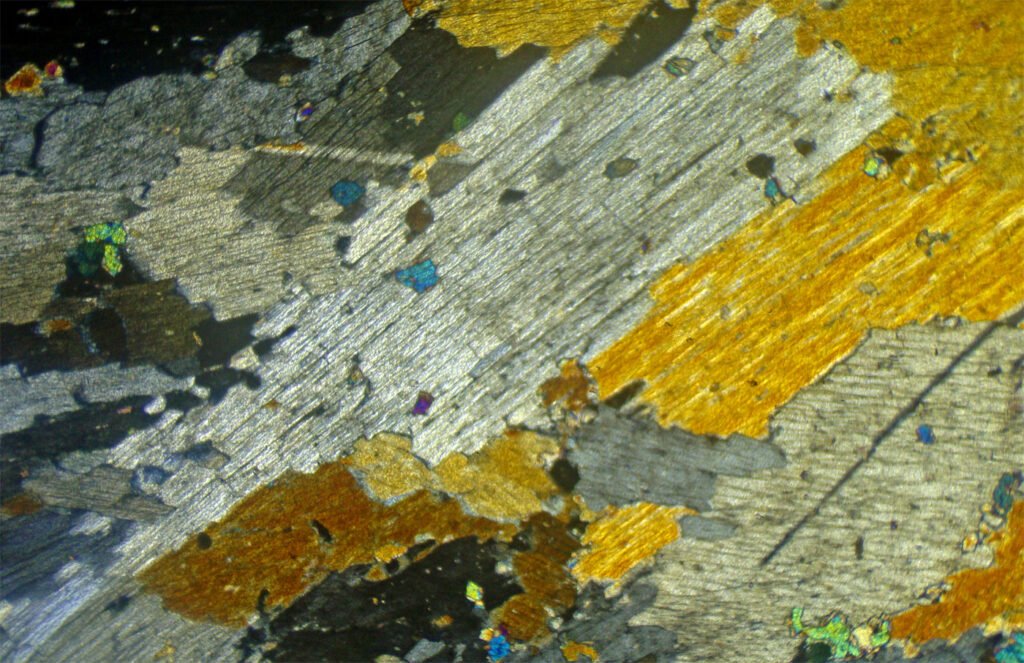
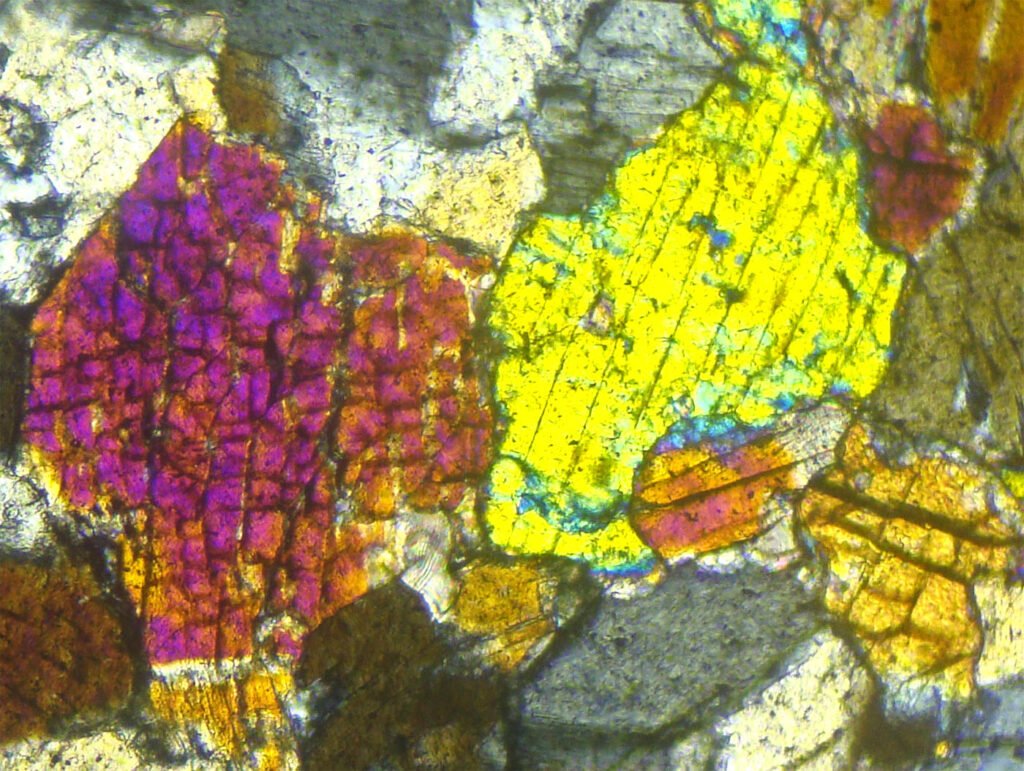
CROSSED POLARIZED LIGHT – XPL
Birefringence and Interference Colors: Low birefringence, 0.013 – 0.017 (or 0.012 – 0.014), higher 1st order: gray to at most 1st order yellowish-orange colors.
Birefringence increases a little with increasing Fe+Mn contents.
Extinction: Always oblique, but in longitudinal sections parallel to “b” almost parallel. In other sections with angles of 0 – 5º (β,b) or 30-44º (α,c).
Elongation sign: ES(+) or ES(-), its not diagnostic.
Twins: In lamellae, on (100).
Zoning: Frequently zoned.
CONVERGENT LIGHT
Character: B(-).
2V angle: 36 – 60º, usually around 40º.
Alterations: to pectolite, apophyllite, calcite, quartz, chalcedony and opal.
May be confused with: several other Ca and Ca-Mg silicates that occur in marbles.
Diopside has higher relief, higher 2V and always has pyroxene cleavage, which is coarser and slightly worse than that of wollastonite.
Zoisite and epidote have higher relief, higher 2V, and much more intense interference colors, and they often show anomalous interference colors.
Tremolite has typical amphibole cleavage, a larger 2V angle, higher birefringence.
Pectolite has higher birefringence.
Cancrinite has the same interference colors, but has low relief and is U(-).
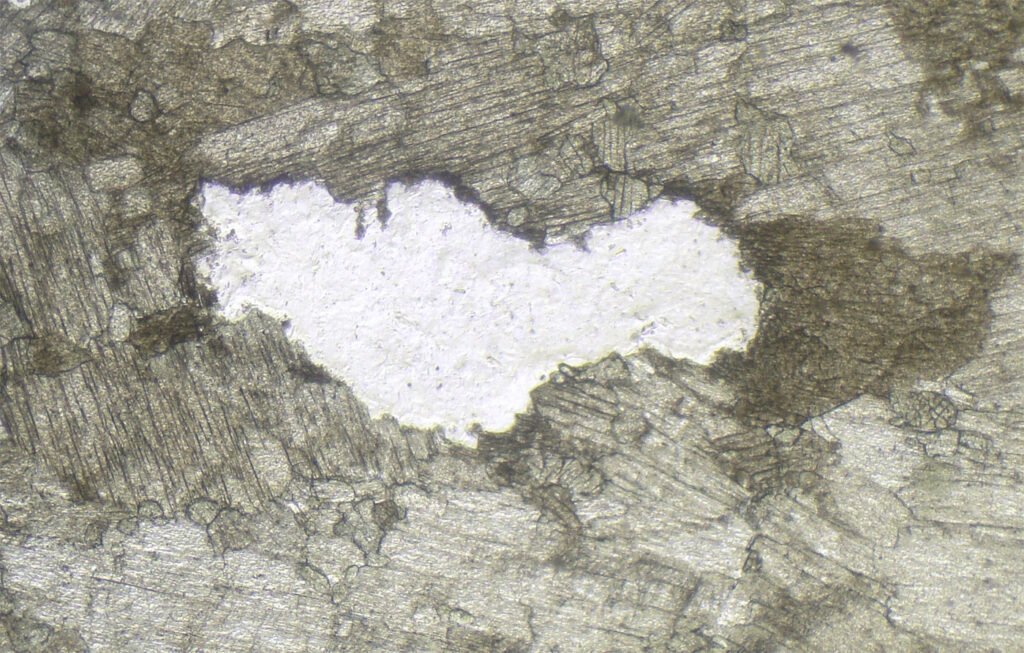
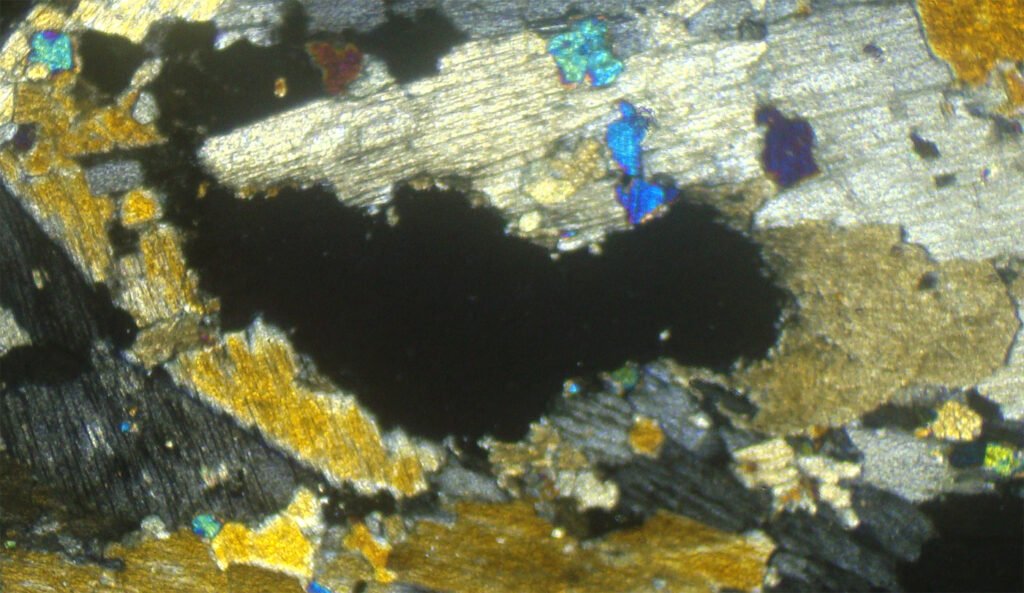
An indication of the occurrence of wollastonite is the presence of holes in the thin section, which are places where the minerals of the thin section were stripped during the making of the thin section. The holes are due to the fact that wollastonite has good quality cleavages and presents “very brittle” tenacity, which causes it to shatter easily during the making of the thin section. The same goes for kyanite.