1. Characteristics
Crystal system: Orthorhombic bipiramidal.
Color: Colorless, grey, grey-white, green, yellow. It can be yellow brown, purple or pink.
Habit: Prismatic, columnar, can be compact to massive.
Cleavage: {010} perfect, {100} imperfect. Striations // to {010}
Tenacity: Brittle.
Twinning: No.
Fracture: Irregular, conchoidal.
Mohs Hardness: 6 – 7
Parting: No.
Streak: White.
Lustre: Vitreous, pearly on cleavage.
Diaphaneity: Transparent.
Density (g/cm³): 3.15 – 3.36
2. Geology and Deposits
Zoisite occurs mainly in medium-grade metamorphic rocks (epidote–amphibolite), of regional metamorphism, formed from Ca-rich and Mg-poor sediments: schists, gneisses, eclogites and marbles. It is also found in blueschists, but is not as common. It can form a high-grade metamorphic rock called zoisitite. In the type locality, it occurs in eclogite pegmatite.
In igneous rocks, it occurs as an accessory mineral in mafic and ultramafic rocks.
Thulite occurs only in pegmatites and hydrothermal veins.
Plagioclases can change to saussurite, a very fine-grained hydrothermal alteration product composed of albite, zoisite or clinozoisite, sericite (muscovite) and other silicates, in addition to calcite.
3. Mineral Associations
Associates with:
– quartz and feldspars (albite, adularia),
– pyroxenes (diopside),
– amphiboles (“hornblende”, actinolite, pargasite, micas (biotite, muscovite, chlorite),
– other members of the Epidote Supergroup (epidote, clinozoisite) and
– garnet, prehnite, calcite and corundum (including the ruby variety).
4. Transmitted Light Microscopy
Refraction indices: nα: 1.696 – 1.700 nβ: 1.696 – 1.702 nγ: 1.702 – 1.718
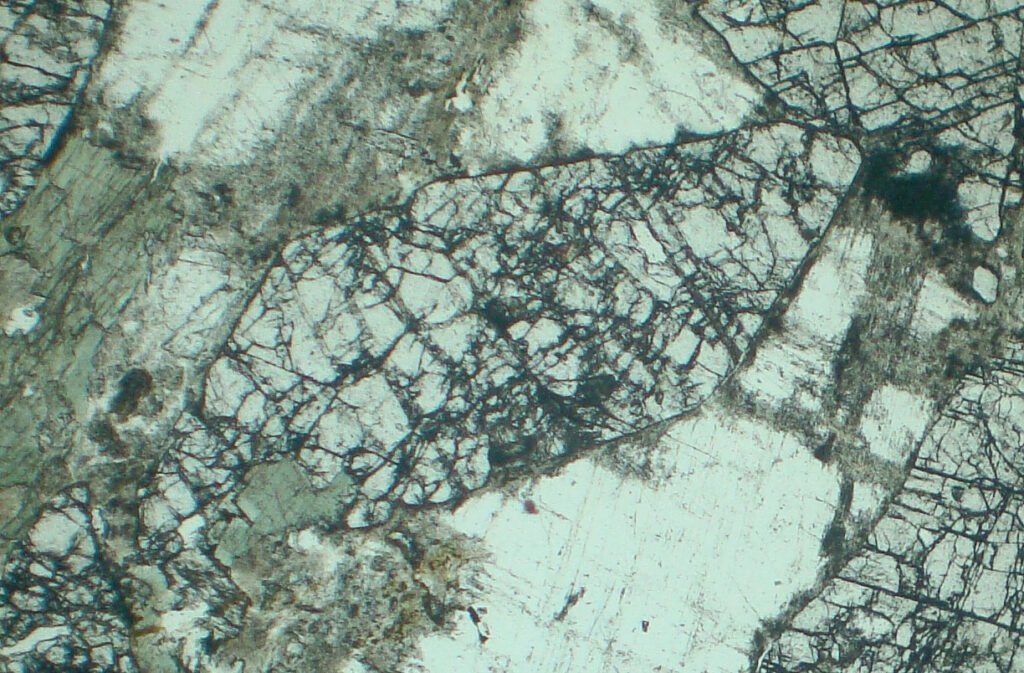
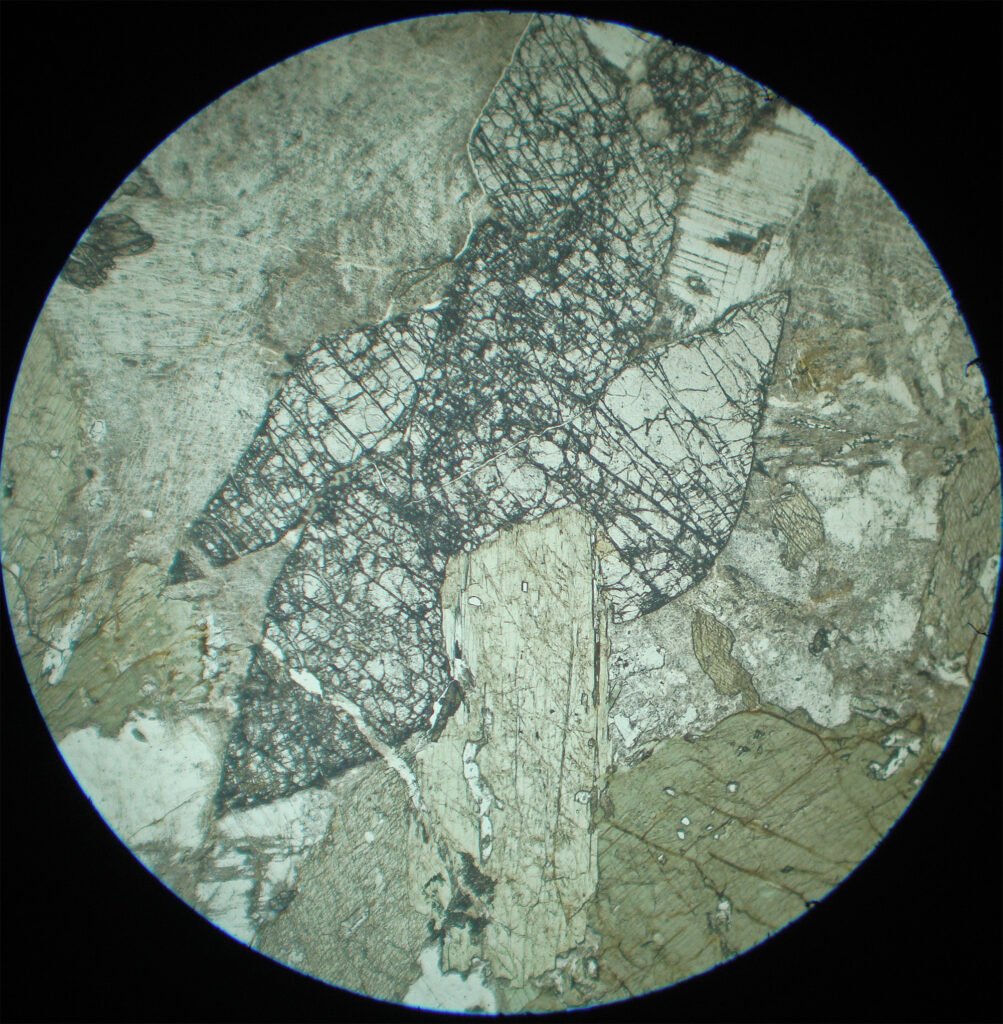
PLANE POLARIZED LIGHT – PPL
Color / Pleochroism: Colorless, does not show pleochroism.
Thulite (variety with Mn) has a pink color and moderate pleochroism between colorless, pink, violet, deep blue, red-violet to yellow and greenish-yellow.
Relief: High.
Cleavage: {010} perfect, {010} imperfect.
Habits: Columnar, fibrous, acicular, granular, prismatic crystals, massive. Basal sections are rhombic or hexagonal. May form oriented intergrowths with epidote or clinozoisite.
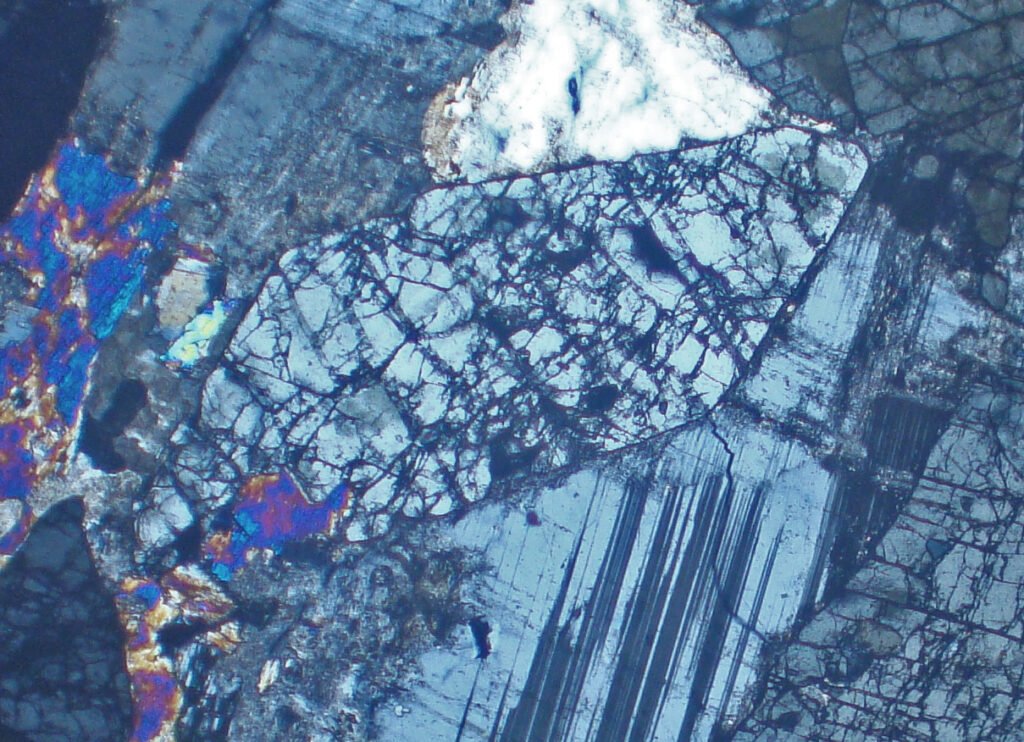
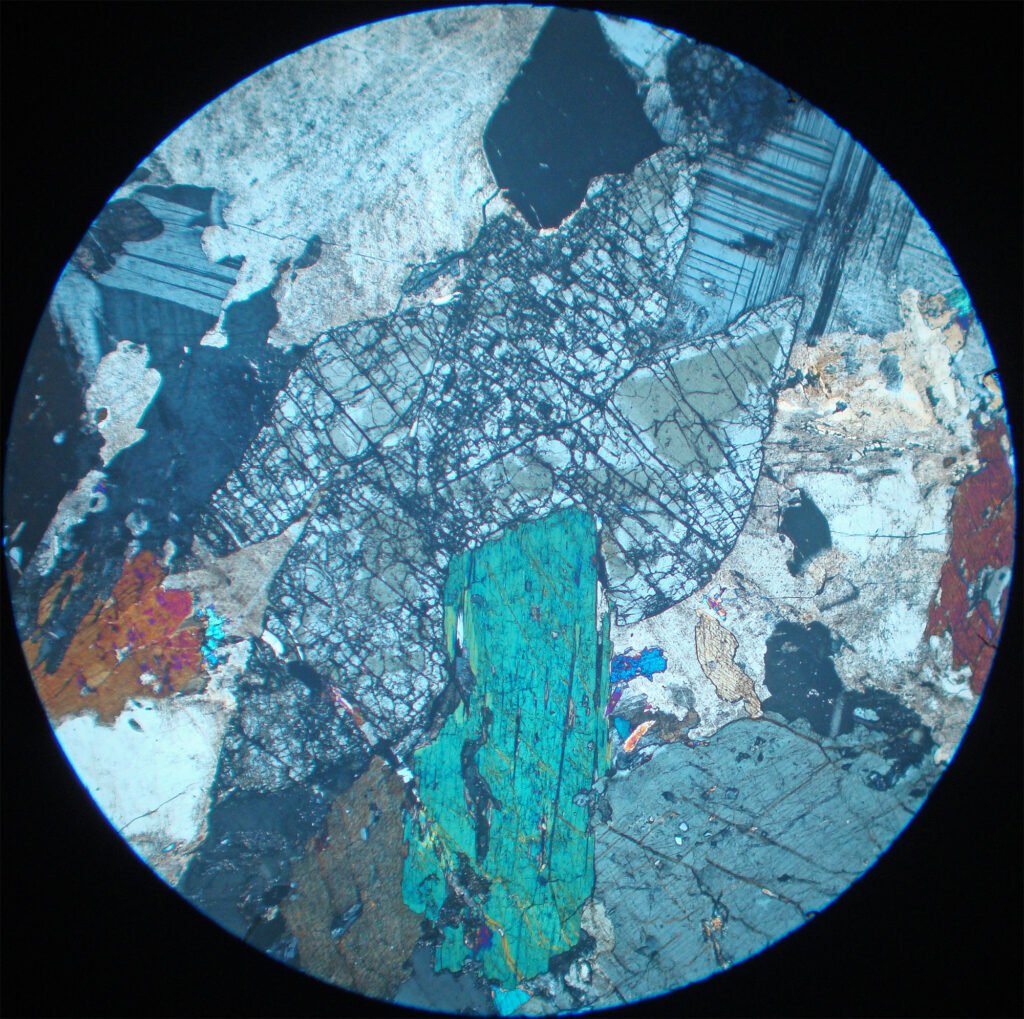
CROSSED POLARIZED LIGHT – XPL
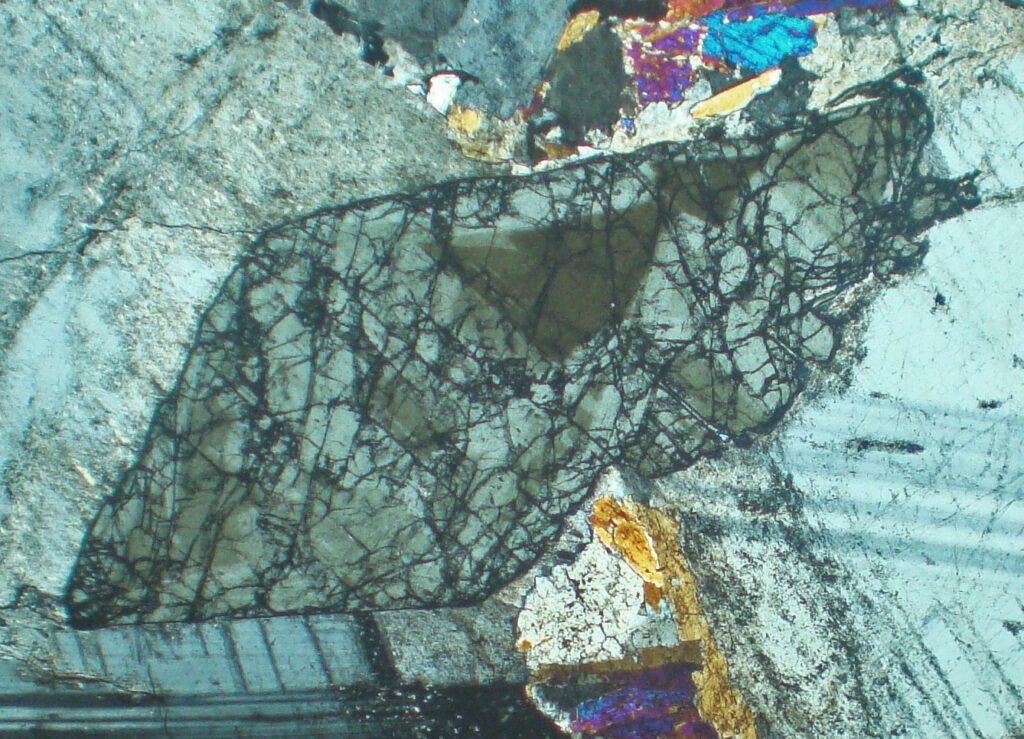
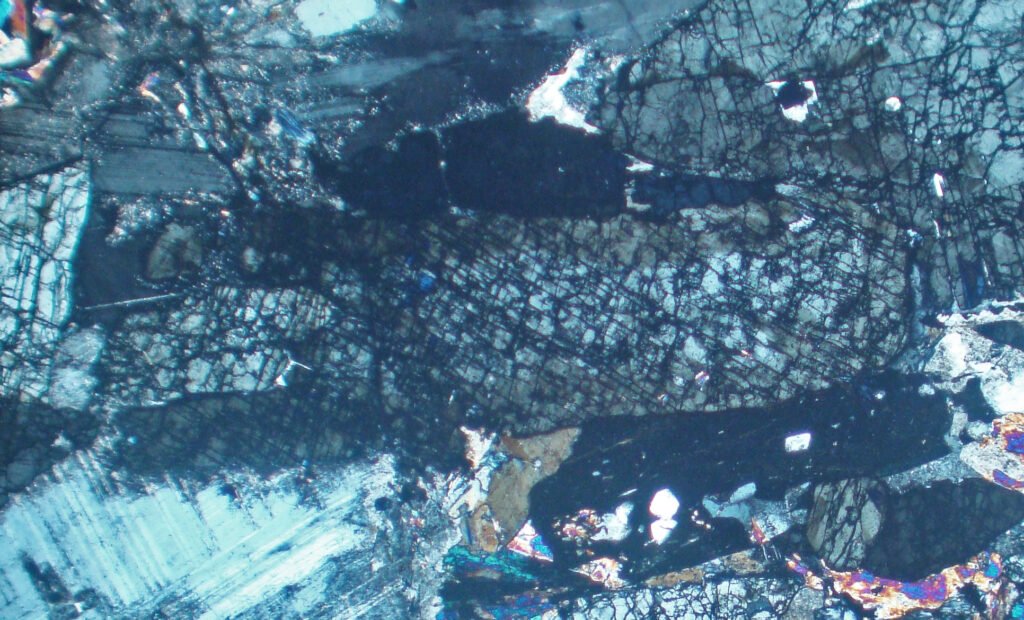
Birefringence and Interference Colors: Birefringence 0.005 – 0.018: 1st order interference colors between grey, white and straw yellow, or anomalous deep blue-gray or brown (leather brown) colors.
Birefringence increases with increasing Fe content.
Zoysite-β= normal birefringence.
Extinction: Parallel (is the only orthorhombic member of the Epidote Supergroup). Basal sections show symmetrical extinction.
Elongation sign: ES(-).
Twins: No.
Zoning: Often zoned. Thulite may have a darker pink core and a lighter pink border as a function of varying Mn content.
CONVERGENT LIGHT
Character: B(+).
2V angle: 0 – 69º, it can vary in the same grain due to variations in the chemical composition.
Alterations: is generally not altered.
May be confused with: its habit is very similar to that of epidote and clinozoisite, but these are monoclinic and have oblique extinction. Characteristic for zoisite are the high relief, the basal cleavage parallel to the elongation of euhedral crystals and the fact that it is colorless in PPL.
Clinozoisite, in addition to oblique extinction, shows anomalous interference colors in very intense and luminous blue (“Prussian blue”), a color that is more intense and stronger than the anomalous interference colors of zoisite, which tend more towards gray-blue. little luminous.
Vesuvianite and apatite are uniaxial. Vesuvianite also has two good cleavages and not just one.
Melilite may be similar, but has much lower relief and is U(-).
Pink andalusite is quite similar, but is B(-) and has lower relief.
Sillimanite has more intense interference colors and other habits.